
One of the most breathtaking astronomical events you can witness is a solar eclipse.
Not only is it an experience you’ll never forget, but it also shows the Solar System in motion through the fortunate alignment of three astronomical bodies.
The first object is our planet, Earth, which orbits the second object, the Sun. The third object in the equation is the Moon.
A solar eclipse happens when the Sun, Moon and Earth become aligned in space.
In this guide we'll look closer at why these incredible phenomena occur, what exactly happens during the event and how to observe one safely.
Get started by watching our quick video below.
Read our beginner's guide to the mechanics behind a lunar eclipse.
Why solar eclipses happen
On Earth we’re lucky that the Moon is just the right size and orbits at just the right distance to make total solar eclipses possible.
You may wonder how they happen at all since the Sun is so much bigger than the Moon.
Well, due to one of the most amazing coincidences in nature, even though the Moon is 400 times smaller than the Sun, the Sun itself is around 400 times further away.
This makes the Sun and the Moon appear the same size in our sky.
However, we don’t get a total solar eclipse every time the Moon moves between Earth and the Sun. The lunar orbit is tilted, so that it sometimes passes above or below the Sun.
And because the Moon’s orbit isn’t circular but elliptical like an oval, when it is furthest from us and an eclipse occurs the Moon is too small to cover the Sun completely.
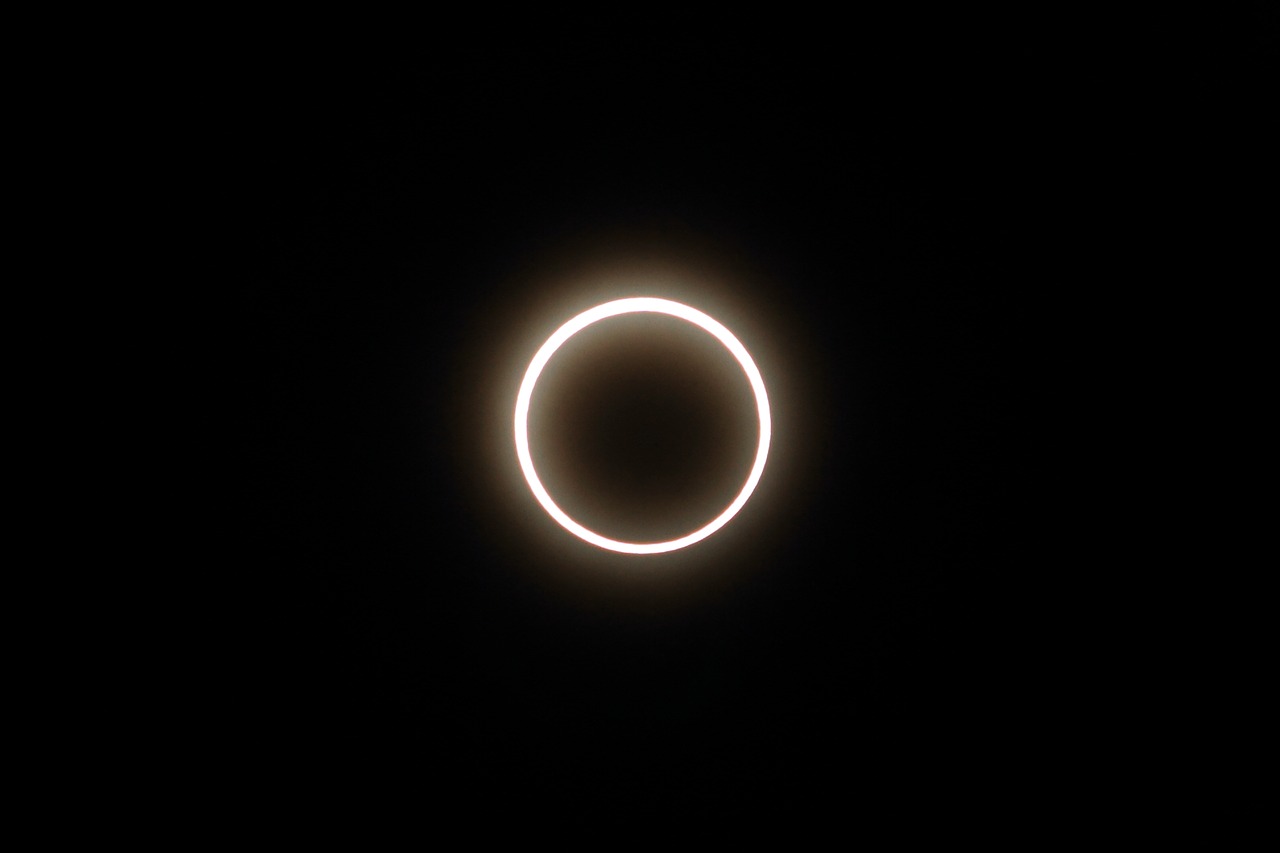
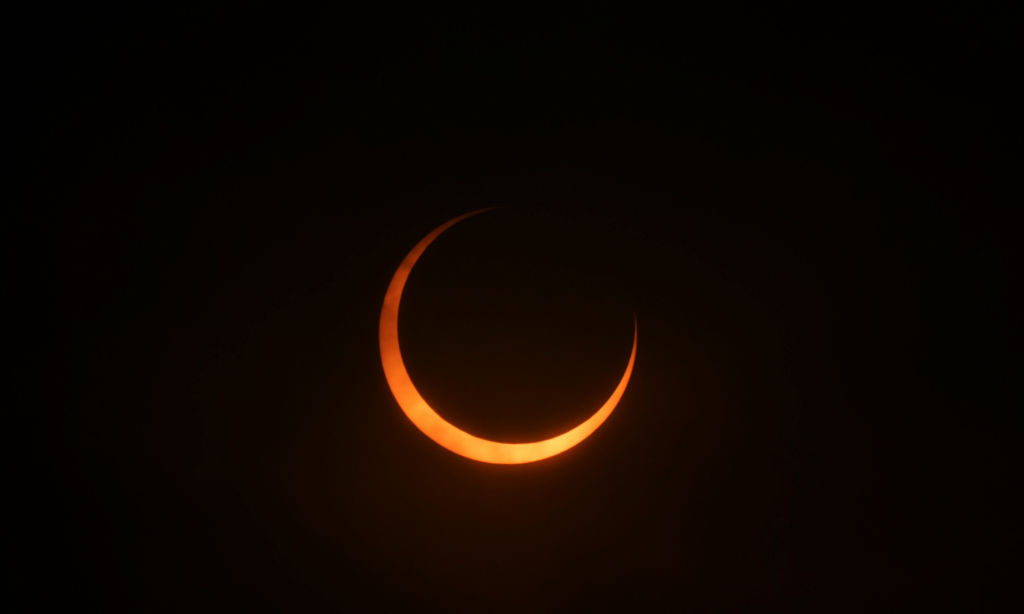
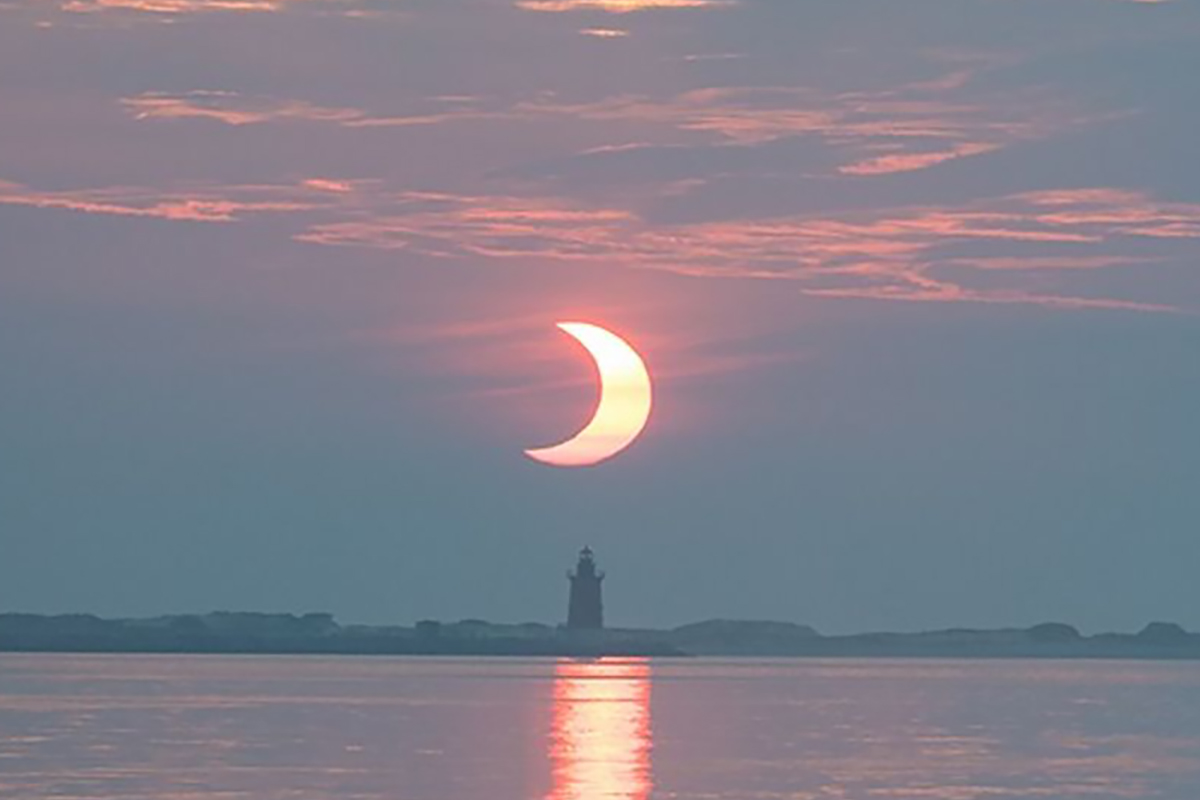
We then see an ‘annular solar eclipse’, in which a thin ring of sunlight can be seen circling the Moon.
What happens during a total solar eclipse
When we witness a total solar eclipse it means that we are in the shadow of the Moon and, as the Sun is the bigger object, it makes the shadow of the Moon cone-shaped.
This shadow cone starts out as big as the diameter of the Moon at 3,476km (2,160 miles), but by the time it reaches Earth it is much smaller.
The biggest it can get is about 300km (190 miles) in diameter.
If you’re lucky enough to be within the zone of the shadow, you’ll see darkness descend as the shadow sweeps across the planet.
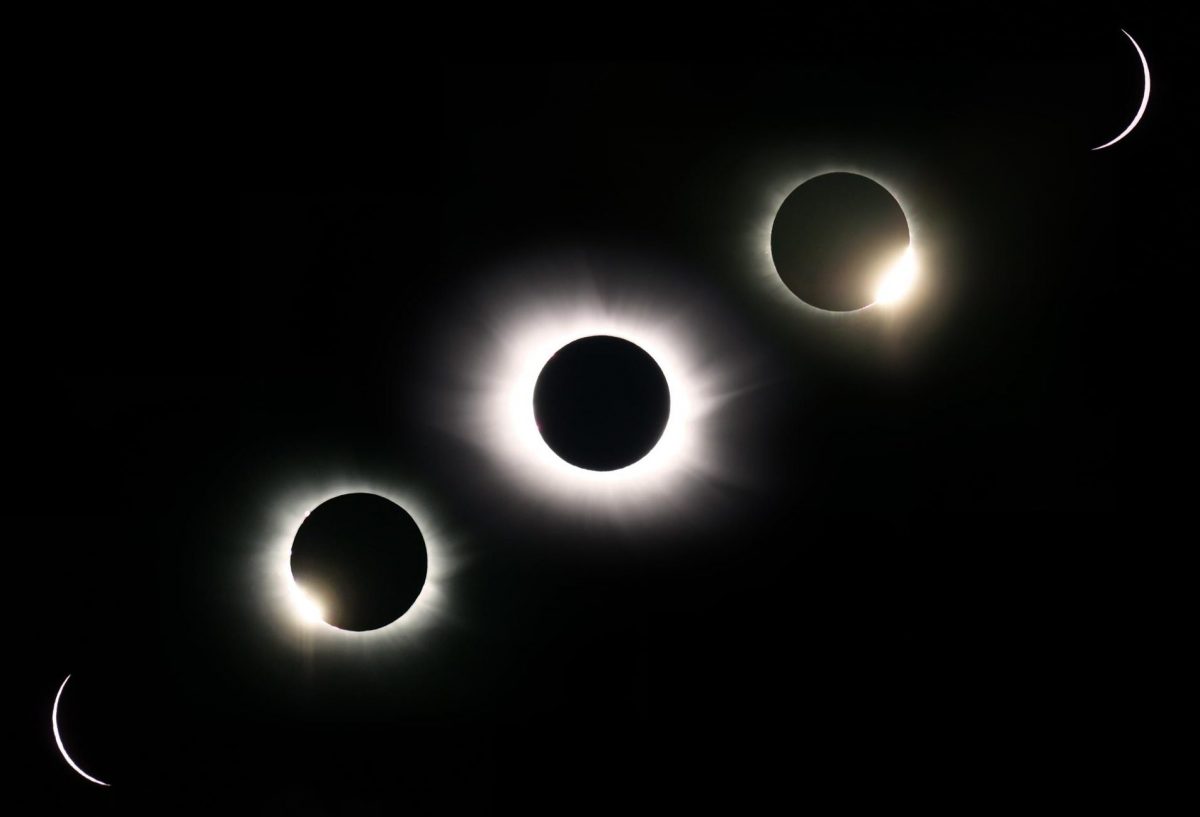
The Moon covers the Sun entirely for 7 minutes 31 seconds at most, but you’ll probably see a ‘totality’ lasting between 2 and 4 minutes.
If you’re outside the 300km circle of the shadow cone you’ll only see a partial eclipse because the Moon covers up less of the Sun as you move further away from the track of totality.
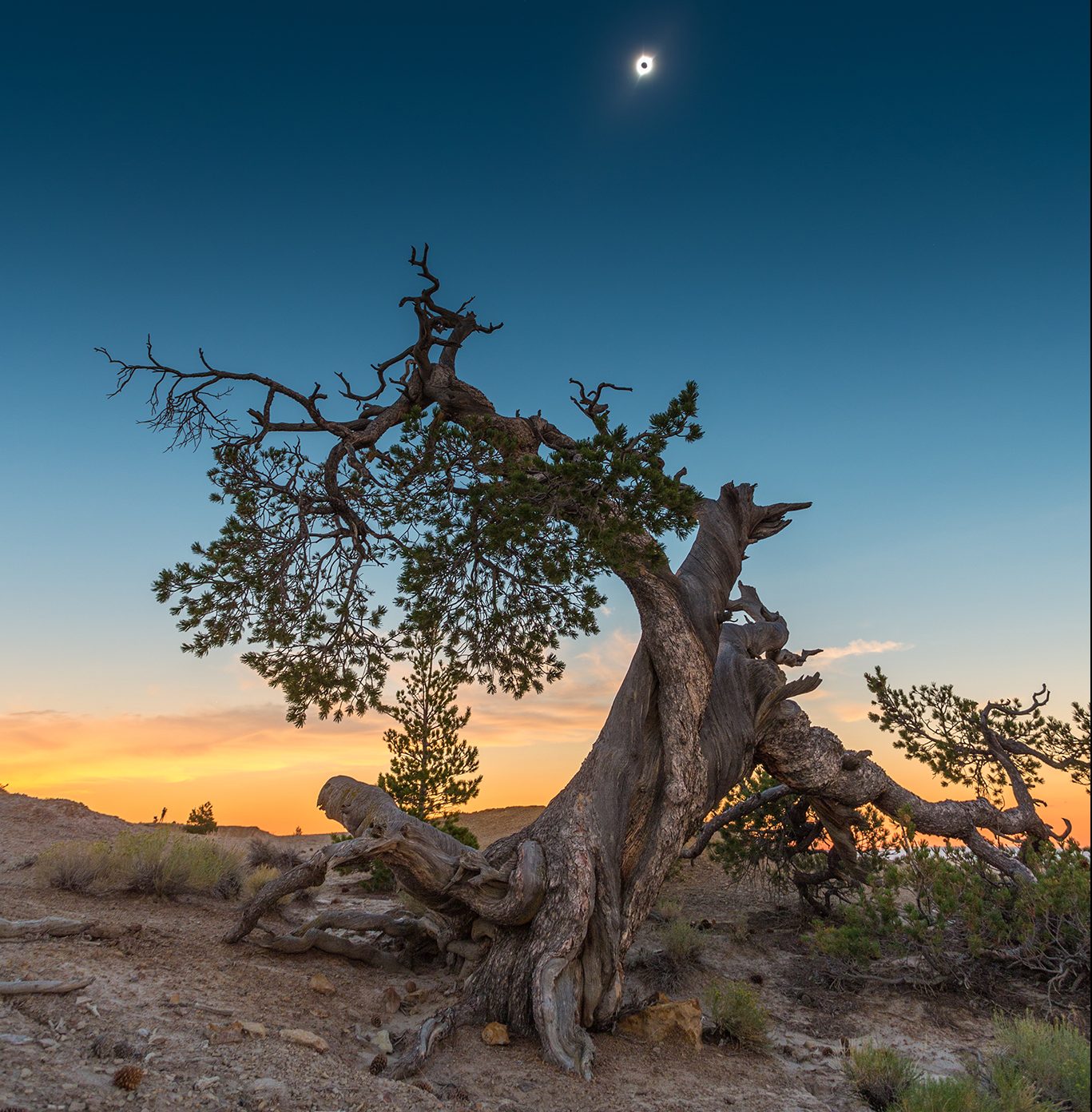
Due to the intense light from the Sun, a total eclipse is dangerous to look at. The only time when it’s safe to look directly at the eclipse is during the five or so minutes of totality when the Moon completely covers the Sun.
For the rest of the event you must protect your eyes with specially designed equipment (more on this below). Take due care and you can fully enjoy this marvel of celestial mechanics.
During a total solar eclipse, if you’re in the ‘umbra’ you’ll see the entire Sun being slowly covered by the Moon and get the full glory of totality.
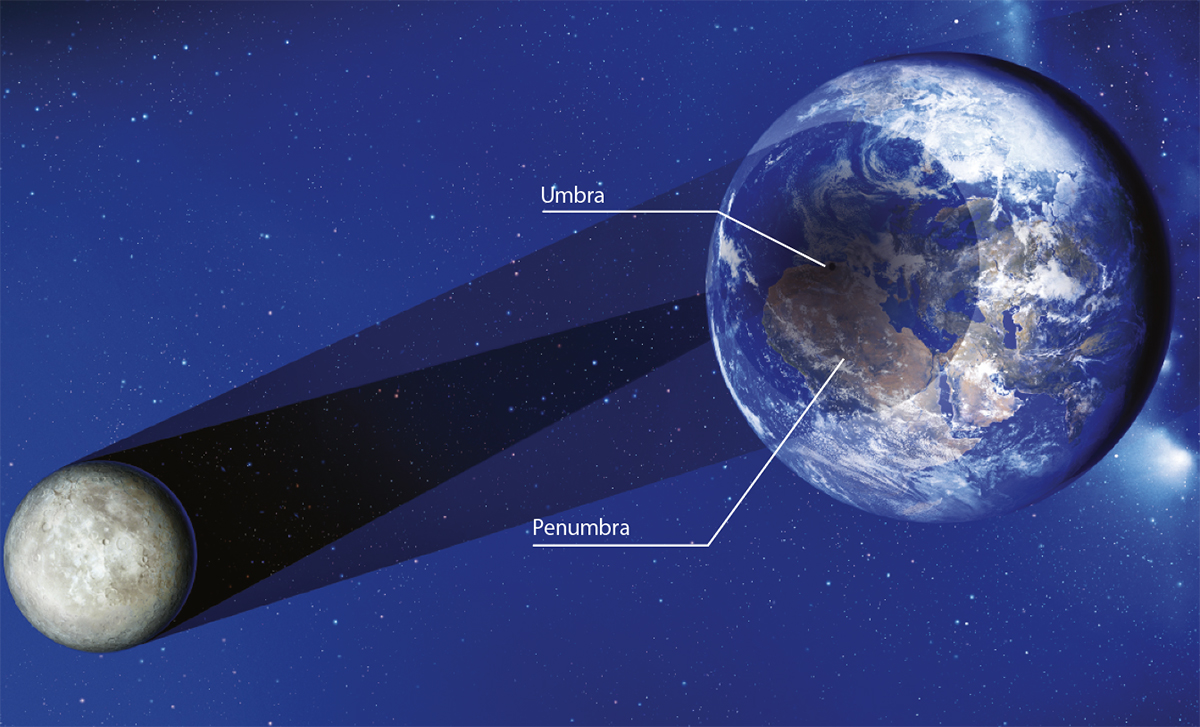
There’s also an area around the umbra called the ‘penumbra’, where the shadow isn’t quite so dark.
On the ground this forms a large circular zone where you see more and more of the Sun the further you get from the umbra until you don’t see an eclipse at all.
So whenever people in one location see a total eclipse, those in a large surrounding area will see a partial eclipse. There are a maximum of five solar eclipses in any given year.
Video: Make your own eclipse model
Three ways to safely view
Pinhole
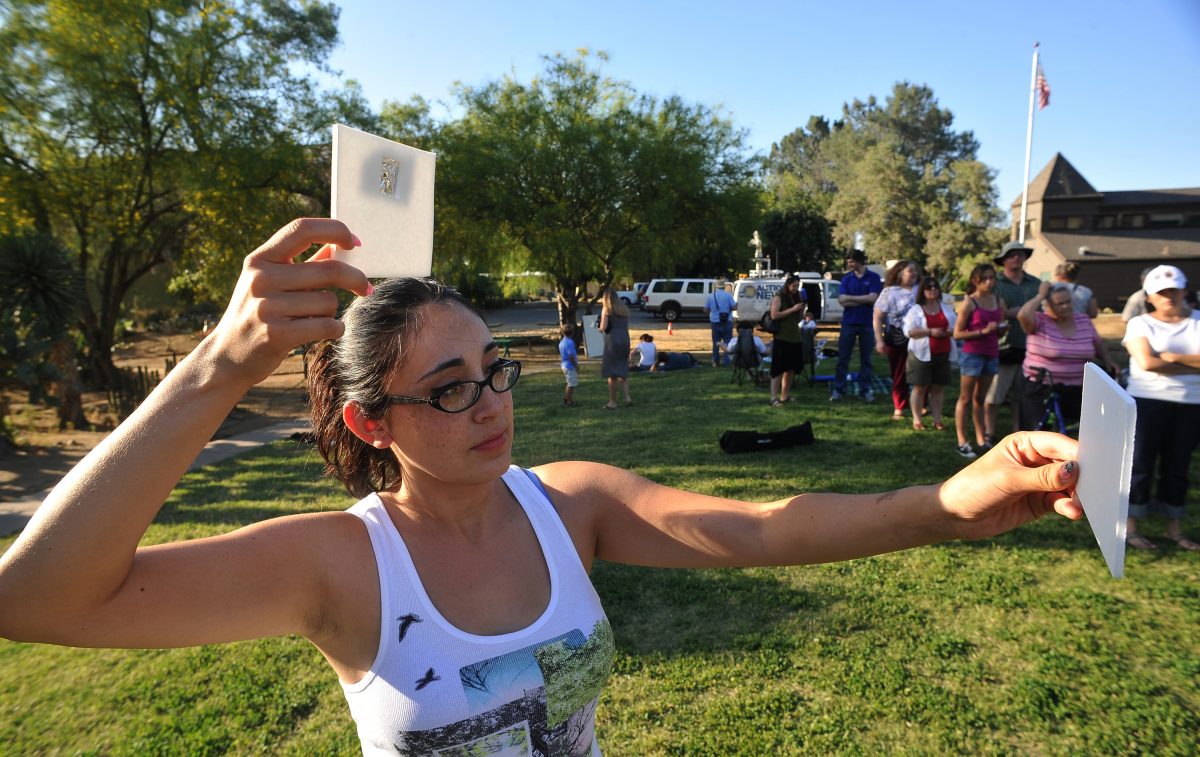
A safe way of viewing an eclipse is with two pieces of card. Make a small hole in one and hold the other so that the Sun is projected onto it. You can then watch as events unfold.
Projecting
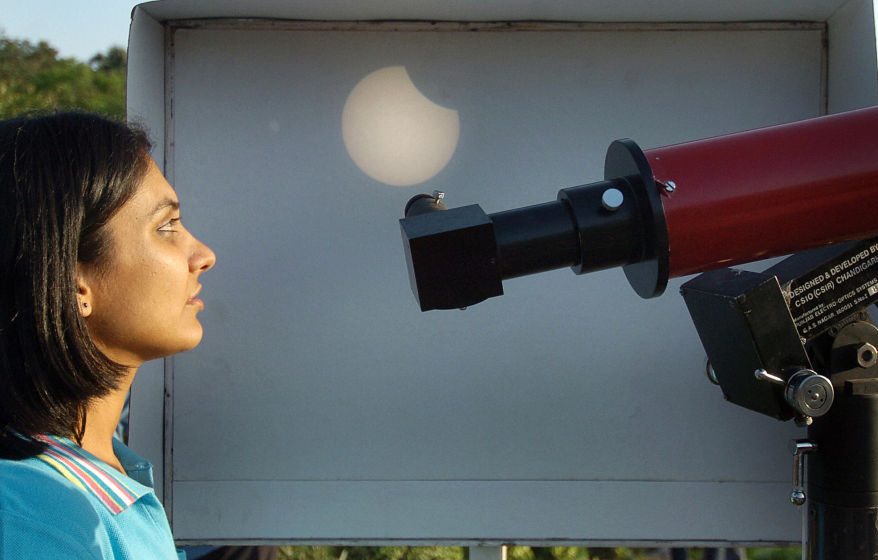
You can set up binoculars or a telescope on a tripod to capture an eclipse. Hold a piece of card away from the eyepiece so the sunlight is projected onto it, then watch the Moon cover up the Sun.
Do it yourself with our guide on how to build a solar projection screen.
Eclipse glasses
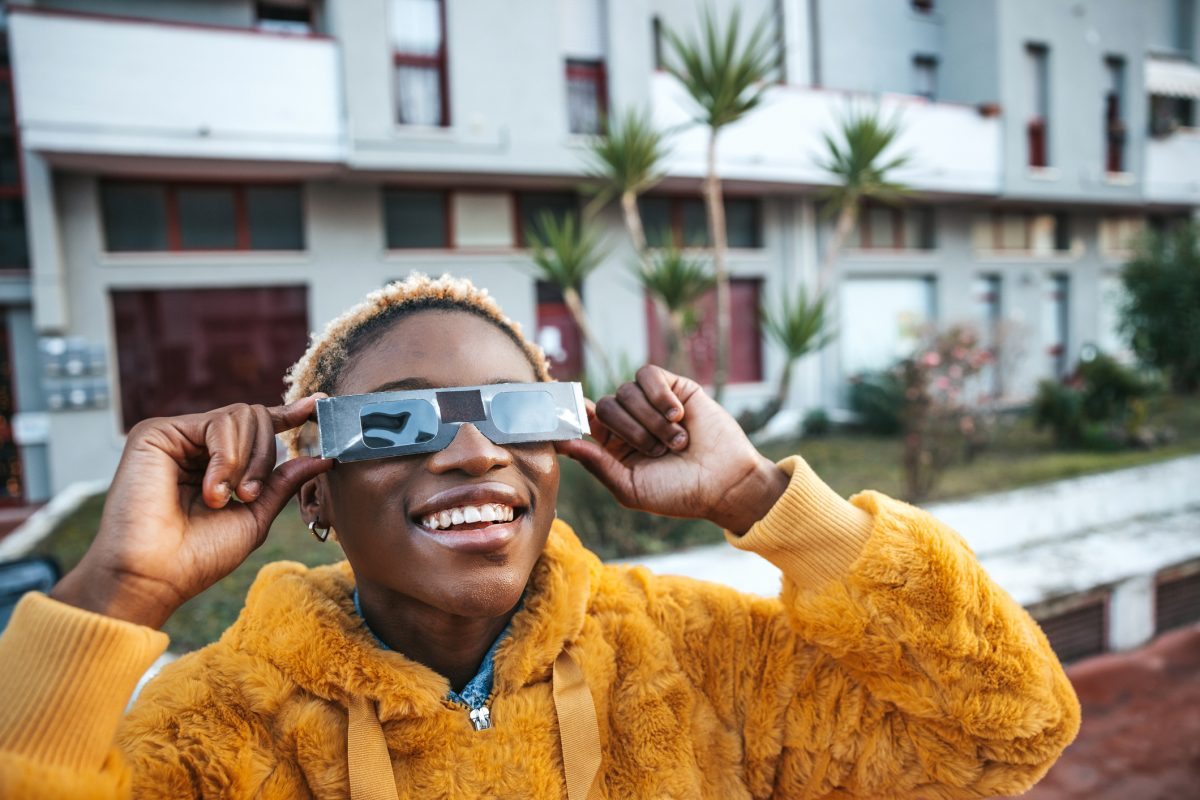
You now buy safe solar eclipse glasses that you wear just like sunglasses. They cut out all harmful ultraviolet and infrared rays and 99.9% of the Sun’s visible light.
You could also use a solar telescope to observe up-close. Find out more in our complete guide on how to safely observe a solar eclipse.
Solar eclipse – quick FAQs
These are the questions we most get asked about solar eclipses – answered in a nutshell for beginners.
What is a solar eclipse?
They occur when the Moon passes directly between the Sun and Earth, blocking all or part of the Sun’s light from reaching Earth.
This casts a shadow across specific regions of our planet, which we view as a solar eclipse.
Solar eclipses only happen during the new Moon phase, when all three celestial bodies line up.
What are the different types of solar eclipse?
There are four main types of solar eclipse:
Total solar eclipse: The Moon completely covers the Sun, briefly turning day into night along the path of totality.
Annular solar eclipse: The Moon is too far from Earth to cover the Sun fully, leaving a bright ring of sunlight called a 'ring of fire'.
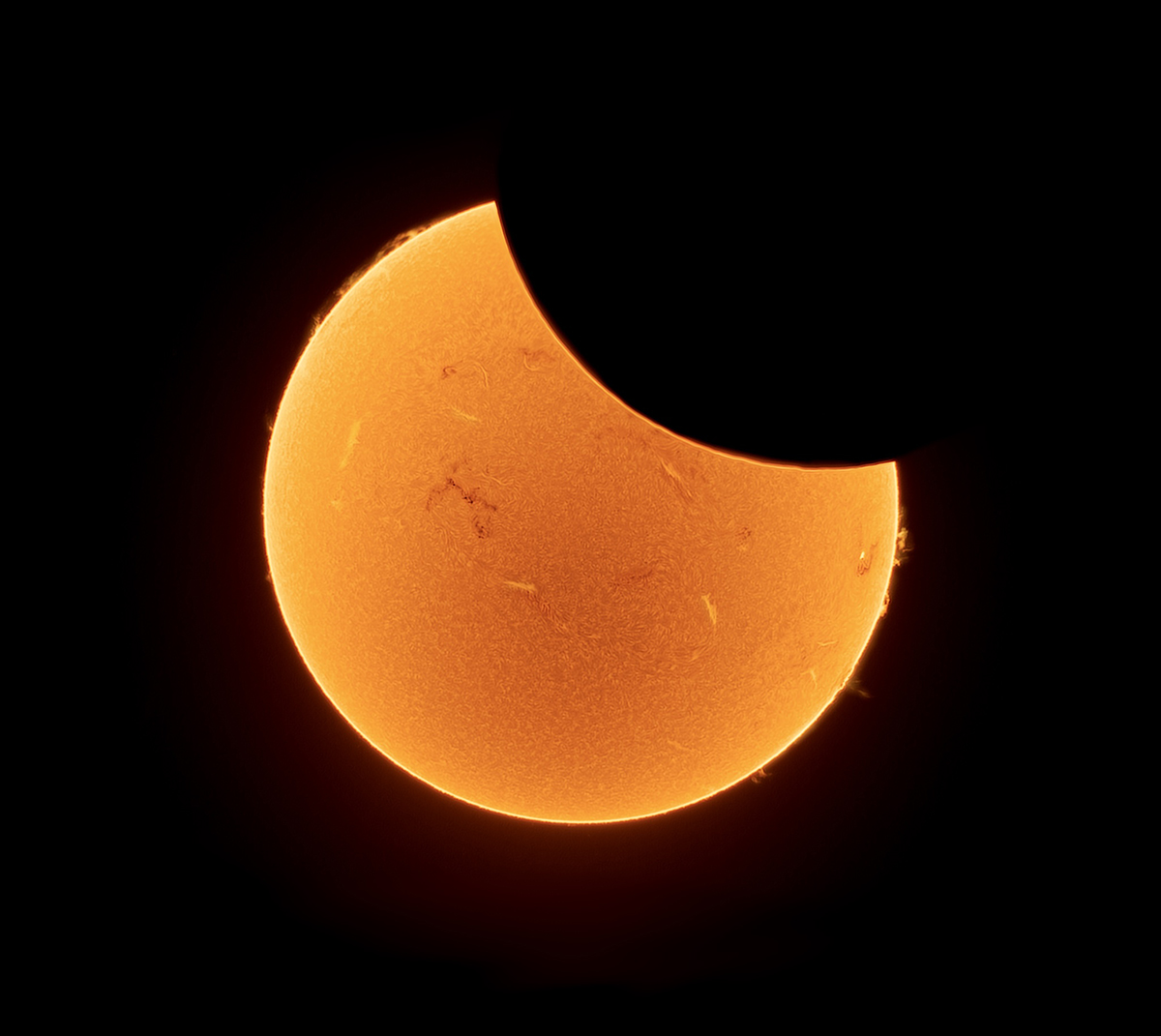
Partial solar eclipse: The Moon covers only a portion of the Sun, making it look like a bite has been taken out of the solar disk
Hybrid solar eclipse: A rare event that shifts between an annular and a total eclipse as the shadow moves across Earth.
What's the path of totality?
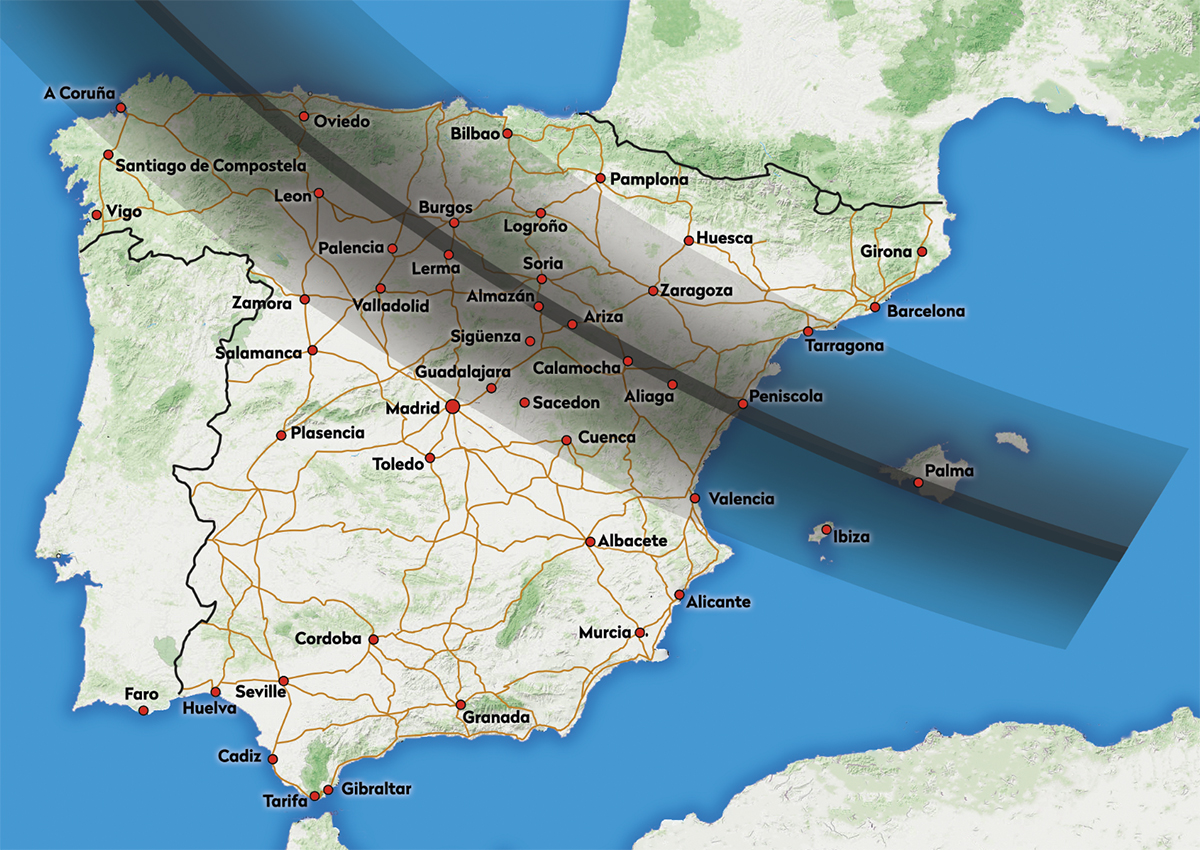
The path of totality is the narrow track on Earth’s surface where the Moon completely blocks the Sun.
Only viewers located within this specific geographic – but imaginary – line will see a total solar eclipse.
Observers located either side of this band only see a partial solar eclipse.
Why don't solar eclipses happen every month?
The Moon passes between Earth and the Sun once a month, but a solar eclipse doesn't happen every month because most of the time during new Moon, the Moon's shadow passes either above or below Earth rather than directly crossing it.
Is it safe to look at a solar eclipse?
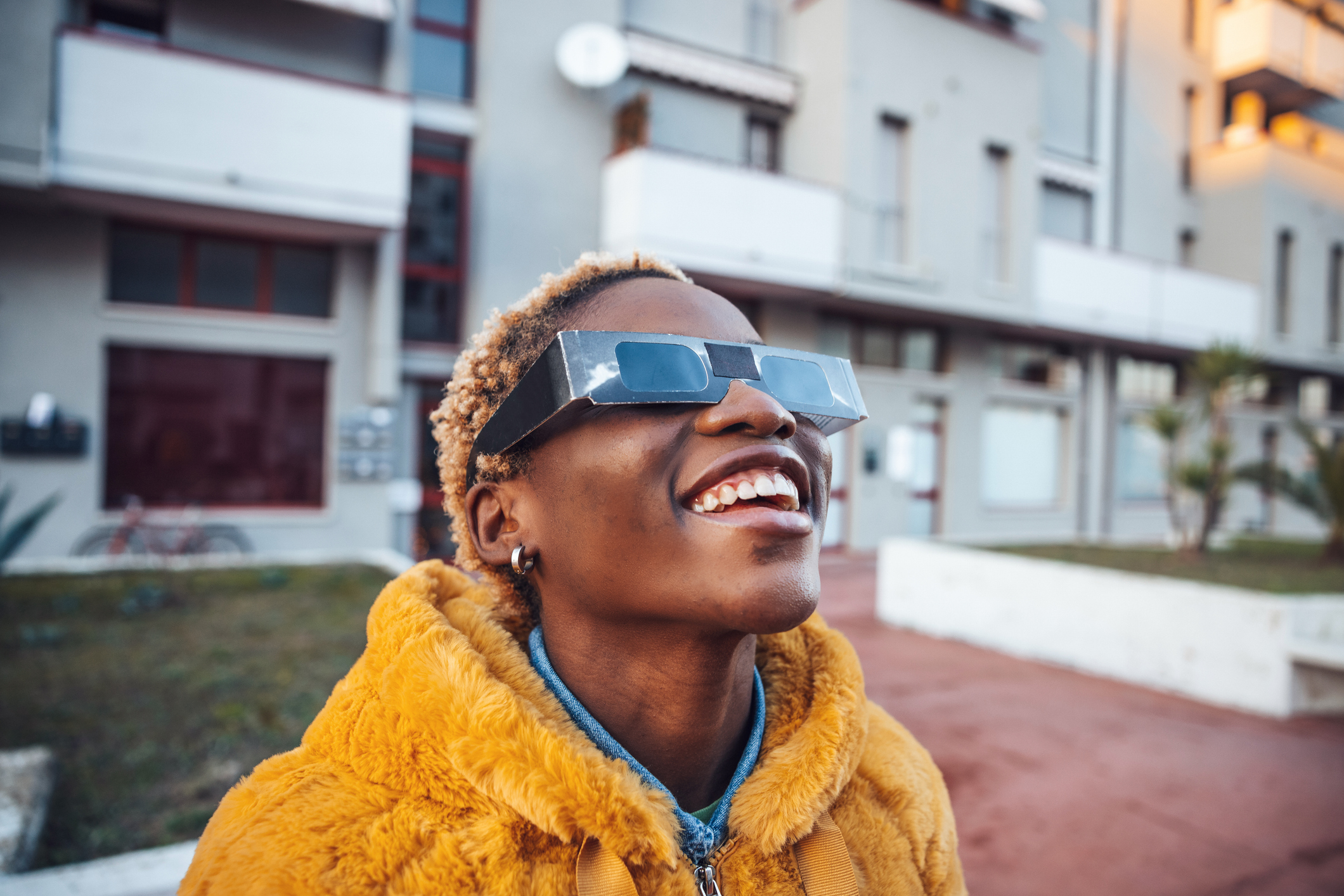
It is never safe to look directly at the Sun without certified solar-observing equipment, which is most commonly found in the form of solar eclipse glasses.
The only exception is during the brief minutes of totality when the Sun is 100% covered.
But even then, care must be taken and you must wear solar eclipse glasses either side of totality.
How long does a solar eclipse last?
The entire event – from the initial moment the Moon begins to pass across the Sun to the end – takes about 2 to 3 hours.
However, the period of maximum cover – totality –can last anywhere from a few seconds to a theoretical maximum of 7.5 minutes. Most total eclipses last around 2 to 4 minutes.
How often do solar eclipses occur?
Globally, solar eclipses happen 2 to 5 times per year. However, a total solar eclipse occurs somewhere on Earth roughly once every 18 months.
How are weather and wildlife affected?
During totality, temperatures can drop suddenly by 5°C to 11°C (10°F to 20°F), wind speeds can decrease and daylight rapidly drops to twilight levels.
The effect is not lost on animals, either. During a total solar eclipse, animals may be deceived into thinking night has fallen: there have been reports of birds stopping singing, crickets starting to chirp and nocturnal species becoming active during totality.
And a total they've been known to have a pretty profound effect on humans, too!
Have you ever seen an eclipse, or managed to capture a photograph of one? Let us know by getting in touch via contactus@skyatnightmagazine.com or on Facebook, Twitter and Instagram.

