
Ezzy Pearson
Science journalist
Science journalist Ezzy Pearson is Commissions Editor at BBC Science Focus Magazine. Her first book about the history of robotic planetary landers is out now.
Recent articles by Ezzy Pearson

There’s something wrong with our understanding of the Universe and how much it's expanded since the Big Bang
JWST confirms ‘Hubble tension’ isn’t down to observational error.

Scientists have discovered six planets in perfect balance
Planets around star HD110067 are in what’s known as an 'orbital resonance'.

Did you know Uranus has rings? The story of how scientists made a huge discovery by accident – and triggered an emergency response in the process
Jessica Mink reveals how she and her team discovered rings around the planet Uranus.

Being in space changes how you think. Scientists find astronauts' decision-making is altered by zero gravity
A study has found that the decision making prowess of astronauts might be affected by being in zero gravity.

Buyer's guide | Star projectors and home planetariums
Star projectors turn any room into your own personal planetarium, making the walls into a glittering sea of stars.

Astronomers caught a rare burst of light from deep space. But it's only deepened a huge cosmic mystery
Luminous Fast Blue Optical Transients are blue in colour and evolve rapidly, reaching peak brightness and fading in a matter of days.

"Exciting and bizarre". Uranus's moon may have once had an ocean beneath its surface
Uranus's moon Miranda had a liquid water ocean. The finding challenges Voyager 2’s data that suggested the Uranus moon was inert.

Nearby planet reeks of rotten eggs and rains glass, but could tell astronomers a great deal about life beyond Earth
Exoplanet's smell is from hydrogen sulphide, a vital ingredient for building the molecules of life.

This is Gaia BH1, the closest known black hole to Earth
Dormant black hole Gaia BH1 lies only 1,600 lightyears away, making it the closest known black hole to Earth.

Scientists have detected strange radio signals beaming out from the heart of our Galaxy
What are the weird radio waves detected in deep space, and how can astronomers hope to solve this Milky Way mystery?

Mars was once wet with a thick atmosphere. 3 billion years ago, both disappeared. Now scientists may have finally found Mars’s missing atmosphere and water
Mars’s missing atmosphere and water may have finally been found
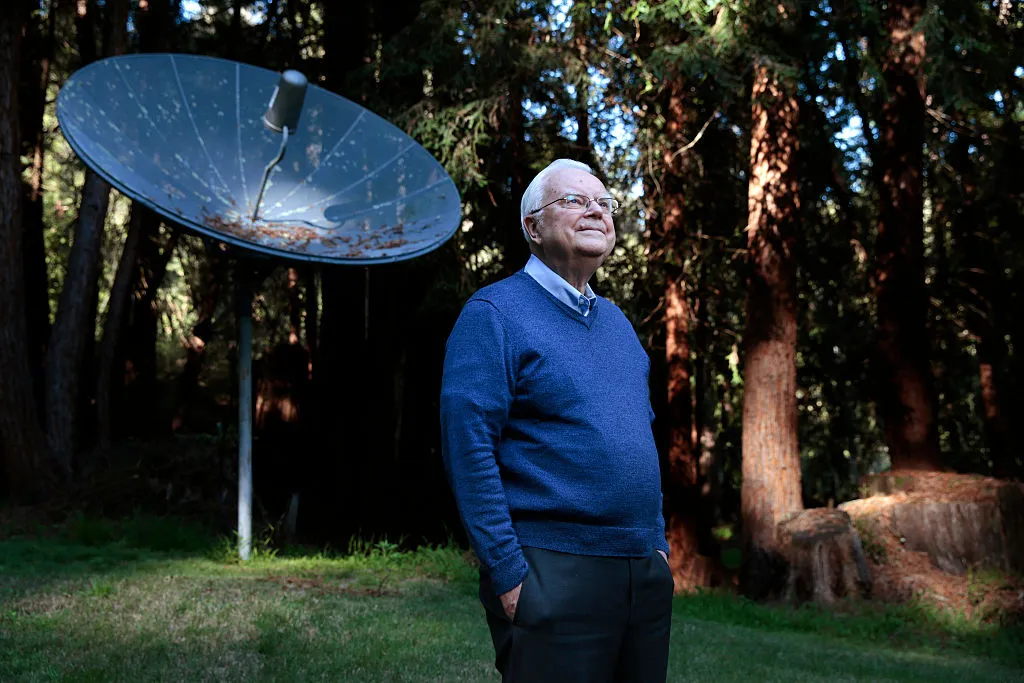
Frank Drake – the scientist who took the hunt for aliens from the fringes and began a real-life search among the stars
Drake’s work transformed the hunt for alien civilisations from a fringe interest into a legitimate field of scientific inquiry

Things commonly mistaken for UFOs
Think you've seen a UFO in the sky? Consider the following possibilities...

How the Huygens probe landed on Saturn's largest moon Titan and captured video and images of its surface
in 2005, ESA’s probe gave us our first close look at Titan

Spectacular Earth from space. UK astronaut Tim Peake spent six months on the ISS and captured these amazing images
Some of the best images of Earth captured by UK astronaut Tim Peake during his time on the International Space Station.

From a stellar diamond to a squashed mammoth and one as old as the Universe, 8 of the weirdest stars ever seen
Among the trillion trillion stars in the Universe, there are some real oddballs. Here are some of the weirdest stars astronomers have uncovered in the depths of space.

Prehistoric alien dinosaur planets would be easier to find than modern-day Earth, say scientists
Life is more detectable on worlds with big lifeforms, a study has found.
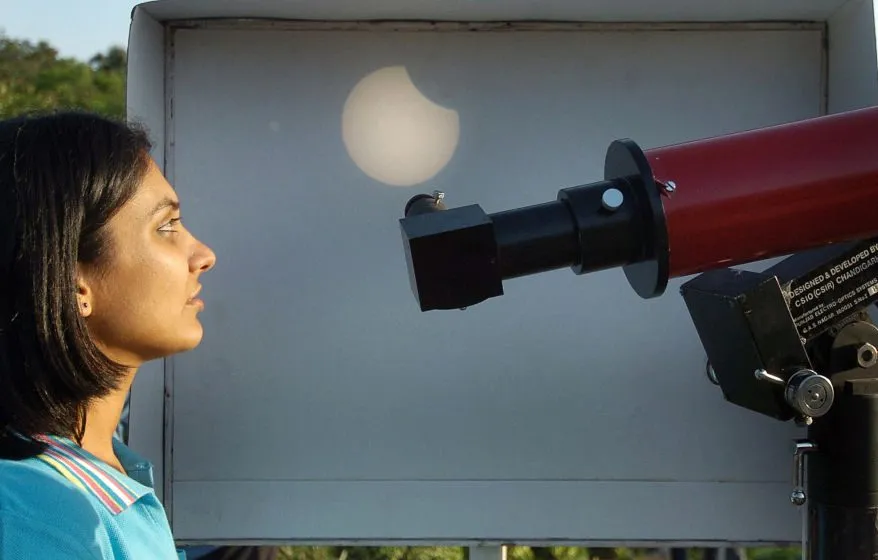
The best, safest ways to view a solar eclipse, from low-cost, simple options to expert astronomer techniques
What are the best and safest ways to view an eclipse?

Best red light head torches
Maintain your dark adaptation and keep your hands free while stargazing with the best red light head torches for astronomers.

Astronauts get a weird feeling looking at Earth from space. It's the Overview Effect, and here's how it works
Looking back at Earth from the Moon had a profound effect on the Apollo astronauts

How old the Universe is, and how we know
How do astronomers estimate how old the Universe is, and could they be wrong?

CHARA observations of Polaris, the North Star
Astronomers have taken a close-up look at the star's surface

Meet NASA's Space Launch System, the rocket taking the Artemis astronauts to the Moon
NASA’s newest rocket, the Saturn V-sized Space Launch System, will take human exploration beyond low-Earth orbit once more.

The chances of alien life just got slimmer, according to new study looking at the dark Universe
Study looks at how likely it is for stars and planets to form in a universe with a certain amount of dark energy
