Astronomers say they may have found a new dwarf planet in the outer reaches of our Solar System, beyond the orbit of Pluto.
Named 2026 ED138, the potential dwarf planet is large and bright say astronomers and, if confirmed, would be one of the largest dwarf planets ever seen in that part of the Solar System.
It was discovered by the Vera C. Rubin Observatory, which boasts the biggest digital camera in the world and has just begun its ground-breaking survey of the sky.
Read more

How 2026 ED138 was found
2026 ED138 is a trans-Neptunian object, meaning it orbits the Sun far beyond Neptune, the most distant planet from the Sun in our Solar System.
It was found in observations carried out during preparations for the Vera C. Rubin Observatory's Legacy Survey of Space and Time, which is a 10-year survey of the southern sky.
The discovery was made by Rubin Operations team member Matthew Holman of the Center for Astrophysics | Harvard & Smithsonian.
On 13 October 2026, Holman was analysing data collected by Rubin earlier in the year.

He was using a search code that looks at billions of detections of moving objects in space, compares them and then locates the detections that correspond to the same object.
Holman discovered ED138 and noted its brightness and distance revealed it's unusually large.
"Rubin Observatory's super power is the ability to clearly capture movement and change among a vast number of objects and phenomena that humans have never seen before," says Edward Ajhar, NSF Program Director for Rubin Observatory.
"That power greatly extends our ability to reveal and understand new things about our Solar System, the Milky Way, and billions of other galaxies across the Universe."
"My first reaction was one of excited disbelief," says Holman. "Objects like this are very rare, so I immediately started checking whether I or the code had done something wrong."
What we know so far
ED138 could be among the largest and brightest bodies scientists have ever found in the outer regions of the Solar System.
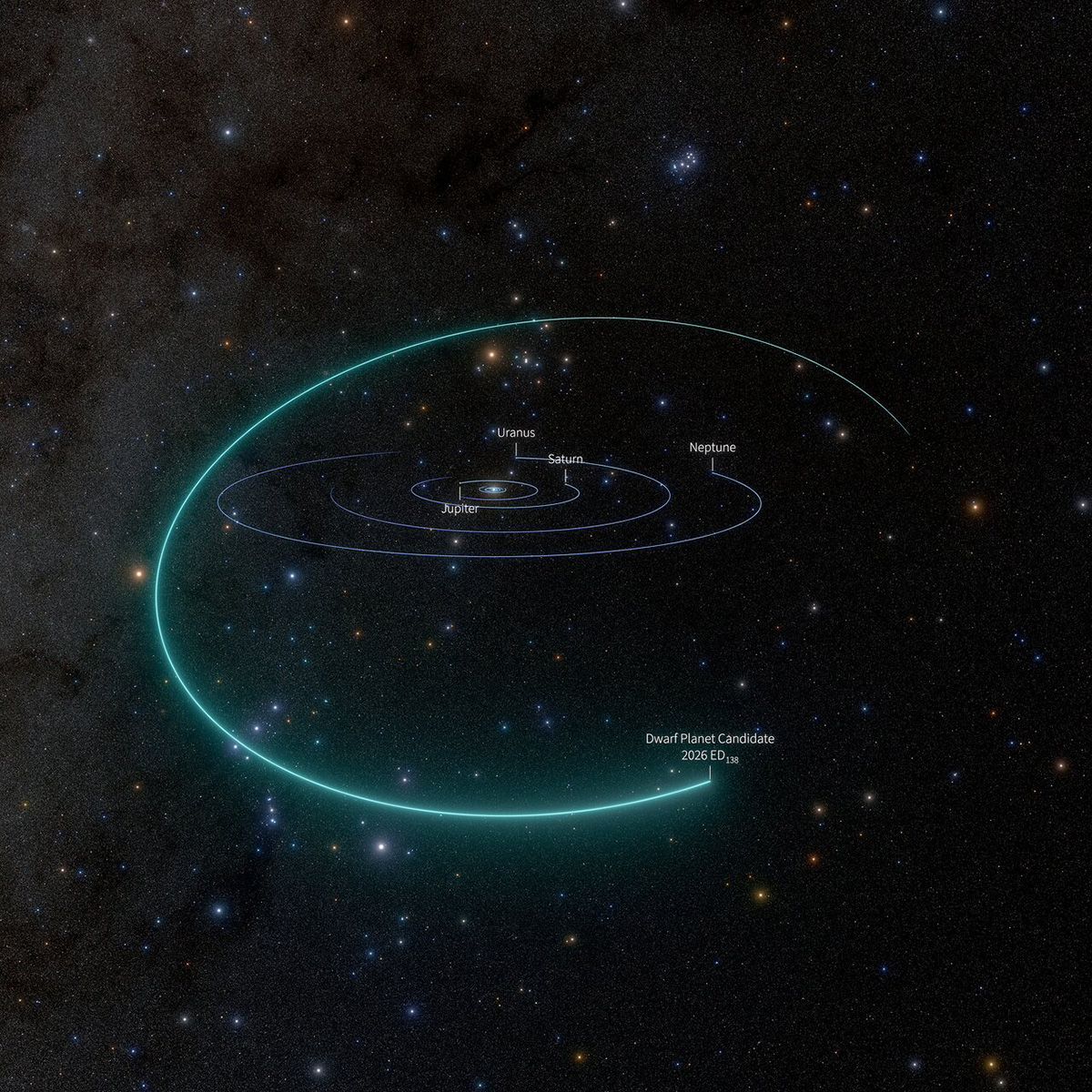
It's currently about 46 astronomical units (AU) from the Sun, where 1 AU is the average distance between Earth and the Sun.
Pluto, for comparison, orbits the Sun at an average distance of 40 AU.
ED138’s orbit is tilted nearly 25 degrees away from the plane of the Solar System which, say astronomers, makes it a 'hot-classical trans-Neptunian object'.
Its tilted orbit also suggests it was disturbed from its original orbit through gravitational interactions with Neptune.
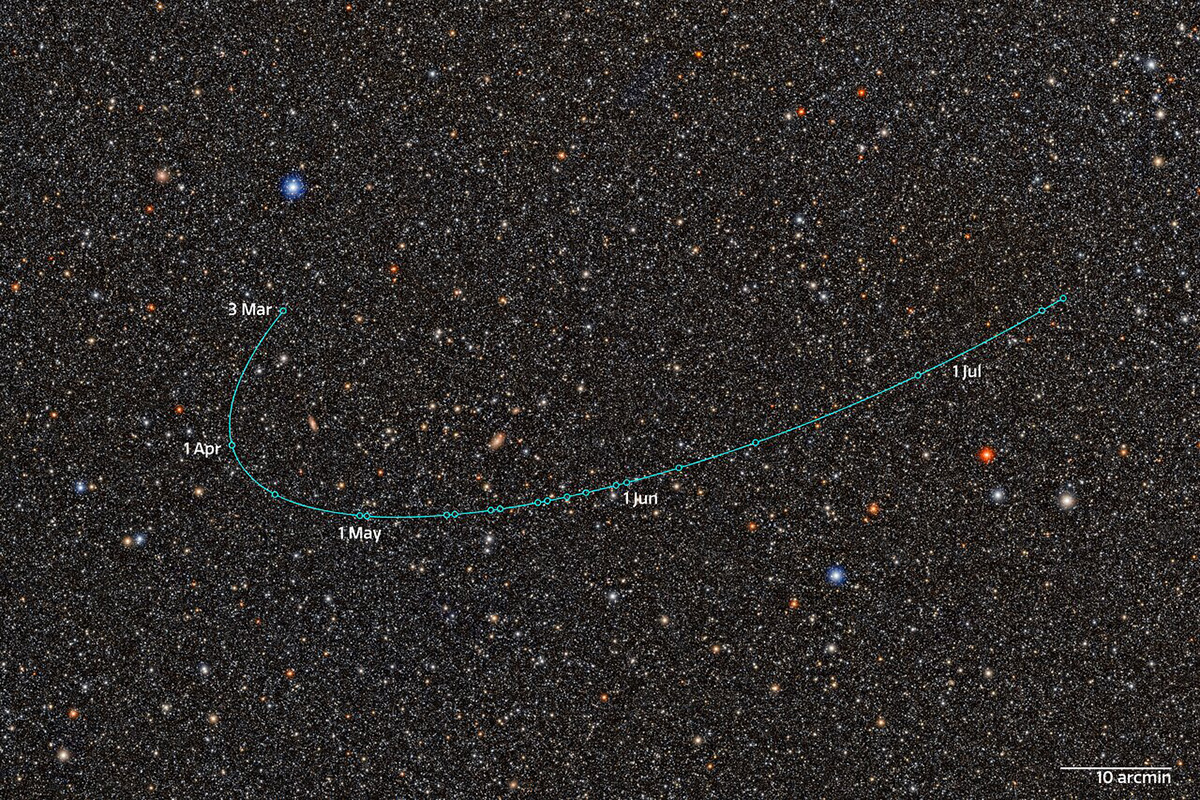
By analysing ED138’s distance from the Sun, its brightness and how reflective its surface is, astronomers calculate it's between 600–1,500 km (370–930 miles) wide.
ED138 was found in a region of sky near the plane of our Milky Way galaxy.
This is a crowded region filled with millions of stars, which is probably why the dwarf planet candidate has evaded detection by most telescopes until now.
However, the Rubin Observatory has been regularly and continuously monitoring the entire Southern Hemisphere sky since coming online.
That, combined with algorithms that sift through millions to billions of points of light in the sky, enabled the team to spot ED138.
A brand new dwarf planet?
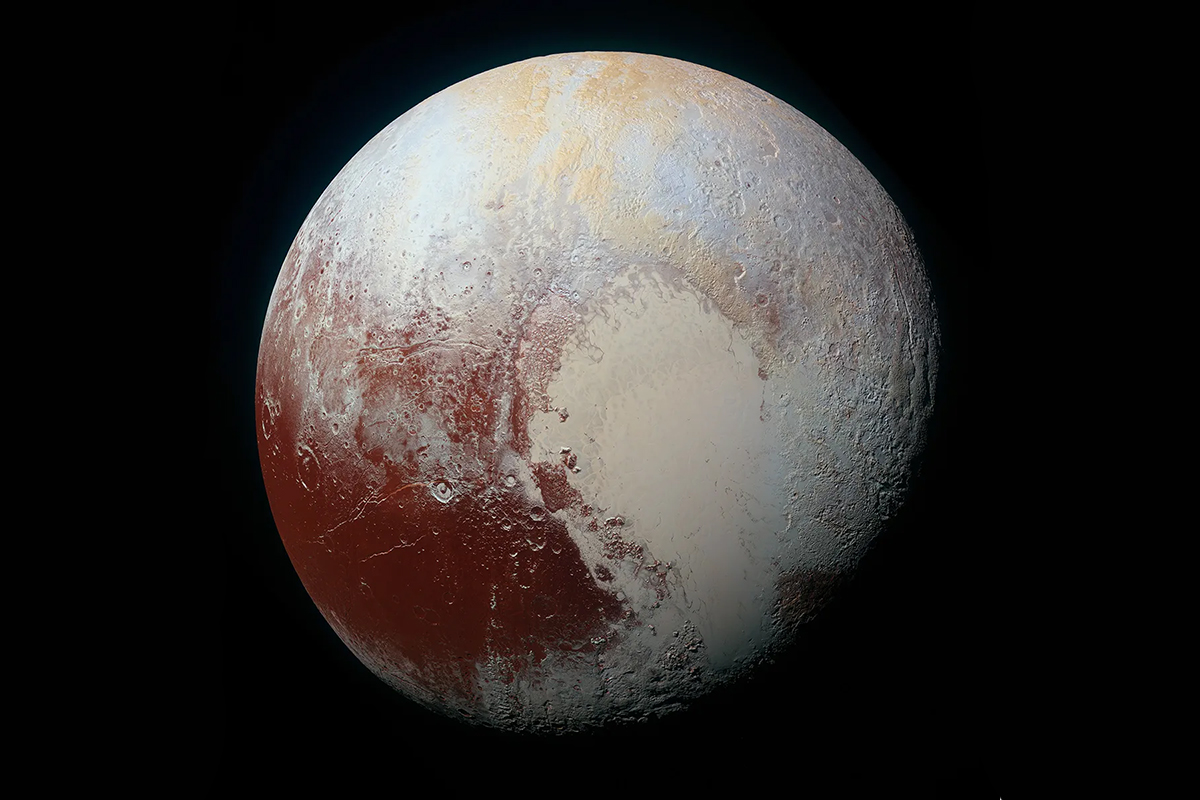
The most famous dwarf planet in our Solar System is probably Pluto, which was reclassified from planet to dwarf planet by the International Astronomical Union in 2006.
Pluto's reclassification came about because, as astronomers began to learn more and more about the outer reaches of the Solar System, they discovered that Pluto is just one of many similar bodies in that distant region, far from the Sun.
The 'planet' was reclassified as a dwarf planet along with other bodies including Haumea, Makemake and Eris, which are in the outer reaches of the Solar System, but also Ceres and Vesta, which are among the largest bodies in the asteroid belt between Mars and Jupiter, much closer to the Sun.
Not all trans-Neptunian objects are dwarf planets, however; a dwarf planet must be massive enough for its own gravity to pull it into a round shape, in order to be classified as such.
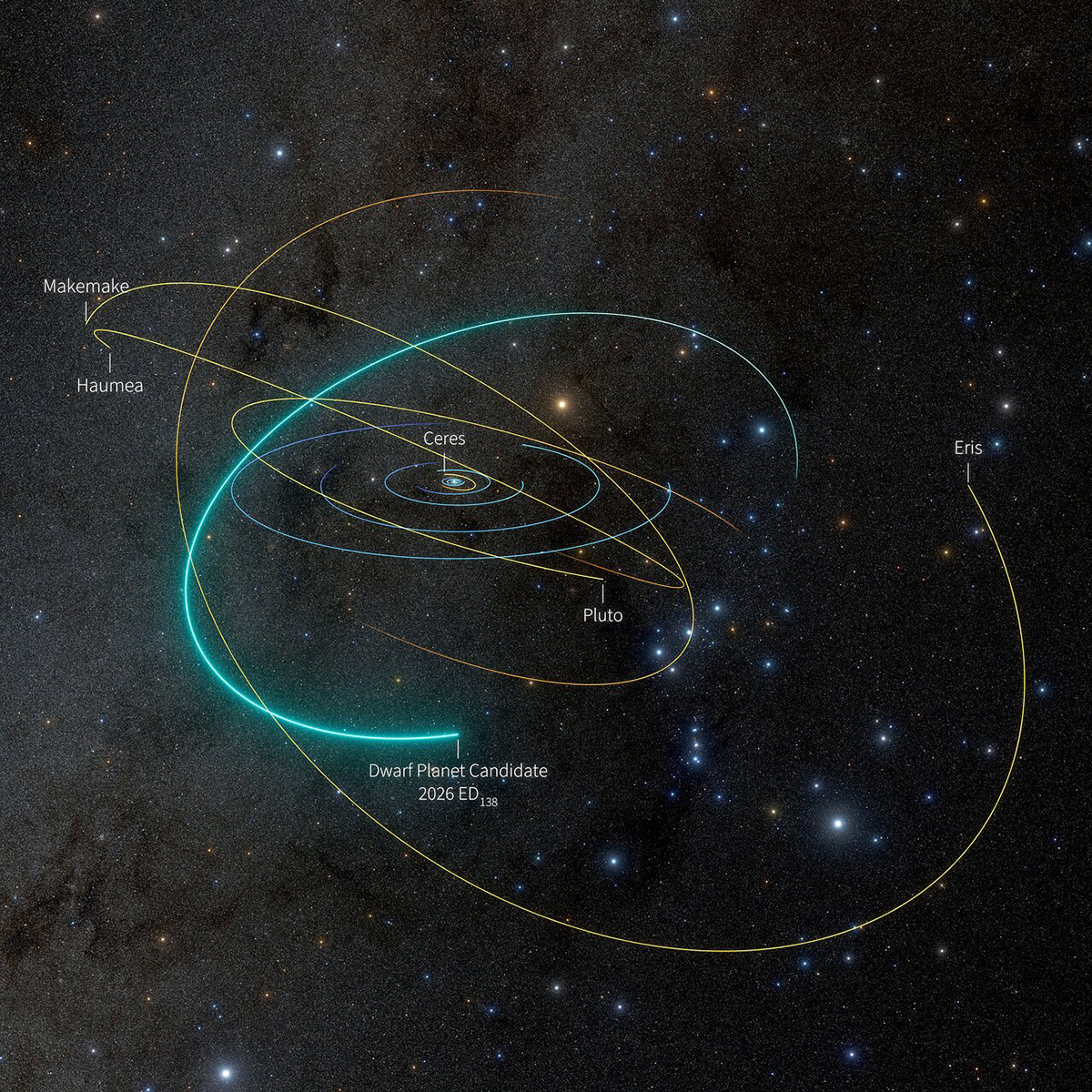
Preliminary analysis shows ED138 is among the largest dwarf planets ever discovered beyond Neptune – provided its status is indeed confirmed.
Astronomers say infrared observations will be needed to confirm its size and whether it is a dwarf planet.
"If confirmed as a dwarf planet, ED138 would join a very small family of worlds," says Holman.
"Rubin will image the whole southern sky again and again for ten years, so any others hiding in the places earlier surveys skipped are now within reach."