
How can frozen fruit help us build human habitats on Mars?
Maybe not directly, but frozen fruit has sparked a 'eureka' moment in a civil engineer and researcher faced with the problem of how to 3D-print houses that would enable human beings to one day live on the Red Planet.
The ultimate building material, say the scientists behind the study, is a concoction of gelatine and yeast that could end up being as strong as concrete and suitable for constructing human shelters on Mars.
More on Mars
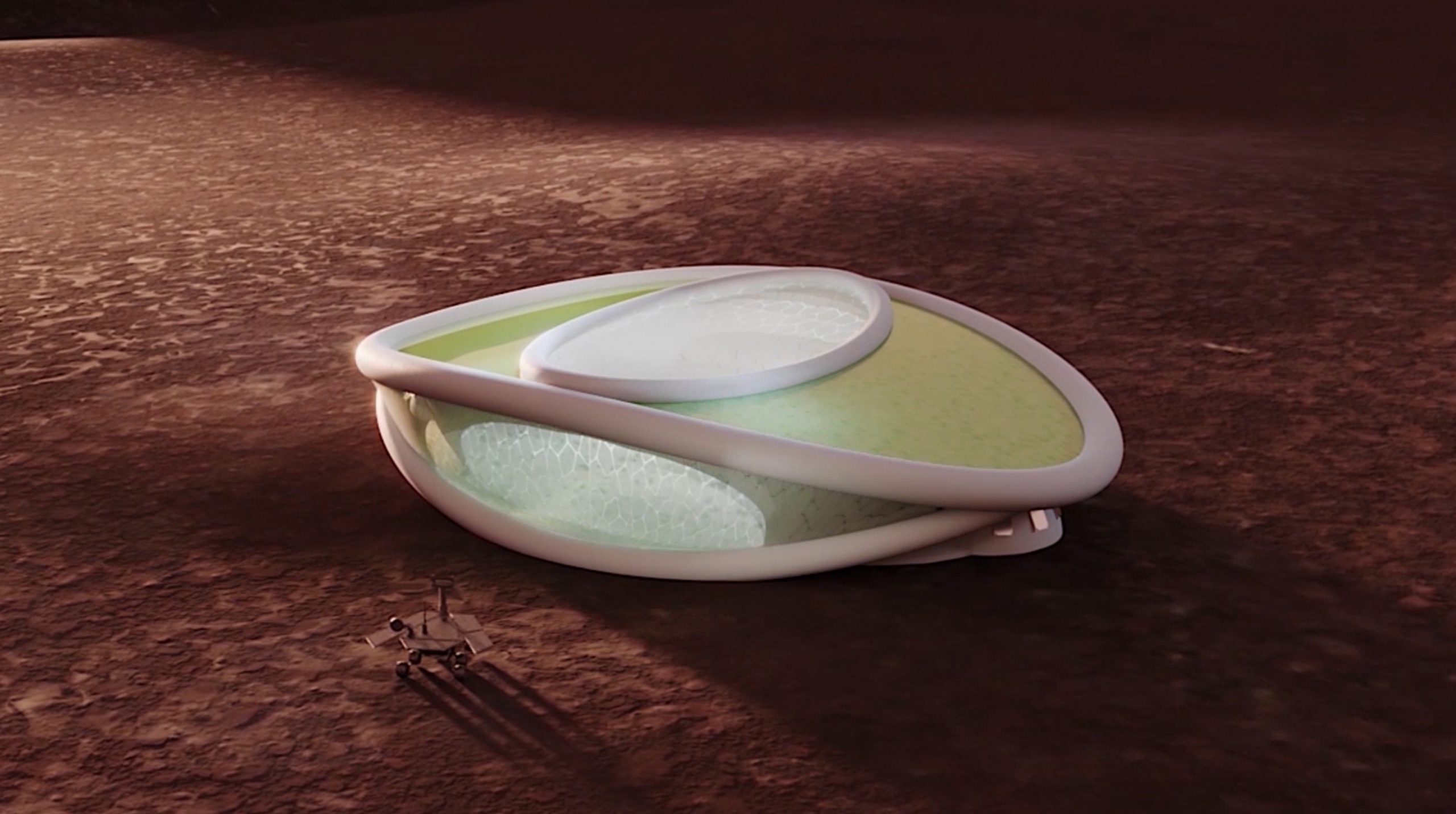
Building on the Red Planet
When it comes to building human habitats, Mars is one of the worst places you could think of.
It's freezing cold, the surface is blasted by cosmic radiation and the surroundings are basically a vacuum.
One of the biggest problems is how to get building materials from Earth to Mars, which would be both difficult and tremendously costly.
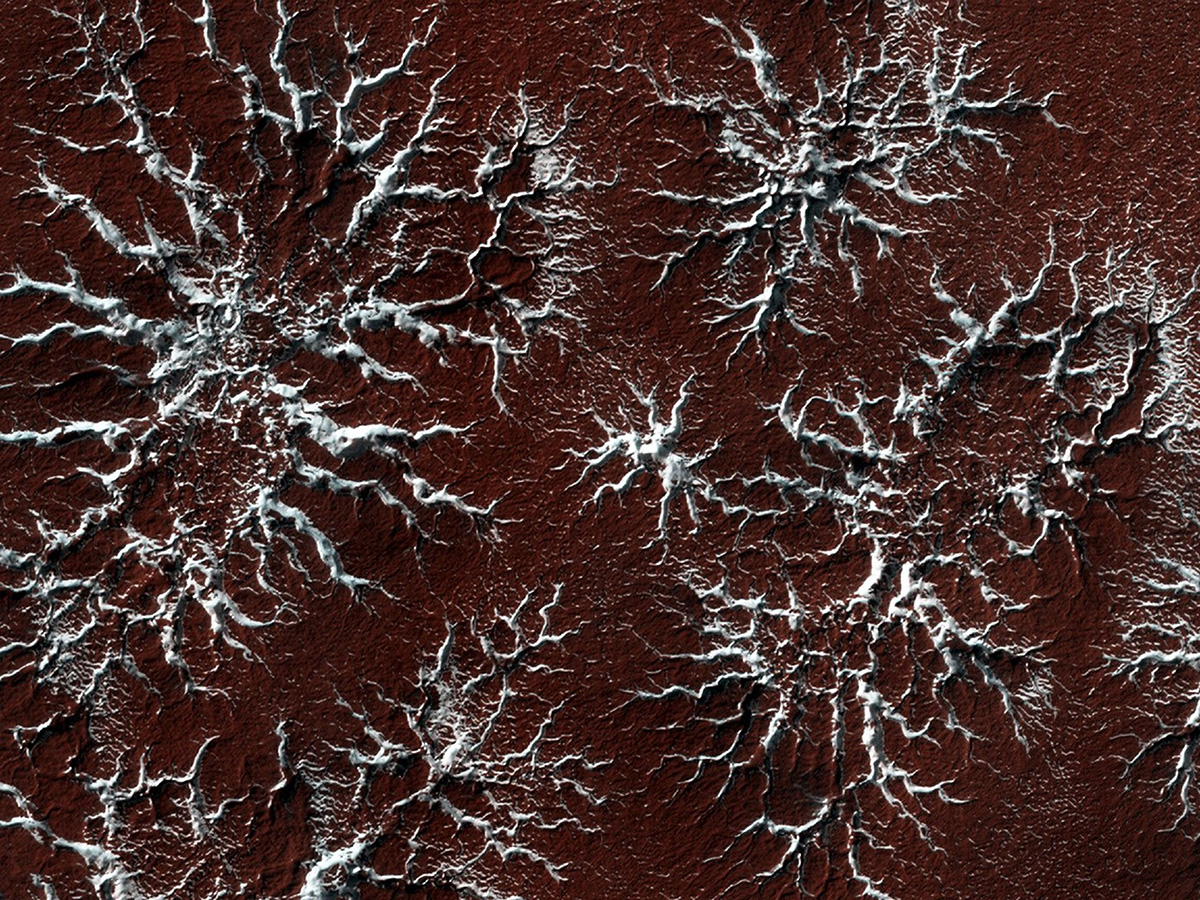
A frozen-smoothie breakthrough
"My inspiration came from freeze-dried fruits that become harder," says civil engineer Jishen Qiu of The Hong Kong University of Science and Technology and senior author of the study.
Mars’s low temperature and pressure create conditions similar to freeze-drying.
"I asked myself if we can take advantage of that and make some materials."
The team came up with a recipe that, they say, could one day be used the 3D-print houses on Mars.
Gelatine and yeast, once mixed with Martian rocks then dried and hardened, produced a building material as strong as low-grade concrete.
What's more, the team say the 'living' building material could be broken down, recycled and brewed again for new construction.
Coming up with the Martian mixture
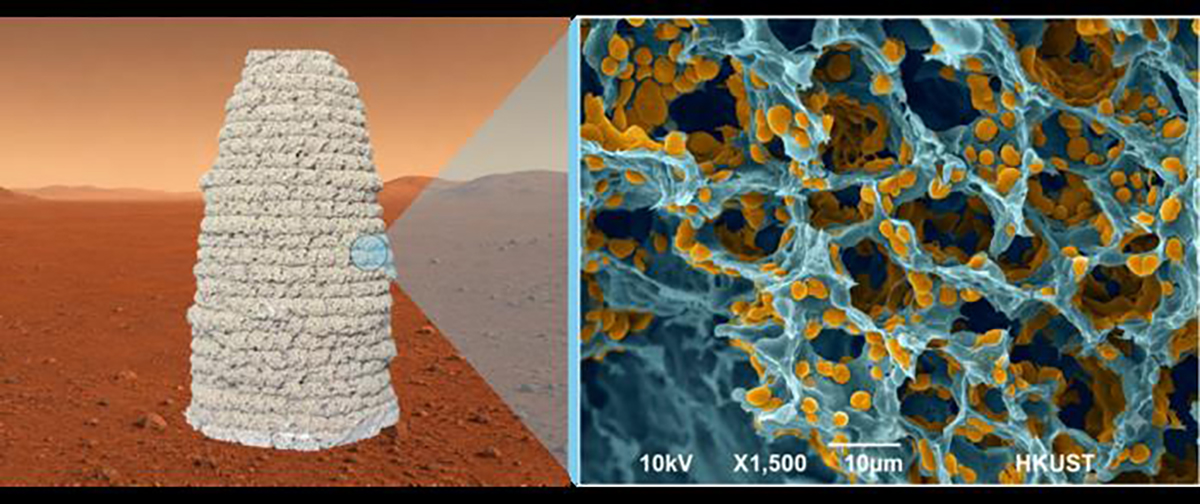
To make the building material, the team needed a mixture of sand and glue, the latter made from gelatine and a specialised yeast.
They engineered yeast coated with sticky proteins, including the same that mussels use to cling to rocks.
The gelatine clumps the other ingredients together and provides room for the yeast to grow. The sand provides mass and structure.
But will it work on Mars? The team tested the material in conditions simulating those on Mars.
They say that, once the mixture is applied, the extreme cold and low pressure freeze-dry it. The result resembles a light, porous foam.
At the moment, the structures being produced by the team are domes about the size of wine corks, but they say the material has a strength similar to low-grade concrete.
"So this is actually strong enough to build a one- or two-story building on Earth whose gravity is three times that of Mars," says Qiu.
"So, you can probably easily build a multistory building on Mars with the material."

Sustainable construction on the Red Planet?
The team say this biology-based material saves energy compared to other proposed building solutions like melting Martian rocks into bricks and beams.
What's more, the scientists say Martian settlers could recover the yeast from dismantled structures and regrow it in bioreactors.
"As long as there's one yeast that’s still alive, you can grow them again," Qiu says.
However, the material has only been tested on Earth. It's not yet known whether the yeasts would survive actual Martian conditions.
And despite the relative sustainability of the building methods, the material still relies on Earth ingredients that would need to be transported from Mars.
"I always ask myself: Is there any physical law or fundamental mechanism that prevents us from doing this?" says Qiu.
"I can’t see any at this point in time. We are confident in scaling it up.
"It would surprise me if materials for future Martian engineering will not be as diverse as those used in Earth engineering – and biology will certainly contribute."
What do you think about this idea for building houses on Mars? Let us know by emailing contactus@skyatnightmagazine.com

