
Interstellar comet 3I/ATLAS is one of the biggest stories in space science in recent years.
From the moment of its discovery in July 2025 to its close approach to the Sun and its onward passage to the edge of the Solar System, it has captivated both space fans and non-space fans alike.
This interstellar object originated in a distant corner of the Galaxy and zipped through our Solar System on its journey through space.
And while it was in our neck of the woods, humanity threw all its best observing power at the comet to find out as much about it as we could, while we had the chance.
More on 3I/ATLAS

Some of our most powerful observatories – like the Hubble and James Webb space telescopes – caught a glimpse of 3I/ATLAS.
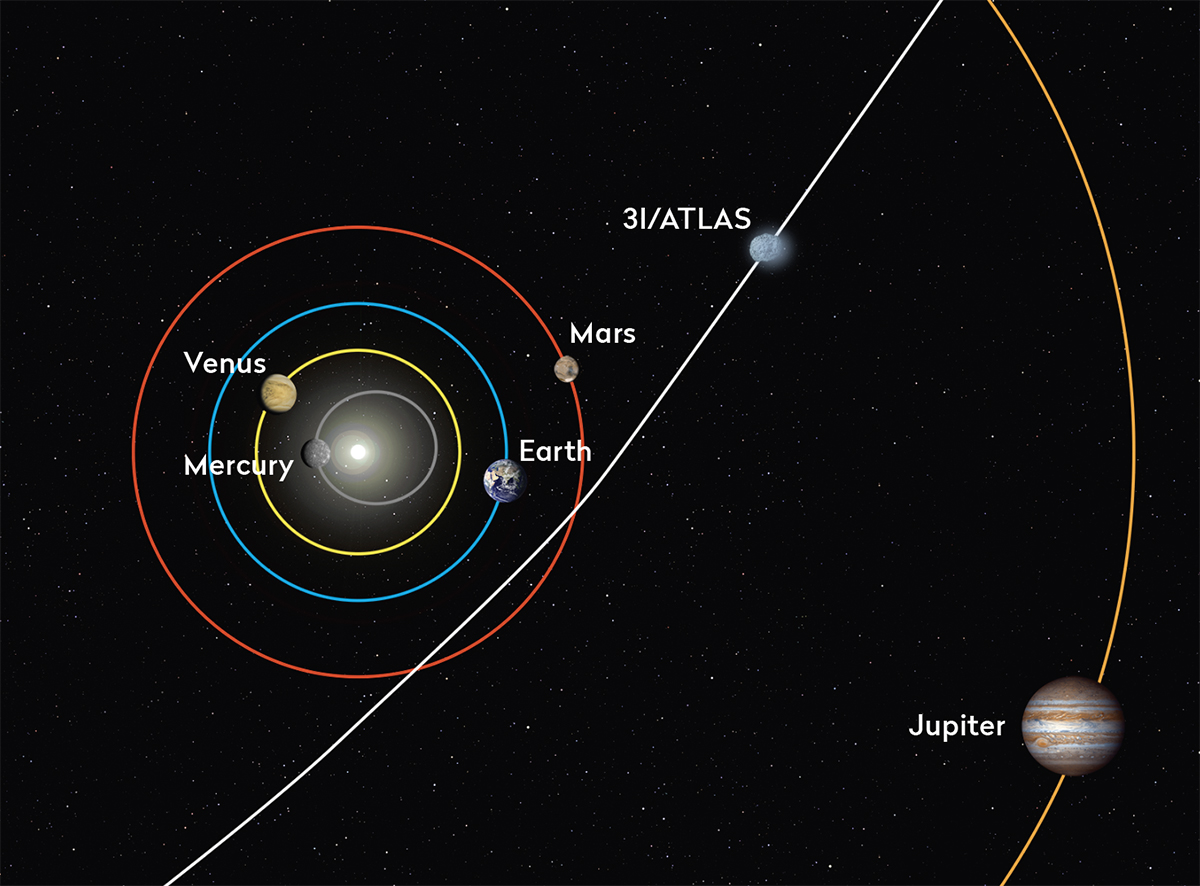
We were even able to point robotic spacecraft at Mars and Jupiter at the interstellar visitor, giving scientists a unique view of the strange body while it was too close to the Sun to observe from Earth.
Cyrielle Opitom is an astronomer at the University of Edinburgh in the UK who co-led a study of comet 3I/ATLAS using the Very Large Telescope, one of the world's finest observatories located under the dark skies of Chile's Atacama Desert.
We got the chance to talk to Cyrielle about 3I/ATLAS, what made it so special, how we know it's older than the Sun and how we could be about to see an explosion in interstellar discoveries.

How do astronomers discover interstellar comets?
Most of the time, the discovery of Solar System comets and interstellar comets comes from surveys.
These are observatories that look at the whole sky, or as much of the sky as they can, on a regular basis and detect objects moving or changing. That's how we tend to discover interstellar objects.
3I/ATLAS in particular was discovered by the ATLAS survey, which in summer 2025 alerted astronomers that there was an unknown object moving across the sky.
After a few follow-up observations we realised it was actually a moving object, but not one that had come from within our own Solar System.
We worked that out by looking at the orbit of the object and calculating it must have originated beyond our Solar System.
That's how 3I/ATLAS became the third interstellar object ever discovered.
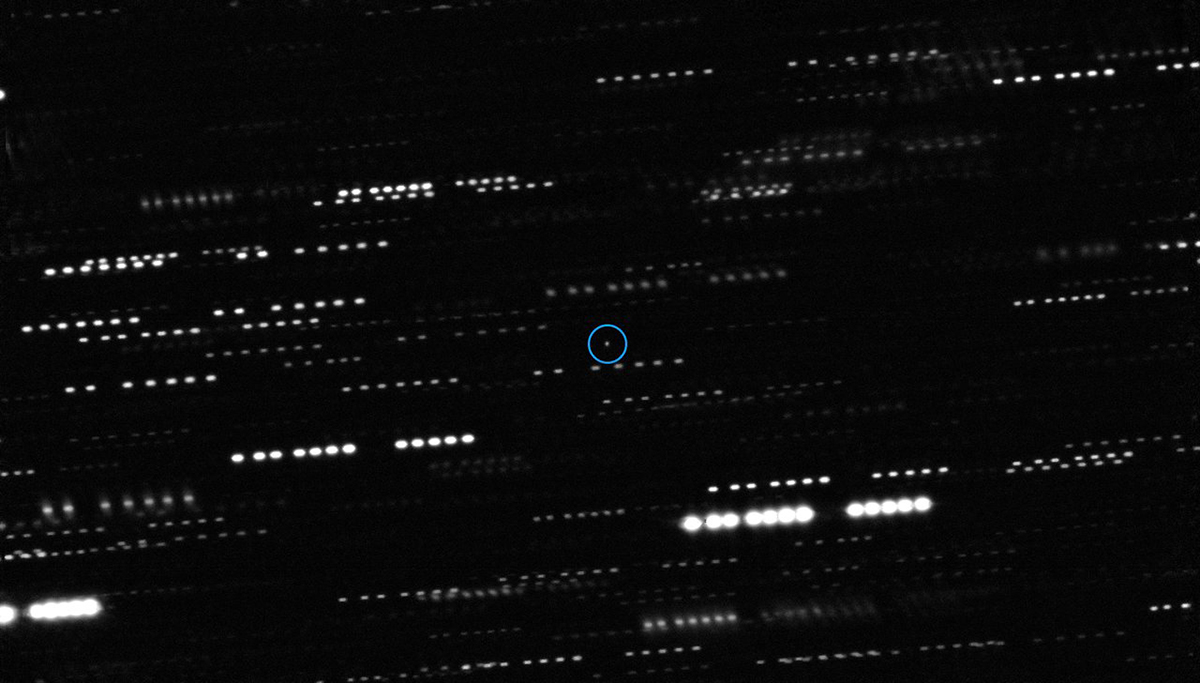
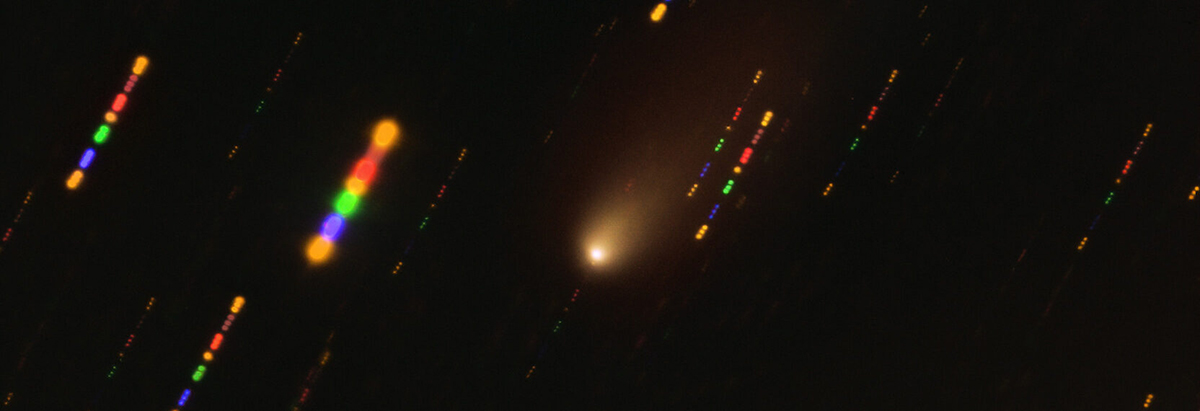
The first interstellar object ever discovered, 'Oumuamua, was found by the same type of telescope but the second, 2I/Borisov, was found by an amateur astronomer.
It feels like there was more fanfare around 3I/ATLAS than the previous two. What made it so special?
I think part of it was because it was the brightest we'd observed so far, so we were able to carry out more observations than we could for the first two. As a result, we know much more about it.
3I/ATLAS was also quite different from our own Solar System objects, so that made it very interesting.
ʻOumuamua was a bit different from what we expected too, but we were only able to see it for a couple of weeks before it became too faint.
That's because when we discovered ʻOumuamua, it was already moving away from the Sun.
3I/ATLAS was discovered while it was still entering our Solar System, before its closest passage to the Sun, so we had a long warning time.
We were able to prepare our observations and look at it with the most powerful telescopes at our disposal, to figure out what it was made of.
Is it the case that these interstellar visitors are zooming through our Solar System, so we only get one chance?
Yes, exactly. You only get the one chance, if you're unlucky. If it's only visible for a short amount of time or it's cloudy where your telescope is, that's not so lucky!
In the case of 2I/Borisov, the object broke apart at the end of our observing window.
A little piece detached from it right at the start of the COVID pandemic when we had to close most of the observatory, which was very unfortunate.
It's kind of a one-off chance with these interstellar objects that we really need to take advantage of.
Is it satisfying as an astronomer to have confirmation that other star systems have comets too?
Yes it's really exciting. The idea that other star systems would have comets was theorised a long time ago, so we thought it would be the case.
What we think happened in the case of our own Solar System is that the first objects to form around the young Sun were smaller bodies that we call planetesimals.
Then larger planets formed and as those planets migrated, they ejected those little bodies, those planetesimals.
Some stayed in our own Solar System and became the comets or asteroids that we see today. Some were ejected outside our own Solar System.
If that's what happened around our own star, well, there's no reason it wouldn't happen around other stars.
We hadn't been able to confirm this, but we do see indications of comets around other planetary systems.
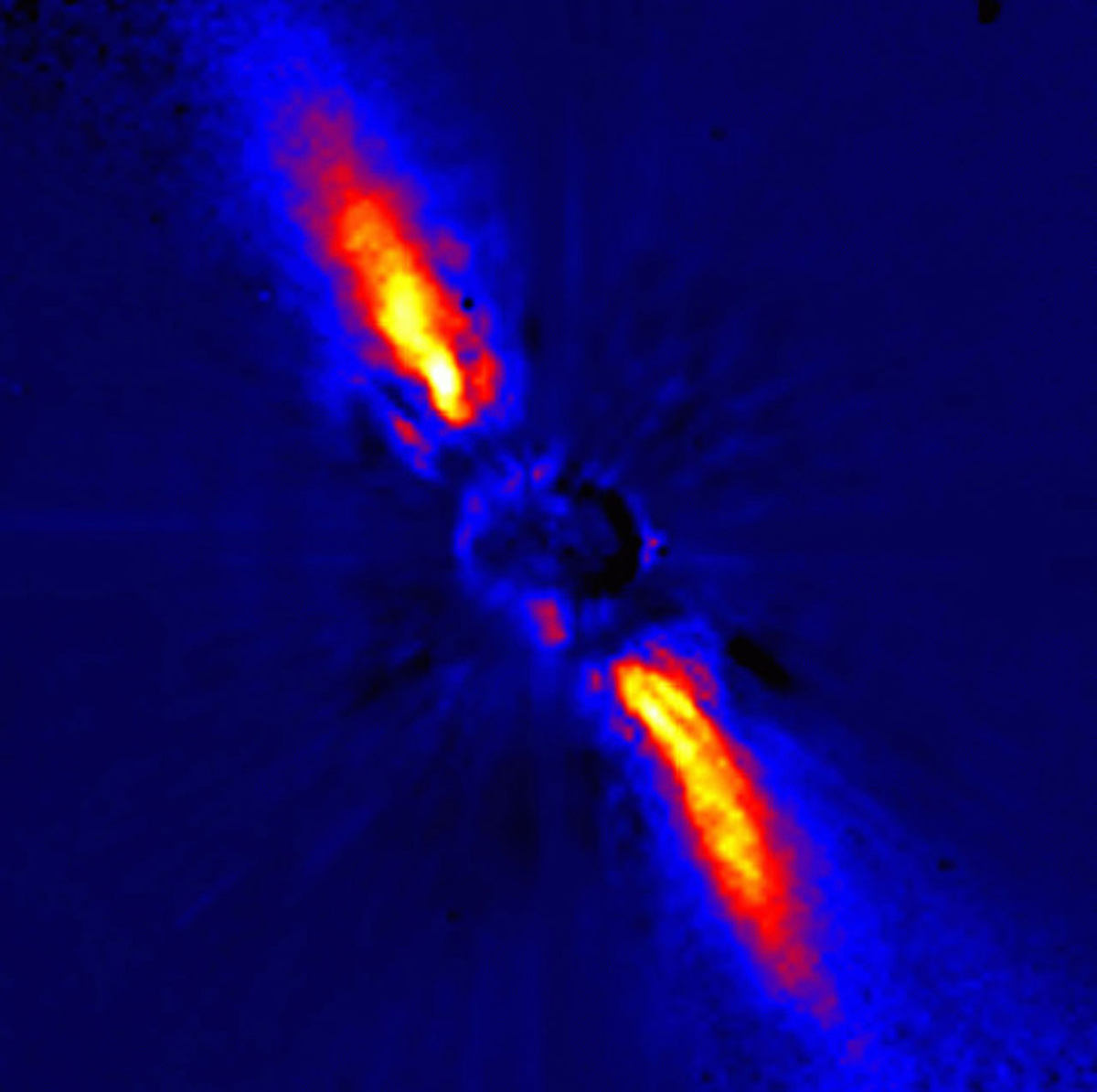
Around the star Beta Pictoris, for example, we think we can see what we call exocomets passing in front of the star.
But having that little piece of another planetary system coming towards us is incredible.
We've confirmed thousands of exoplanets – planets orbiting stars beyond our Solar System – and now we're starting to see hints of exocomets, but they're all very far away and hard to study even with the best telescopes.
So just a piece of an interstellar comet visiting us is great, because we can study it in much more detail than we can the comets in those distant systems.
What have your own studies of comet 3I/ATLAS revealed?
I was lucky to be able to observe 3I/ATLAS with a range of telescopes.
We were prepared in advance, in the sense that we had what we call 'target of opportunity observations' ready to go.
This means we have everything set up and ready to observe any sudden or unforeseen astronomical phenomena.
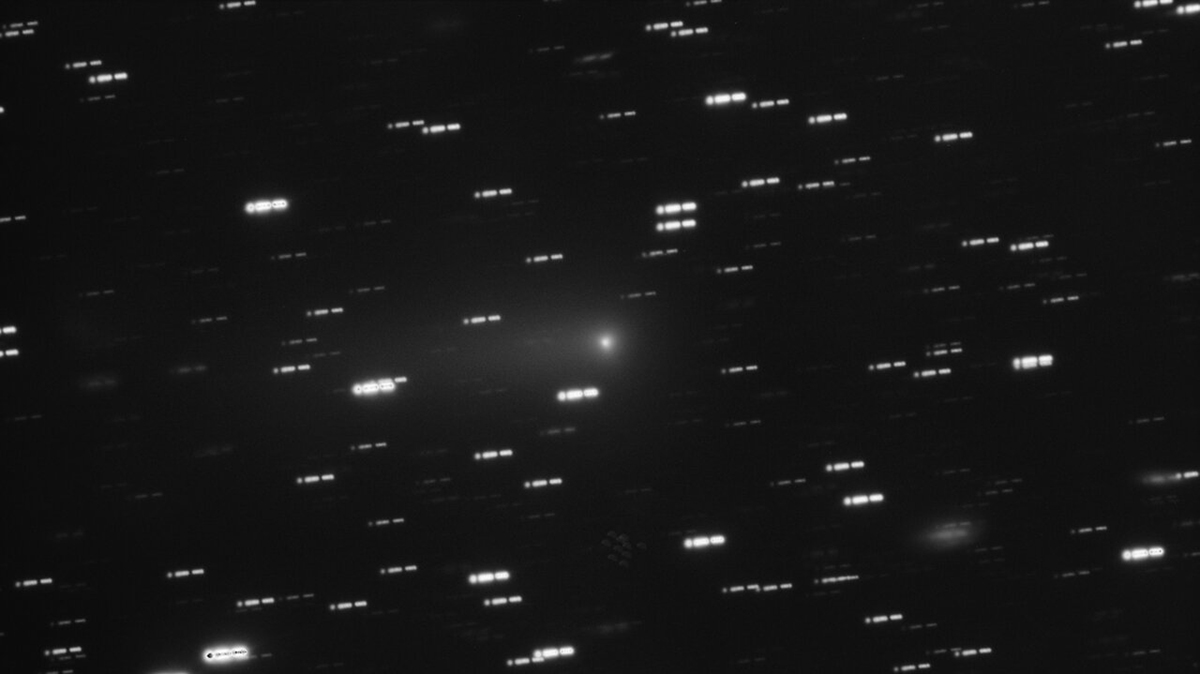
We were waiting for the next interstellar object so, within about 48 hours of the announcement of the discovery of 3I/ATLAS, we were able to observe it with the Very Large Telescope in Chile.
We used the telescope's MUSE instrument, which gave us an image of the object, but also gave us a spectrum.
That means it spread the light from the comet to enable us to study what it was made of at the same time, which is really, really cool.
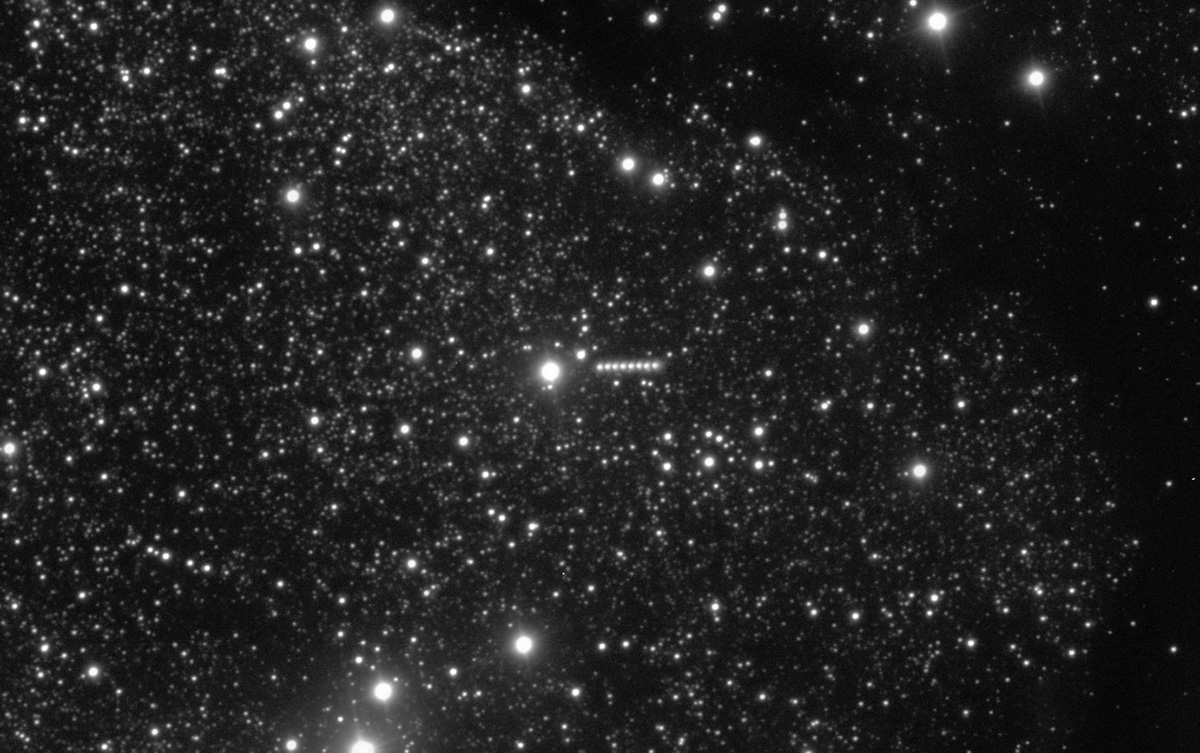
Initially we were getting very good observations, but the comet didn't stand out very well.
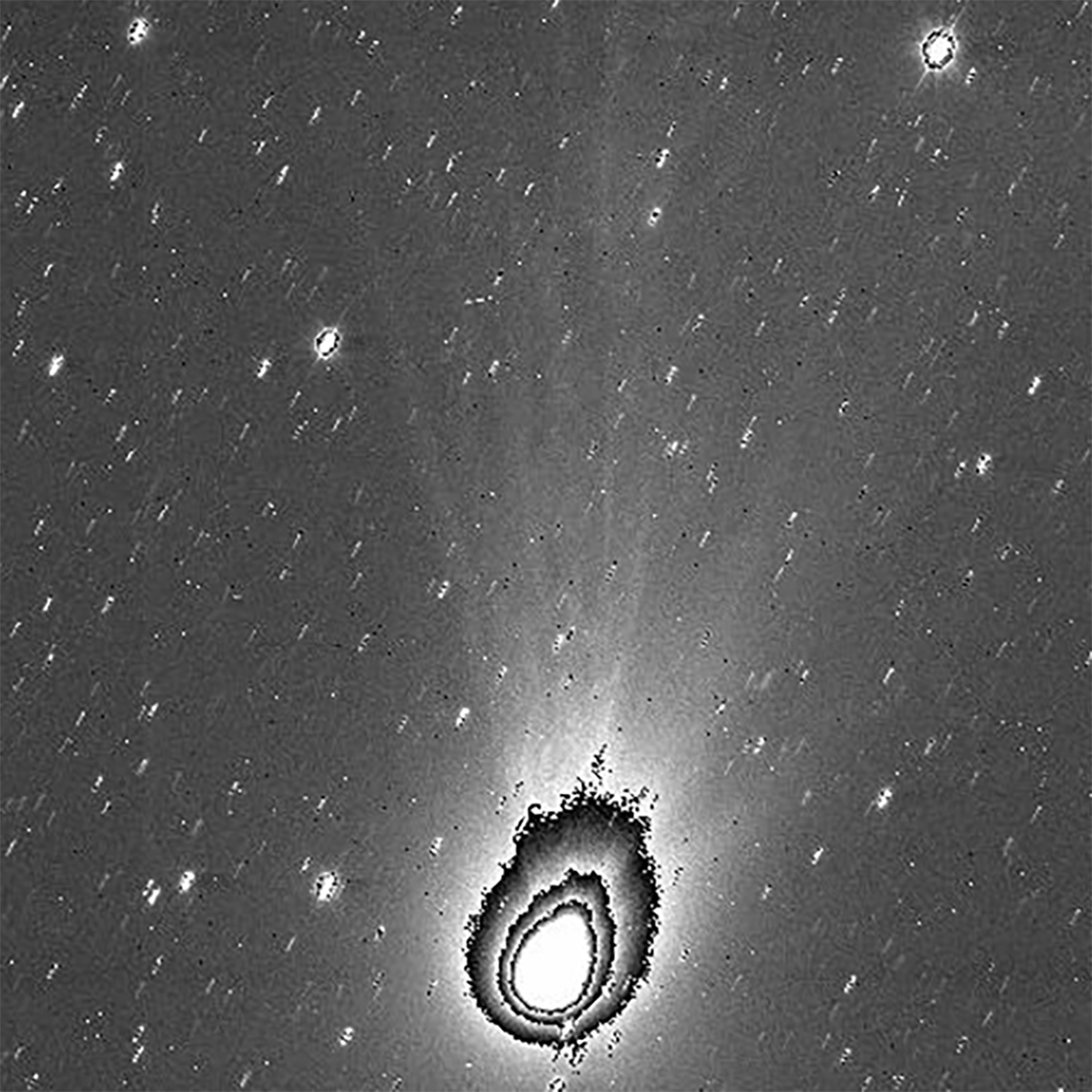
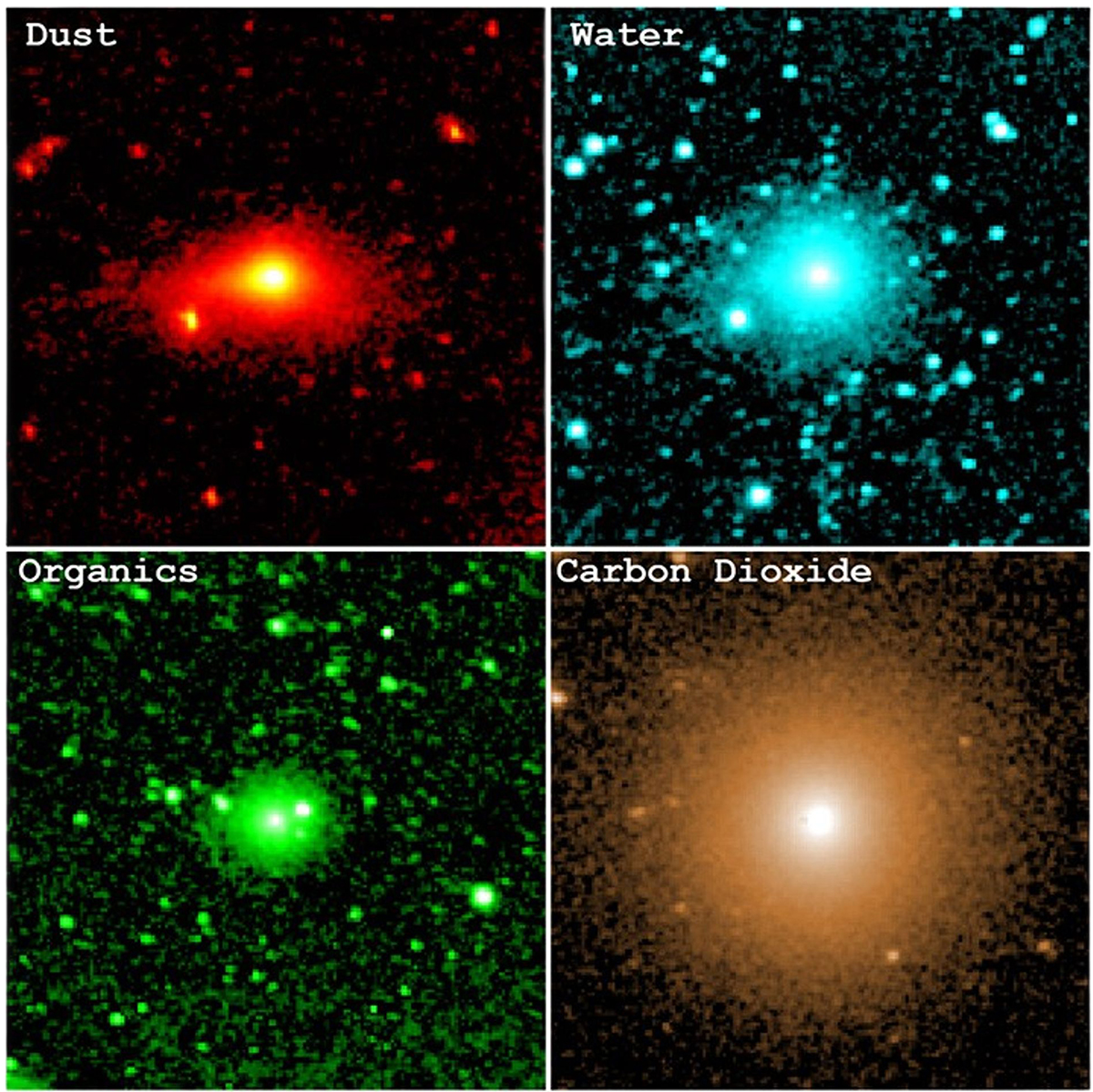
We could see that it was a comet with an atmosphere of dust surrounding it, but in the beginning we couldn't detect any gas.
We kept observing with different instruments on the Very Large Telescope, but I was also involved with collaborators using the James Webb Space Telescope to observe 3I/ATLAS from space.
That's when we started getting the first surprises around late July and August 2025, when we could see the gas.
Webb told us it was very rich in carbon dioxide, richer than what we see in most Solar System comets.
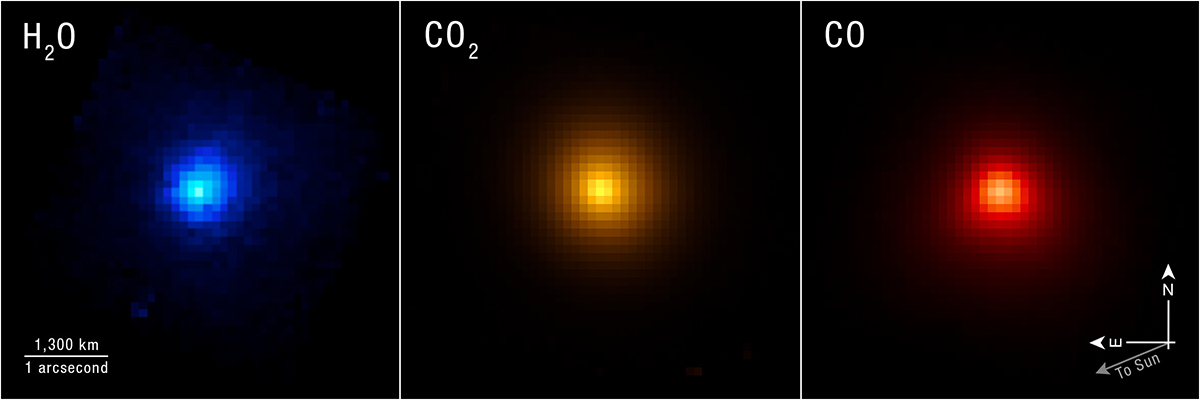
And from observations with the Very Large Telescope we could see signs of metals in the gas atmosphere of the comet.
I remember I was teaching in Kenya at the time and I was getting the data from the night before.
I was expecting to see the molecules that we usually see in most comets at that distance from the Sun.
One of them is cyanogen, CN, and it's very bright, so it's easy to detect. But rather than seeing a lot of that, what I was seeing was a line of nickel.
That was strange. That didn't look like what I would expect to see. We do see nickel and iron in Solar System comets, but there was more of it in 3 ATLAS and that's why we were able to see it so early.
That was the first interesting surprise.
We were able to observe it from July 2025 all the way to March 2026. It was a very long time, with a little bit of a break when the object passed too close to the Sun to observe, from our point of view.
Did that approach to the Sun make 3I/ATLAS become more active?
Yes, exactly. Comets tend to do that.
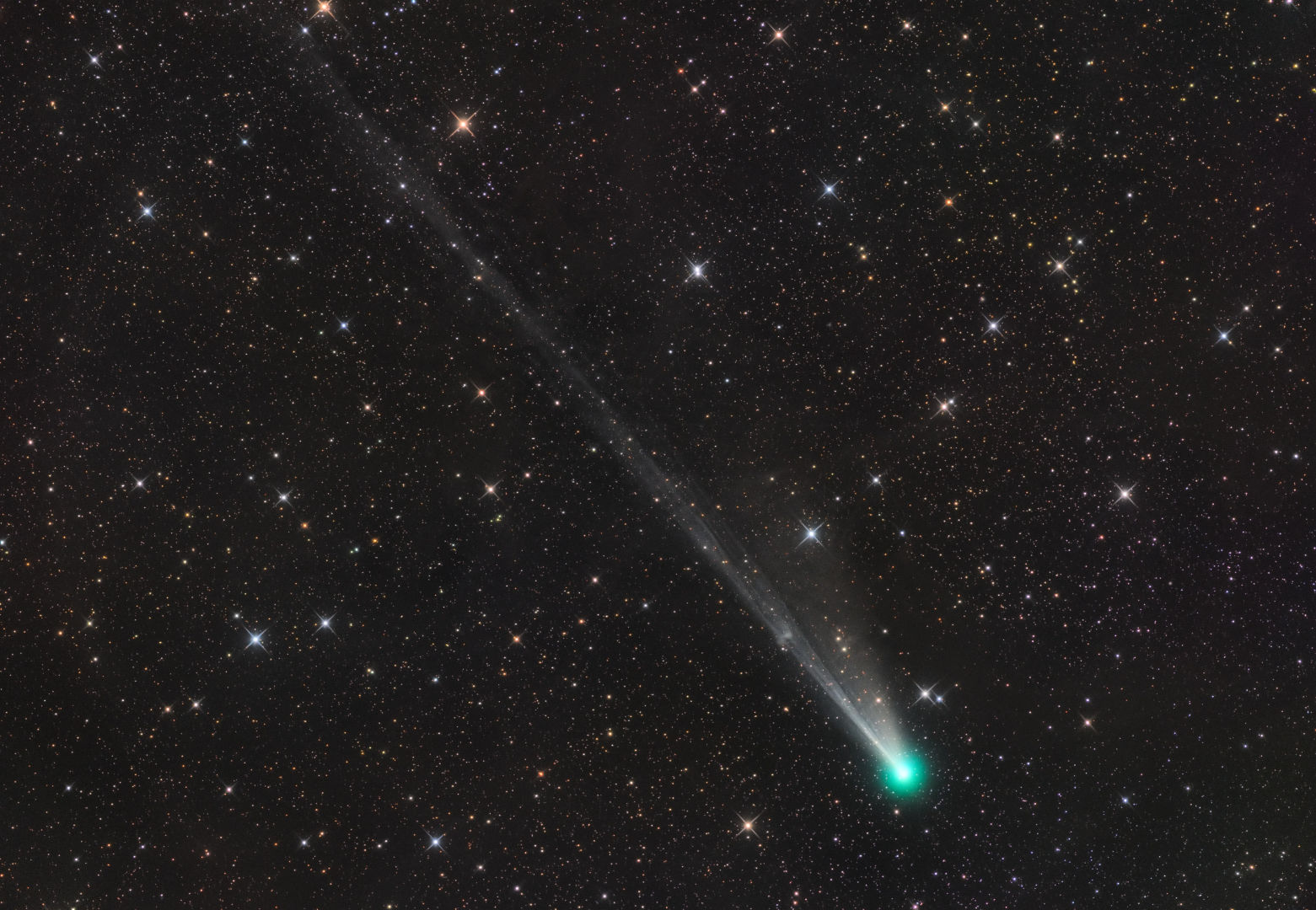
As they approach the Sun, all the ice contained in the nucleus – the solid bit of the comet – starts sublimating.
The closer it gets to the Sun, the more it sublimates and the more active it is. That's usually when it's the brightest and easiest to study.
But unfortunately, they don't let us point telescopes too close to the Sun! At least not some telescopes.
There are telescopes like the ALMA observatory where we could observe during daytime, so that made things a bit easier.
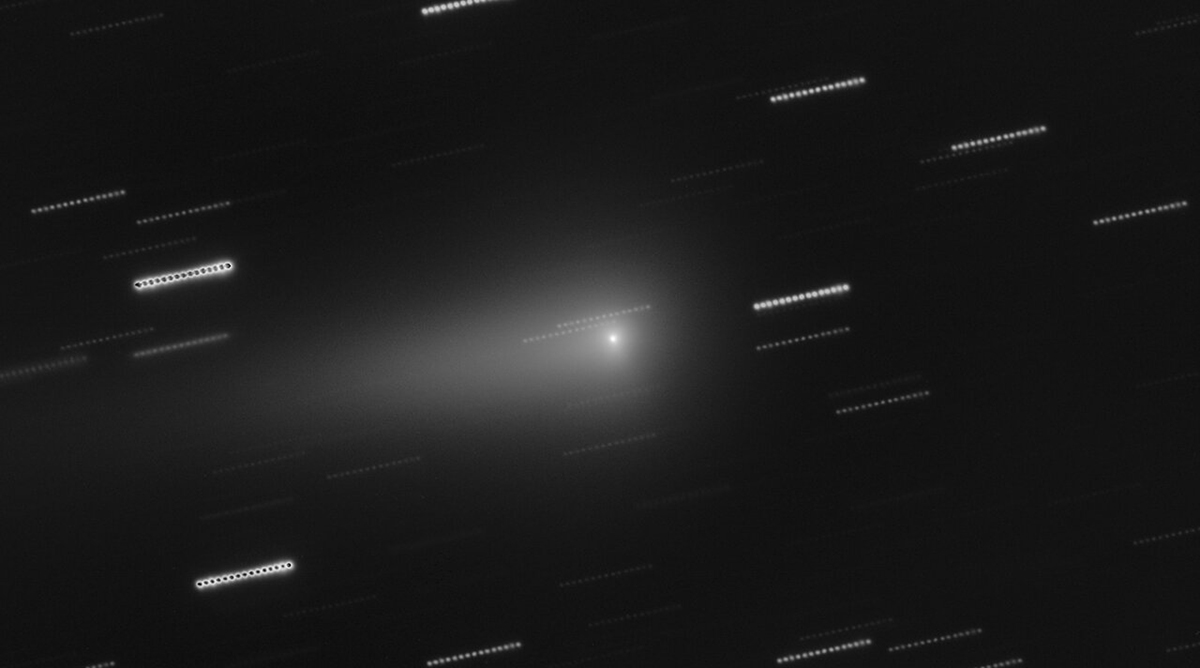
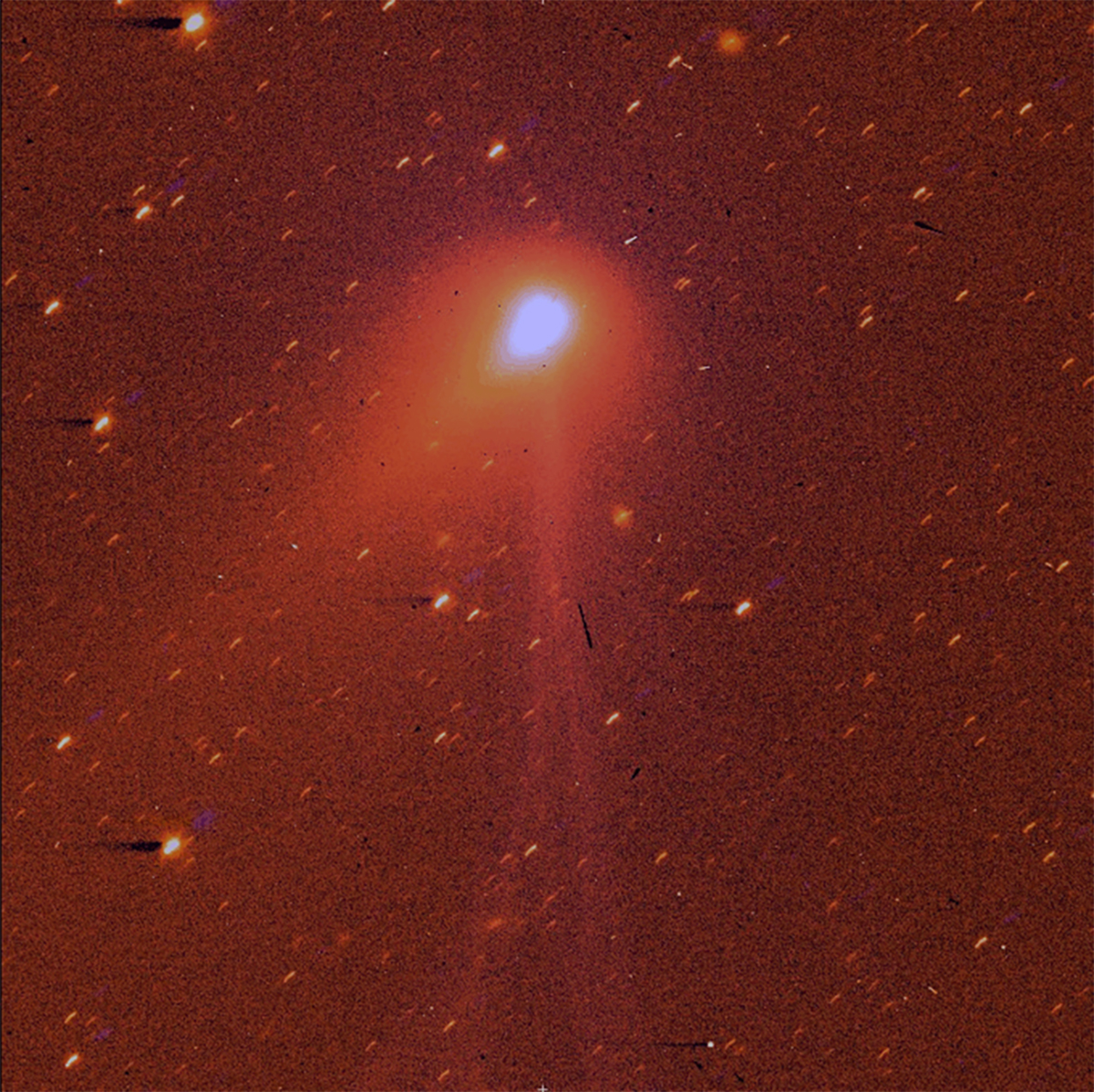
But we were not able to observe at the time when the comet was really the most active, so we had to wait until it came back to being visible during nighttime at the end of November, early December 2025 to keep observing it in the optical wavelength, i.e. the light that we see with our own eyes.
And then we had to fight the Chilean weather because there was a lot of wind at the time.
For several nights, we weren't allowed to point the telescope towards the comet.
We knew that with each passing day 3I/ATLAS was becoming fainter, so the chances of getting the best observations, gathering most of the light of the object, were fading.
We still wanted to measure the isotope ratios in the comet, which are important indicators about the conditions under which it formed.
We were really trying to beat time and beat the weather to get these observations. So that was a very interesting Christmas time in 2025!
With ground-based astronomy, it's sometimes a shame we're stuck on a planet with weather and an atmosphere, isn't it?!
Yes! Luckily, there were a lot of spacecraft that were able to observe it.
The Juice space mission, for example, was able to observe it from space at a time when we couldn't really observe it from Earth.
So that was quite interesting.
What have all the observations told us about 3I/ATLAS?
We were very lucky because our observations have told us a lot about its formation, particularly when looking at the isotopic ratios.
Think of these as different flavours of the same molecule. Some are a bit heavier, some a little bit lighter.
These isotopic ratios can be very sensitive to where the comet formed.
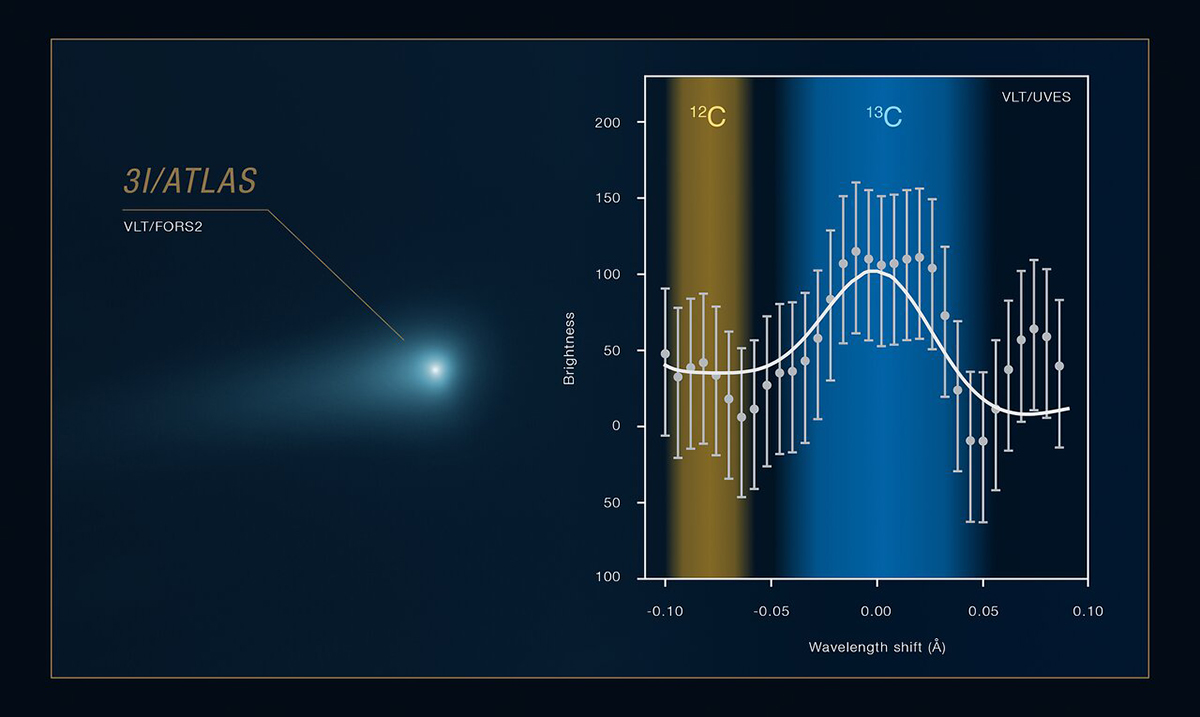
We were able to measure this with three different instruments: with the James Webb Space Telescope, with ALMA and the Very Large Telescope in Chile.
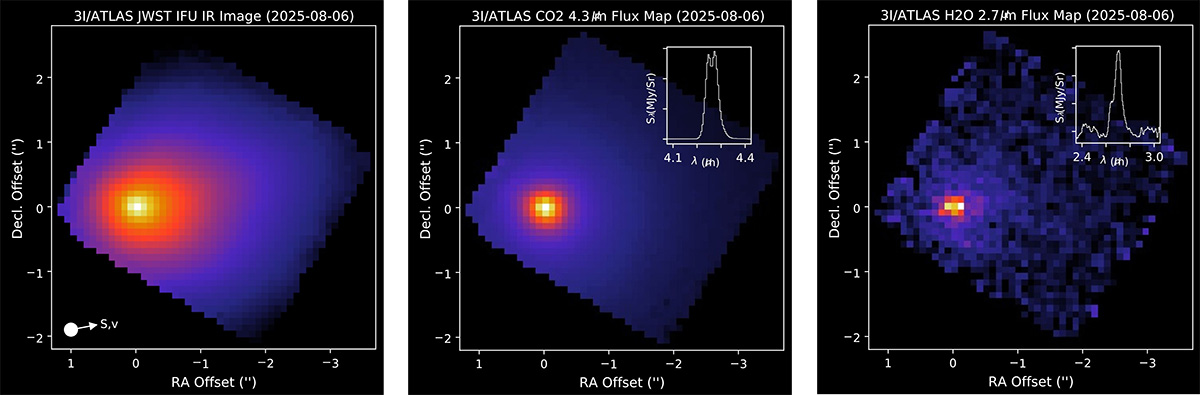
One of the things we measured was the isotopic ratio of carbon, two different flavours of the carbon atom in the molecules that we could see around the comet.
We found that it was much higher than what we see in Solar System comets.
For a while, we were scratching our heads trying to understand what that meant because we don't see many variations of that ratio within Solar System comets.
But looking at the Galaxy as a whole, this told us that 3I/ATLAS formed around a fairly old star – i.e. what we call a low-metallicity star.
That means 3I/ATLAS was formed before our own Sun. It might even be as much as twice as old as our own Sun.
We know that because one of the 'flavours' of the carbon atom gets produced in stars.
If there's very little of it, it tells us that the object comes from a system that was formed before much of it was produced in stars, a long time ago.
There were different lines of evidence pointing to this. Not just the isotopic ratios, but also looking at the trajectory of the comet.
We can't really decipher which exact star in our Galaxy it formed around, but we can see which region of the galaxy it came from, which does indicate it came from a region where older stars reside.
So both the trajectory of the object and its composition seem to indicate it formed around an older star.
That's very interesting because there was always a question about whether older stars with lower metallicity could form planetary systems and planets.
And here we have the proof that they can at least form some of the components of a planetary system.
These are like messengers telling us what's going on in distant pockets of the Galaxy, then
Yeah it's really interesting and I can't wait to see what the next interstellar object will teach us.
There's so much information. We were also able to figure out that it probably formed in a very cold environment, again by using these same isotopic ratios.
So we're really starting to piece together information about what it was like around those stars a long time ago in the Galaxy.
It's a revelation for me because I'm used to thinking about our Solar System in very local terms in the scale of astronomy.
Then suddenly we've got this visitor from a distant corner of our Galaxy coming to us and telling us about things that are happening in our Galaxy, and also things that were happening a long time ago.
Did we get all the information about 3I/ATLAS that we could have, while it was here?
I think in terms of remote observations, we got pretty much everything we could have for that kind of object, of that brightness.
If it had been even brighter, there were probably more observations we could have made.
But for how bright it was, I think we got pretty much everything we could, at least in terms of remote observation.
It would have been amazing to get a spacecraft to fly by it and analyse its coma.
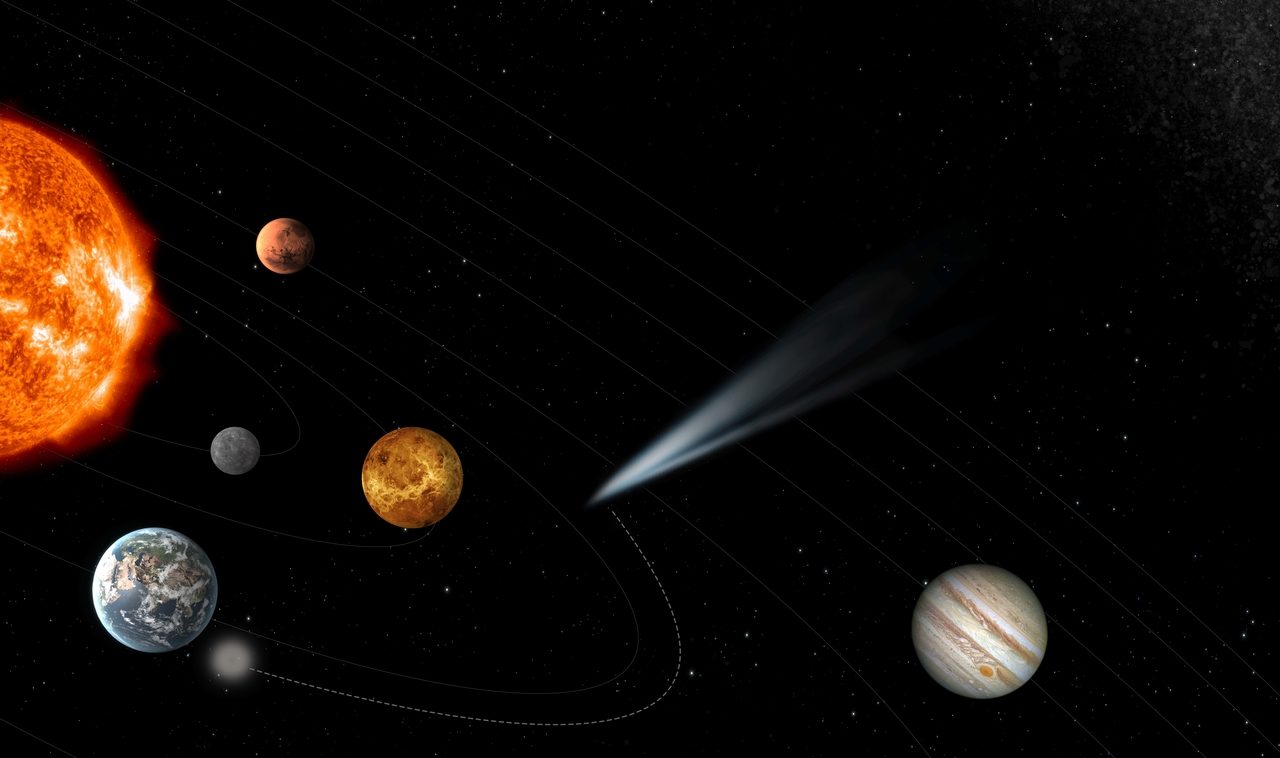
There's actually a mission that's been selected by the European Space Agency called Comet Interceptor.
The whole concept of the mission is to have a spacecraft waiting in space until we discover the right target for it to go to.
It's primarily concerned with Solar System comets, but it's the kind of mission that could very well be used to go and fly by an interstellar object, if the right one was found with the right type of trajectory.
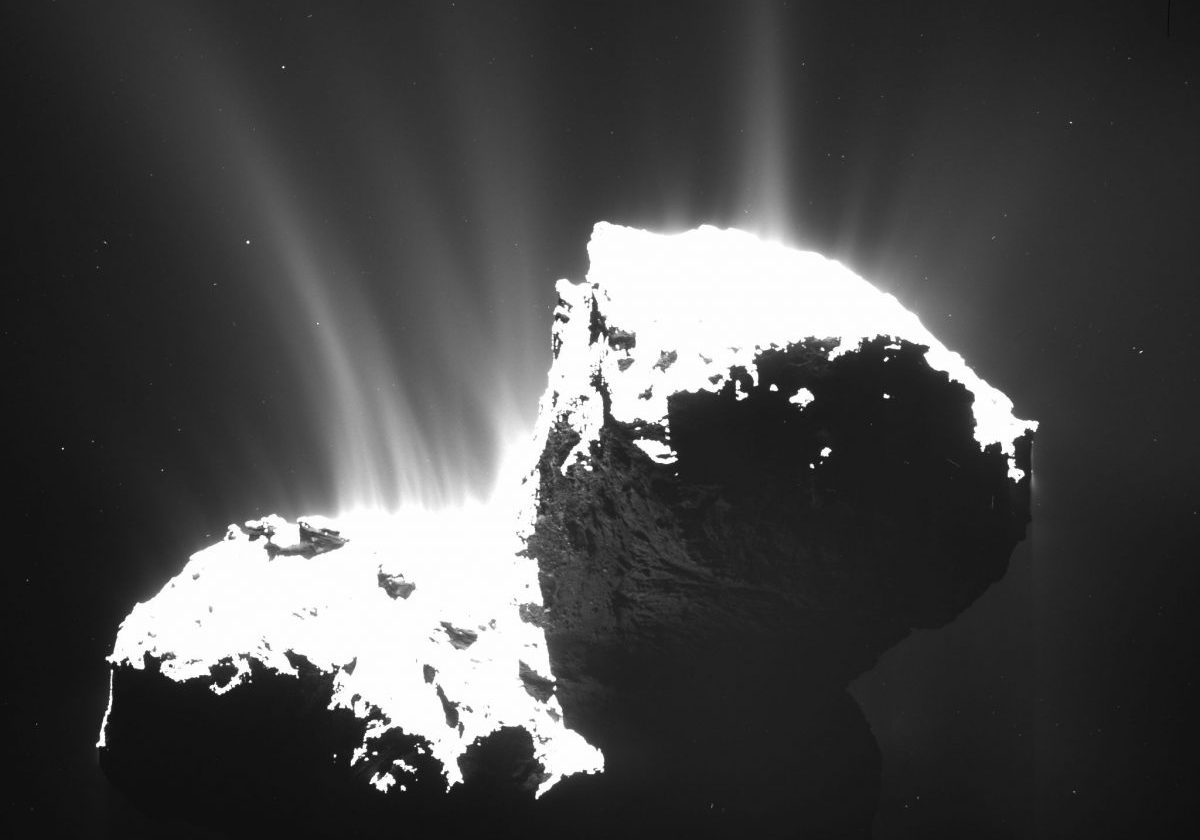
It makes you think of of the Rosetta mission and the images and science we got from that
A mission like that at an interstellar comet would be amazing, but extremely hard to do technically. I'd settle for even just a fly-by, a quick visit and a few images!
There's a very, very small possibility that, if there's an interstellar object discovered with the right trajectory, Comet Interceptor could potentially go to it.
The chances that an interstellar object would be discovered at the right time with the right trajectory are extremely small, so most likely it's just going to see Solar System comets.
But that kind of mission would be the ideal setup if we ever wanted to launch a space probe to an interstellar object.
Will we find more interstellar objects in future?
I'm extremely excited about the prospect of finding many more. A little bit terrified as well!
I think we still need time to recover from 3I/ATLAS and finish analysing all the data we've got.
But the new Vera Rubin Observatory's survey, the Legacy Survey of Space and Time, has started officially and the predictions are that it could find about one interstellar object a year.
It's very uncertain, but it's kind of the order of magnitude that we could expect.
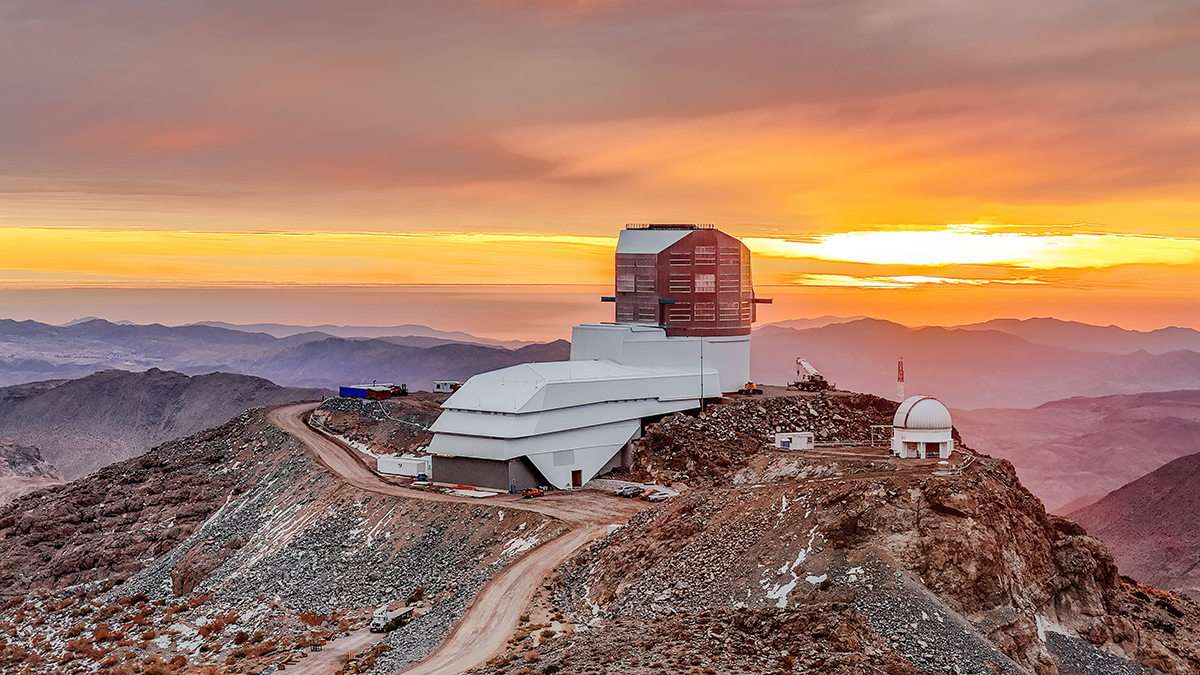
And that would be great because it would move us from studying one object at a time to studying them as a population.
We might find objects that look very different from our own Solar System comets, or maybe most of them will be like Borisov and look roughly like our own comets.
We're only going to be able to know for sure once we have more of them to study.
So far, the three we've seen are quite different from each other. Now we want to see what interstellar objects look like as a bulk population.
For that, we just have to wait until observatories keep finding new ones for us to study.

