
NASA's Artemis II mission to the Moon has successfully lifted-off from Kennedy Space Center.
The Space Launch System rocket launched from Complex 39B at 18:35 EDT EDT (22:35 UTC) on April 1st, 2026.
Atop the Space Launch System, the Orion capsule is carrying four astronauts on a 10-day journey that will take them round the Moon and back.
At the culmination of their journey, the Artemis II crew will splash down in the Pacific Ocean.
After launch, what's next?
The Artemis II mission is the first crewed flight of NASA's Artemis programme.
Artemis I launched in November 2022, but that was an uncrewed mission around the Moon to test the Space Launch System and Orion capsule, ahead of future crewed flights.
Artemis II is the next stage in the programme. The crew won't land on the Moon, but will instead slingshot around the Moon and return to Earth.

Following a successful launch from Kennedy Space Center in Florida, the Space Launch System will propel the Orion capsule into Earth orbit.
Around 8–9 minutes after launch, the main engines cut off and the Orion capsule, still attached to the rocket's upper stage, enters orbit around Earth.
About 20 minutes from launch, the Orion capsule's solar panels will deploy.
And 40–50 minutes from launch, the rocket upper stage will fire its boosters to raise the Orion capsule into a higher orbit around Earth.

While the first orbit around Earth will last about 90 minutes, a boost from the rocket's upper stage will raise Orion into a much higher orbit, which will take about 24 hours to make one journey around Earth.
This is to generate enough speed to enable Orion to leave Earth orbit and begin the journey to the Moon.
The Orion capsule will separate from the upper stage and the crew will use that 24-hour orbit around Earth to test the spacecraft's manual handling and to ensure all systems are working correctly.

Onwards to the Moon
After the systems check, the Orion spacecraft will perform a large engine burn to break free of Earth's gravity and begin the journey to the Moon. This is known as a 'trans-lunar injection'.
The astronauts will then be on a four-day journey to Moon, crossing the void of about 384,400km (238,855 miles) that lies between Earth and our closest celestial body.


The crew – Commander Reid Wiseman, Pilot Victor Glover and Mission Specialists Christina Koch and Jeremy Hansen – will monitor radiation levels, test communications with Earth and prepare for their lunar flyby.
As they travel on their journey, Earth's apparent size will keep shrinking behind them, while the Moon in front will get larger and larger.

Flying around the Moon
The Artemis II mission won't land on the Moon. Nor will it orbit the Moon. It will fly around the Moon once, then head back to Earth.
5–6 days into the mission, they'll pass round the far side of the Moon.
Our Moon is tidally locked to Earth, which means that the Moon's rotation and its orbit are aligned so that, from the ground, we only ever get to see one side of it.
There's a whole 'far side' of the Moon we never see from Earth. And the Artemis II astronauts will be the first human beings to see it with their own eyes since the Apollo missions.
However, the Artemis II crew will fly further into space than any human before them; much further than the Apollo astronauts.
While the Apollo astronauts had a close-up view of the Moon, the Artemis II crew will be so far away from the Moon, they'll get to see the whole of the far side of the Moon in one view, from a distance of about 7,400–7,600km (4,600–4,700 miles) from the lunar surface.
Meanwhile, the Moon's gravity will be pulling them towards the lunar surface.
That means the Artemis spacecraft will effectively be falling towards the Moon, but will just miss it, using that powerful pull to propel them back to Earth.
A high-speed return
The ride home will take another four days.
As the Orion capsule approaches Earth, it will be traveling at a top speed of 40,000 kph (25,000 mph).
The spacecraft’s heat shield will endure temperatures of over 2,700°C (4,890°F) as it hits Earth's thick atmosphere. That's about half as hot as the surface of the Sun.
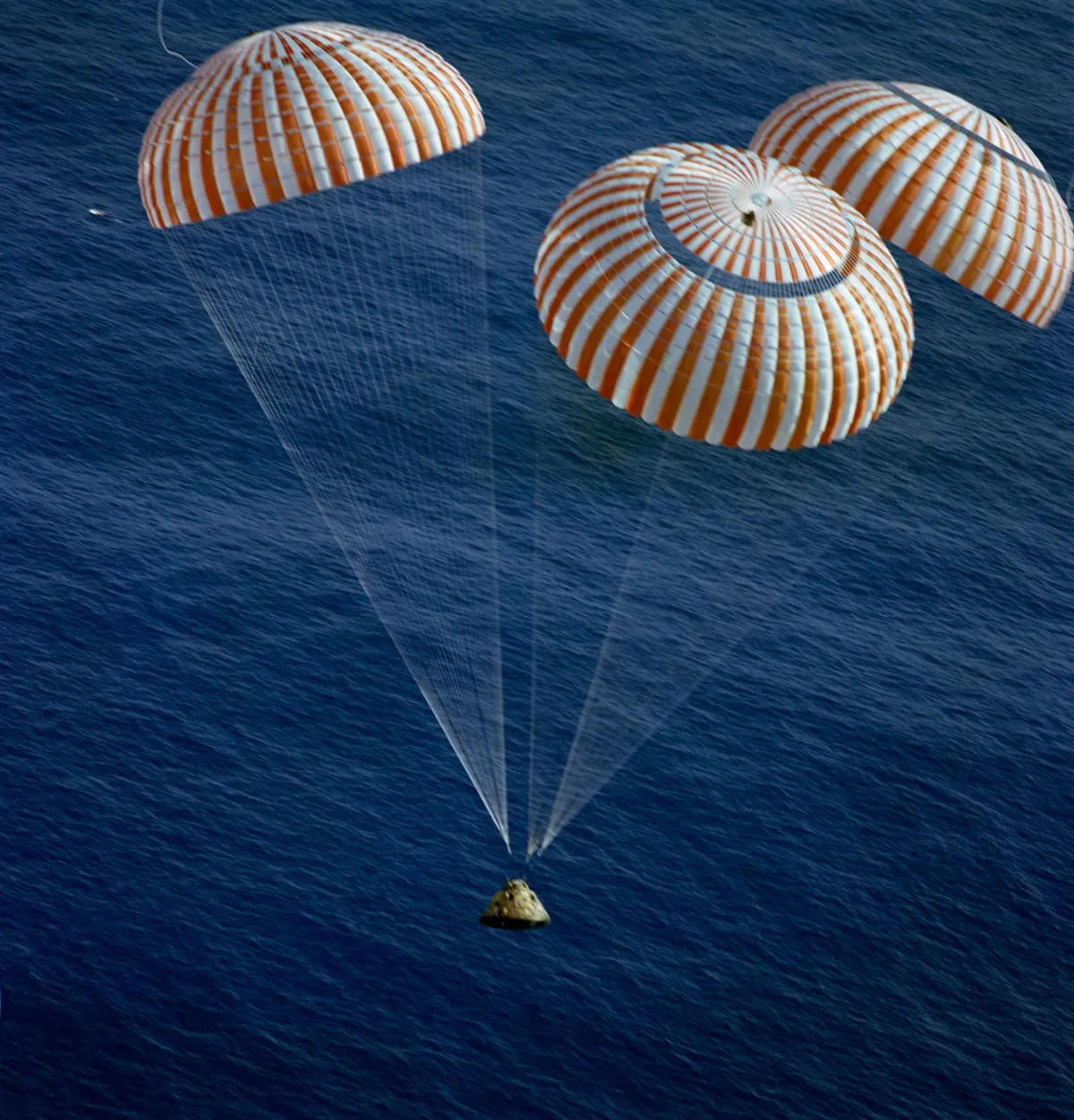
Orion's protective cover will then cast off to allow for the deployment of a series of parachutes to slow the Orion capsule down to 17mph for splashdown in the Pacific Ocean, where a U.S. Navy ship will recover the crew.
What are your thoughts on the Artemis II mission? Let us know by emailing contactus@skyatnightmagazine.com

