There are countless books on the timeless question of whether humans are alone in the Universe, but Cloudy with a Chance of Starships by Seven Rasmusen offers something different.
It’s a whistle-stop tour of the entire field of astrobiology, aimed at readers with no formal scientific training.
If you’ve ever wondered what scientists and engineers are doing to answer the question, you’ll find it in this book – though if you’re expecting to find the actual answer, you’ll be disappointed.
More on alien life
A formula for alien life?
The scientific pursuit of extraterrestrial life is vast, complex and unnervingly youthful.
In 1961, astronomer Frank Drake published his now famous Drake equation, which lists the factors that most likely determine the number of actively communicating intelligent civilisations in the Milky Way Galaxy.
The book explores each factor in turn and where the science currently stands, covering everything from planet formation, geology, climatology and stellar nucleophysics to cosmology, the genesis of life and the development of intelligence.
Frequent but concise diversions help to explain the core science behind the discussion.
Each chapter is accessible and fun, forming a skilfully executed, entertaining and witty journey of discovery.
SQUIRREL_14055524

Occasionally the author digresses into political opinion on issues such as equality in science, the thorny question of appropriating tribal lands for astronomical observatories, human-induced climate change, the responsibilities of global business (or lack thereof) and the destructive power of unchecked capitalism.
But these are relevant issues in a book about both science and humanity (and our ultimate chance of survival).
The final pages offer suggestions on how to become involved in astrobiology, in the broadest sense, from engineering to cosmology.
Naturally, the discussion is US-centric, but there is some useful advice for non-US readers too.
Astrobiology is a science relevant to all humankind, of interest to all humankind, and should be accessible to all humankind.
This book will give the reader a thorough grounding in this fascinating area of modern science.
Interview with the author

Do you think it's likely there's life beyond Earth?
Absolutely! I believe the galaxy is teeming with life, although I'm sure 99.999% of it is single-celled.
Within our own neighborhood, I'm optimistic that we will find evidence of past microbial life on Mars and I believe there is a good chance we will encounter present life on Saturn's moon, Titan, as well.
How useful is the Drake equation, from a scientific perspective?
From a scientific standpoint—if I may spoil the book a bit—the range of possible solutions is astronomical! Imagine you asked me how many people live in Birmingham.
If I said "at least one, but less than one trillion", that wouldn't be very helpful, right?
Those are the kind of numbers we see from the Drake Equation. It's most valuable as an educational tool rather than a mathematical one.
Where are the most promising places to look for life beyond our Solar System?
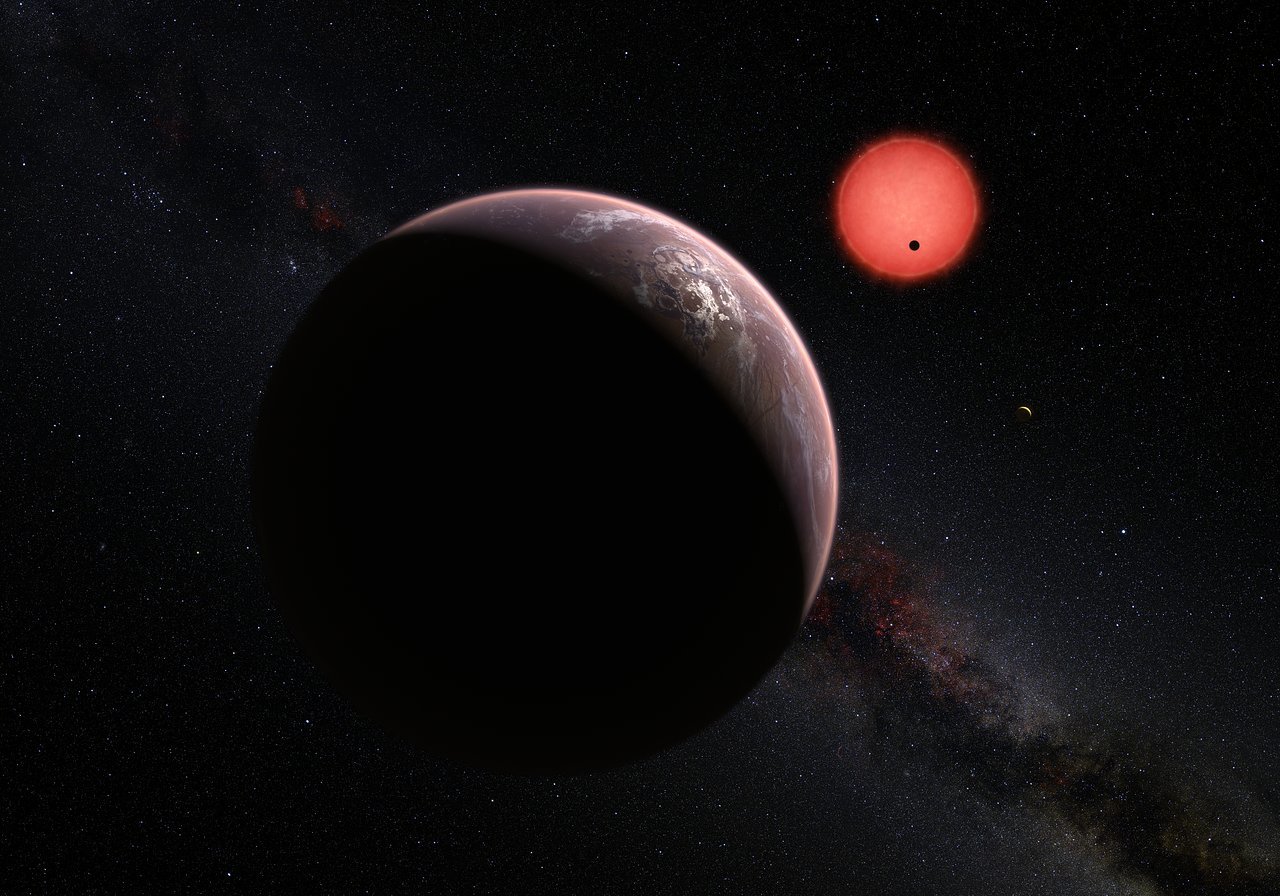
Within the next 10-20 years, the TRAPPIST-1 system (seven Earth-mass planets around a small, red star) is the easiest and most promising system to study with current telescope technology.
That's not to say that there aren't any solar systems just like our own out there, only that we don't have the technology to find them yet.
Once we find Earth-mass planets around Sun-mass stars, those will become our most important targets for space telescopes (and perhaps long-term space missions?)
Should humanity be seeking to become interstellar?
These days? Absolutely not! We humans have a terrible track record with colonisation.
If we discovered another planet with life on it, we should study it like a fragile ecosystem rather than start zoning for new construction.
If and when humanity becomes interstellar, we must aim for Star Trek and not Star Wars.
What are your thoughts on the search for alien life? Let us know by emailing contactus@skyatnightmagazine.com
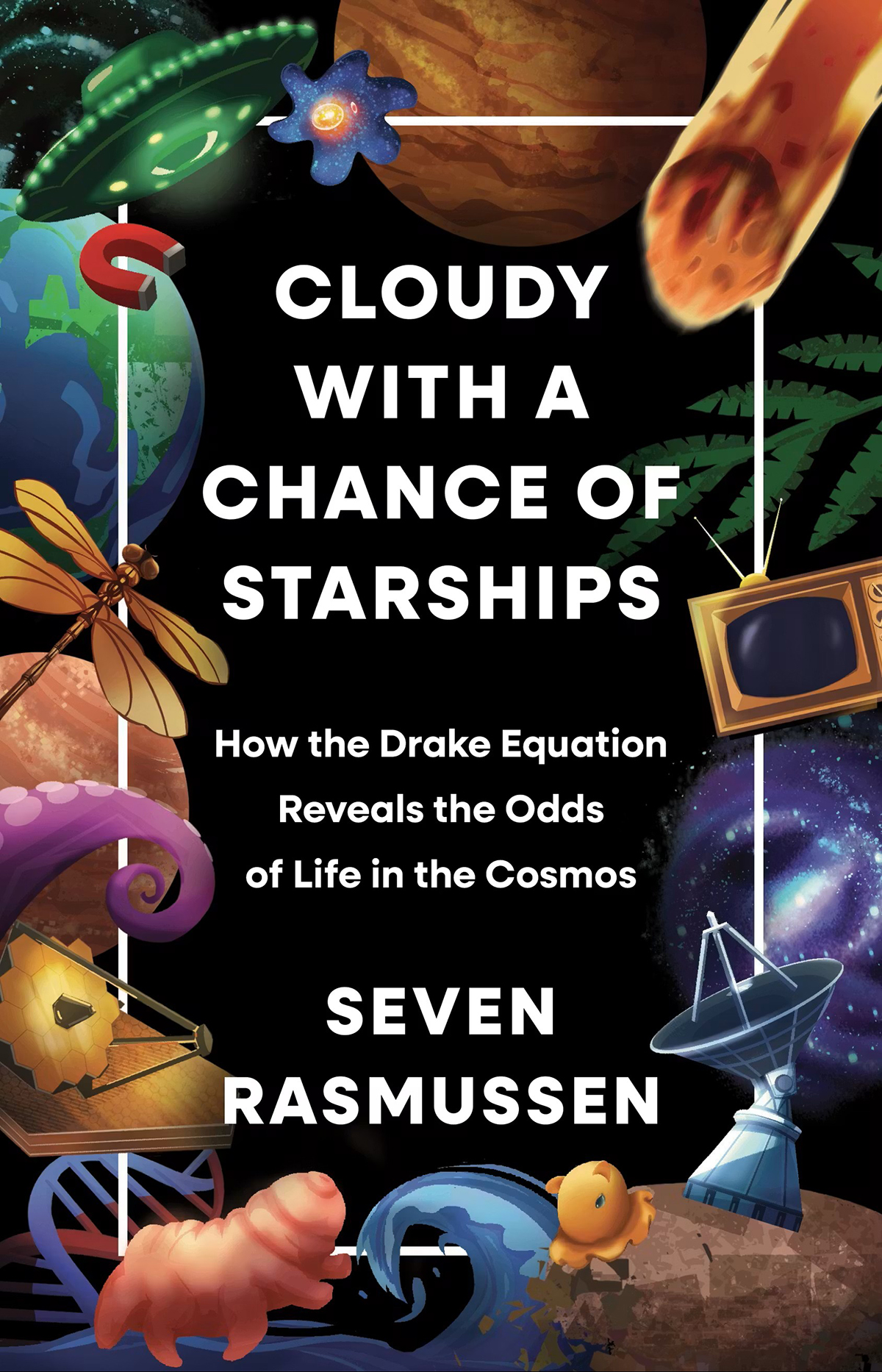
Cloudy With A Chance of Starships is published by Princeton University Press