If modern life makes you feel as though the days are dragging on, science can offer you a little reassurance – they actually are getting longer.
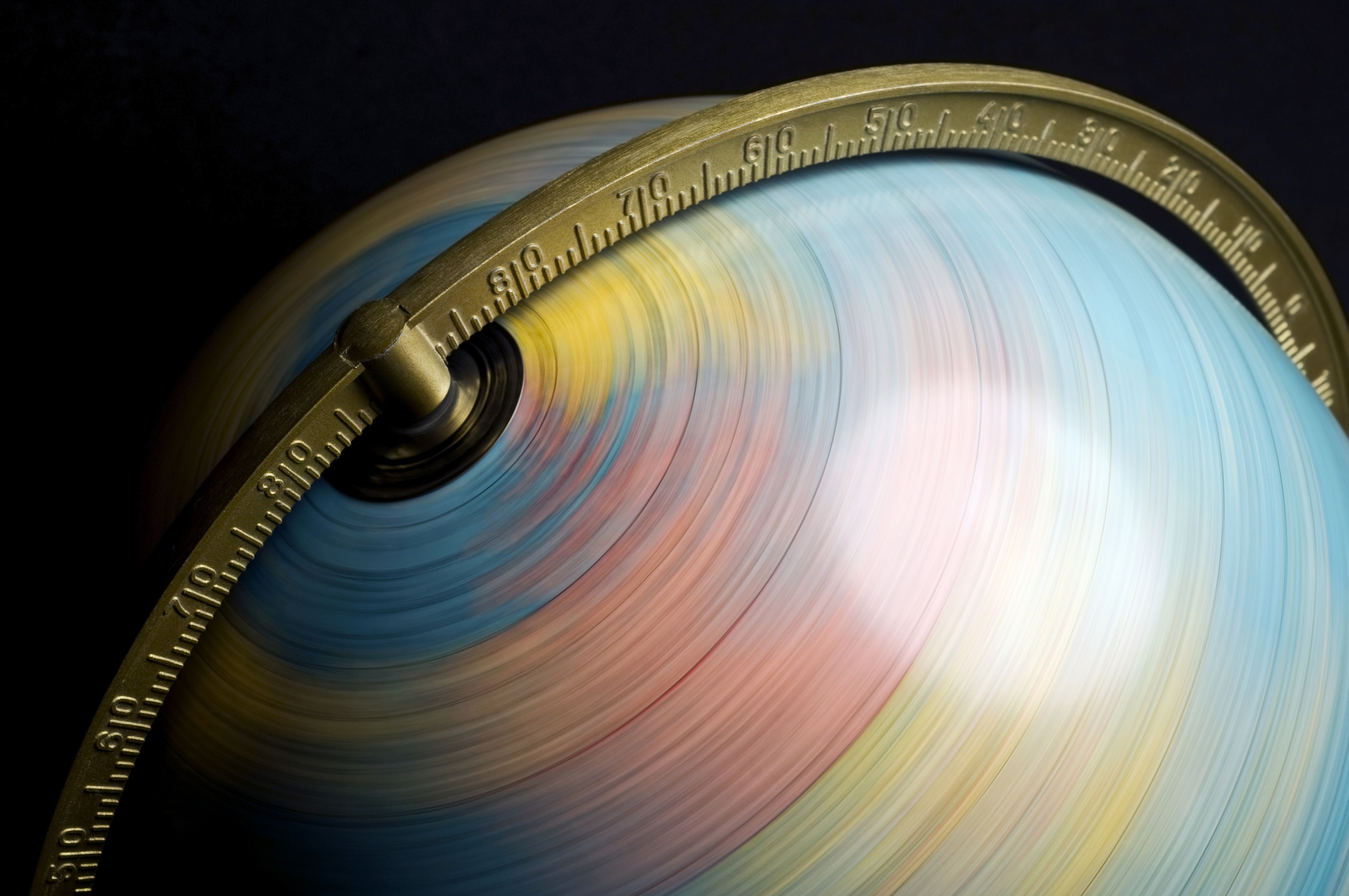
Earth’s rotation is gradually slowing down, and as it does, the length of the day increases.
Not enough to give you much more free time, but by tiny fractions of a second, spread across centuries.
More Earth science
Just how much is Earth slowing down by?
The effect is extraordinarily subtle. Scientists estimate that Earth’s day lengthens by around 1.7 milliseconds per century.
That means a Tyrannosaurus rex 68 million years ago experienced a day about 20 minutes shorter than we do.
Further back, during the Cambrian explosion 540 million years ago (when there was a huge expansion of new life forms), the days were only around 21 hours long.
Of course, we’re not going to really feel this small change – scientists need atomic clocks to keep track of such minute differences.
But why is it happening? Well, mostly it’s the Moon’s fault.
Blame it on the Moon
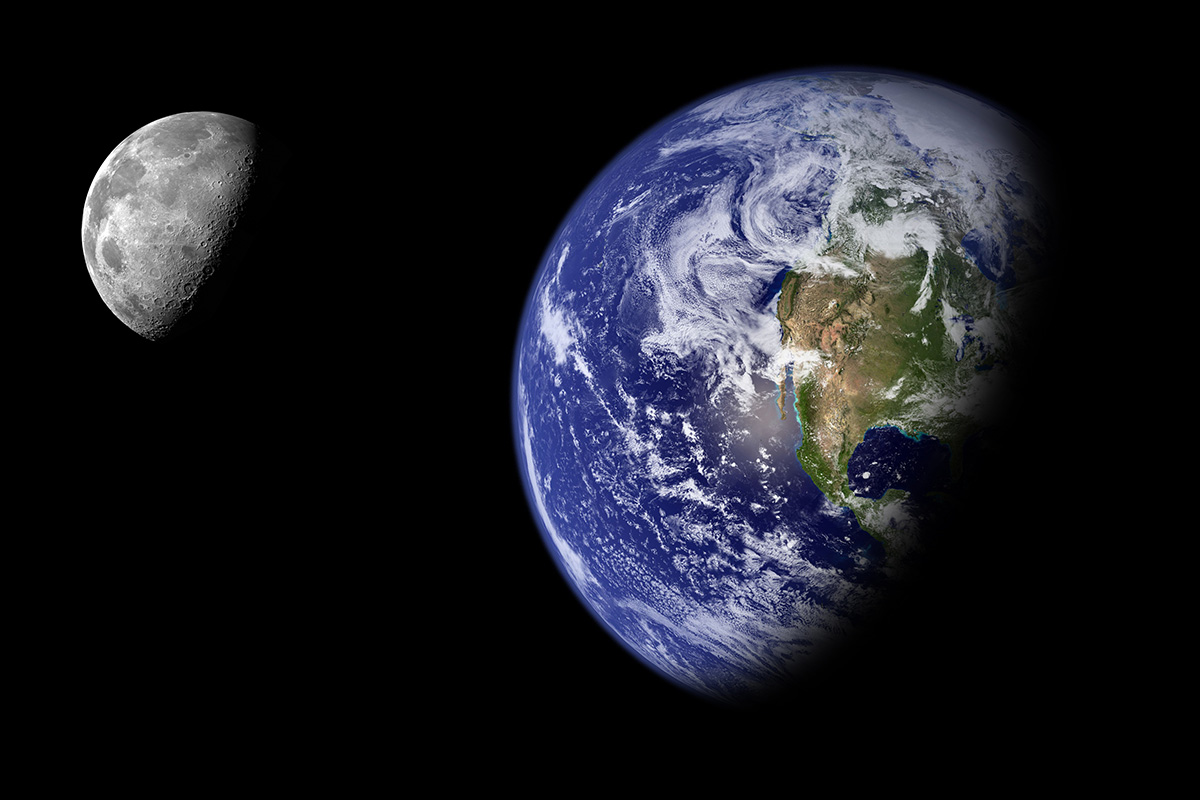
The Moon’s gravitational pull creates tides, producing large bulges of water that are constantly moving as the planet rotates.
Because Earth spins faster than the Moon orbits, those tidal bulges are dragged slightly ahead of the Moon.
Gravity from the Moon then pulls back on them, acting like a brake on Earth’s rotation.
Slowing the rotation of Earth results in the Moon’s orbit widening and speeding up to conserve the total momentum of the Earth–Moon relationship.
This means the Moon is moving away from us at a rate of about 3.8cm (1.5 inches) a year. As its orbital period increases, Earth’s rotation slows down.
The inside story
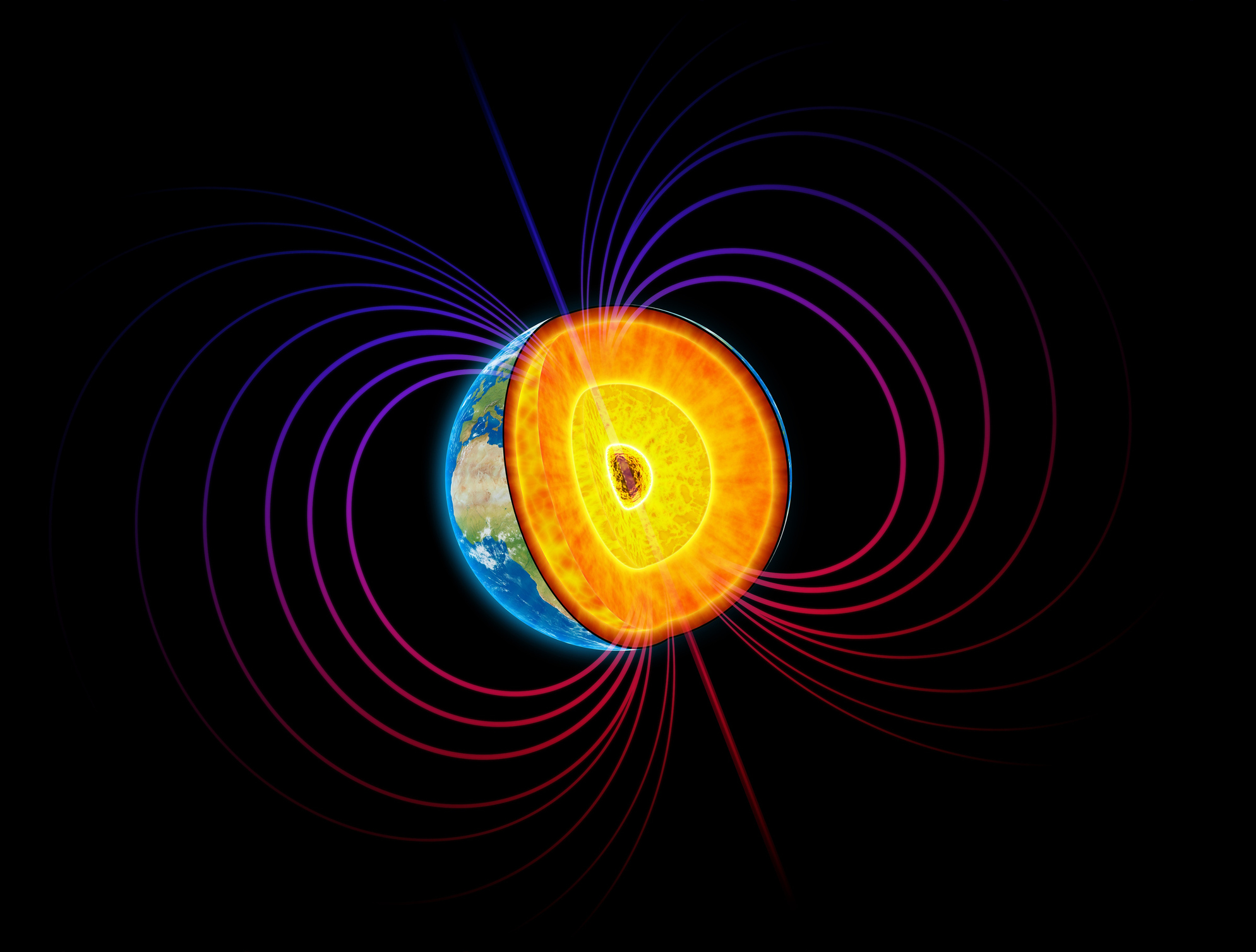
But there’s more to it than our relationship with the Moon. Movements within our dynamic planet also influence its rotation.
Deep beneath the crust, the molten outer core constantly circulates, subtly redistributing mass inside the planet.
Changes in atmospheric winds and ocean currents can also alter the speed of Earth’s rotation by tiny amounts.
There’s evidence to suggest climate change is starting to play a part too. As glaciers melt, water moves from the poles to the ocean, slightly changing how Earth’s mass is distributed.
How scientists know Earth is slowing down
We work all this out by comparing the planet’s spin against atomic time, which is defined using the consistent oscillations of caesium atoms.
Atomic clocks are accurate enough to detect variations of less than a millisecond in the length of a day.
By comparing Earth’s actual rotation to this extremely stable standard, researchers can identify tiny fluctuations in how long the planet takes to complete a full rotation on its axis.
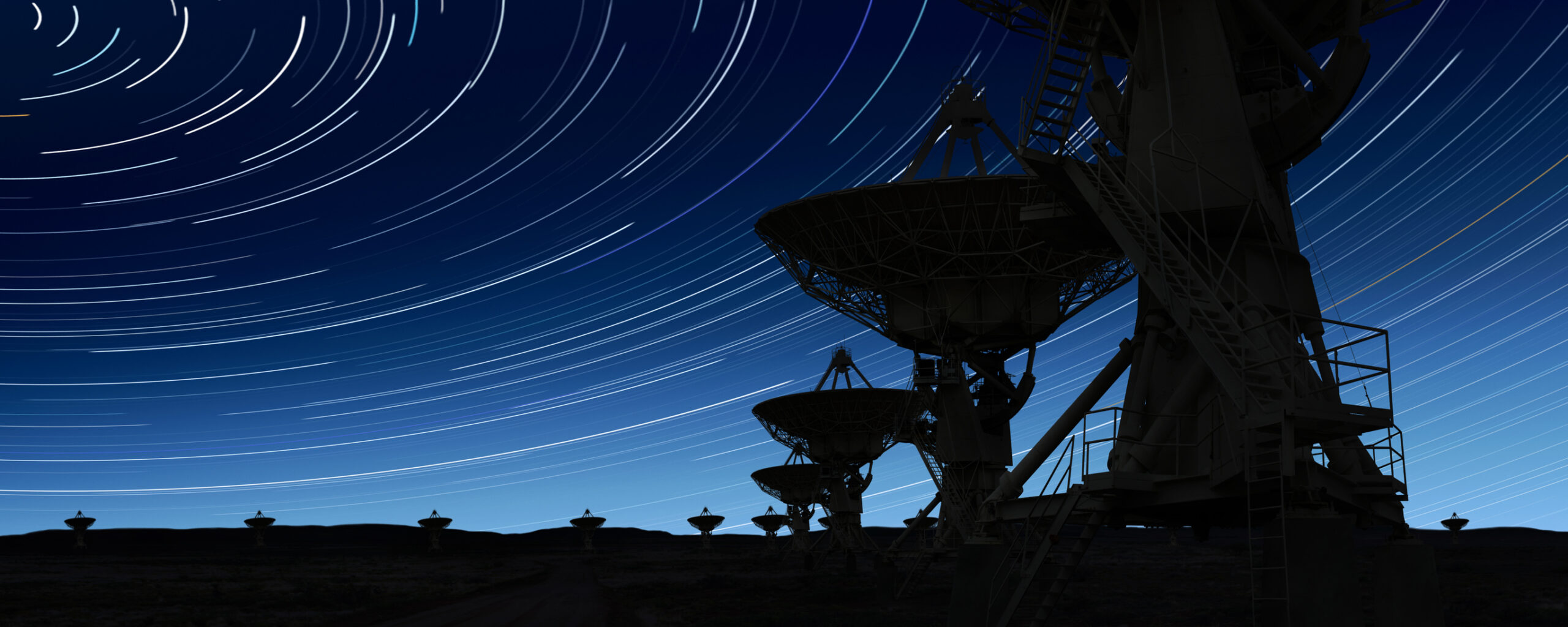
To track orientation and rotational speed directly, scientists use techniques such as very-long-baseline interferometry (VLBI), in which radio telescopes around the world observe distant quasars that appear fixed in space.
Small differences in the arrival times of their radio signals at different telescopes reveal minuscule changes in Earth’s rotation.
Satellite laser ranging and lunar laser ranging, using mirrors (retroreflectors) placed on the Moon during the Apollo missions, provide additional measurements of Earth’s motion and the Earth–Moon system.
Will it eventually stop?

Will Earth eventually stop spinning altogether?
In theory, tidal forces could slow Earth to a point where one rotation of our planet and one orbit of the Moon takes the same amount of time, and one side permanently faces the Moon – a state known as tidal locking.
But this process would take tens of billions of years, far longer than the remaining lifetime of the Sun.
Long before Earth stopped spinning, our star will have evolved into a red giant, transforming the inner Solar System completely.