
You might think that the frozen moons orbiting planets Jupiter and Saturn would be among the last places you'd find life beyond Earth in our Solar System.
But it turns out that icy moons such as Europa (around Jupiter) and Enceladus (around Saturn) are promising places to look for life, primarily because they have liquid oceans beneath their surfaces.
Studies have even shown that complex organic molecules exist within these subsurface oceans, making them among the best places to search for signs of life in our Solar System.
But how likely is it really that any form of life could exist in such seemingly uninhabitable conditions on a frozen Moon far from the Sun?
A team of planetary scientists from Freie Universität Berlin have published two studies that show, they say, promising discoveries about the potential for life on one of Saturn’s icy moons.
Read more
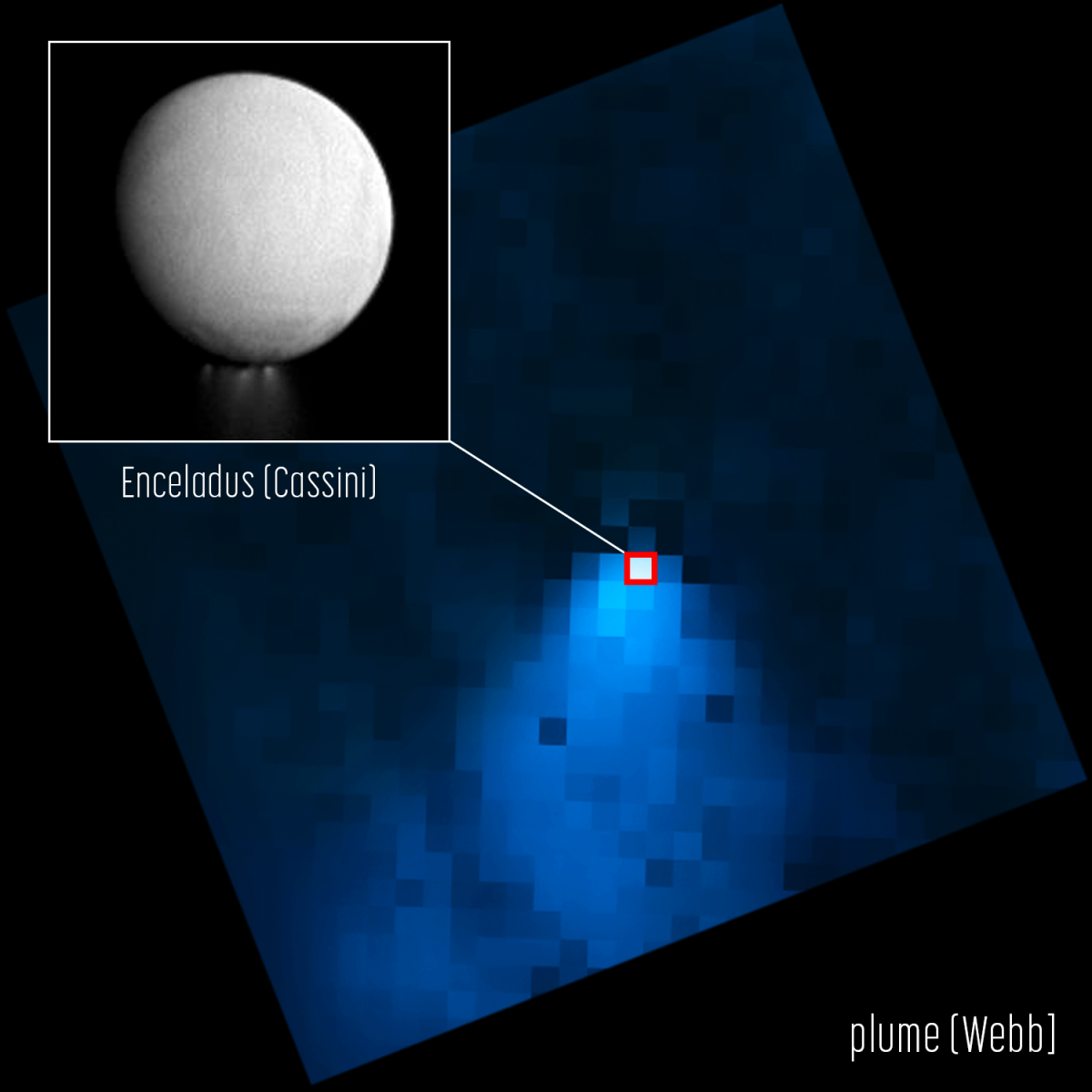
Enceladus and the search for life beyond Earth
The team behind the study say they've found evidence showing Saturn's moon Enceladus could be more supportive of life than once thought.
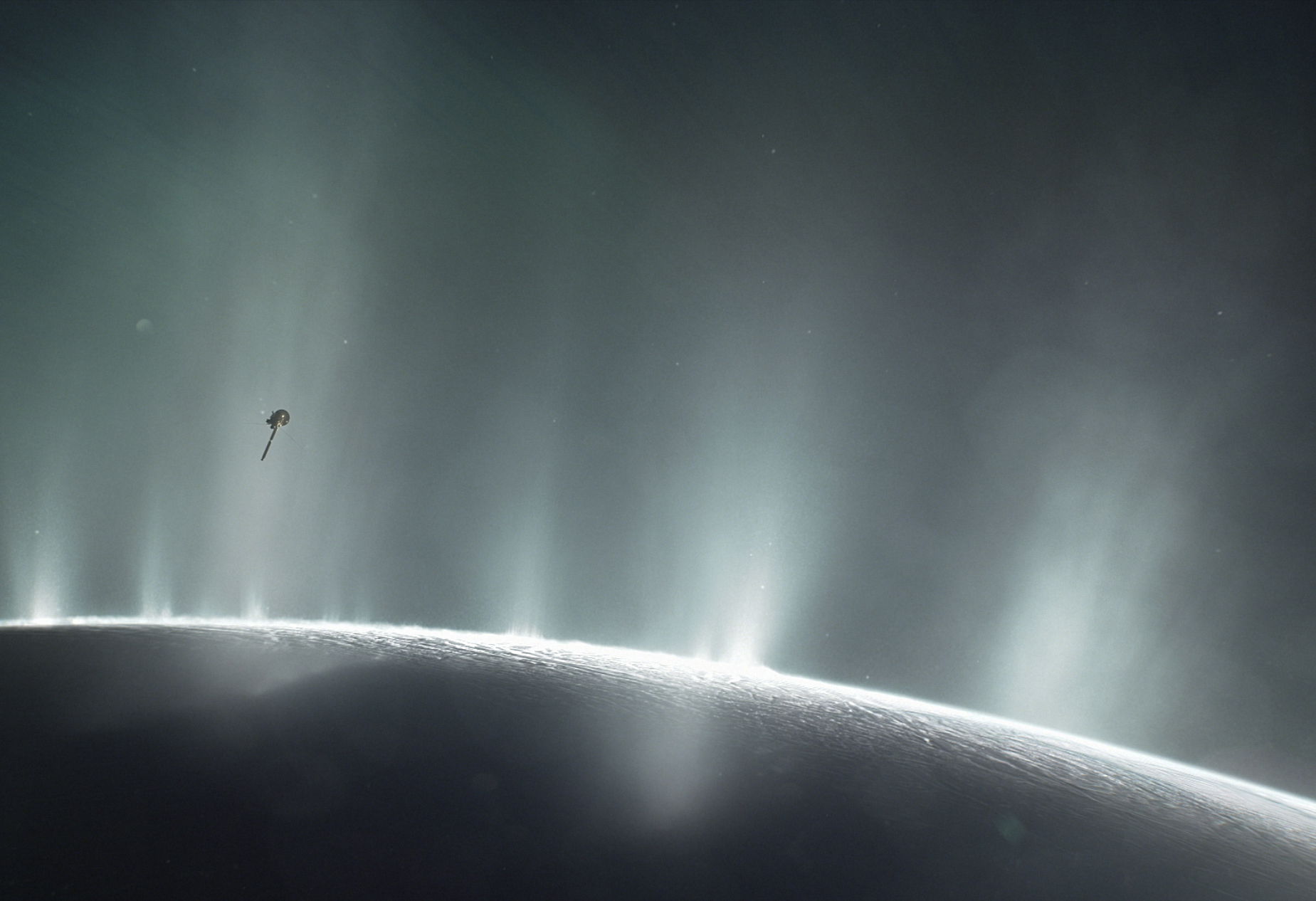
Enceladus was studied in detail by NASA's Cassini spacecraft during its mission orbiting Saturn from 2004–2017.
That included 'plume dives' that saw the spacecraft fly through plumes of water vapour erupting from beneath the surface of Enceladus.
Studies of Cassini data eventually found that the spacecraft had detected signs of organic molecules – the building blocks of life – within the material spewed out from beneath Enceladus's frozen crust.
Now this latest study says certain microorganisms could tolerate the conditions in Enceladus’s ocean better than previously thought.
The results, say the team, increase the probability of finding evidence of life on Saturn’s moon.
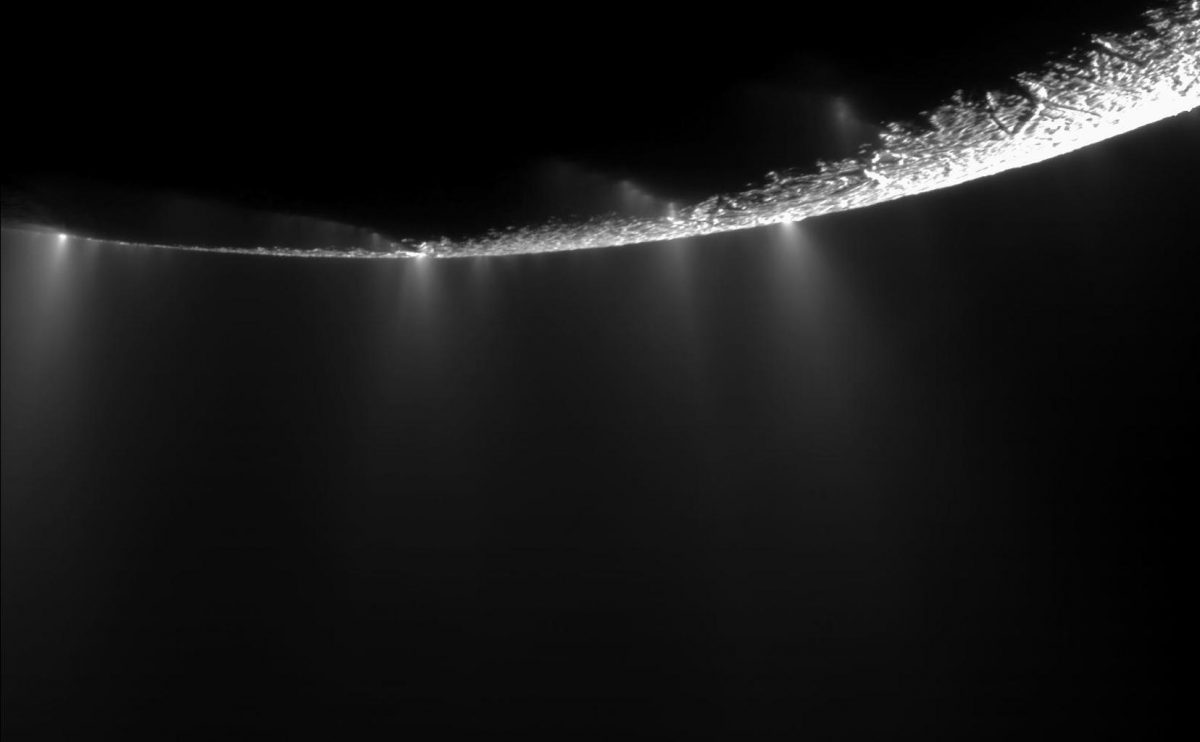
What's going on beneath Enceladus's surface?
The study, published by Professor Frank Postberg, a planetary scientist at Freie Universität Berlin, includes findings on what happens to Enceladus's ocean water as it's blasted out into space.
The team used Cassini data, lab experiments and models to reconstruct the process.
They found that droplets form at the surface of Enceladus's ocean when bubbles filled with gas float upwards.
Water vapour pushes these droplets through cracks in Enceladus's icy crust and out into space.
Scientists had believed that the water droplets would freeze immediately, but this new study says the freezing happens more slowly.
As a result, most components in the droplets separate from each other, meaning salts and organic materials are spread across different locations inside each freezing droplet.
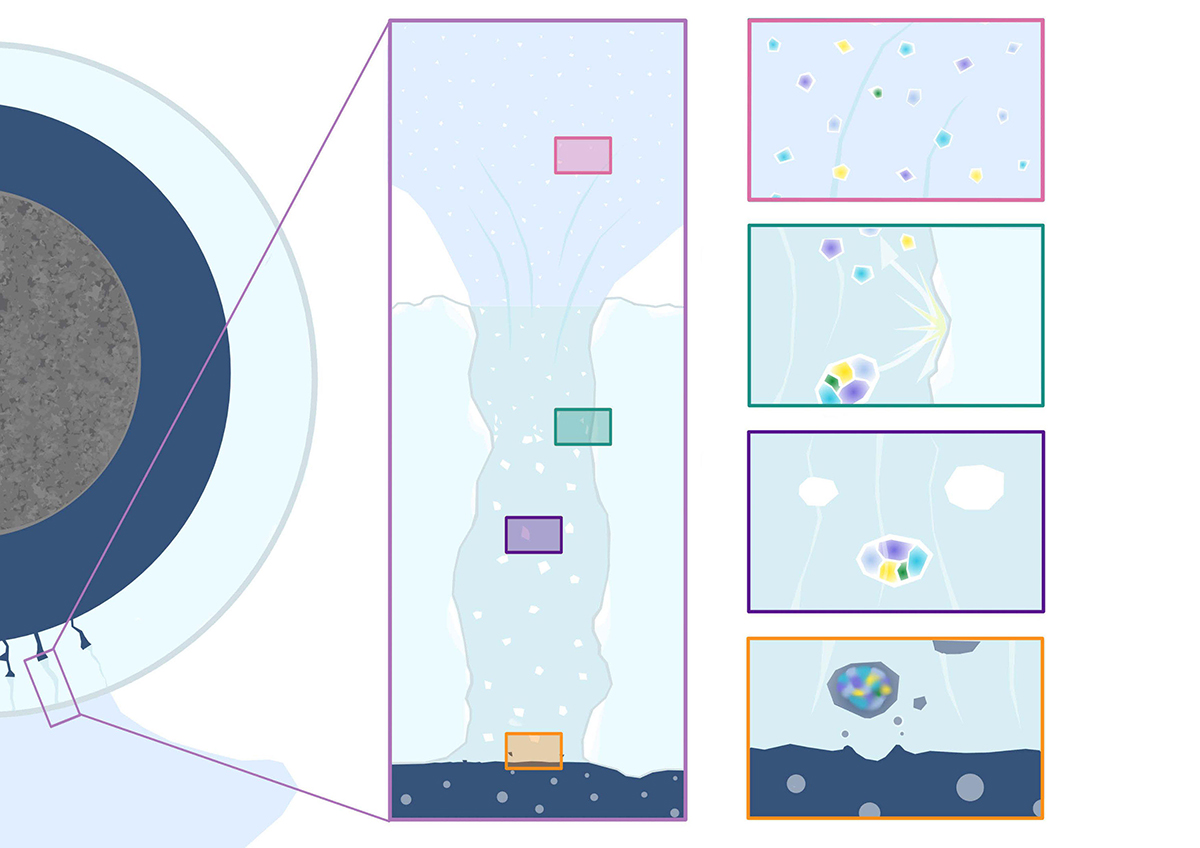
Different sorts of dissolved salts get segregated in the process. One example is sodium chloride – also known as table salt – which separates from sodium carbonate.
What's more, the frozen droplets soar up to the surface at speeds of up to 1,000 km/h (620 mph).
If they smash into the walls of the icy cracks, the droplets fragment into pieces just a few micrometers in size before shooting out into space.
That means the ice particles often consist of only one concentrated, previously segregated substance.
"Enceladus actually does a lot of the work for us in preparing samples for analysis that usually take a lot of effort in chemical labs on Earth," says Postberg, who led the study.
"The oceanic constituents are separated from each other and simultaneously concentrated into individual ice particles."
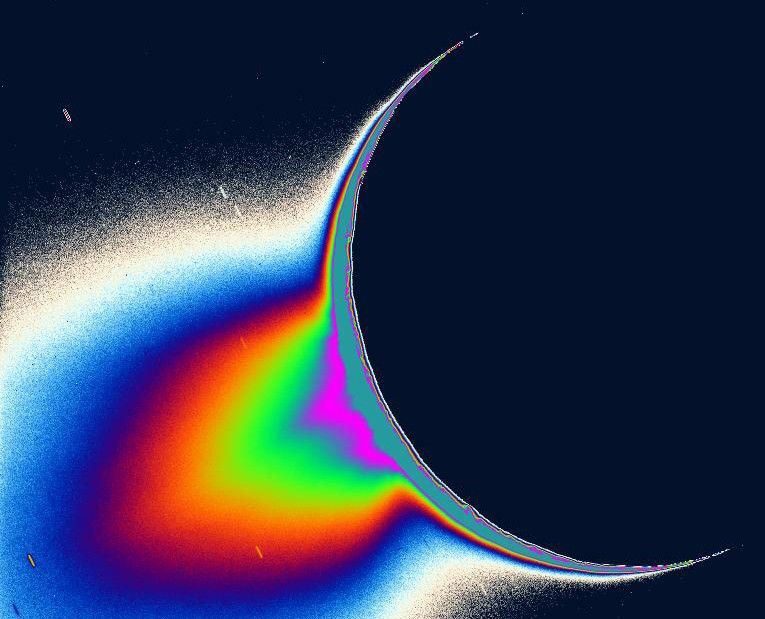
Why Enceladus is such a promising world
So what does this all mean in terms of finding signs of life at Enceladus?
The team say this mechanism is not only helpful in pinpointing the moon's ocean as a potential habitat for life, but it's also an interesting development in the search for biosignatures, which are potential chemical signals that could indicate the presence of life on a planet or moon.
If one of the droplets contained components from alien microbes, for example, the team say they could be segregated from other components in the freezing process.
"That is great news in the search for life," says Postberg. "Future spacecrafts will have to analyse many individual ice particles in the plume.
"But if they come across one with microbial material in it, they could identify biosignatures in the particle relatively easy with already available technology."
Could life really exist on Enceladus?
A second study published by scientists at Ludwig-Maximilians-Universität München, which Postberg and another scientist from Freie Universität Berlin, Dr. Nozair Khawaja, contributed to, reproduced the conditions of Enceladus’s ocean in a lab.
They say Enceladus's ocean has a low concentration of oxygen, a high concentration of carbonate and is very alkaline.
The team recreated these conditions then introduced a microorganism known as methanothermococcus okinawensis, which normally lives near deep-sea hydrothermal vents on Earth.
The microorganism doesn't need oxygen to survive, which makes them ideal for the experiment, since oxygen is rare on Enceladus.
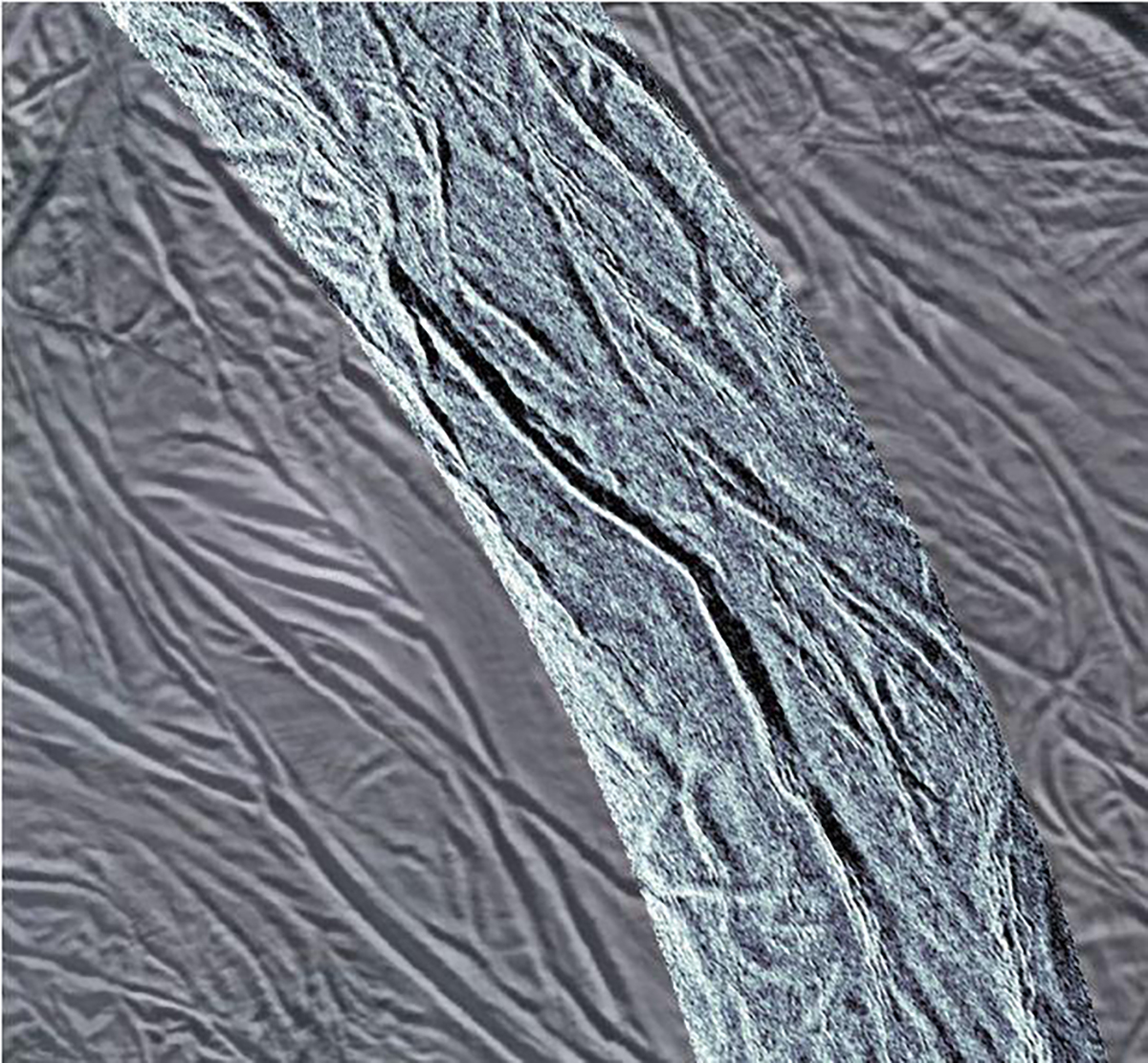
The team say that in the simulated Enceladus environment the microrganism continued to grow, producing methane using hydrogen generated by water-rock reactions.
It was even able to adapt its metabolism to the low amounts of carbon dioxide.
"This was really a surprise to us," says Khawaja. "This was an experiment for which we did not expect such a successful outcome."
"On Enceladus the specific geochemical conditions might allow one of the oldest known metabolic systems on Earth to work, even in very alkaline environments," says Postberg.
"While that doesn’t mean that there is life on Saturn’s moon, our first study shows that – in the event that there is – future space missions might have a good chance of finding traces if they analyse individual ice grains from Enceladus’s plume."

