After two years in space, ESA’s Hera spacecraft has arrived at the binary asteroid system Didymos, and sent back its first close-up images.
To understand the significance of these pictures, you need to cast your mind back to 2022.
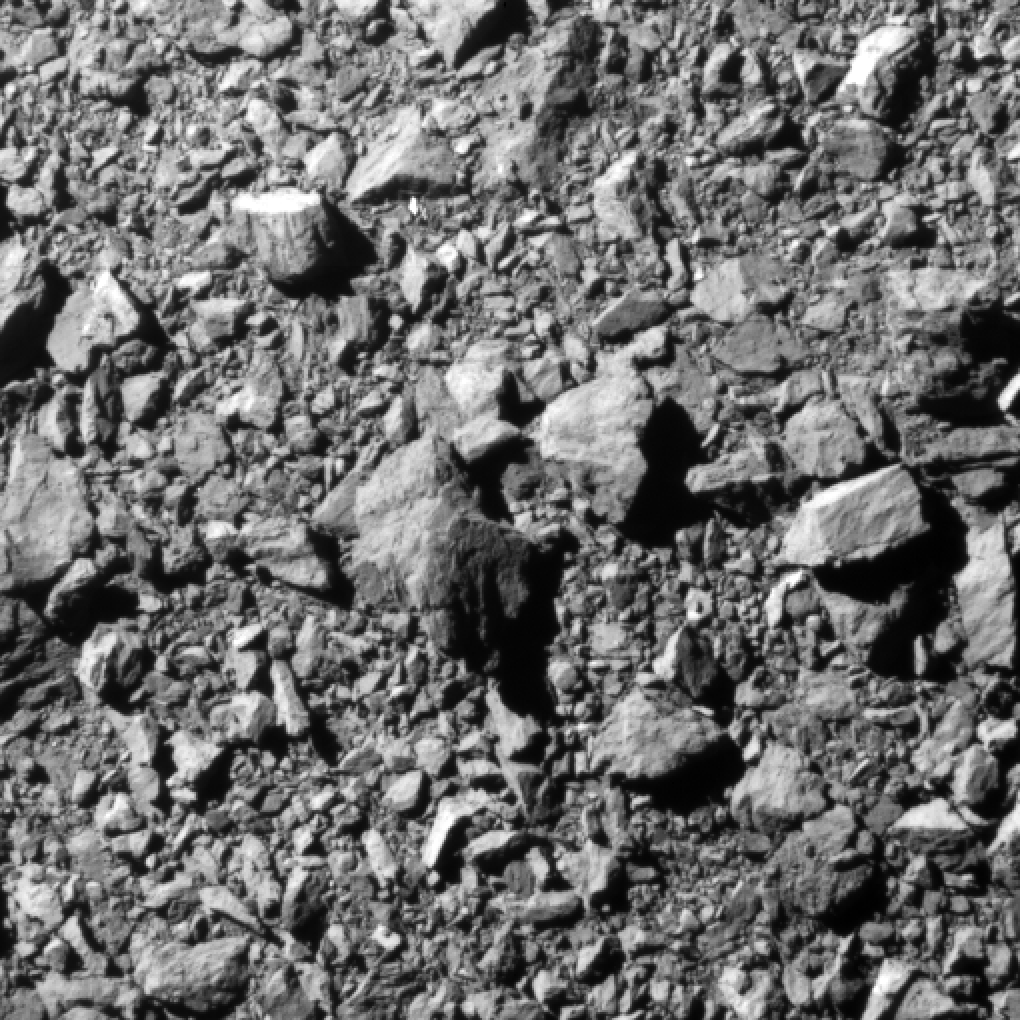
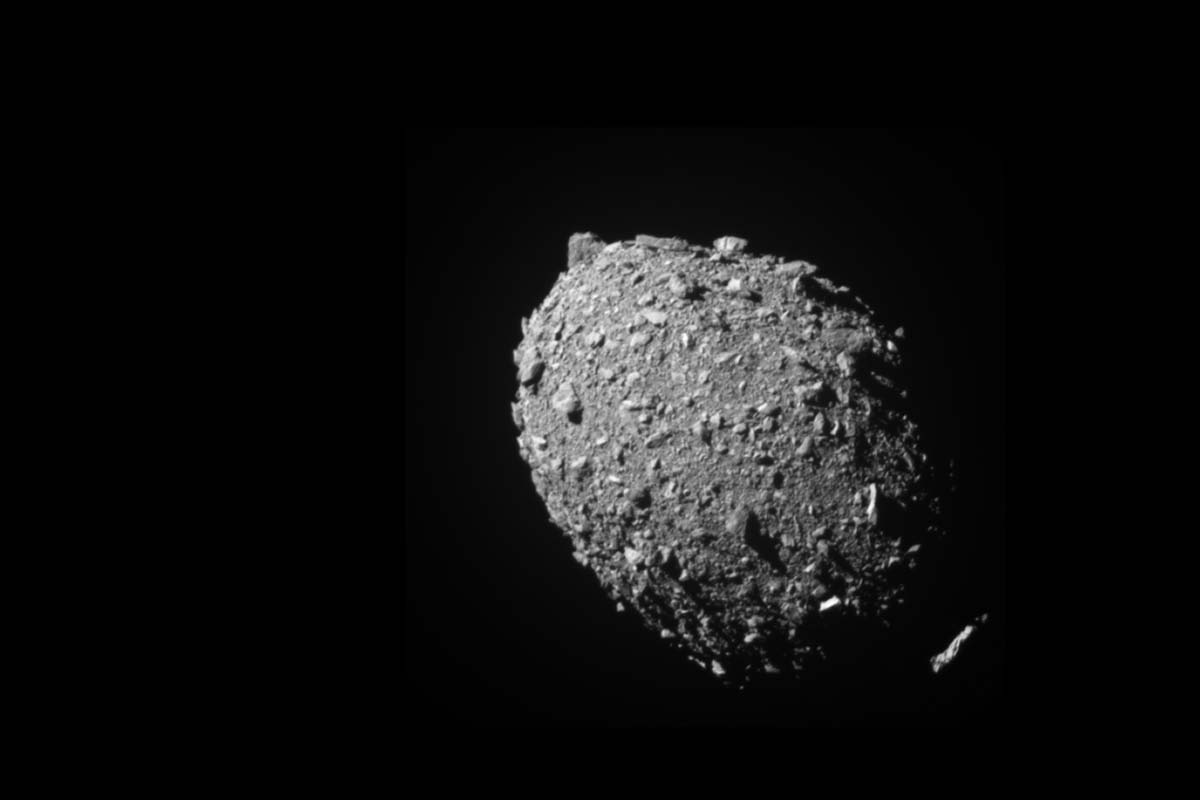
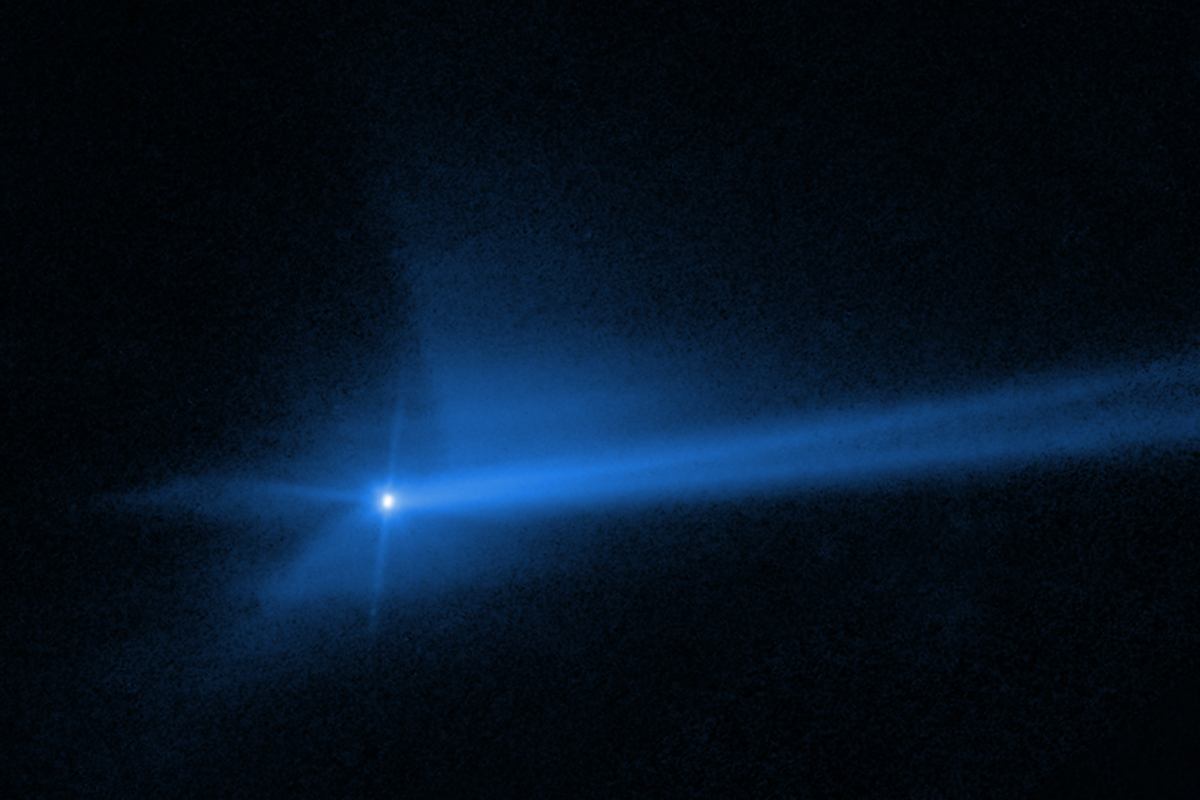
To 26 September 2022, to be precise: that’s the date when NASA’s Double Asteroid Redirection Test (DART) spacecraft was deliberately crashed into the surface of Didymos’s companion/moon, the far smaller Dimorphos.
Didymos has a mean diameter of 765 metres, while Dimorphos has a mean diameter of just 150 metres.
The binary system presents no threat to Earth, but was chosen by NASA as a testbed for the DART craft, which is designed as an Earth defence system.

More on the DART mission
The idea was that, if an approaching asteroid ever does threaten to crash into our planet, we can knock it off course by crashing a spacecraft into it.
Which is the approach that was being tested on the date stated above.
Following the impact, Dimorphos was observed to lose some orbital speed, which caused the radius of its orbit around Didymos to reduce, because a slower-moving object has less momentum and hence is more susceptible to the pull of gravity.
This also meant that the time taken for each orbit was reduced by around 32 minutes.
The impact was also observed to have a very slight impact on the both the orbital path and the orbital speed of the binary system around the Sun.
This was excellent news for the mission team, who said that even the tiniest alteration to an asteroid’s trajectory could one day be the difference between humanity being obliterated and humanity NOT being obliterated.
That much, we could see from a distance.
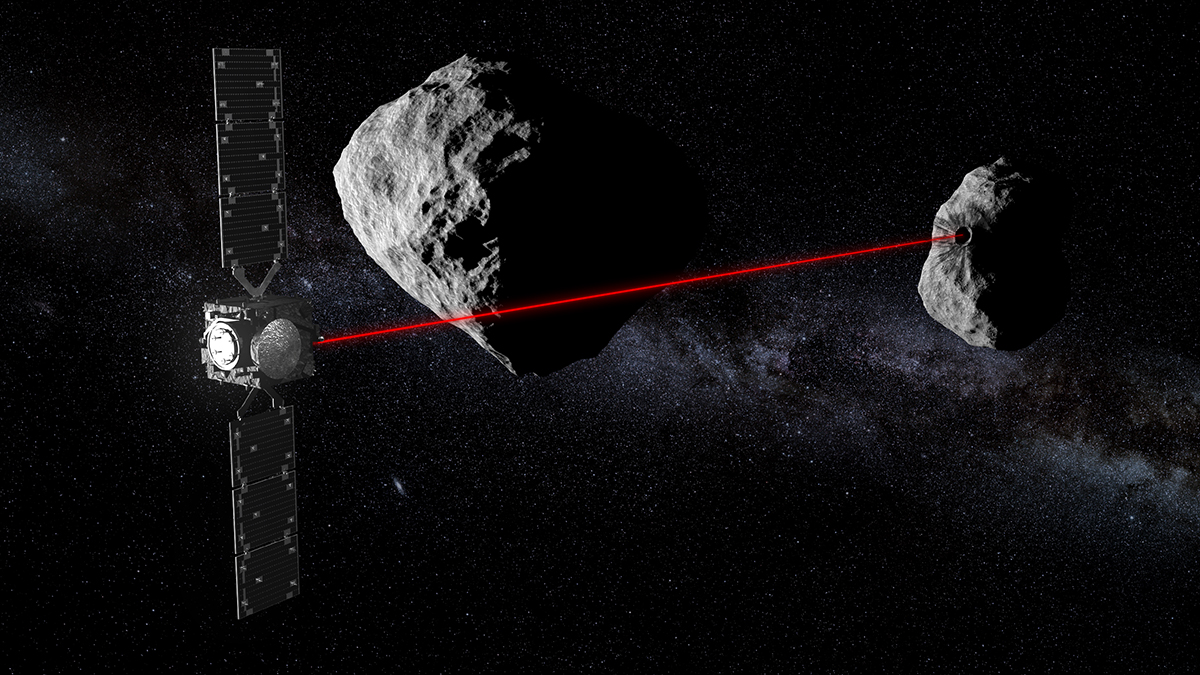
But in 2024, ESA launched its Hera spacecraft, whose role is to visit the Didymos/Dimorphos system and assess the effects of the 2022 impact close-up. And now it’s arrived.
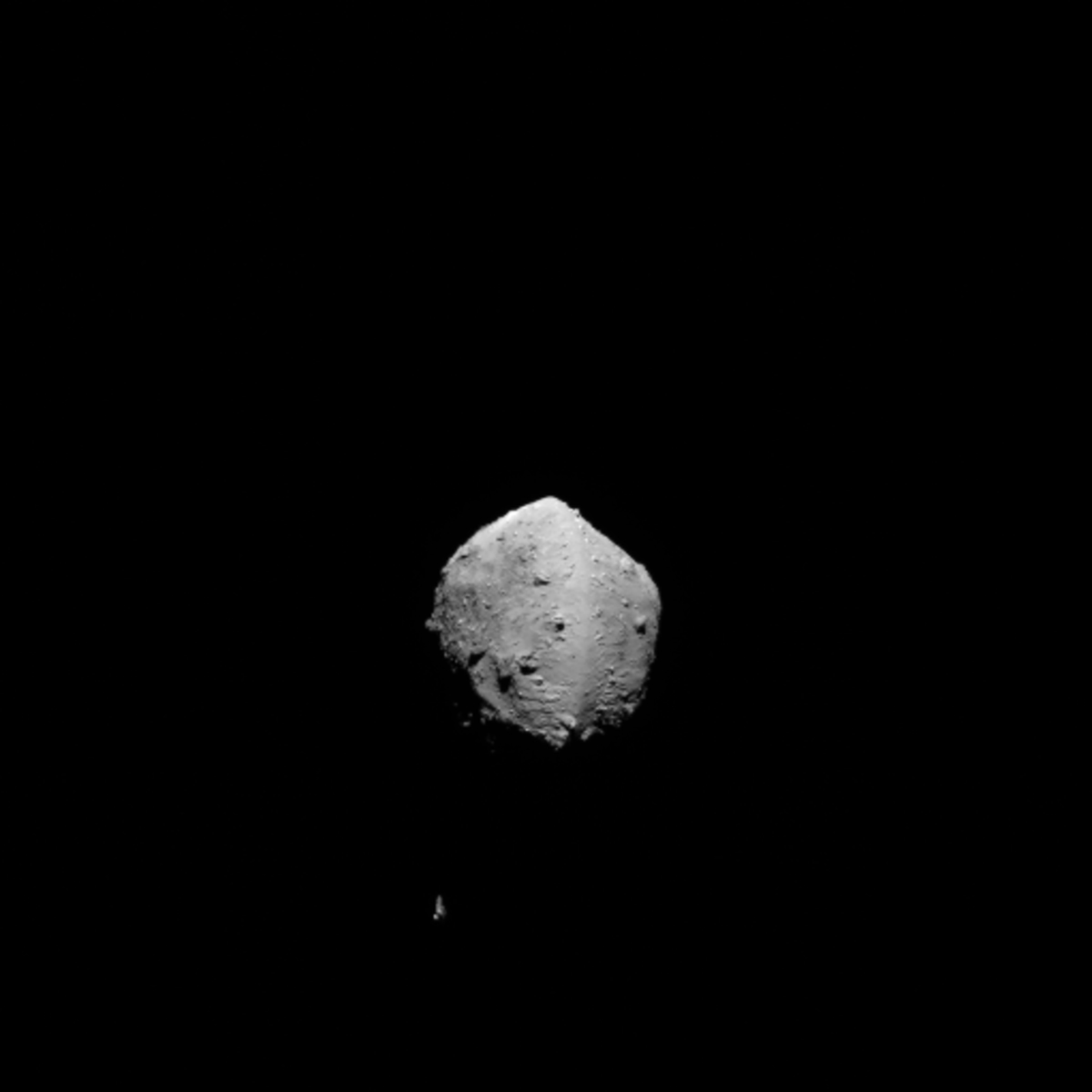
Dimorphos isn’t really visible in the new pictures, as it’s mostly in the shadow of its parent asteroid.
But they do give us a nice clear view of Didymos – and of a different side than we saw in pre-impact images sent back by DART four years ago.
“The first thing we said was wow!” says Hera principal investigator Patrick Michel.
“This is the other side of Didymos from the one that DART’s camera showed us shortly before impact, so this feels like looking at a whole new world.
“This side of Didymos has the same central ridge along its equator that we saw before, but otherwise appears very different, with multiple boulders and craters and what look like patterns of grooves or ridges.”
Those ‘boulders’ may well turn out to be material ejected by the 2022 impact, adds Hera mission scientist Michael Kueppers.
“Since we expect a lot of impact-ejected material to have made it across the approximately 1 km of space from Dimorphos to Didymos, it may be that some of these characteristics originate from this transport of material, and we have exciting work ahead of us to sort it out,” he says.
“We look forward to seeing much more of both bodies and systemically mapping all the changes we identify.”
Further images of both asteroids are expected later this in November 2026.
“It has taken years of hard work and dedication to reach this point,” says Hera mission manager Ian Carnelli, “but we’re motivated to know that the adventure is only beginning!