
The European Southern Observatory (ESO) released a striking image showing powerful laser beams shooting into the night sky above Chile, as astronomers targeted the Tarantula Nebula with one of the world’s most advanced telescope systems.
The image captures Paranal Observatory’s Very Large Telescope Interferometer (VLTI) using laser systems to create artificial guide stars high in Earth’s atmosphere.
"It might look like we started a space war, but we didn’t," says ESO. "This isn’t a scene from Star Wars either."
More amazing science
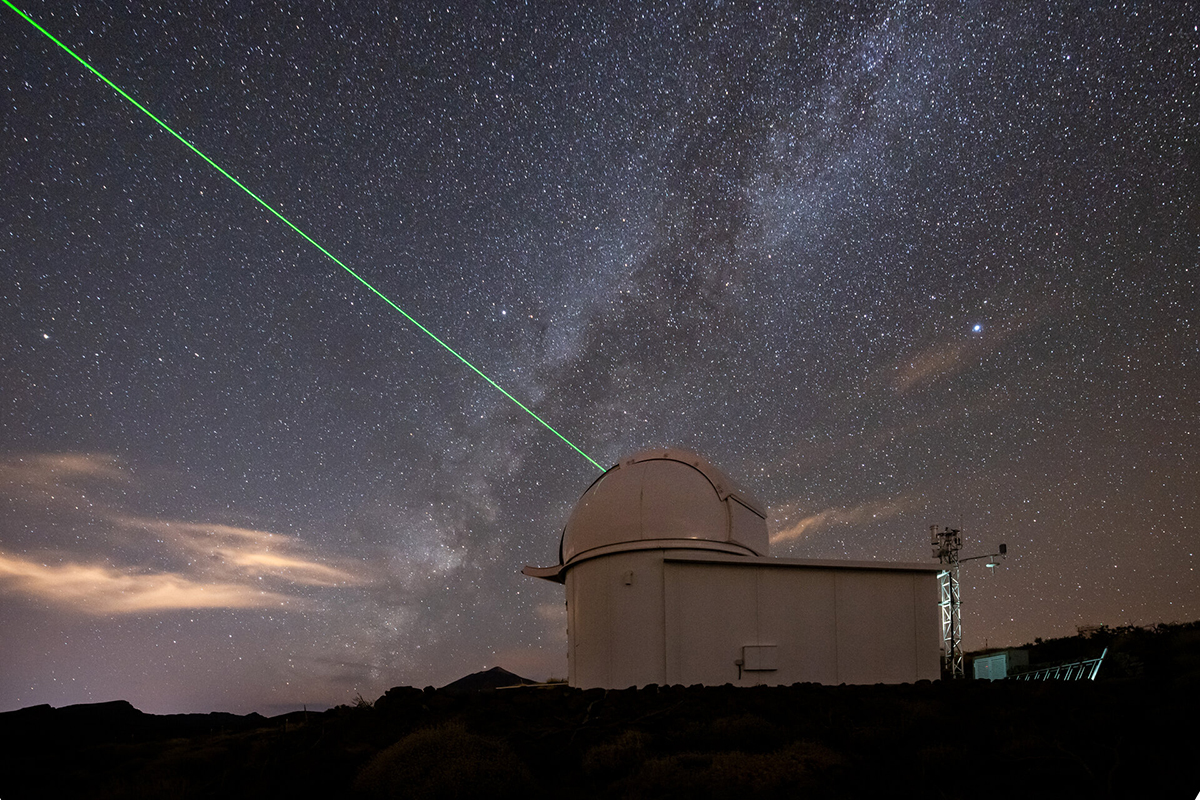
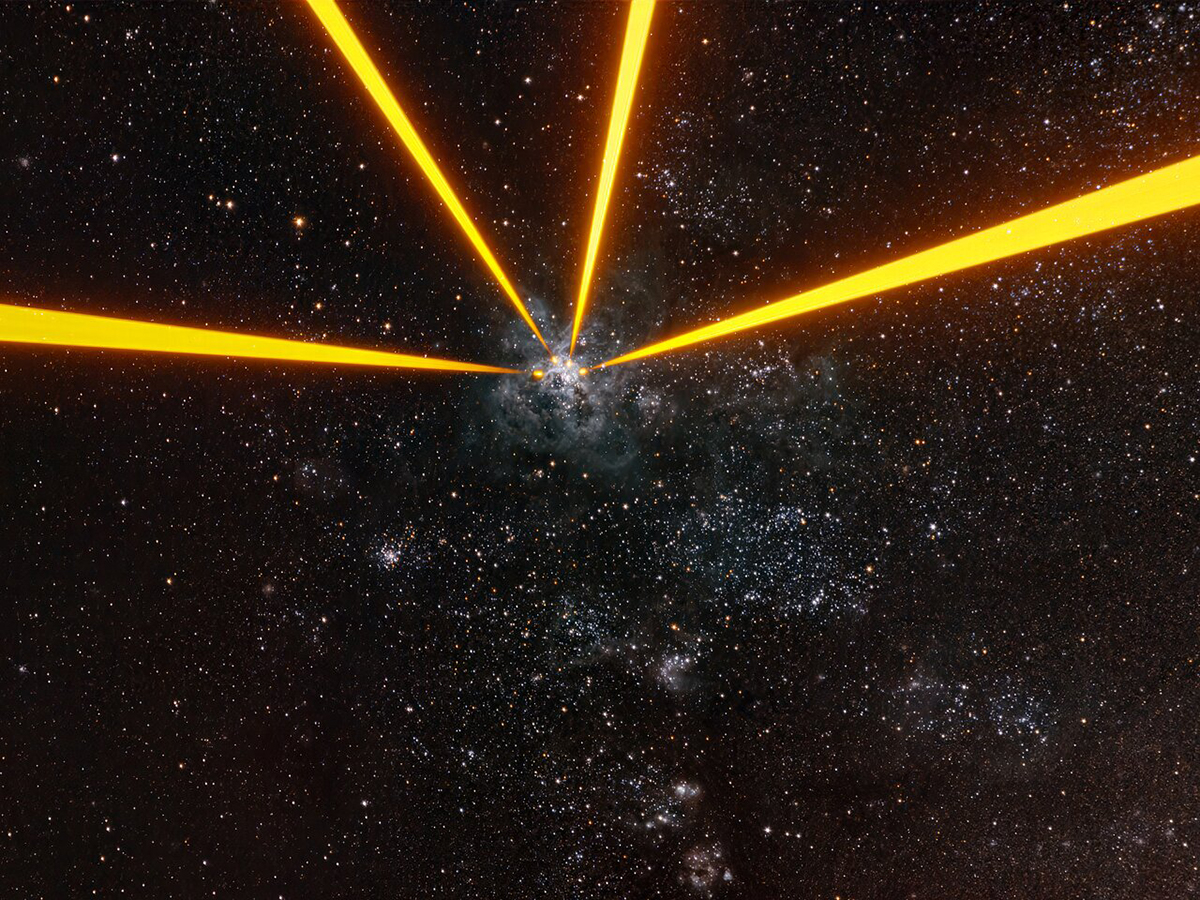
The lasers are part of a major upgrade programme known as GRAVITY+, designed to improve the performance of the VLTI.
An interferometer combines light collected by multiple telescopes to effectively create a virtual telescope with a ‘mirror’ as large as the distance between the individual instruments.
This allows astronomers to study extremely fine cosmic details that would otherwise be impossible to resolve.
However, our atmosphere distorts incoming starlight, blurring observations.
To counter this effect, the VLTI fires lasers into the upper atmosphere where they excite sodium atoms around 90km (56 miles) above Earth, creating bright artificial stars.
These allow the telescope’s adaptive optics system to measure atmospheric turbulence and correct for it in real time.
Laser guide stars were first suggested in the final report of the Very Large Telescope Project in 1986: "If it could work in practice, it would be a breakthrough."
Now, 40 years later, that breakthrough is here.

