
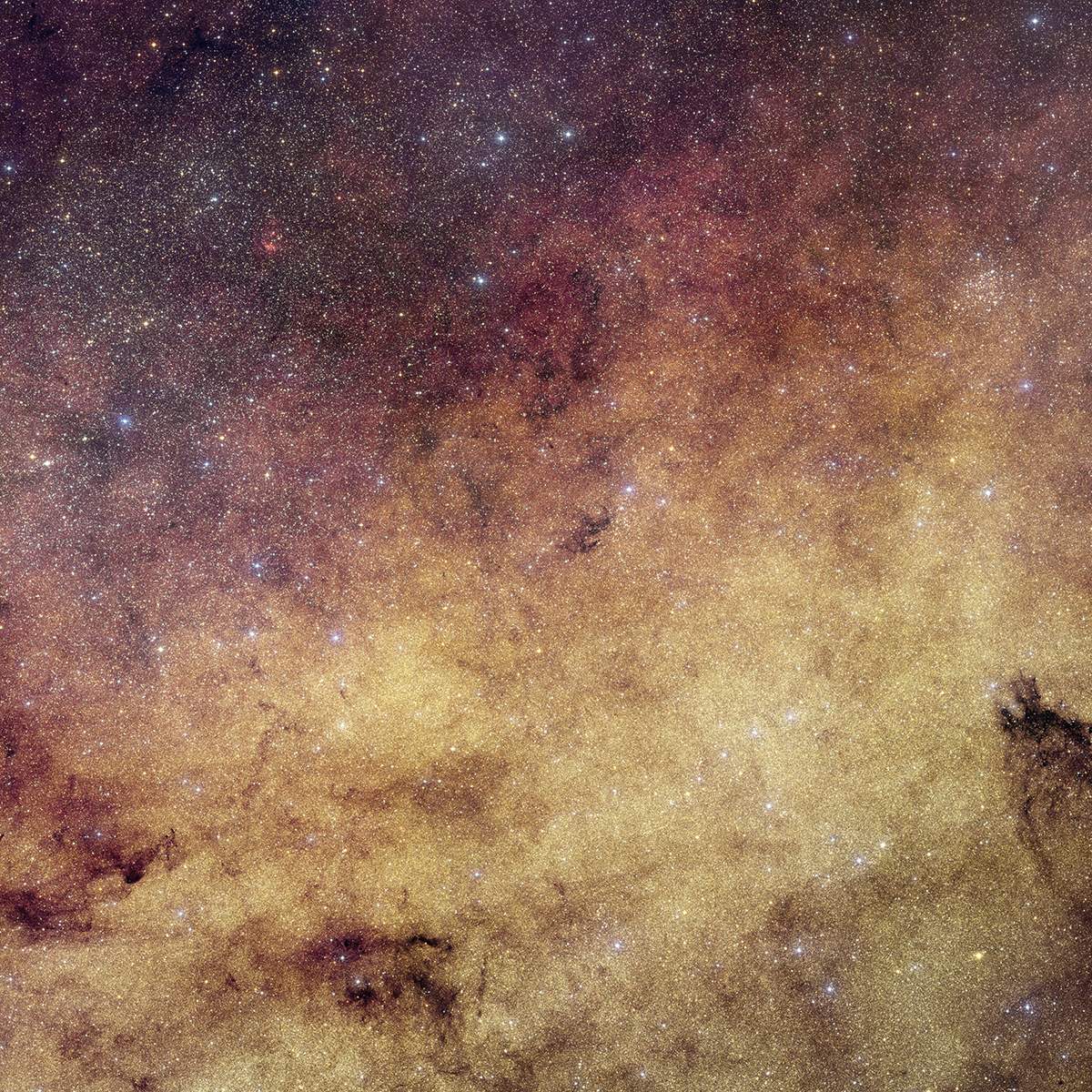
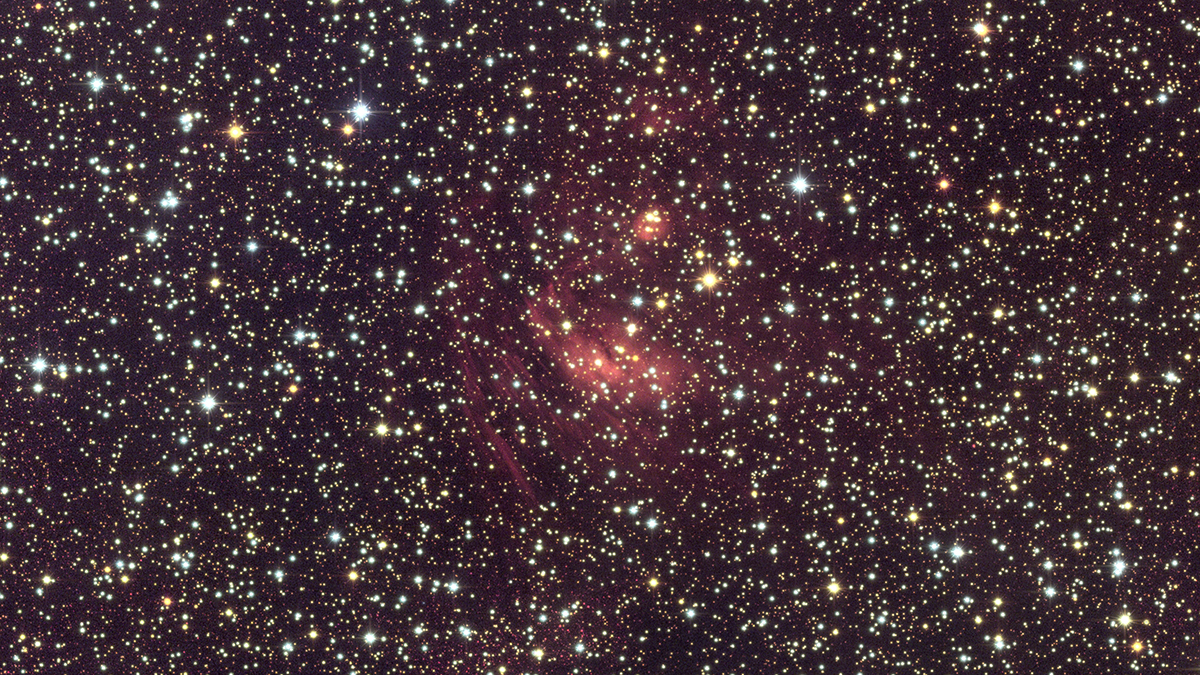
This is a view of over 60 millions stars located near the centre of our Milky Way galaxy.
It was captured by the Euclid space telescope, which is tasked with observing distant galaxies to explore the nature of the mysterious phenomena known as dark matter and dark energy.
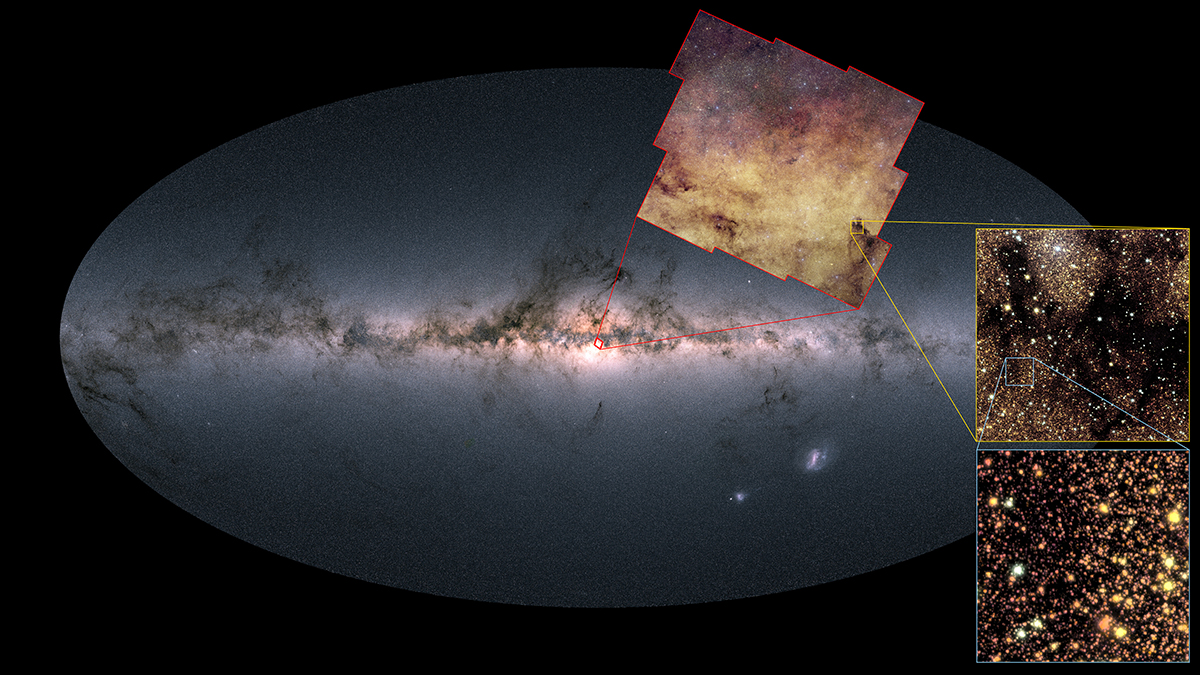
Euclid captured the image over the course of just one day, turning its gaze towards the bright, inner region of our Galaxy known as the galactic bulge.
But Euclid isn't just looking at stars; the astronomers who used the spacecraft to capture this photo are interested in something else – distant planets orbiting suns beyond our Solar System.
More from Euclid
A view into the centre of our Galaxy
Our Milky Way Galaxy is a spiral galaxy. Earth, the Sun and all the other planets of our Solar System are located within one tiny region in one of its enormous spiral arms.
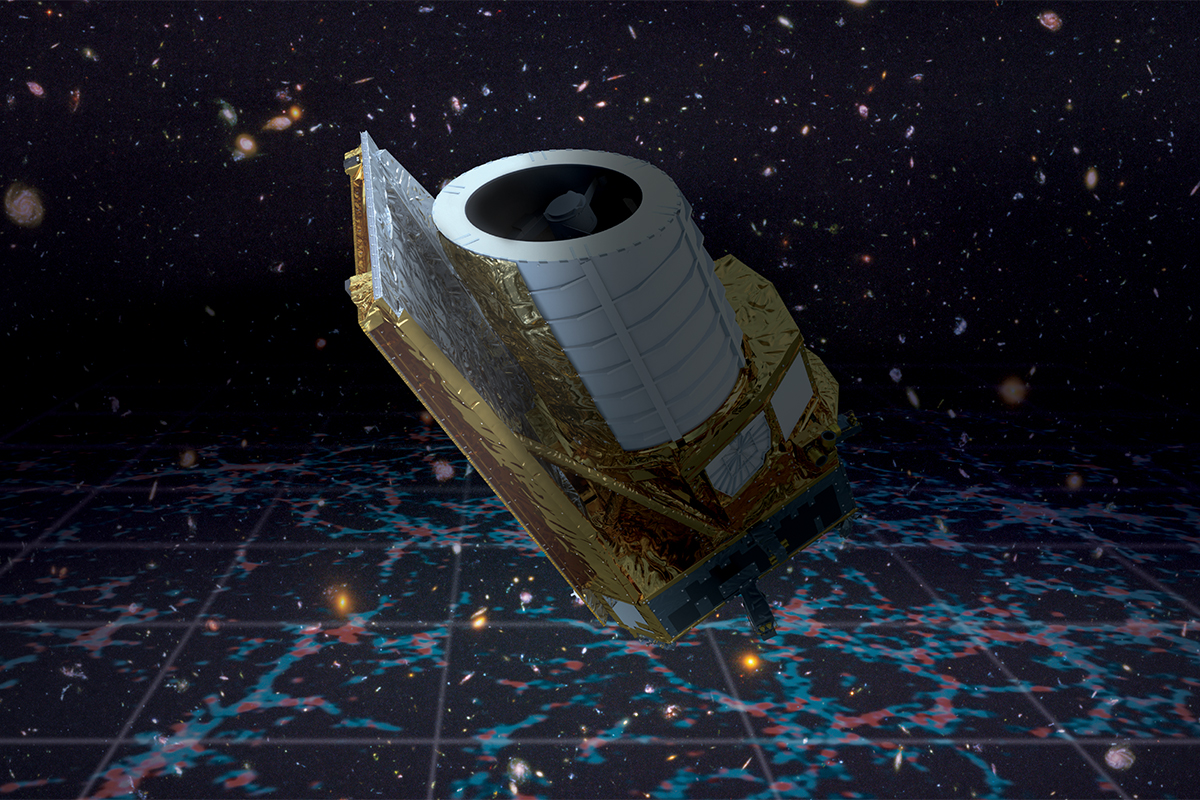
Euclid was designed to observe billions of faraway galaxies to probe the unknown, dark universe.
As a result, its visible light light camera is so sensitive, it can distinguish between individual stars even in the crowded galactic bulge.
On 23 March 2025, Euclid produced this image over a period of about 26 hours.
The space telescope captured nine different images, each covering a patch of the sky larger than the full Moon, and these were then stitched together to produce the final image.
Scientists say each 'pointing' that Euclid captures over a period of hours spans an area 270 times larger than the field of view of the Hubble Space Telescope.
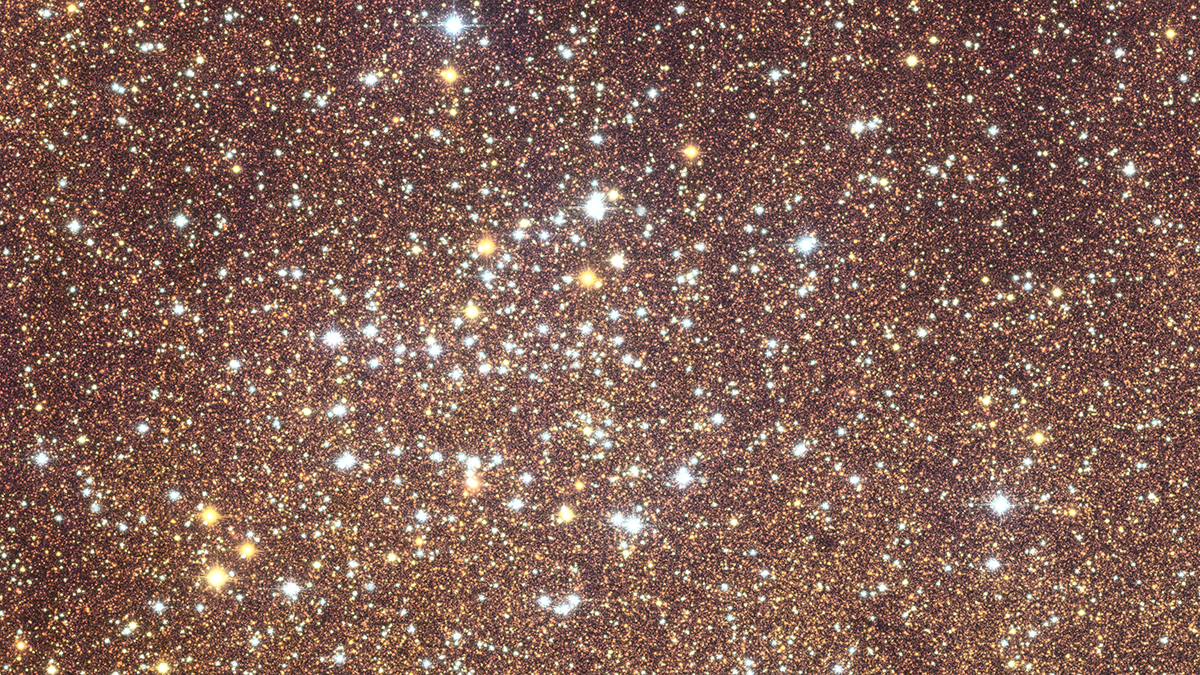
The result is an image that includes over 60 million stars, along with nebulae and star clusters.
And despite how crowded it looks, Euclid's crisp view is good enough for astronomers to use it to search for planets orbiting distant stars using a light-bending trick known as microlensing.
Microlensing and warping light to search for alien worlds
Microlensing, like gravitational lensing, is a technique based on Einstein's theory of relativity that relies on the fact that light from distant objects is warped by the mass of closer objects.
In the case of gravitational lensing, where astronomers are studying enormous objects like galaxies and galaxy clusters, light from distant galaxies is magnified by the sheer mass of closer galaxies, acting as a sort of cosmic magnifying glass and giving astronomers a better view of faraway objects.
Microlensing, in contrast, works on a smaller scale – relatively speaking – and involves hunting for planets orbiting distant suns.
The process relies on the alignment of two stars, from an observer's perspective.
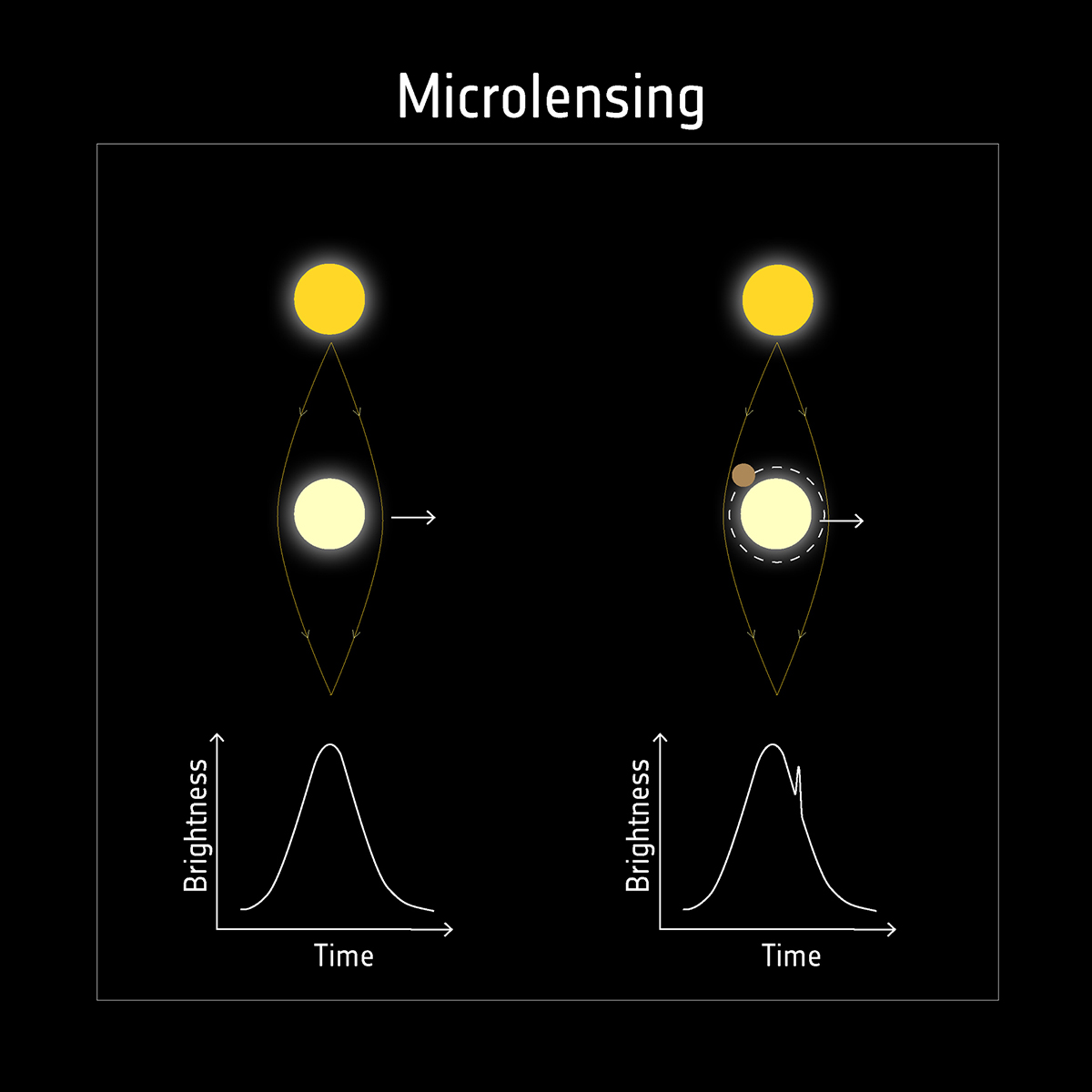
As one star passes in front of another, the nearer star acts like a magnifying glass, bending and brightening the background star’s light.
But if a planet is orbiting – and passes in front of – the closer star, that planet's gravity also bends the light, causing the light to be warped in an uneven way.
That change in brightness can tell astronomers there may be a planet around the star.
"To catch microlensing, you need to observe parts of the sky that are crowded with stars, such as close to the centre of our galaxy," says Jean-Philippe Beaulieu of the Institut d’Astrophysique de Paris in France, and the University of Tasmania in Australia.
"During the last twenty years, almost 300 exoplanets have been discovered using this technique, all with ground-based telescopes and all towards the centre of our galaxy.
"This image from Euclid includes 51 known planetary systems – and it will assist in studying many more that will be found."
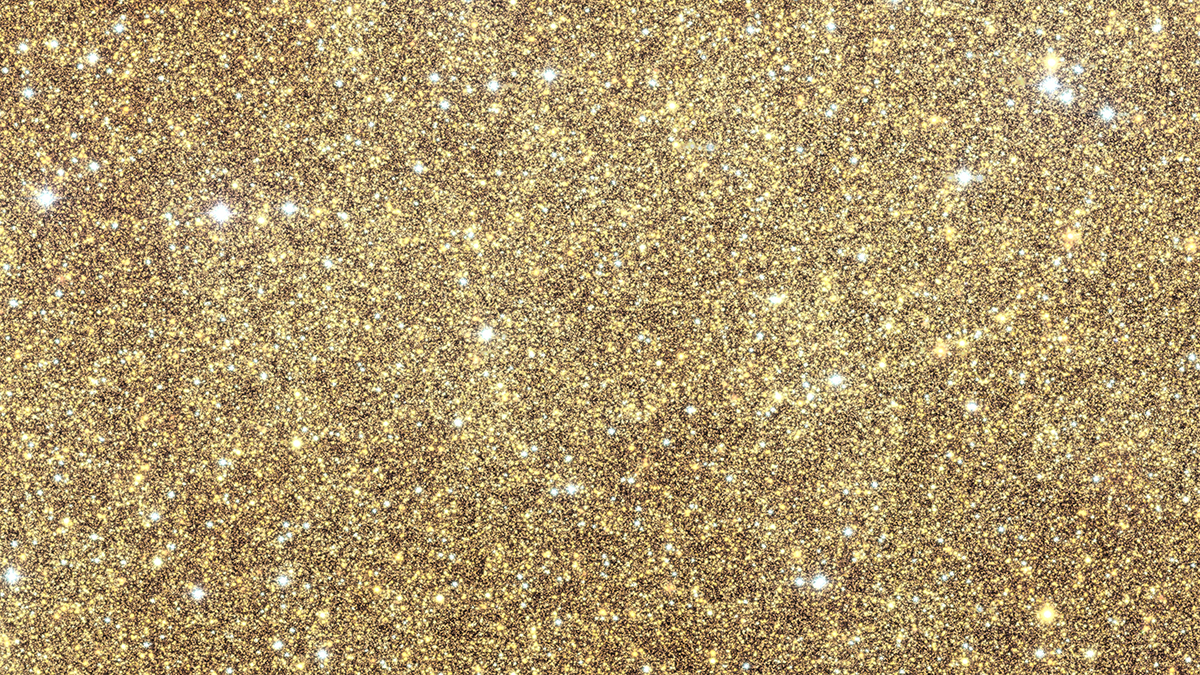
Euclid’s single day of observation isn't long enough for new microlensing events to be found, but the image allows scientists to measure the mass of planets that are already known, as well as planets yet to be discovered.
For example, the patch of sky covered here is the same as that which will be explored by the upcoming exoplanet-hunting Nancy Grace Roman Space Telescope.
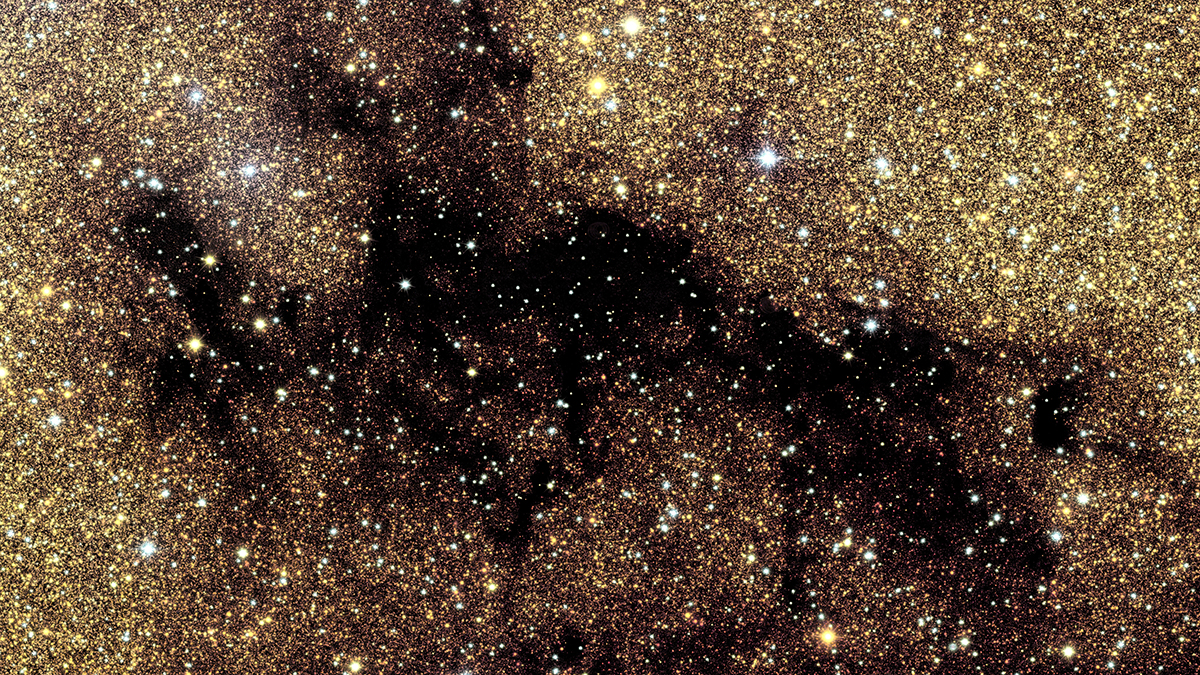
"In 24 hours, Euclid has already captured the stars involved in all the future microlensing events that the Roman space telescope will detect, but before the stars and planets involved have aligned," says Natalia Rektsini of the Institut d’Astrophysique de Paris in France.
"This means that anyone who detects a microlensing event in the same region, for example with Roman, will be able from now on to use Euclid data as a time reference in the past and see how the stars looked before they overlapped," Natalia says.
"Since Euclid can clearly separate individual stars, one can then measure how fast they move over time and use that information to confirm the existence of a planet and determine its mass. This would not be possible with data from one point in time."
A wealth of worlds to be found
The team behind this image say that, with most planet-hunting techniques, large, hot planets orbiting massive stars are easier to find.
But that's not the case with microlensing.
"This technique is unbiased, we discover whatever is out there," says Natalia.
"It is uniquely suited to discover cold exoplanets. And we expect every star in the Milky Way to host at least one such planet."
"This result shows what a relatively small, dedicated team, can achieve within a large international mission," says Valeria Pettorino, Euclid Project Scientist at ESA.
"The exoplanet team included strong contributions from early-career researchers and was supported by the Science Ground Segment unit working on the visible instrument.
"In just 24 hours, Euclid has delivered unique data on the Milky Way’s centre, with a large and sharp view of this region. With time, the separation between sources and lenses increases.
"That’s why this Euclid data will be a time reference for past and future missions and enable studies of exoplanets and their masses.
"This data can also be used for other scientific applications, from brown dwarfs and binary stars to stellar motions and dust across our galaxy."

