
Scientists have captured the first-ever visual proof of two supermassive black holes locked in a death spiral.
It has long been suspected that black holes can come in pairs, but this is the first time the phenomenon has been imaged.
The international team behind the capture used data from the now-defunct RadioAstron radio satellite.
More on black holes
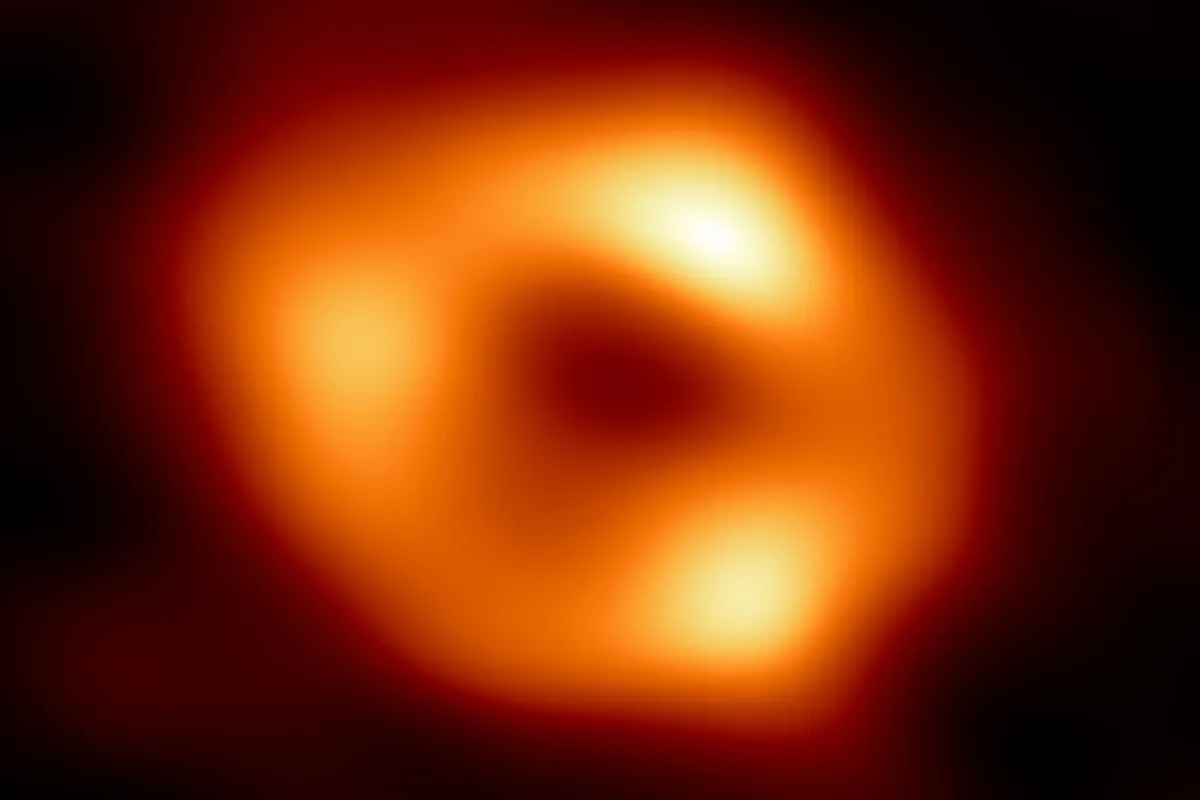
The two singularities, located 4–5 billion lightyears away from Earth, were given away by the powerful streams of plasma and energy ejected from their poles.
The capture is an impressive feat – the equivalent of photographing a coin on the surface of the Moon.
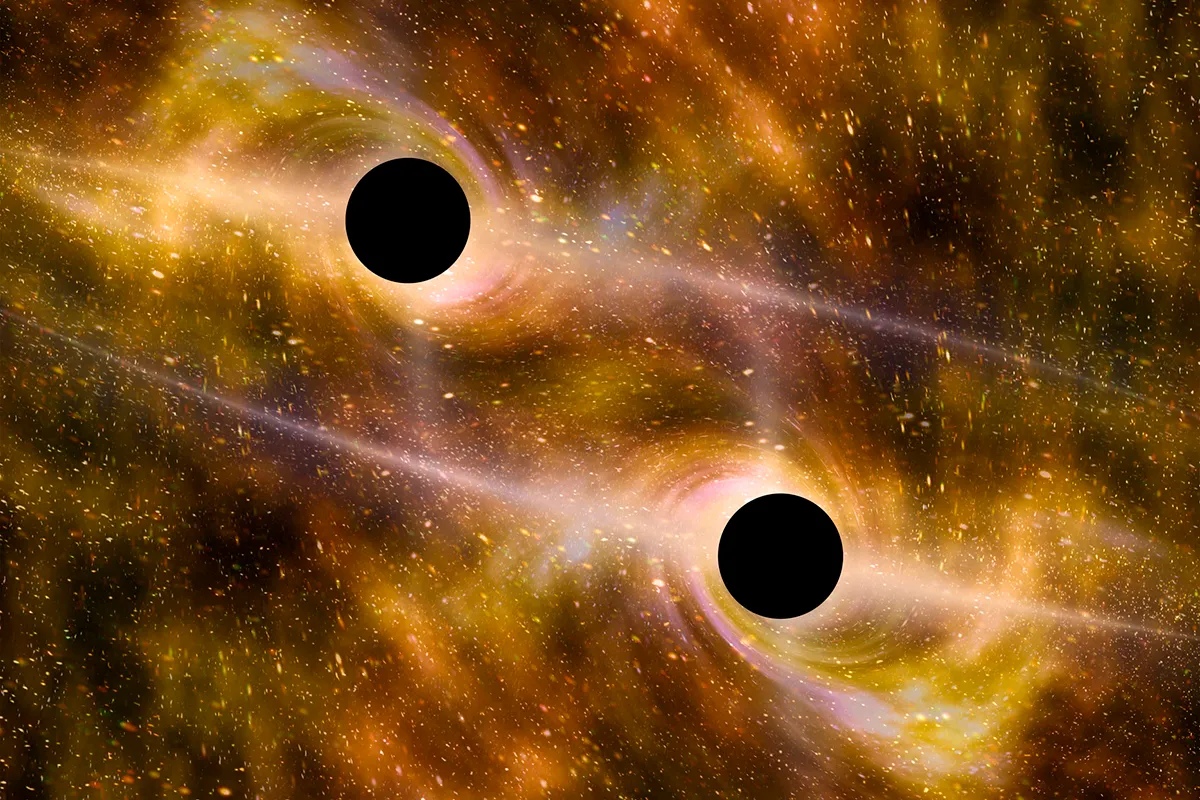
"For the first time, we managed to get an image of two black holes circling each other,” explains lead researcher Mauri Valtonen.
"In the image, the black holes are identified by the intense particle jets they emit. The black holes themselves are perfectly black, but they can be detected by these jets or by the glowing gas surrounding the hole."
The pair were found in the centre of a quasar called OJ287, which has long been thought to harbour a black hole pair, due to its light output fluctuating on a 12-year cycle.
The idea that this dimming and brightening was a sign of a binary black hole system dates back to the 1980s, but this new radio image is the first-ever confirmation of the theory.
The smaller black hole’s jet may be a previously unseen type of particle stream.
It appears to be twisting around like a spinning garden hose as it rotates around its larger counterpart – although this is yet to be verified.
"The RadioAstron satellite was in operation a decade ago, when OJ287 was imaged," says Valtonen. “Its radio antenna went half-way to the Moon, which greatly improved the resolution of the image."

