
The Geminid meteor shower is one of the best meteor showers of the year, and this weekend is perfectly placed in the calendar to catch the peak of the 2025 season.
Peak Geminids activity occurs during 13–15 December, and what's more, this weekend the Moon will be a thin crescent and below the horizon for much of the night.
More on meteor showers

That means there's no lunar glare to spoil your view, and with these December nights now well and truly dark, the 2025 Geminid meteor shower is one of your best chances of seeing a shooting star.
Here we'll go though some top tips to help you get the most out of the 2025 Geminds.
For the full picture, read Pete Lawrence's fantastic guide to the Geminid meteor shower.
Find out when the next meteor shower is happening and get weekly Moon rise times and phases sent directly to your email inbox by signing up to the BBC Sky at Night Magazine e-newsletter.

Geminid meteor shower quick facts
The radiant - the point in the sky from which the meteors appear to emanate, is in Gemini near the stars Castor and Pollux.
The Geminid shower has a zenithal hourly rate (ZHR) of 140–150 meteors per hour. This is the theoretical number of meteors you would expect to see under ideal conditions.

With the Moon out of the way and if you have clear skies tonight, there could be time for around 12 hours of Geminid meteor shower watching.
Sleep management and warm clothing are a must for serious Geminid watchers!
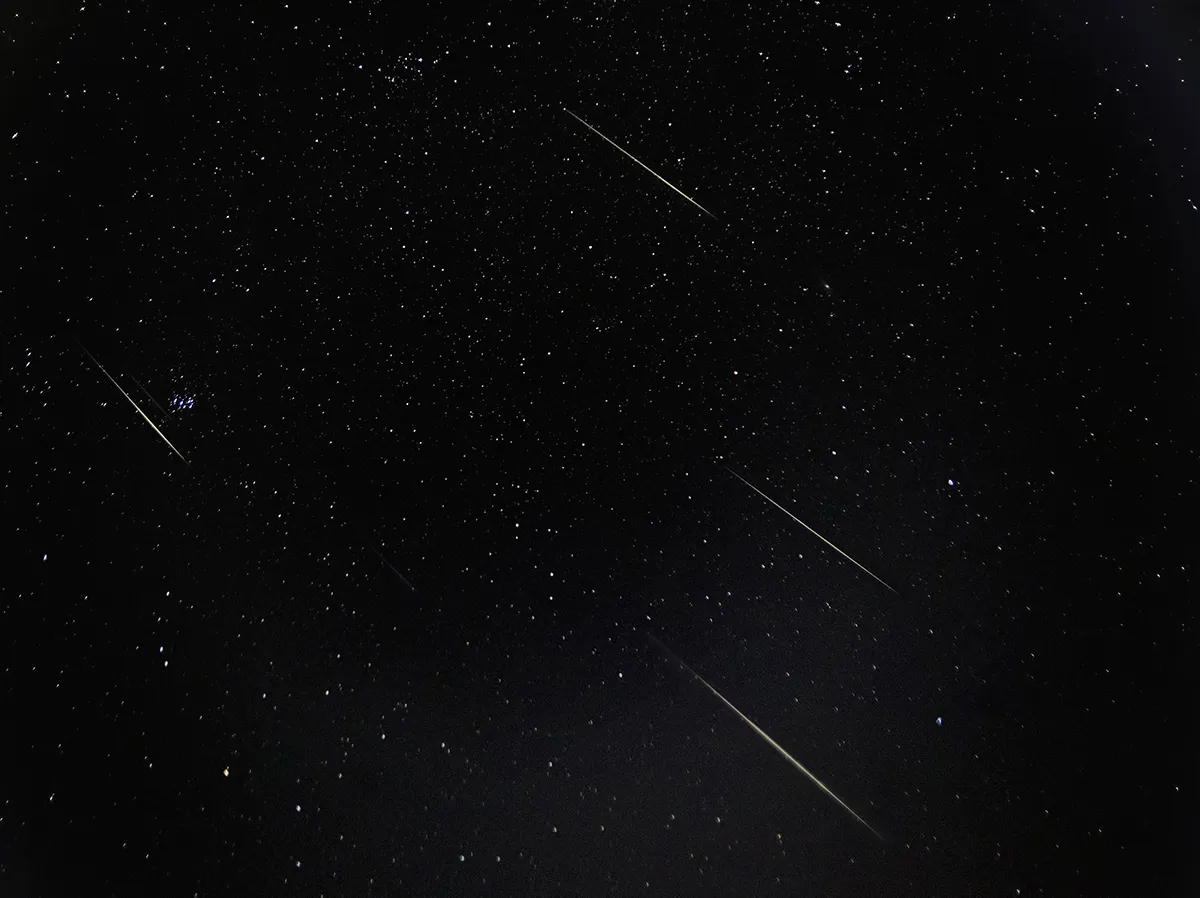
Observing the Geminid meteor shower top tips
Wrap up warm and use a sun-lounger or reclining chair to prevent neck ache
Observe with friends and family and keep watch in shifts, with comfort breaks in between.
Bring a flask of hot tea or soup to help keep warm - those December nights can get cold!
Allow 20 minutes for your eyes to adapt and avoid looking at bright artificial light
If you need a light, use a red torch
Look around two thirds the way up the sky, this being the best region to see a Gemind meteor
Any direction is fine, but trails will be shortest closer to the radiant and longest 90° from the radiant.
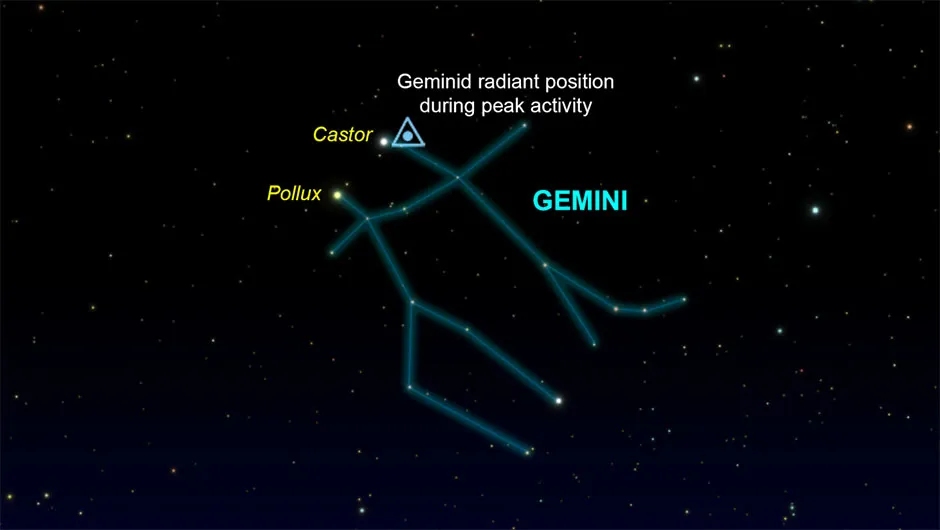
Find Gemini by drawing a line between Orion’s right foot (Rigel) and left shoulder (Betelgeuse).
Follow that line on for around the distance between your thumb and little finger stretched out at arm's length.
You'll see a pair of bright stars here: Castor and Pollux, the ‘heads’ of Gemini’s twins.
The radiant is just by Castor, but look slightly away from this region rather than directly at it.
If you spot a meteor coming from this region, you've seen a Geminid.
Have you managed to see any Geminid meteors this year? Did you manage to photograph any? Let us know by emailing contactus@skyatnightmagazine.com or get in touch via Facebook, Twitter and Instagram.

