
There's a pink planet, just a stone's throw from Earth, that astronomers have been trying to decipher for over a decade.
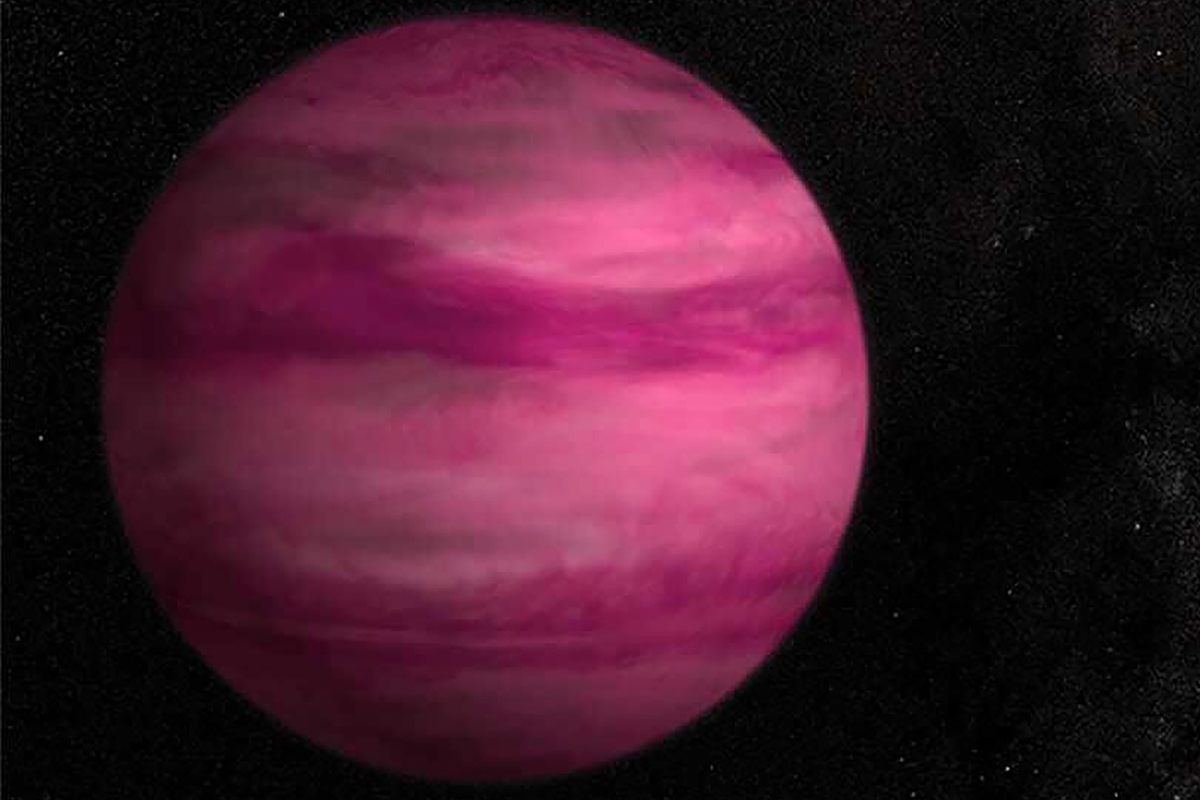
Known as the Pink Planet or, officially, GJ504b, this strange world orbits a Sun-like star 57 lightyears from Earth.
Astronomers aren't even sure if it's a planet at all. About 25 times the mass of Jupiter, it's so massive it's on the boundary between giant planets and brown dwarfs (a type of failed star).
But observations with the James Webb Space Telescope have revealed direct evidence for something rather strange at the Pink Planet: salty clouds.
More strange planets
A freezing-cold, sort-of-planet
Because GJ504b is so massive, astronomers refer to it as a 'planetary-mass companion', meaning it’s a planet-sized object orbiting a star.
The Pink Planet is one of the coldest known planetary-mass companions ever directly imaged.
It's too faint for astronomers to properly study from Earth, but the James Webb Space Telescope has enabled closer study of its atmosphere, revealing an atmosphere filled with exotic chemistry and salty clouds.
"The Pink Planet is the coldest companion ever discovered using ground-based instruments," says Aneesh Baburaj of Northwestern University in Illinois, USA, who led the study.
"Many teams all around the world performed follow-up observations to study its light, but it was too faint for ground-based instruments. That made it a perfect target for JWST.
"When we finally obtained its spectrum, it immediately looked interesting. But once we started digging deeper into the data, we realised it was not like anything we have analysed before."
The observations are some of first direct evidence for salt clouds in a cold object’s atmosphere.
Astronomers say the discovery is an important step toward studying cold cosmic objects too dim to examine in detail with telescopes on the ground.
A major breakthrough
Attempts to study GJ504b with ground-based telescopes have proven fruitless.
GJ504b is just 290°C (550°F) which, while it may sound hot, is freezing cold for a planet. It's not often you can say a distant planet's temperature could be easily outmatched by a pizza oven.
Its cold temperature, say astronomers, is a result of its age. Planets are scorching hot when they form within the dusty discs around newborn stars, but they cool over time.
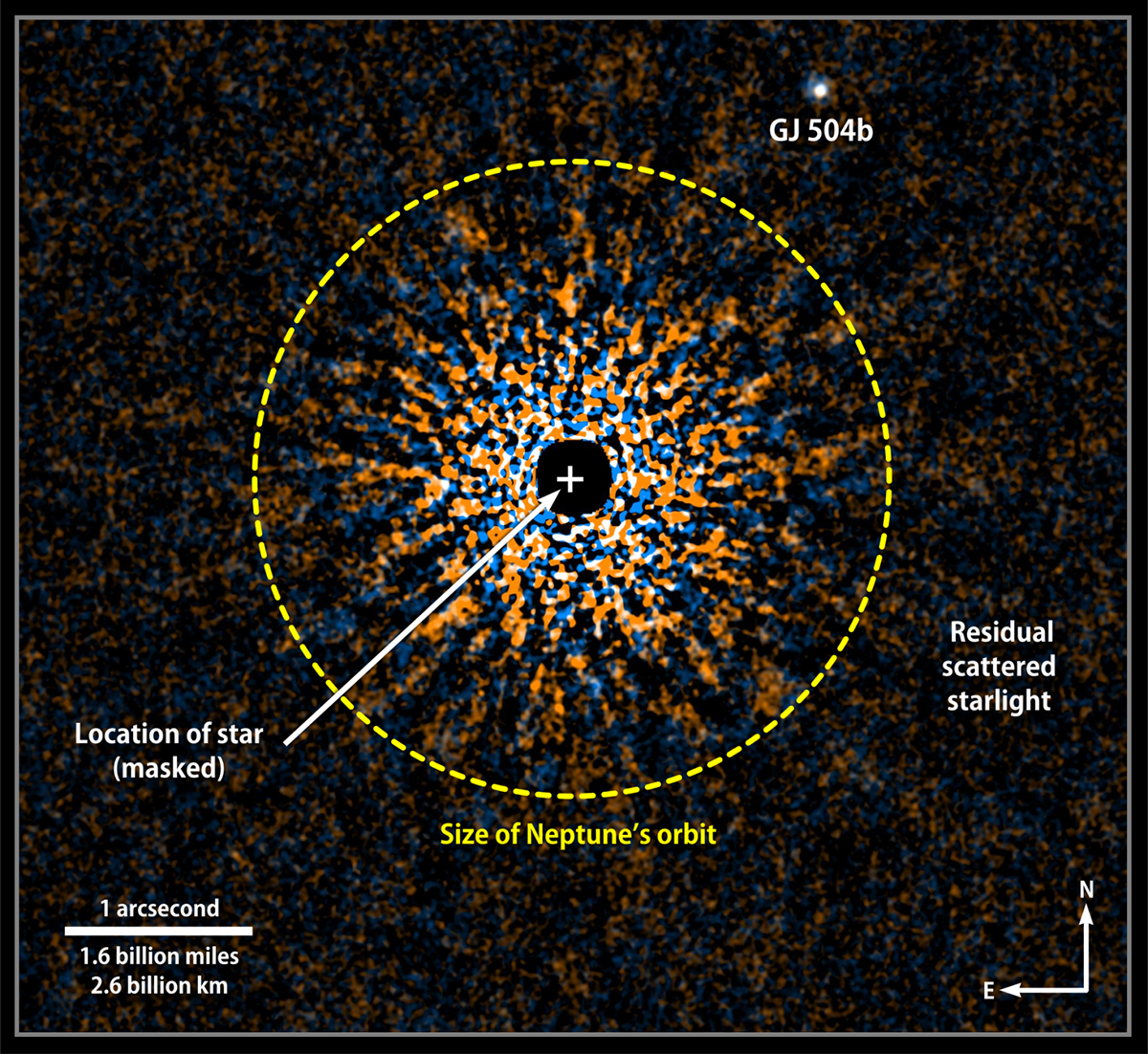
The study estimates GJ504b is between 2.5 billion and 4 billion years old. The James Webb Space Telescope was able to capture planet's faint light.
Then the team used processing techniques to remove the light from the bright host star, giving them a better view of the planet itself.
They were then able to analyse light from the planet and thereby determine the chemical elements and molecules present.
"In the past, other astronomers observed the companion for an entire night with some of the biggest telescopes in the world to obtain a spectrum," Baburaj says.
"And they could not see the object. With JWST, our entire observation took around two hours, and we were successful."
The Pink Planet comes into focus
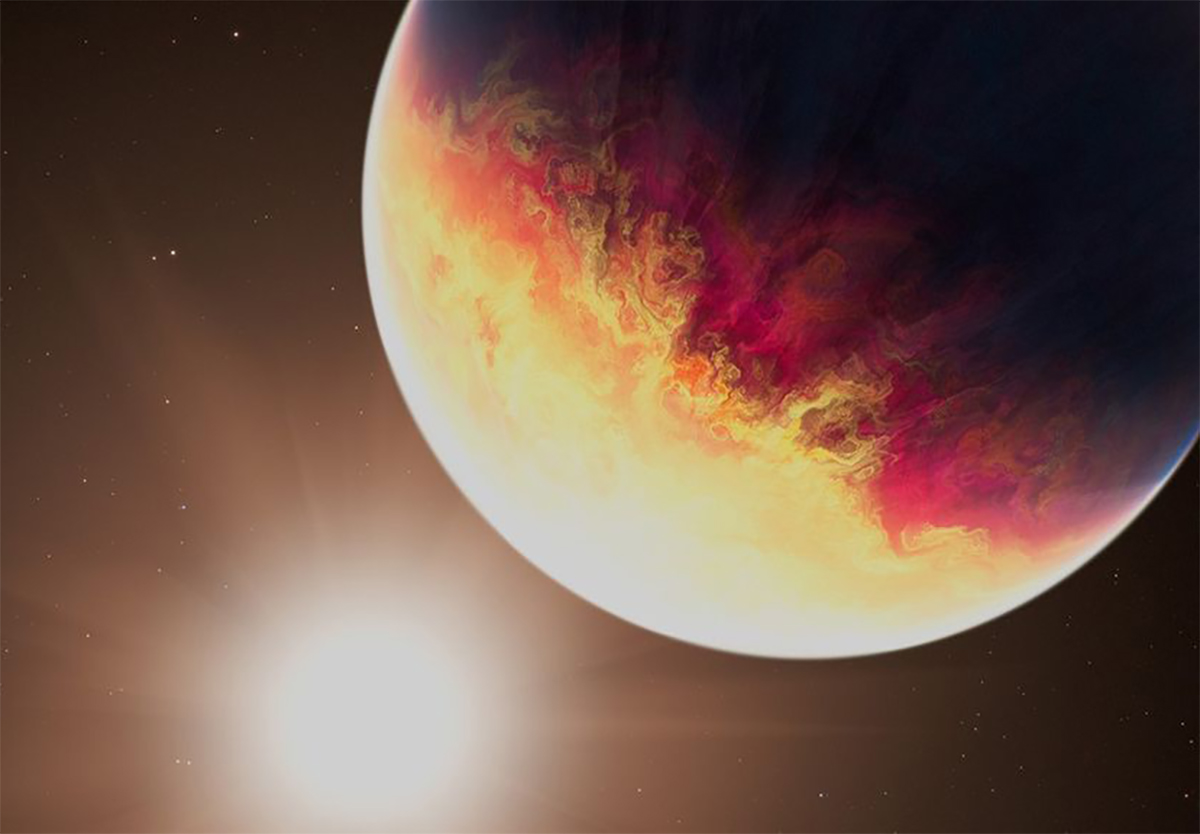
The data revealed chemicals including water vapour, methane, carbon dioxide and ammonia, among other molecules.
The team fed that information into a computer to produce a simulation of the planet, but noticed something was missing.
Once the computer software attempted to construct the model, the team found the simulated atmosphere would only match what they'd actually seen if the planet contained unusual, implausible features.
They added clouds to the model and the unusual characteristics vanished.
The team say salt clouds are likely smothering the atmosphere’s deeper layers, matching what was observed by the James Webb Space Telescope.
"We ran simulations with clouds, and the results aligned with what we know about cold planets," Baburaj says.
"We tried three different types of clouds, and salt clouds fit best. When we accounted for salt clouds, it subdued the signature of molecules hidden deeper in the companion’s atmosphere. Then, the results became physically possible."
Webb's observations suggest GJ504b is unusually rich in heavy elements, or metals.
But astronomers still aren't sure how it formed – it may have formed either like a giant planet or a small star.
The team say the techniques used here could help with the study of other cold, faint planets.
"This is the first time we’ve found that salt clouds are critical to explaining the spectrum of an object," Baburaj said.
"It’s a good reminder to account for clouds in our models."
Read the full paper in the Astronomical Journal

