
It's a relatively well-known fact that we know more about the surface of the Moon than we do about our own ocean floor.
Humans have produced startlingly accurate maps of the Moon and captured amazing images of the lunar surface – including of the far side of the Moon, which isn't even visible from Earth.
More Earth science
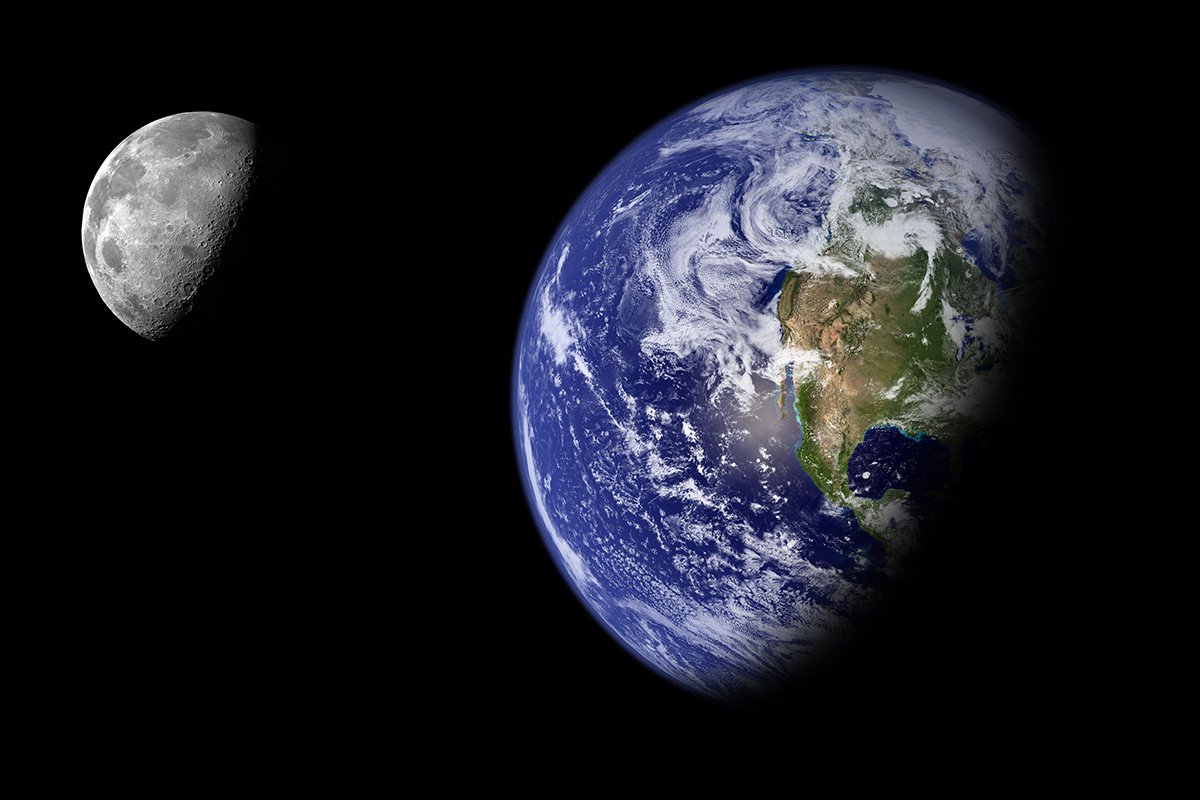
And yet we barely know what's going on at the bottom of our oceans and seas, relatively speaking.
That could be about to change, with a new project seeking to map the whole of the ocean floor in unprecedented detail by 2030.
To that end, NASA has released an amazing map showing the terrain of the seabed captured by an Earth-orbiting satellite that uses gravity to detail underwater canyons and ridges.
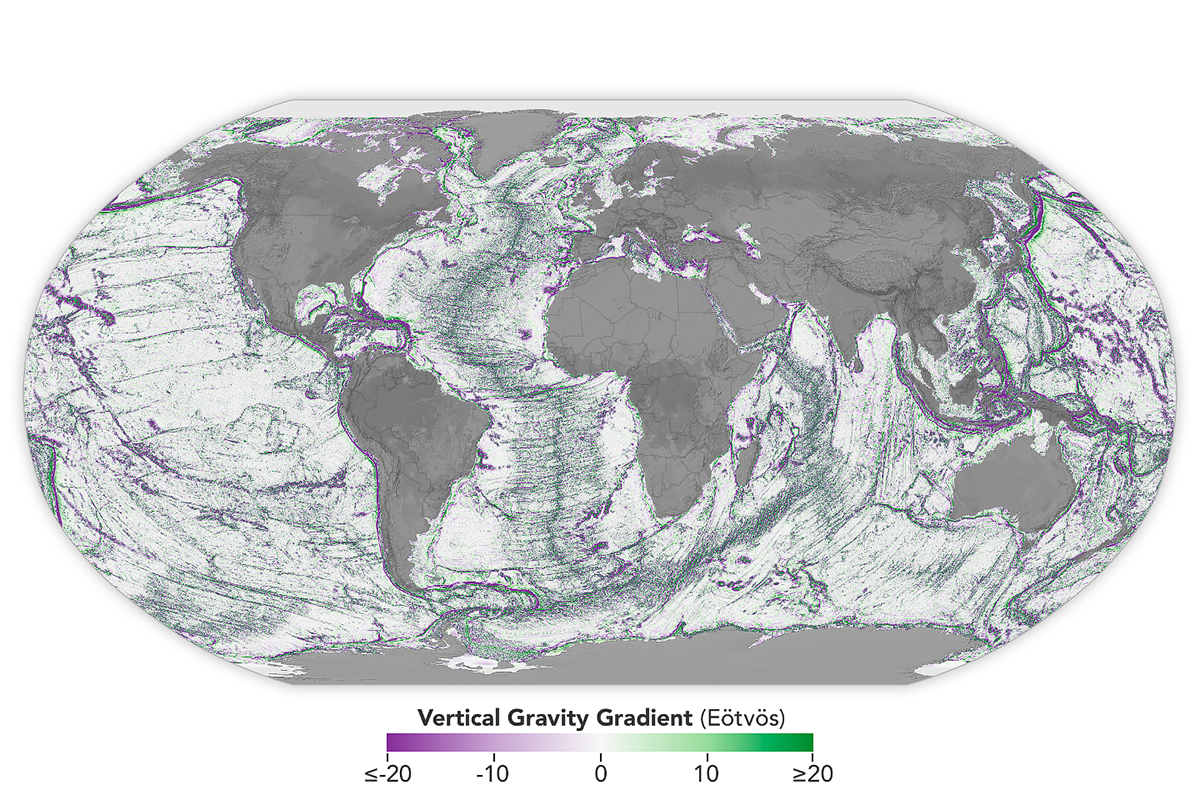
The SWOT (Surface Water and Ocean Topography) satellite is a collaboration between NASA and the French space agency CNES (Centre National d’Études Spatiales).
NASA says the satellite is revolutionising our view of the global seabed, giving us unprecedented ability to map the ocean floor, better even than ships fitted with sonar instruments.
Why map the seafloor?
Beyond sheer scientific curiosity, mapping the terrain at the bottom of the sea has multiple uses, including:
- Navigation
- Laying communications cables
- Seabed mining
- Improving shipping routes
- Detecting potential hazards
- Understanding currents and tides
- Refining knowledge of plate tectonics
- Learning more about ocean ecosystems
How SWOT maps the seabed using gravity
SWOT launched in December 2022 and its orbit around Earth enables it to cover 90% of the globe every 21 days.
The satellite measures the height of water across the globe in oceans, lakes and rivers.
"The SWOT satellite was a huge jump in our ability to map the seafloor," says David Sandwell, a geophysicist at Scripps Institution of Oceanography in La Jolla, California.
Sandwell was part of the team that produced the seafloor map using SWOT data, which was published in December 2024.
The method by which SWOT maps the seafloor is rather ingenious.
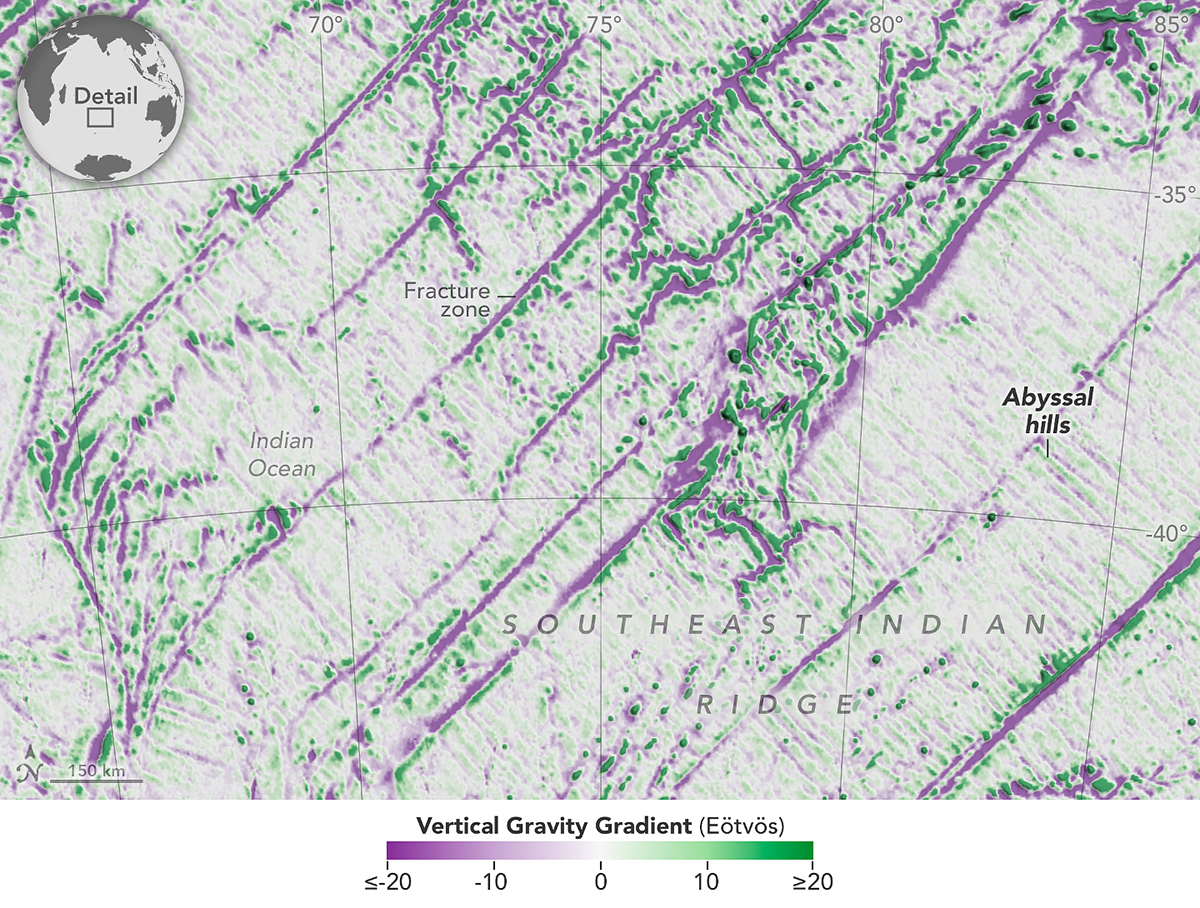
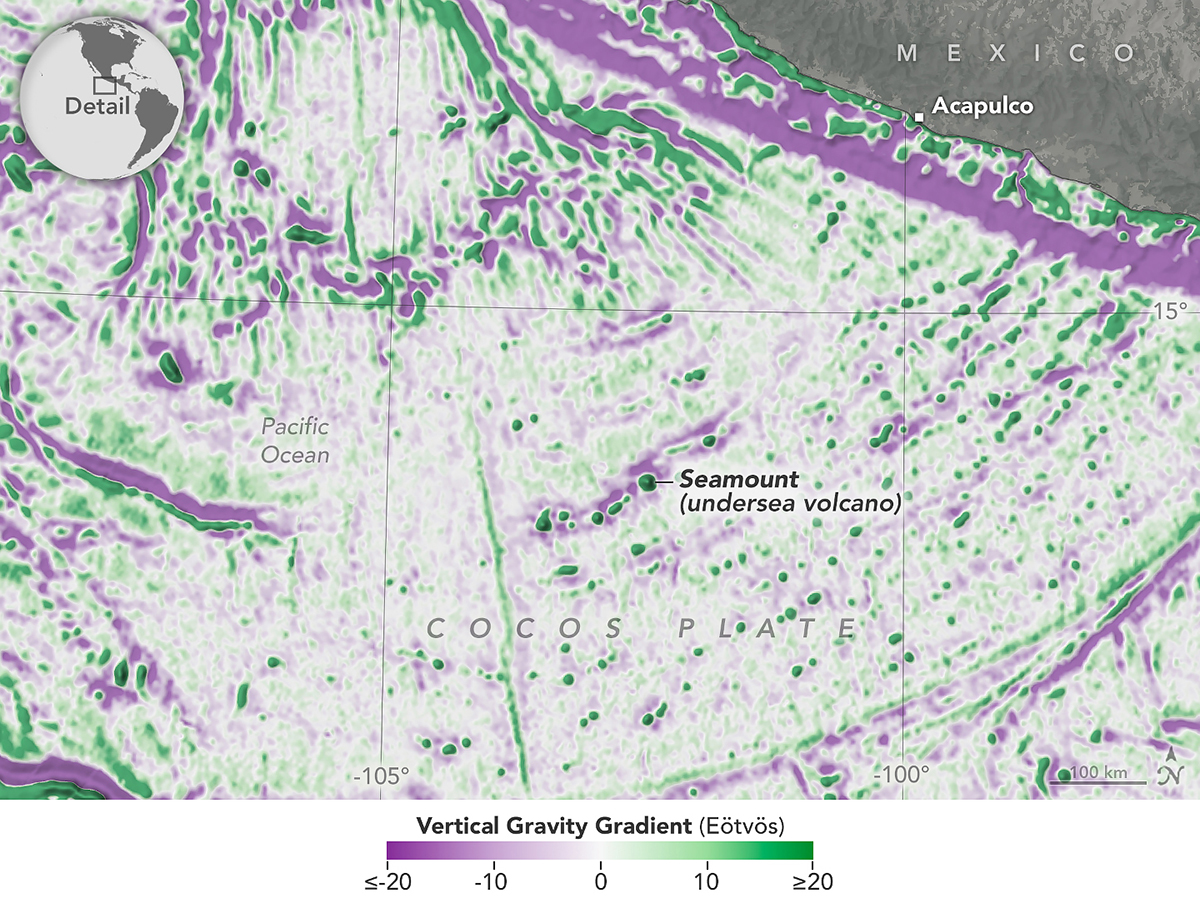
Because geologic features like seamounts and abyssal hills have more mass than their surroundings, they have a slightly stronger gravitational pull.
This creates small bumps in the surface of the sea above them, and researchers can use this to predict the kind of seafloor feature that produced them.
NASA says that previous satellites were able to detect large bottom features like seamounts over 1 km tall, but that SWOT can detect seamounts less than half that height.
That could increase the number of known seamounts from 44,000 to 100,000.
Next – a map of the whole seafloor
The researchers say they've acquired most of the of the data on seafloor features they planned to find in SWOT's measurements, and will now calculate the depth of the features they see.
The work is part of a global effort to map the whole of the seafloor using ship-based sonar by 2030.
"We won’t get the full ship-based mapping done by then," says Sandwell. "But SWOT will help us fill it in, getting us close to achieving the 2030 objective."


