
If you've been following the story of comet 3I/ATLAS since it was discovered on 1 July 2025, you'll likely know that it's an interstellar object passing through our Solar System.
You'll perhaps know that it didn't form within our Solar System, but instead formed elsewhere in the Galaxy, billions and billions of years ago.
You'll also likely know that comet 3I/ATLAS is one of only three such interstellar objects ever discovered; that once it disappears from view, it will be out of sight forever.
More on 3I/ATLAS

And you may also be aware of some voices reporting on comet 3I/ATLAS, suggesting that the body might in fact be an alien craft of some kind, scouting out our Solar System and keeping tabs on the strange life-forms on planet Earth.
The vast, vast majority of scientists and astronomers vehemently refute the 'alien craft' theory around 3I/ATLAS, pointing to the wealth of information that has revealed its cometary origins.
And now they have a new study up their sleeves.
Observations by the James Webb Space Telescope suggest the interstellar comet is nearly as old as the Universe itself.
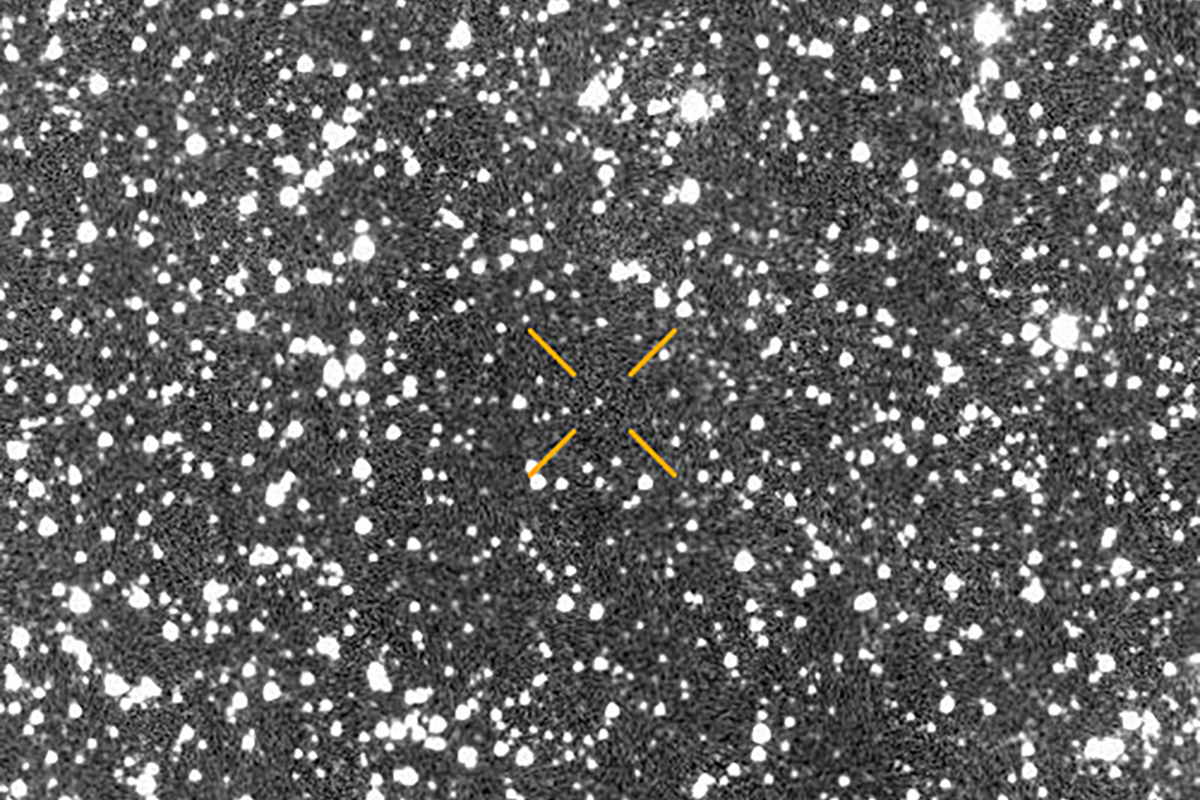
Webb spies the outgoing interstellar object
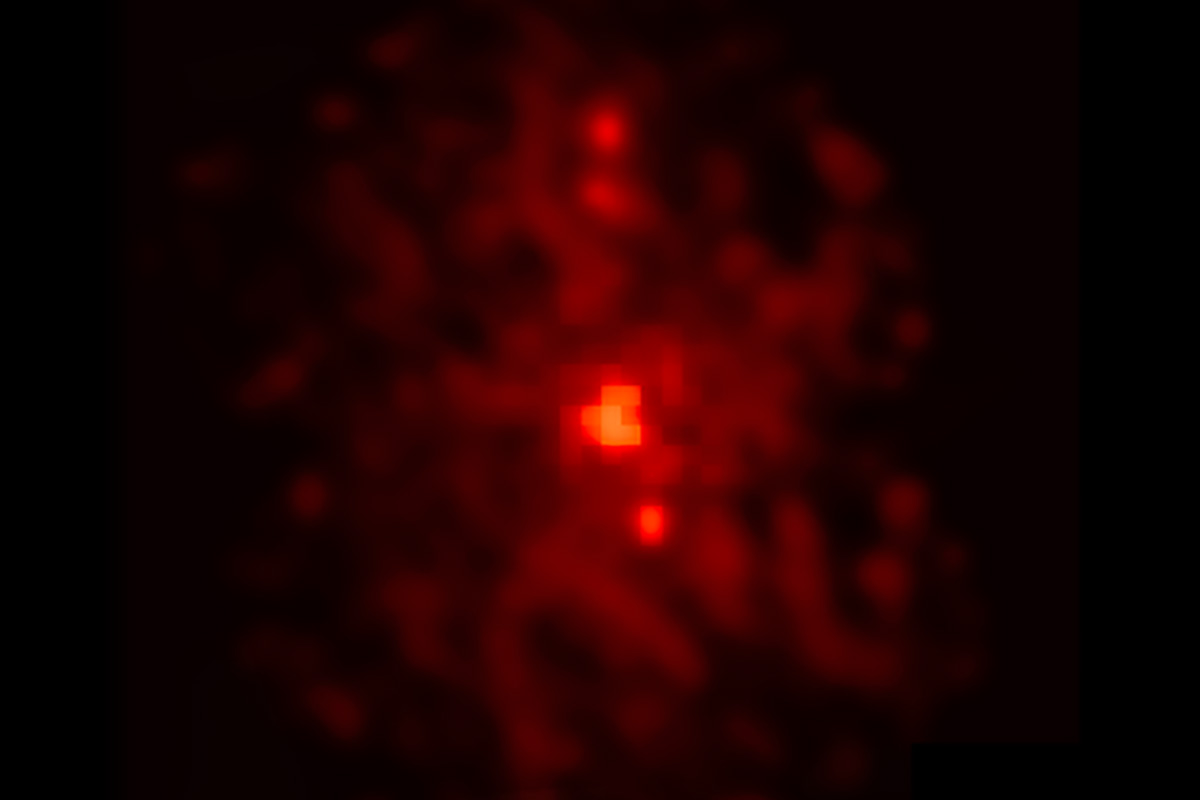
Back in December 2025, after 3I/ATLAS made its close approach to the Sun and was beginning its journey out of our Solar System, astronomers turned the James Webb Space Telescope in the comet's direction and began observing it.
This was deemed such an important opportunity for observation, that the team behind the study were given permission to interrupt Webb's tight schedule of highly-sought-after observing time to gather information on the interstellar object.
The time period was key, as 3I/ATLAS had just made its closest approach to the Sun, meaning its ancient icy particles had been warmed up and converted into a bright coma of gas surrounding the comet.
Within that gas lay the secrets as to what 3I/ATLAS is made of, but also clues as to the conditions under which it formed.
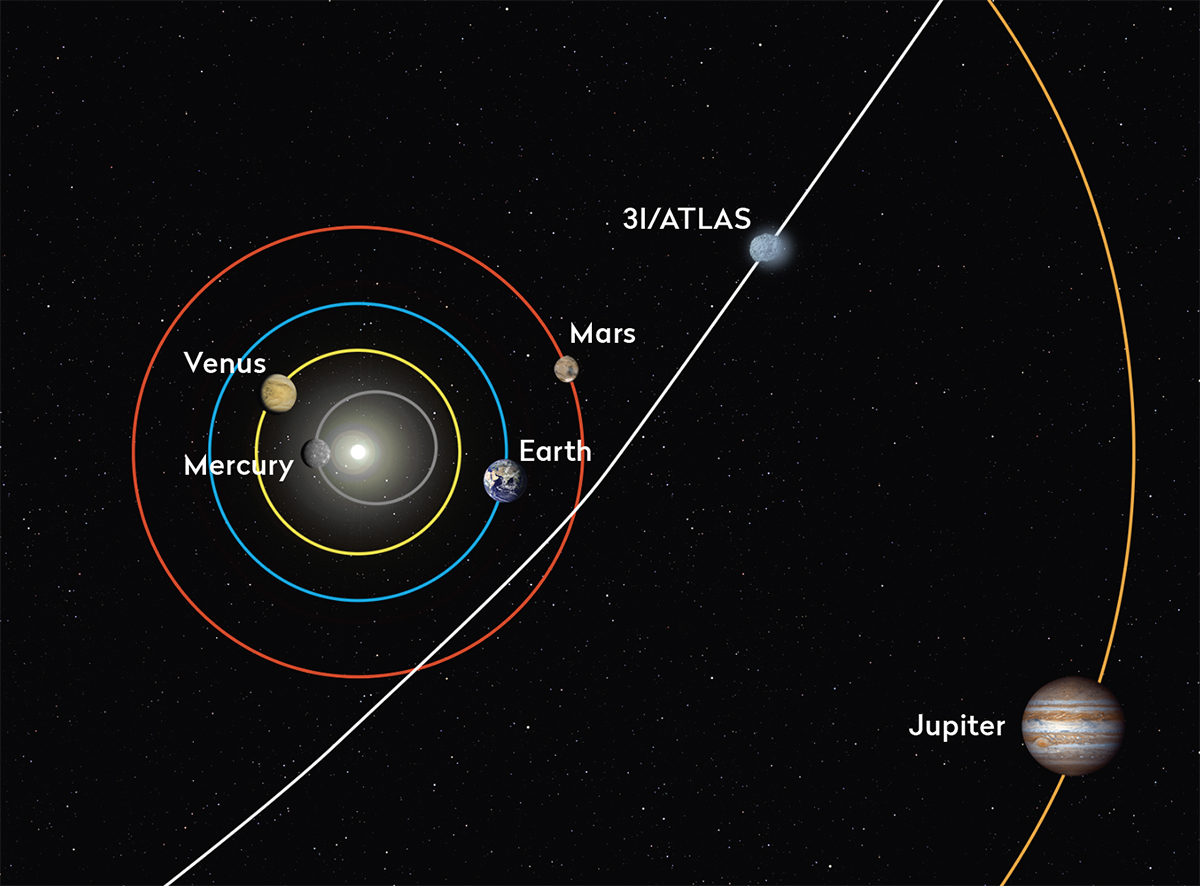
Webb was able to capture detailed data that included chemical ratios of carbon and deuterium, also known as heavy hydrogen.
These are not found in comets that originated in our Solar System.
The team say the results surprised them, and they were able to use the information collected by Webb to learn more about the pocket of the Galaxy in which the comet formed.
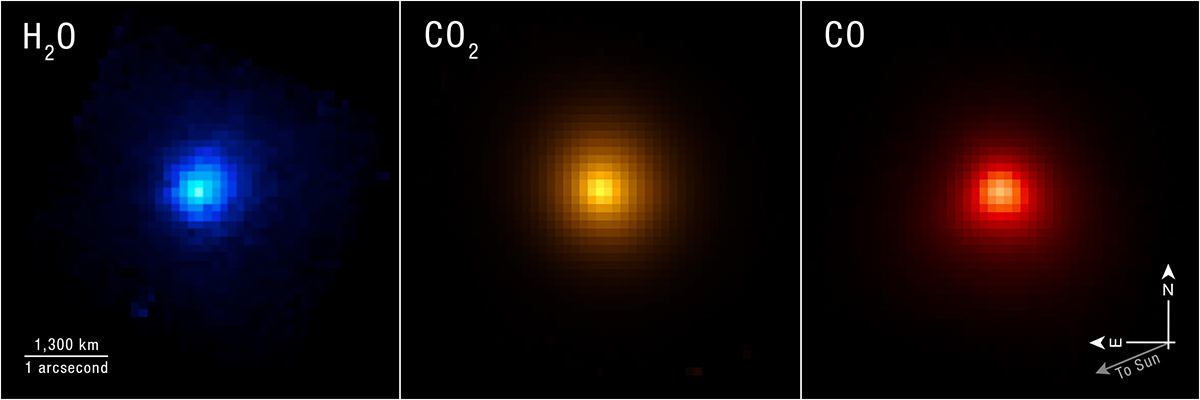
Webb found 3/ATLAS is nearly as old as the cosmos
"This was a unique opportunity to study an ancient object from the distant Galaxy, probably pre-dating our Sun and Solar System," says Martin Cordiner of NASA’s Goddard Space Flight Center in Greenbelt, Maryland, lead author of the study.
"On the one hand, we get direct insight into that distant time and place, and on the other, we learn something about how unusual our own Solar System may be."
The team used Webb's NIRSpec (Near-Infrared Spectrograph) instrument to study 3I/ATLAS and found "exceptionally high" levels of deuterium, to the tune of about 30 times more than would be found in Solar System comets.
That means, say the researchers, 3I/ATLAS probably formed in a very cold system very early-on in the history of our Galaxy.
And during the comet's formation, the material that was incorporated into 3I/ATLAS was likely exposed to lots of radiation.
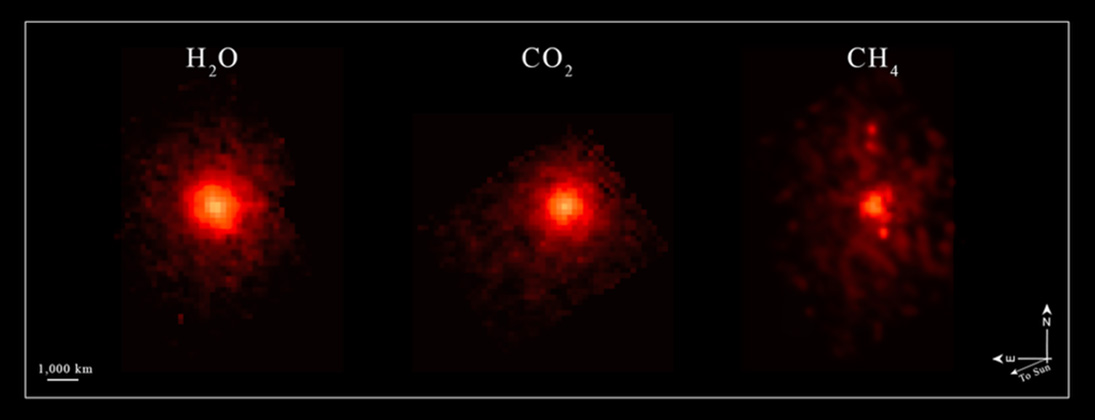
The lack of heat meant its 'heavy water' ice and deuterium were not reprocessed into the type of H2O water ice we find on Earth.
NIRSpec also found only traces of carbon-13, rather than the lighter-weight carbon-12.
The upshot is that, the team say, 3I/ATLAS formed in a very cold region, a long time ago – long before the formation of our Sun.
"Stellar systems become enriched with carbon-13 over time as generations of stars are born and die in the galaxy," the team say.
"That is why there are higher levels of carbon-13 in our system, around our Sun, which formed relatively recently, 4.5 billion years ago."
A comet from the cosmic noon
Our Universe is calculated to be 13.8 billion years old, and the team behind this study say their data shows that 3I/ATLAS could have formed 10-12 billion years ago
This is a period referred to by astronomers as the 'cosmic noon', when star formation was at its most active.
At that time, the region in which 3I/ATLAS formed was probably covered in a cold, dense cloud.
The science team say the abundance of heavy water shows 3I/ATLAS spent its early years in a frozen state.
"For us as scientists, finding these rare isotopes is fascinating, but the bigger picture here is looking at the possibilities of prebiotic chemistry elsewhere in the Galaxy," says Stefanie Milam of NASA Goddard, co-author of the study.
"So far, we know of only one place in the vast cosmos where chemical ingredients led to life – our Solar System, our Earth.
"Analysis of these interstellar objects is a major step towards learning how common, or uncommon, the conditions for the evolution of life are in the Universe."

