
The James Webb Space Telescope has captured an incredible view of galaxy Centaurus A, which lies 11 million lightyears from Earth – close-by, in cosmic terms.
Centaurus A is an active galaxy, meaning it's constantly changing over time, which gives astronomers the chance to learn more about how galaxies and black holes grow and evolve together.
The James Webb Space Telescope's infrared view cuts through thick cosmic dust to get to the heart of the galaxy, showing astronomers the individual stars within.
Here are 10 reasons Webb's Centaurus A image is so amazing.
More from Webb
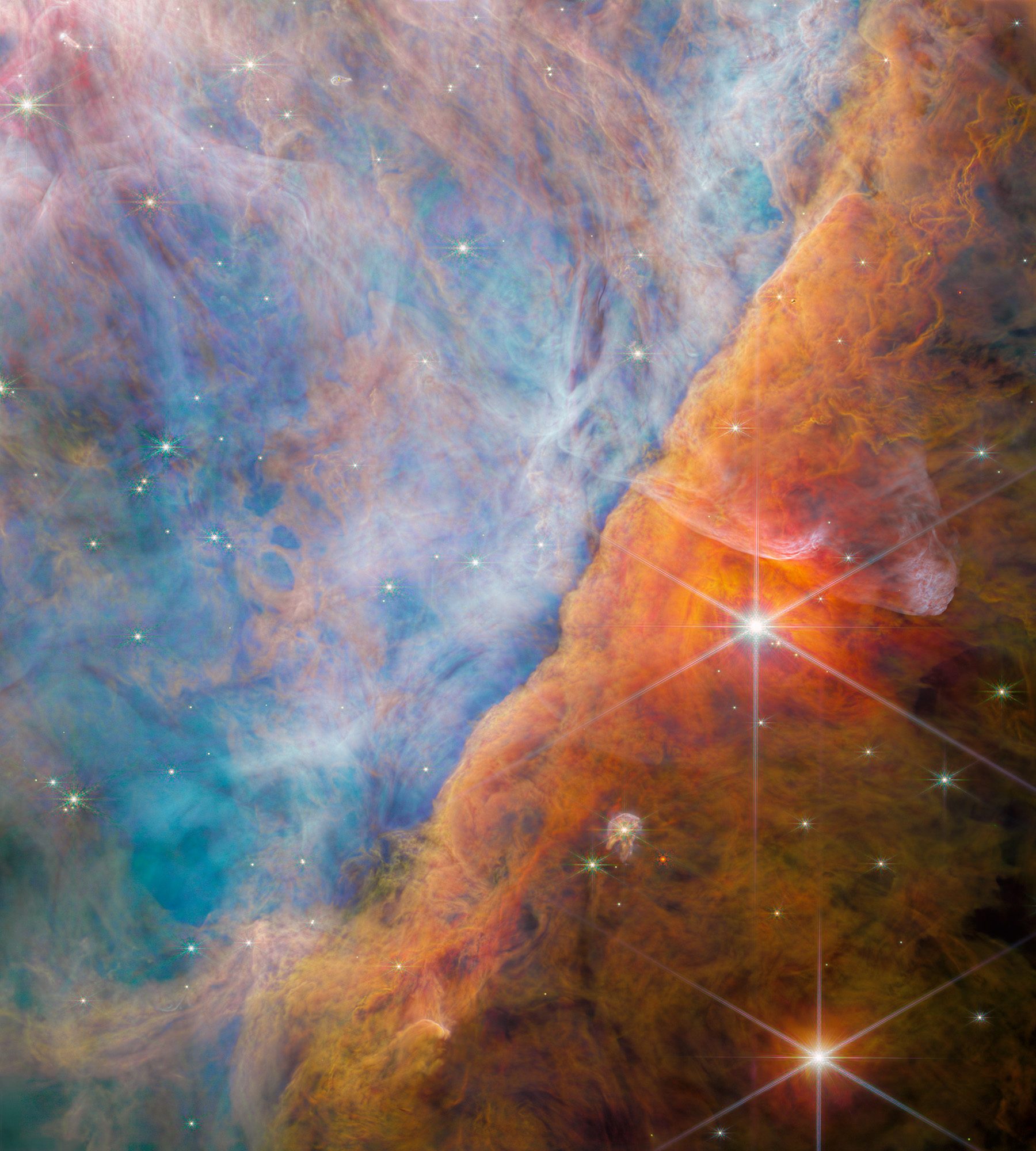
Webb’s infrared vision peers beyond thick cosmic dust
The core of galaxy Centaurus A is obscured by thick lanes of dust when observed in visible light, which means our view of its central region is normally obscured.
Webb’s sensitivity across near- and mid-infrared wavelengths pierces through the barrier, transforming a familiar galaxy into something richer and more complex.
The image resolves a densely-packed region of individual stars
While previous telescopes saw a blur, this Webb image is bringing clarity to our view of Centaurus A.
The grainy region in the image – seen most obviously in the combined MIRI and NIRCam view below – is a densely-packed field of individual stars.
Webb's ability to 'resolve' individual stars is giving scientists vital clues about the galaxy's past.
It marks a four-year milestone
This view of Centaurus A is released to mark the fourth anniversary of the James Webb Space Telescope's science-gathering, celebrating "four years of better-than-anticipated performance", according to NASA.
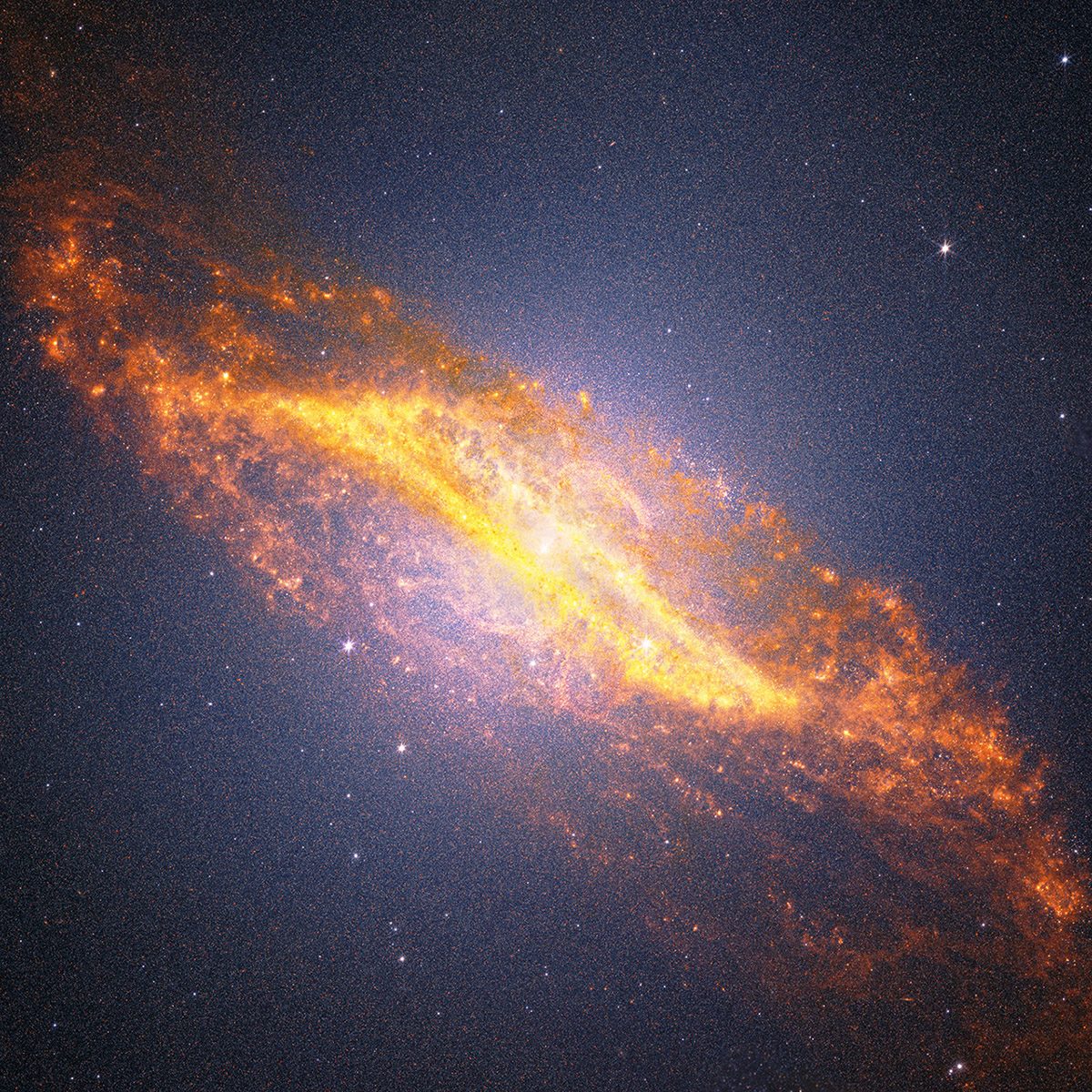
The image acts as a portal for 'galactic archaeology'
Because Webb can resolve millions of individual stars – even in the long-obscured central region of the galaxy– astronomers can use data gathered by the space telescope as a form of astronomical archaeology.
Each star helps astronomers reconstruct a timeline of the galaxy’s evolution, mapping out when older stars formed, when activity slowed and how star formation burst during and after a major cosmic collision.
It exposes the scars of a dramatic ancient collision
Scientists say Centaurus A bears the structural scars of a major collision with another galaxy that occurred about two billion years ago.
Webb’s detailed view allows scientists to examine the ongoing aftermath of this galactic merger, still visible today in the galaxy's unusual structure and ongoing star formation.
A weird S-shaped sturcture is revealed
In the MIRI (Mid-Infrared Instrument) view of Centaurus A, Webb has revelaed an unusual S-shaped feature, alongside a warped, parallelogram-like band cutting across the centre.
Astronomers can now begin investigating what these structures are and what caused them, but also how they are influenced by the black hole lurking at the galaxy's core.
We see stellar nurseries and the ingredients for future planets
Many of the glowing red points seen in the MIRI image are dust-rich stars or stellar nurseries.
Here, aging stars are shedding their own material back into space.
These are the ingredients out of which new stars are forming, showing how cosmic dust serves as the raw materials for future generations of stars and planets.
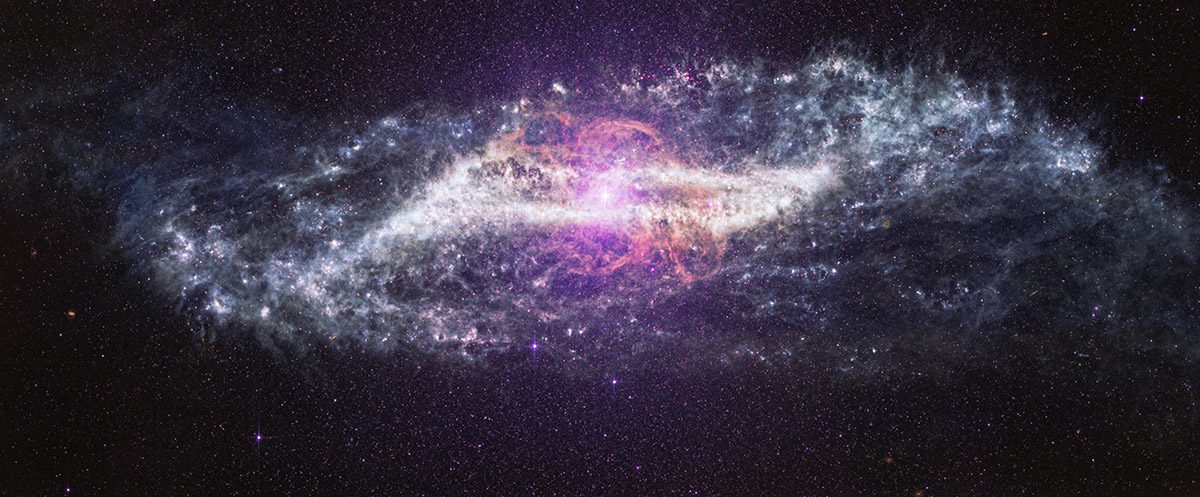
We can see the surroundings of the supermassive black hole
At the core of Centaurus A sits a supermassive black hole feeding on surrounding material.
As it feeds, it launches powerful jets and releases enormous amounts of energy.
Webb is enabling astronomers to see exactly how this cosmic behemoth shapes the region around it.
It tracks the complex, invisible motion of galactic gas
By analysing light using a technique called spectroscopy, astronomers can measure how gas is moving about within Centaurus A.
Early findings show fast-moving ionised gas flowing outward, probably driven by the galaxy's central supermassive black hole, alongside warmer molecular hydrogen moving in a warped rotating disk near the centre.
It's an example of how Webb is pushing the boundaries
As Shawn Domagal-Goldman, division director, astrophysics at NASA Headquarters explains:
"No single telescope tells the whole story. Discoveries build over time and new observatories expand on the foundations laid by earlier missions.
"Webb represents the most powerful step forward yet, opening a window into wavelengths and details never before accessible.
"This allows astronomers to examine structures and processes that other telescopes could not see."

