To stargazers in the Southern Hemisphere, they’ve been familiar naked-eye objects since time immemorial.
Those in the Northern Hemisphere, however, have most likely only ever seen them in photographs.
So what exactly ARE the Large and Small Magellanic Clouds – or the LMC and the SMC, as you’ll often see them described?
This is a guide to two of our closest galactic neighbours, how they were discovered and what we know about them.
Read more
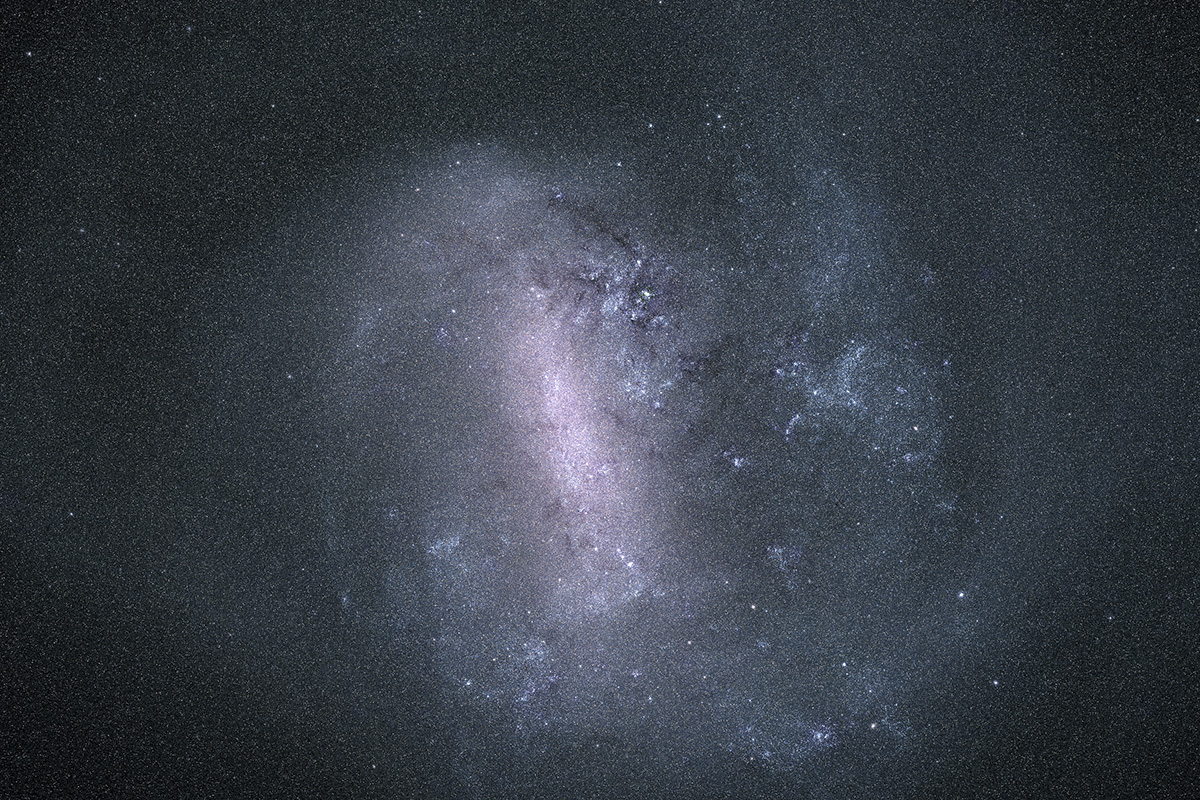
What are the Large and Small Magellanic Clouds?
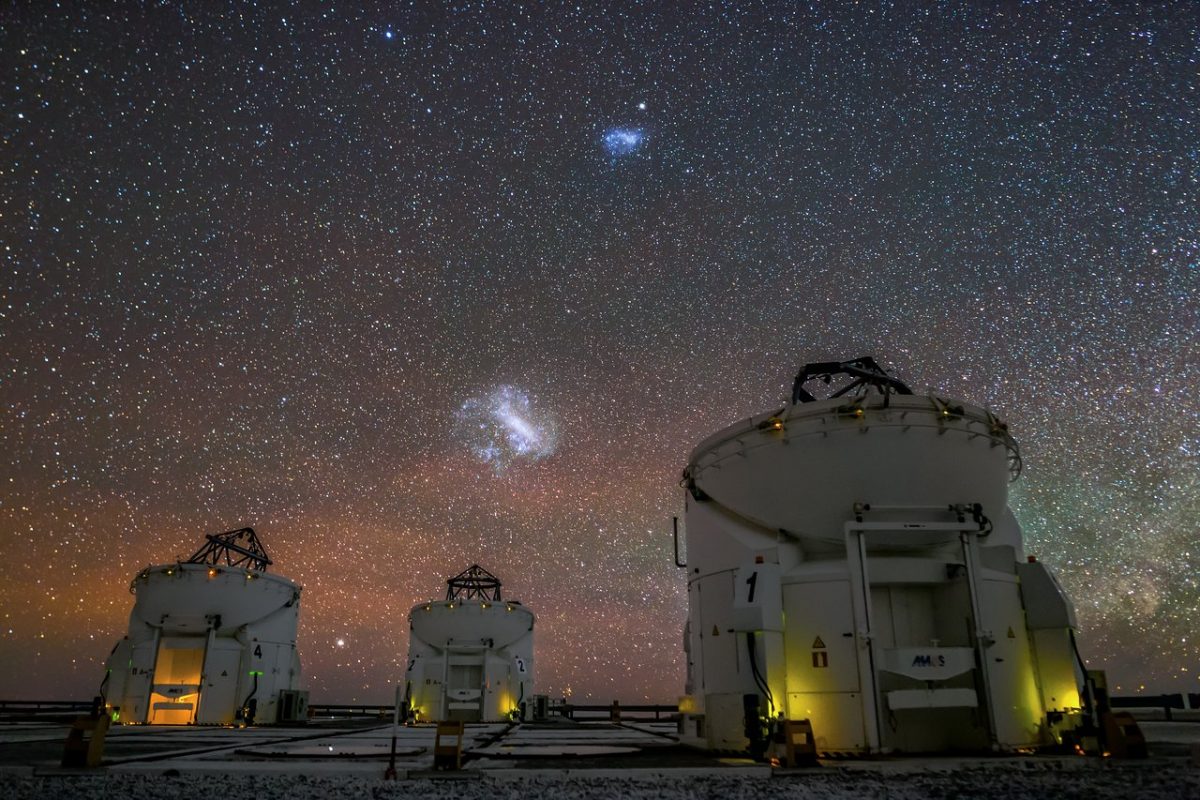
Put in the broadest terms possible, the Large and Small Magellanic (pronounced MAH-jeh-LAH-nick) clouds are a pair of dwarf galaxies that lie very close to the Milky Way.
They're so close, in fact, that until quite recently they were believed to be satellite galaxies of our own.
Over the past two decades, however, many – if not most – astronomers have come to believe their close proximity to our own Galaxy is coincidental.
That’s based on measurements of their velocities taken by the Hubble Space Telescope in 2006, which revealed them to be travelling too fast to have become orbitally bound to the Milky Way.
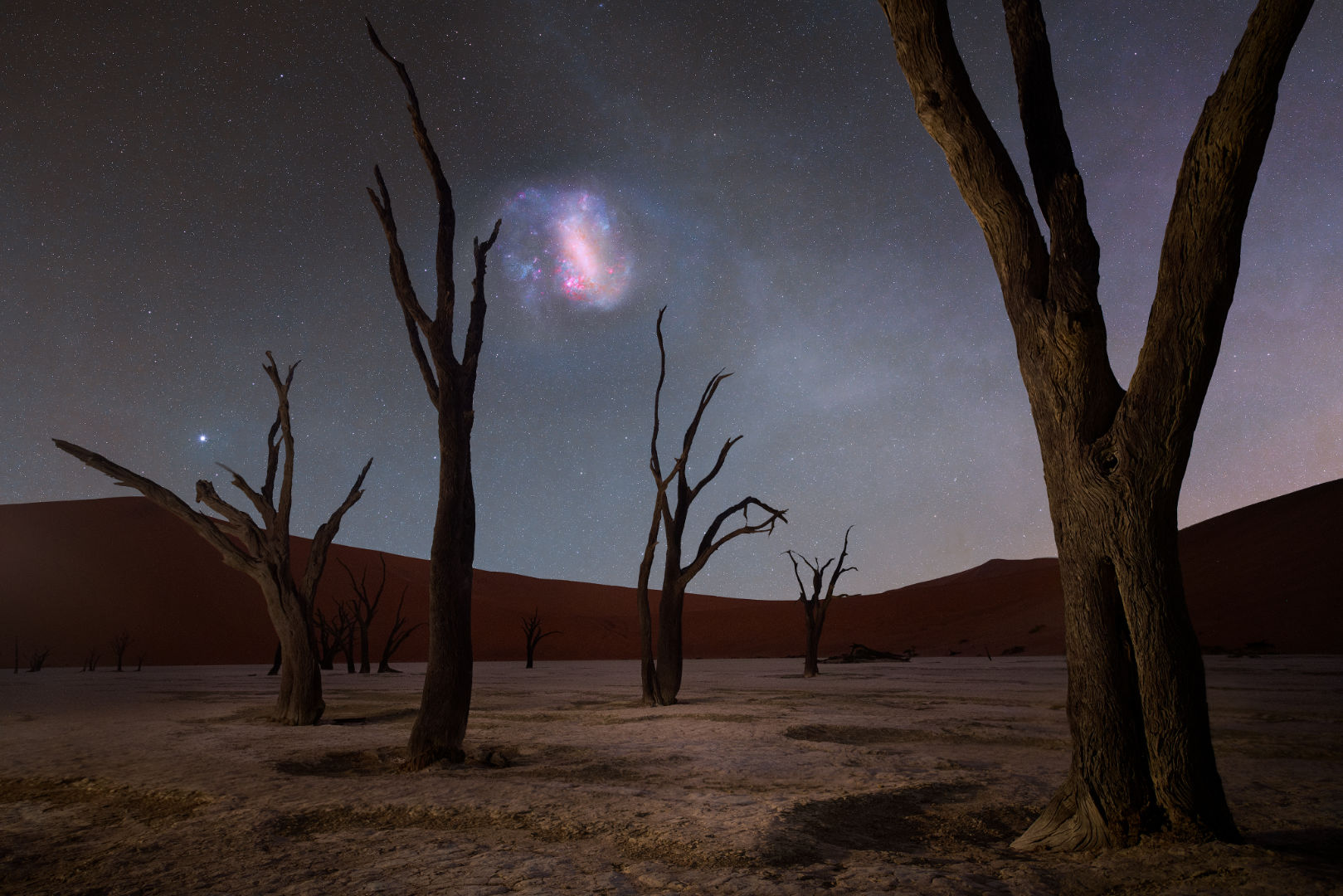
There’s still some debate on the topic, but either way – whether satellites of the Milky Way or not – the two lie around 160,000–200,000 lightyears from Earth.
That’s near enough that, from the Southern Hemisphere, not only can both objects be seen with unaided vision, but nebulae, star clusters and even individual stars within them become visible through a telescope.
The same applies up to a latitude of about 20°N, in the case of the Large Magellanic Cloud, or up to about 15°N for the Small Magellanic Cloud – but anywhere north of the Tropic of Cancer, you’re going to be out of luck.
Discovery and naming

There is a reference in Persian astronomer Al-Sufi’s Book Of Fixed Stars, which was published around 964 AD, that some interpret as a description of the Large Magellanic Cloud and Small Magellanic Cloud.
But the first definite recorded observation was by Italian explorer and navigator Amerigo Vespucci in 1502.
The pair are named, however, for Portuguese explorer Ferdinand Magellan, who described seeing them during his circumnavigation of the globe in 1519-1521.
This in itself has proved controversial in recent years, with some arguing that – given Magellan’s participation in the slave trade – they should be renamed.
Alternative names suggested have included the Large and Small Meridional Clouds, or the Large and Small Milky Clouds (either of which would enable the designations LMC and SMC to be retained).
But there is currently no indication that the International Astronomy Union, the body that decides such things, has any intention of acting on those suggestions any time soon.
Physical characteristics of the Large and Small Magellanic Clouds
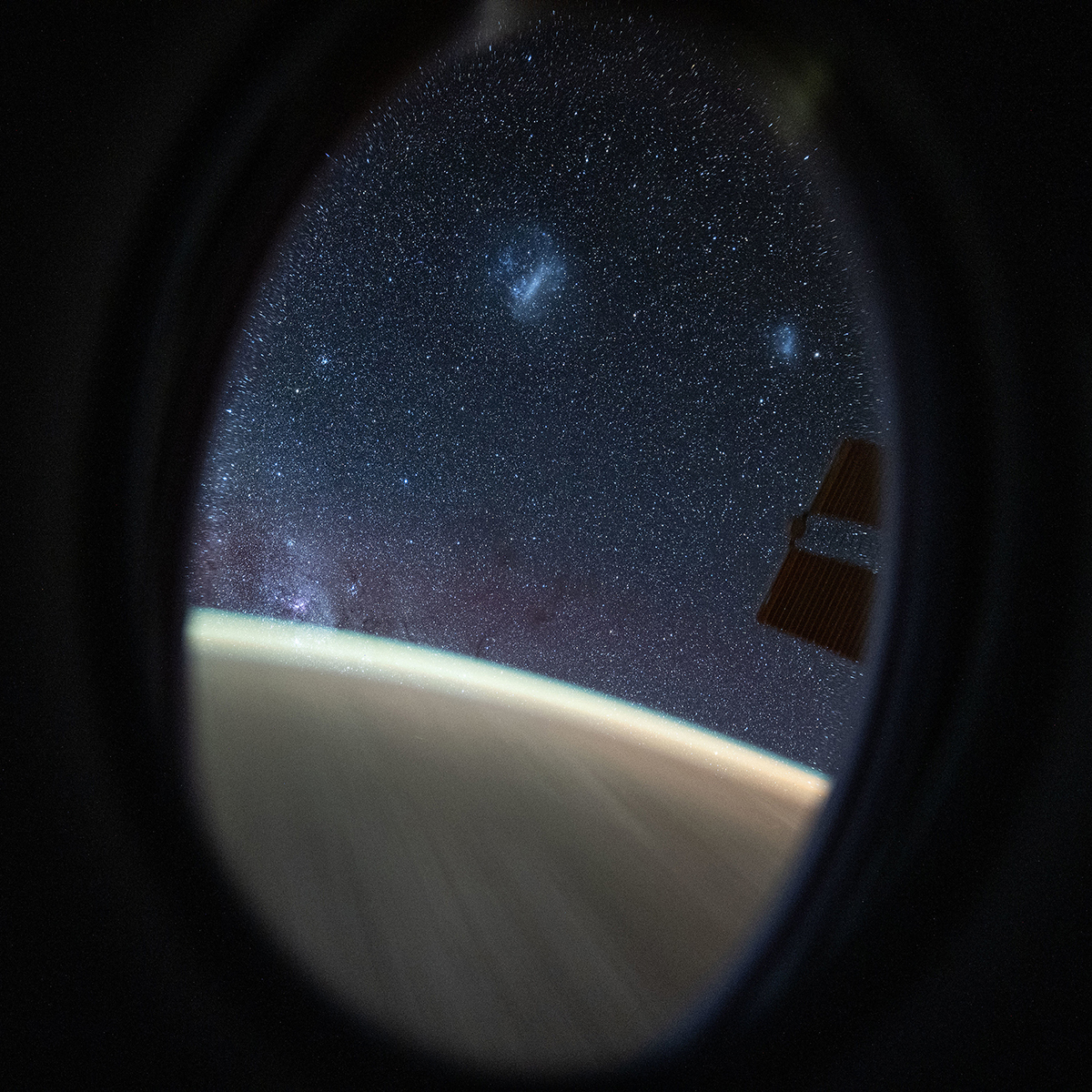
Now we know roughly what they are, let’s take a closer look at the two objects individually.
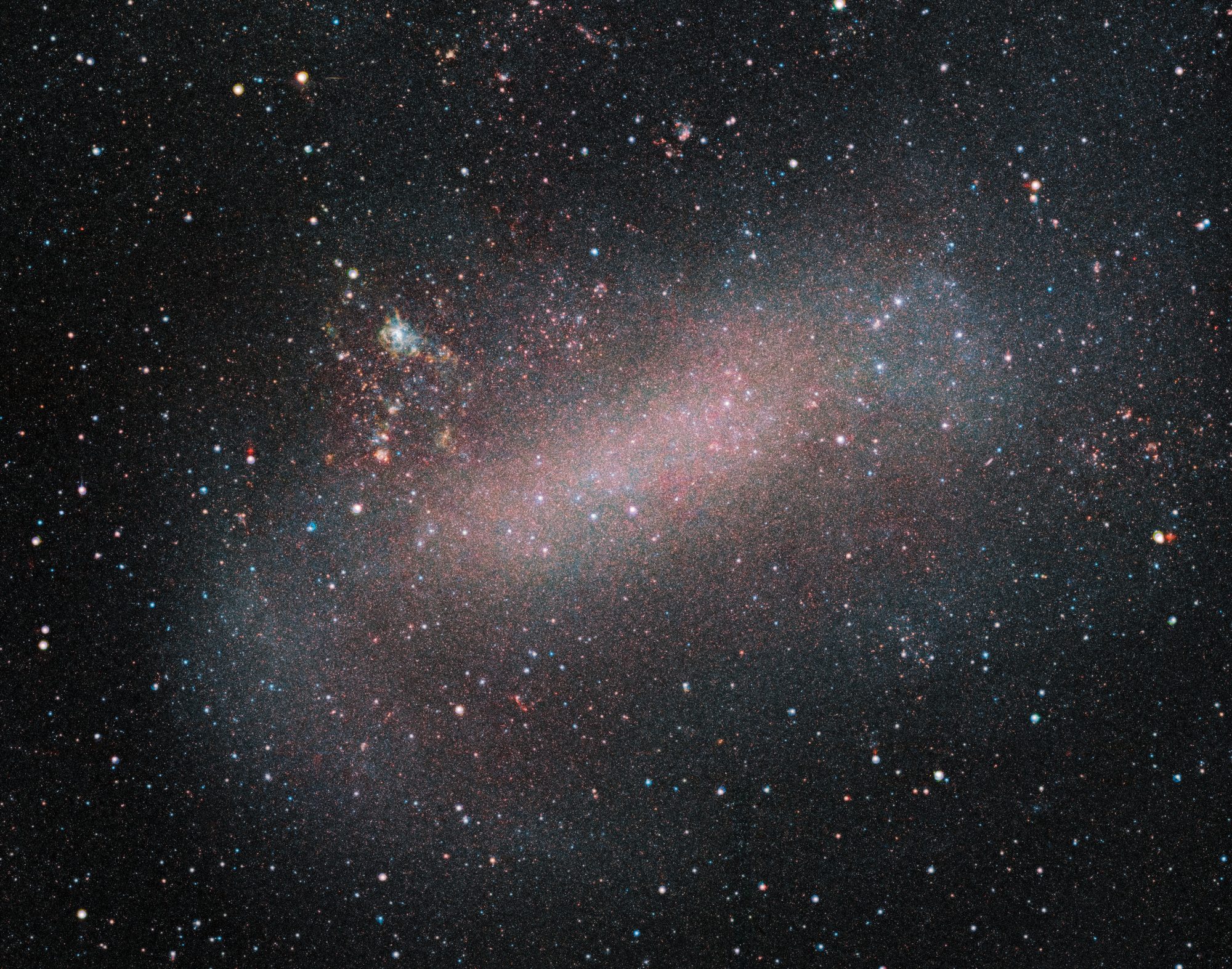
The Large Magellanic Cloud, lying around 160,000–163,000 lightyears from Earth, is classed as either an irregular galaxy or a ‘Magellanic spiral’, depending who you speak to.
It has a large bar running through the middle of it (albeit slightly off-centre) and a single spiral arm.
For this reason, it’s thought that the Large Magellanic Cloud was once a barred spiral galaxy, but that it has been stripped of much of its material by gravitational interactions with other objects, whether that’s our own Milky Way or the Small Magellanic Cloud.
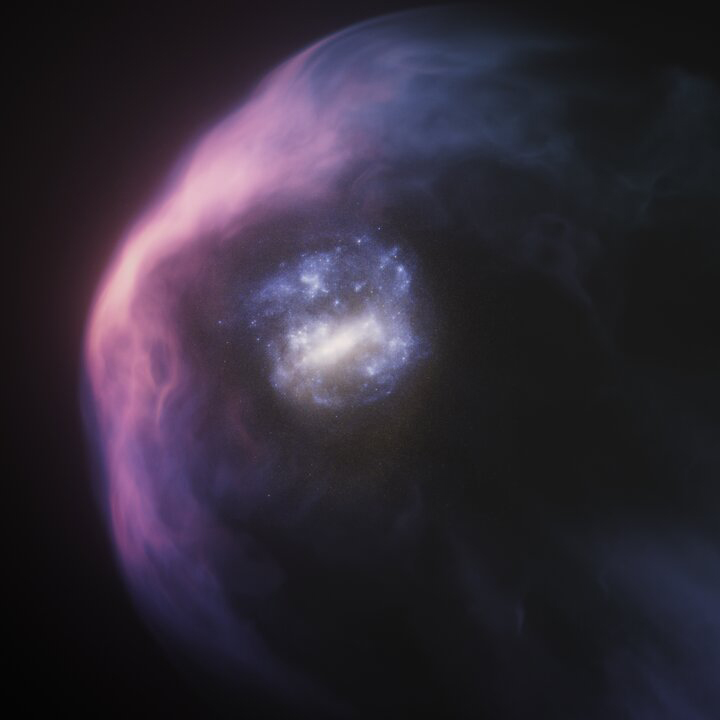
The fourth-largest galaxy in the Local Group (after the Andromeda Galaxy, the Milky Way and the Triangulum Galaxy), the Large Magellanic Cloud has the mass of around 1x 10¹⁰ Suns (1.38x 10¹¹, if you include dark matter) and is known to contain roughly 20 billion stars, around 60 globular clusters and over 700 open clusters.
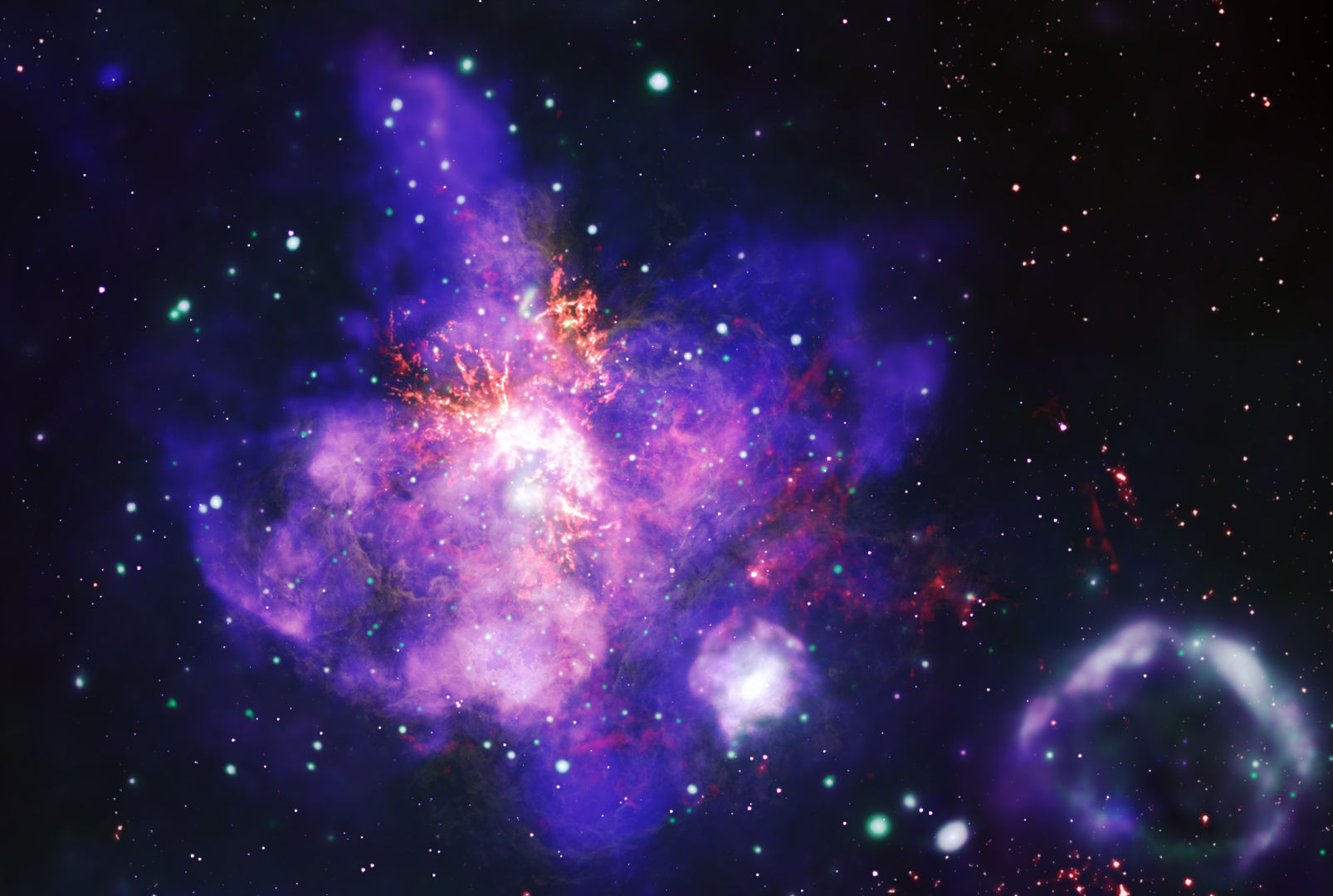
It also includes several regions of very active star-formation – notably 30 Doradus, AKA the Tarantula Nebula.
At the heart of the Tarantula Nebula lies a star cluster called NGC 2070, and inside NGC 2070 resides R136a1 – currently the most massive star ever discovered anywhere in the Universe, with around 300 times the mass of our own Sun.
The Large Magellanic Cloud was also formerly home to another massive star, Sanduleak -69°202.
That one, however, exploded in a supernova on 24 February 1987 – the most recent supernova to have been visible from Earth with the naked eye.
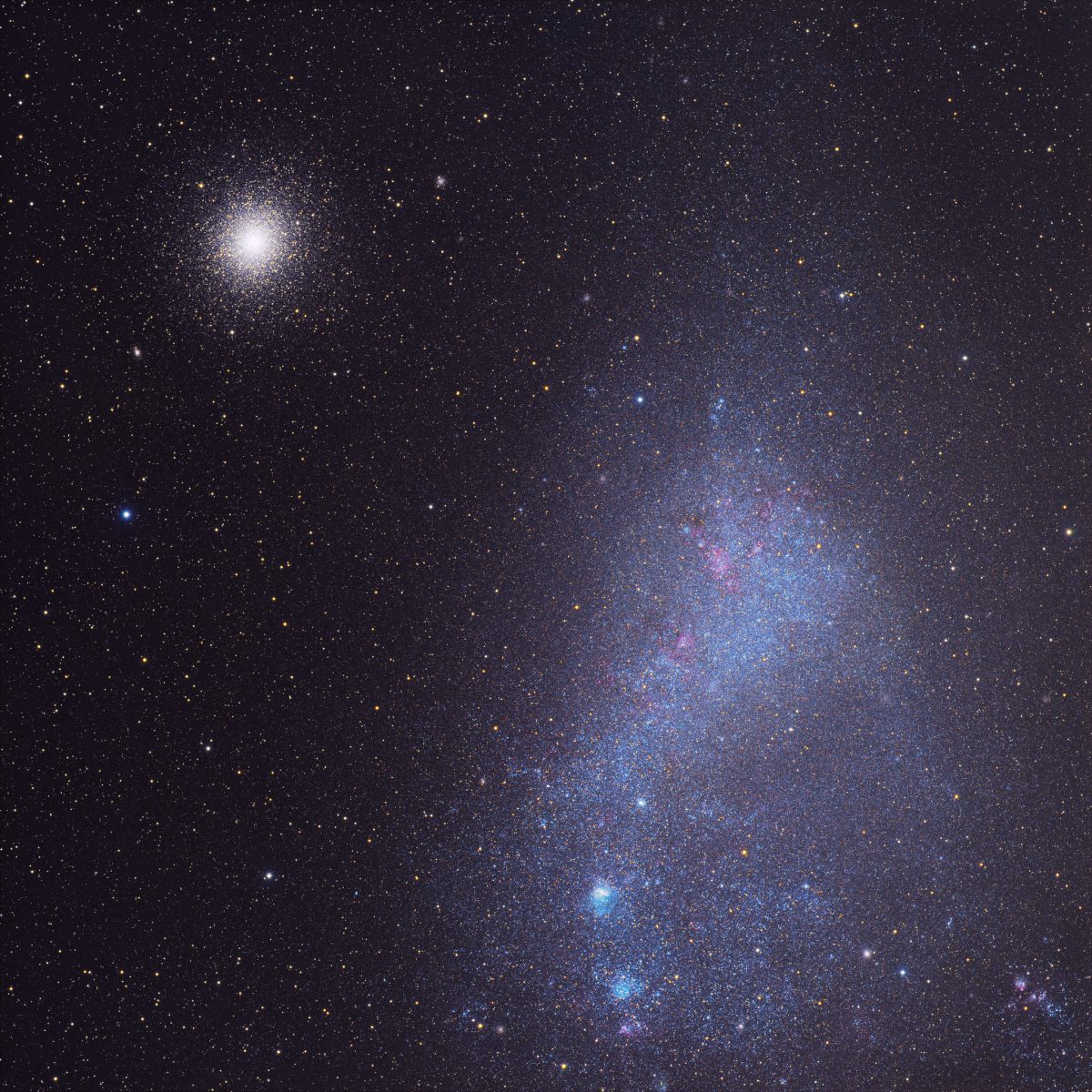
Meanwhile, the Small Magellanic Cloud lies a little further off, at a distance of around 200,000 lightyears, and contains around 3 billion stars, with a total mass of roughly 7x 10⁹ solar masses.
Structurally it looks very akin to the Large Magellanic Cloud, and so it is similarly believed to be a former barred spiral that has become deformed by gravity over time.
As if to provide evidence of that theory, the two objects are linked by a bridge of gas known as the Magellanic Bridge, while another gas filament – the Magellanic Stream – links the two objects to the Milky Way.
The combined LMC-SMC structure, seen from Earth, straddles the border between the constellations of Dorado and Mensa.
The future, and what we still don’t know
The recent discovery that the Large Magellanic Cloud and Small Magellanic Cloud may not, in fact, be satellites of the Milky Way, has thrown up a few interesting questions.
Traditionally, it was believed the Magellanic Stream formed slowly as a result of the two dwarf galaxies orbiting the Milky Way – if they aren’t in orbit around the Milky Way, though, we’re going to need to seek a new explanation.
There’s also some mystery as to how the two objects themselves came into being.
Small, gas-rich, star-forming galaxies are relatively common in more sparsely populated regions of space – but far less so in the proximity of larger galaxies such as our own.
In fact, in simulations, very few galaxies analogous to the Milky Way – less than 2% of them – have even one small galaxy close by and even when they do, such galaxies tend to be gas-poor, with little or no star formation.
So how the Milky Way ended up with a pair of them – and a gas-rich, star-forming pair at that – remains something of a mystery.
Luckily, we’ve got a little while to solve the mystery yet.
The Large Magellanic Cloud and Small Magellanic Cloud will eventually be subsumed by the gravity of the Milky Way – but that’s not due to happen for another 2.4 billion years or so.
Have you ever seen the Magellanic Clouds yourself? Share your stories and images with us by emailing contactus@skyatnightmagazine.com