NASA’s Mars rover Perseverance is an extremely advanced piece of machinery that’s equipped with 19 cameras, two microphones and seven primary scientific instruments.
But tucked away out of sight among all that high-tech hardware is something you might not expect to see: swatches of spacesuit fabric.
The swatches aren’t there to protect the rover – they’d struggle to do that, given that each swatch measures just a few square centimetres (less than one square inch).
Instead, they’ve been installed on the rover so that scientists can determine which of several suggested materials is best able to withstand exposure to Martian dust.
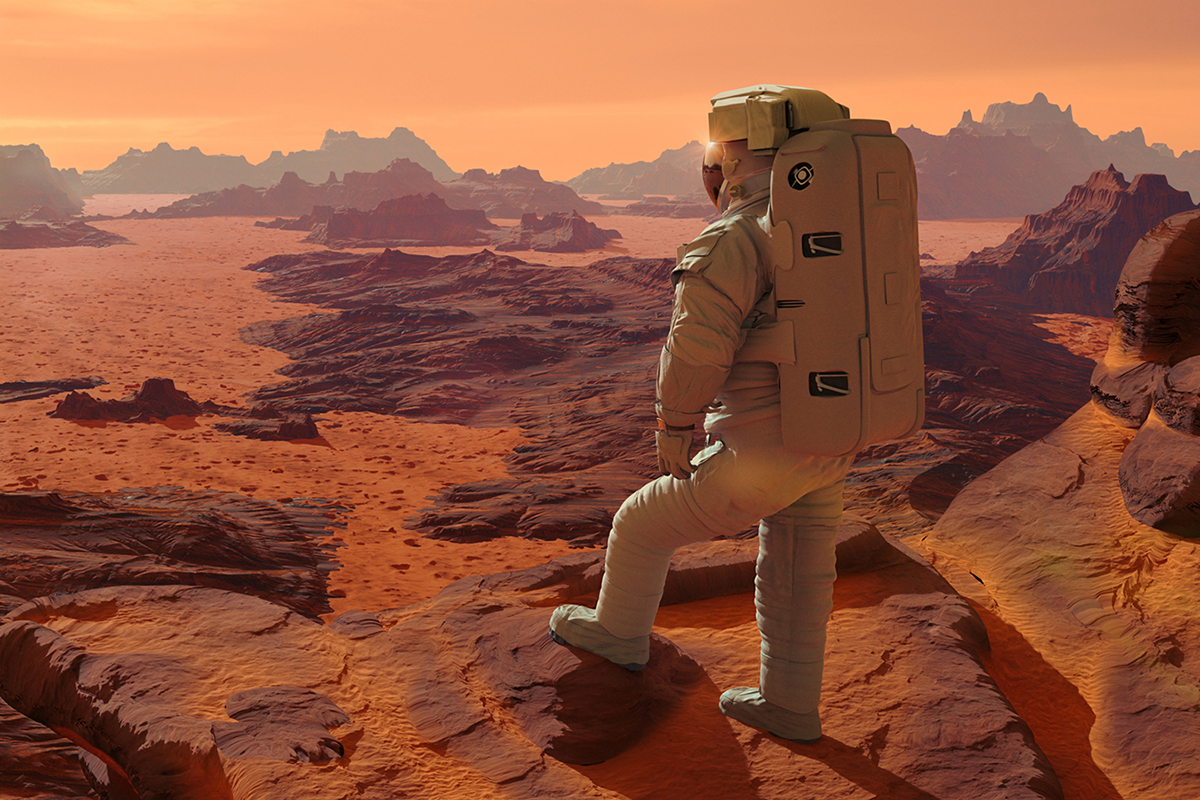
The research team involved is headed up by Scott VanBommel, an assistant professor of Earth, environmental and planetary sciences at Washington University in St Louis, Missouri, USA, and their brief is to ensure that, if we ever do send astronauts to the Red Planet, their spacesuits are able to cope with the environment.
More on missions to Mars
Mars, the dusty planet
For NASA, this is a case of ‘once bitten, twice shy’. During the Apollo missions, astronauts’ visors got scratched by small particles of dust.
The material in their spacesuits began to show signs of deterioration, while smaller particles clung to the suits, eventually found their way into the astronauts’ lungs and in some cases caused them to develop hayfever-like symptoms.
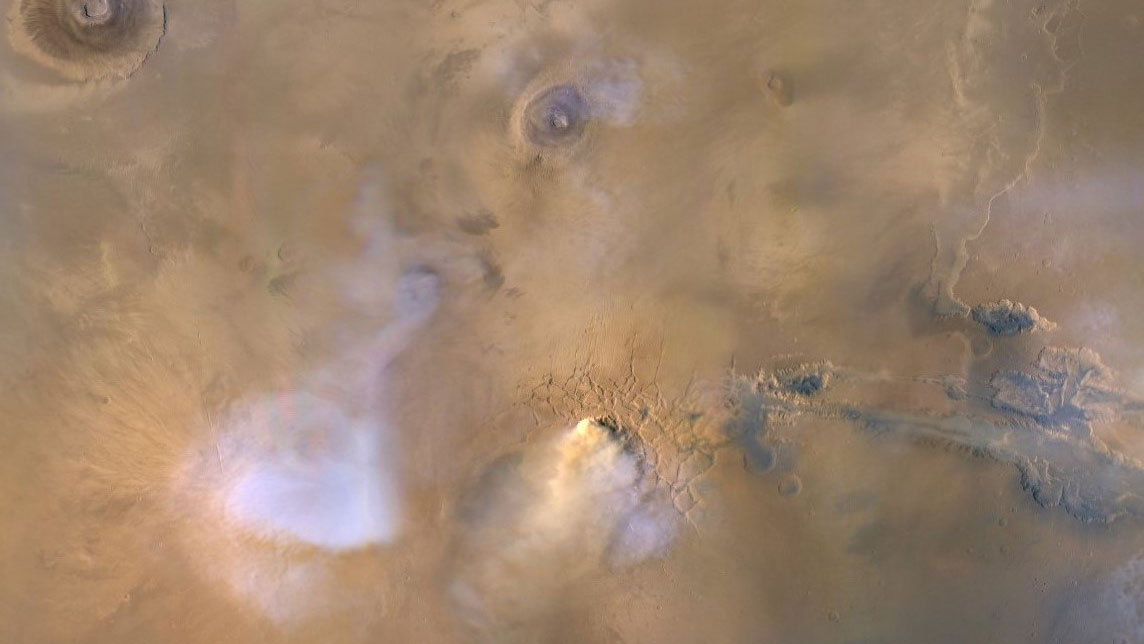
In a bid to prevent such issues in future, the team haven’t just attached a bunch of fabric samples to Perseverance’s exterior: they’ve also been taking a closer look at Martian dust itself.

There’s some good news in this regard. It turns out that Martian dust particles are much smoother than the jagged grains found on the Moon.
This is thought to be due to their having been blown around on the Martian surface for billions of years, which has left them smooth and rounded, just like pebbles on a beach.
But there’s a downside, too. For the same reason, Martian dust particles also tend to be smaller than those found on the Moon – some particles measure just 1/10,000th of a millimetre across! – which means they’re that much more likely to cling to fabrics or worm their way into seams.
Given what we know about nanoparticulate pollution and respiratory health here on Earth, these findings will also need to be taken into account when designing equipment such as air filtration systems for putative Martian habitats.
That’s all some way off, but in the meantime, the team report that their fabric samples are doing well, and show no obvious signs of dust-related erosion after 1,650 days on the Martian surface – which bodes well for future human exploration.
"We know that dust will be a challenge," said VanBommel, "but it’s something we can prepare for and overcome."