
A scientist working with a NASA spacecraft that orbits our Moon has spotted something amazing on the lunar surface.
Robert Wagner, scientist with NASA’s Lunar Reconnaissance Orbiter, was scanning a Moon map on his computer when he noticed an enormous bright spot surrounded by a dark circle.
Wagner knew what it probably was. It looked like the surface of the Moon had been shaken up by something huge crashing into it.
“I just stopped, dropped everything and started looking into what that spot was,” Wagner says.
Once he started comparing before and after images of the Moon, Wagner realised he was on to something big.
He'd just discovered the largest newly-formed crater ever seen in our Solar System.
More Solar System chaos
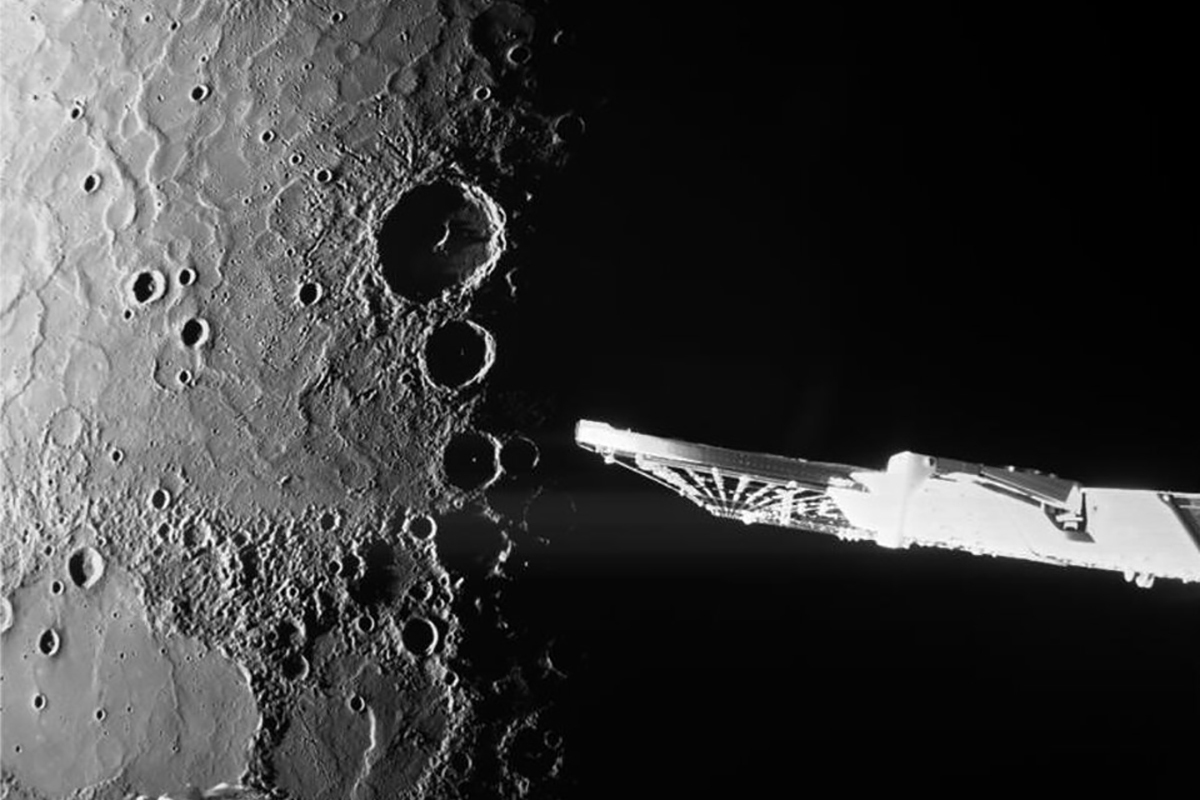
What is the crater and what caused it?
"This discovery highlights the value of NASA’s Moon orbiter data in studying a dynamic landscape as the agency advances a sustained human presence and expanded scientific and commercial activity on the Moon," NASA says.
The crater formed on the eastern edge of the Moon – as seen from Earth – at some point between 11 April and 22 May 2024.
It's been named 'McGetchin' after lunar scientist Tom McGetchin and is thought to have been produced by a comet or asteroid the size of a three- to six-story building smashing into the lunar surface.
The crater is 222 metres (728 feet) wide and 43 metres (141 feet) deep. Scientists say an impact of this size only happens at least once a century.
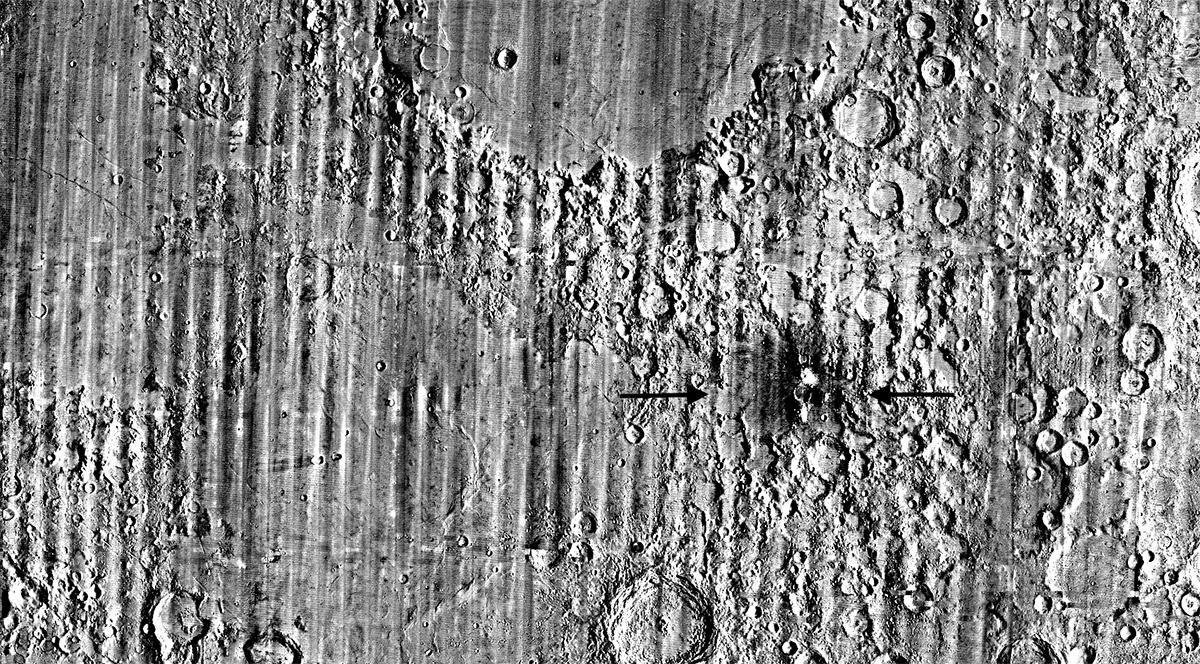
Our Moon is constantly bombarded by space debris
Since 2009, NASA's Lunar Reconnaissance Orbiter has been orbiting the Moon to map its topography, surface composition, temperature and radiation.
It's found at least 1,000 new impact craters and 100,000 surface changes during that time, caused by objects crashing onto the surface and the subsequent debris being flung outwards.
Asteroids and other space rocks hit Earth all the time, but most of the time they burn up in our thick atmosphere.
In the case of Earth's Moon, lacking any kind of substantial atmosphere, space rocks and objects easily reach its surface.
Most are much smaller than the space rock that produced McGetchin crater.
NASA says the smallest craters that the science team are able to make out using images captured by the Lunar Reconnaissance Orbiter are about 10 metres (30 feet) wide, made by rocks about 110 cm (43 inches wide).
Given the spacecraft orbits 50km (31 miles) above the Moon, that's pretty impressive.
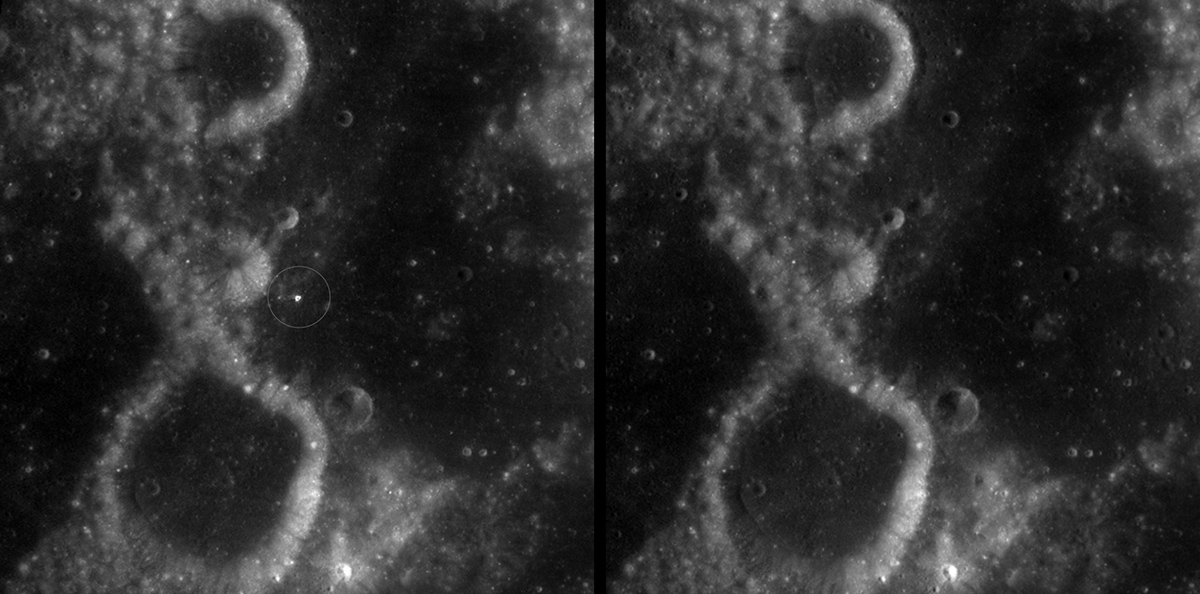
McGetchin – one enormous crater among many
Before and after images show how the Lunar Reconnaissance Orbiter's images of the Moon's surface enable newly-formed features like McGetchin to be detected.
But optical imagery isn't the only tool at the science team's disposal.
Once the crater was discovered, scientists used the Lunar Reconnaissance Orbiter's thermal instrument, Diviner, to make follow-up observations.
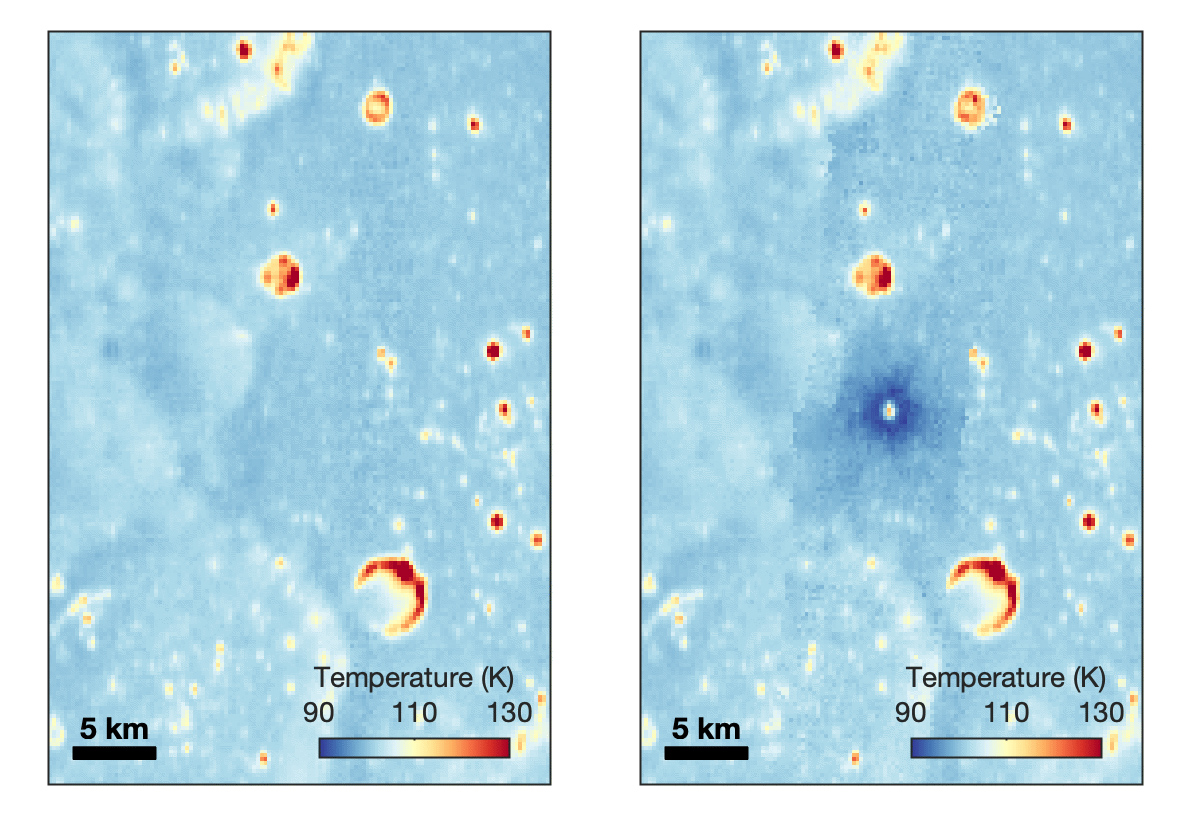
They discovered a 6.5-km-wide (4-mile-wide) area around the crater that's about 9°C (16°F) cooler at night than its surroundings.
This cooling happens because the impact has bunched up lunar dust and regolith around the impact site, which is less dense and therefore less able to retain heat.
So while the chaotic days of the early Solar System are far behind us, what the Lunar Reconnaissance Orbiter's latest discovery shows is that there are still dangerous space rocks lurking out there – and that we on Earth should be thankful we've a protective atmosphere to keep us safe.

