The European Space Agency’s Gaia mission has been an unqualified success.
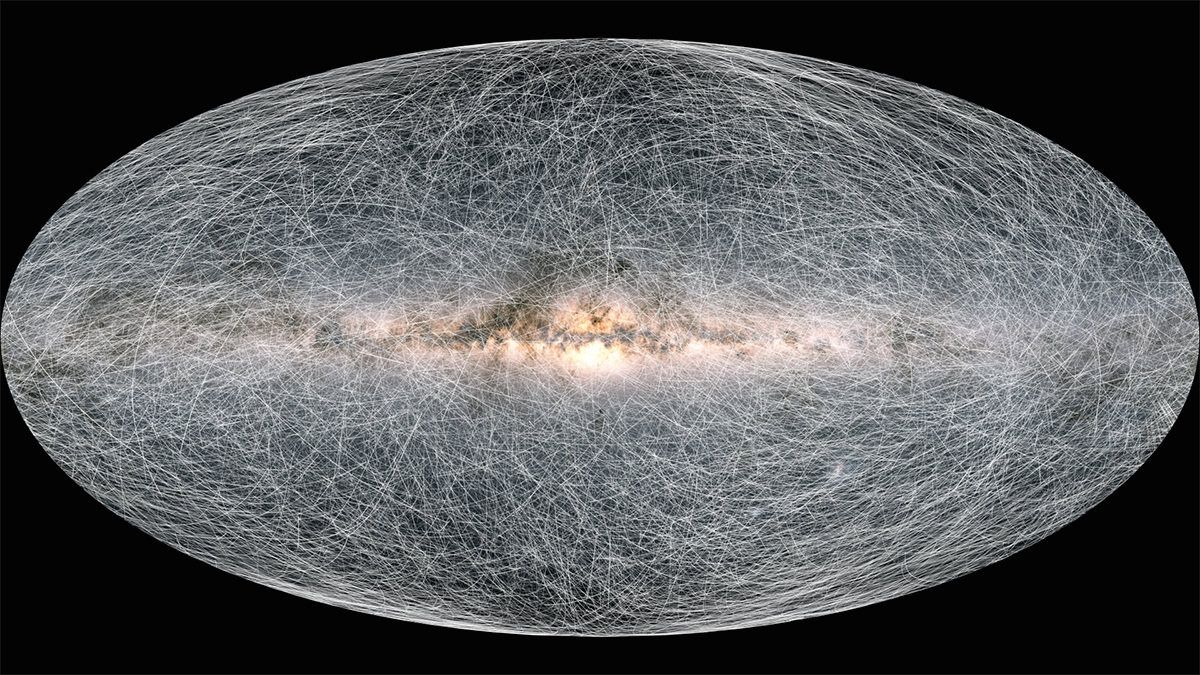
This small but mighty stellar cartographer has mapped the positions and movements of over a billion stars, providing not just a map of the Milky Way today, but insight into its past.
By using Gaia’s velocity data, tracing the paths of stars backwards, astronomers have uncovered the Milky Way’s surprisingly violent history.
Read more
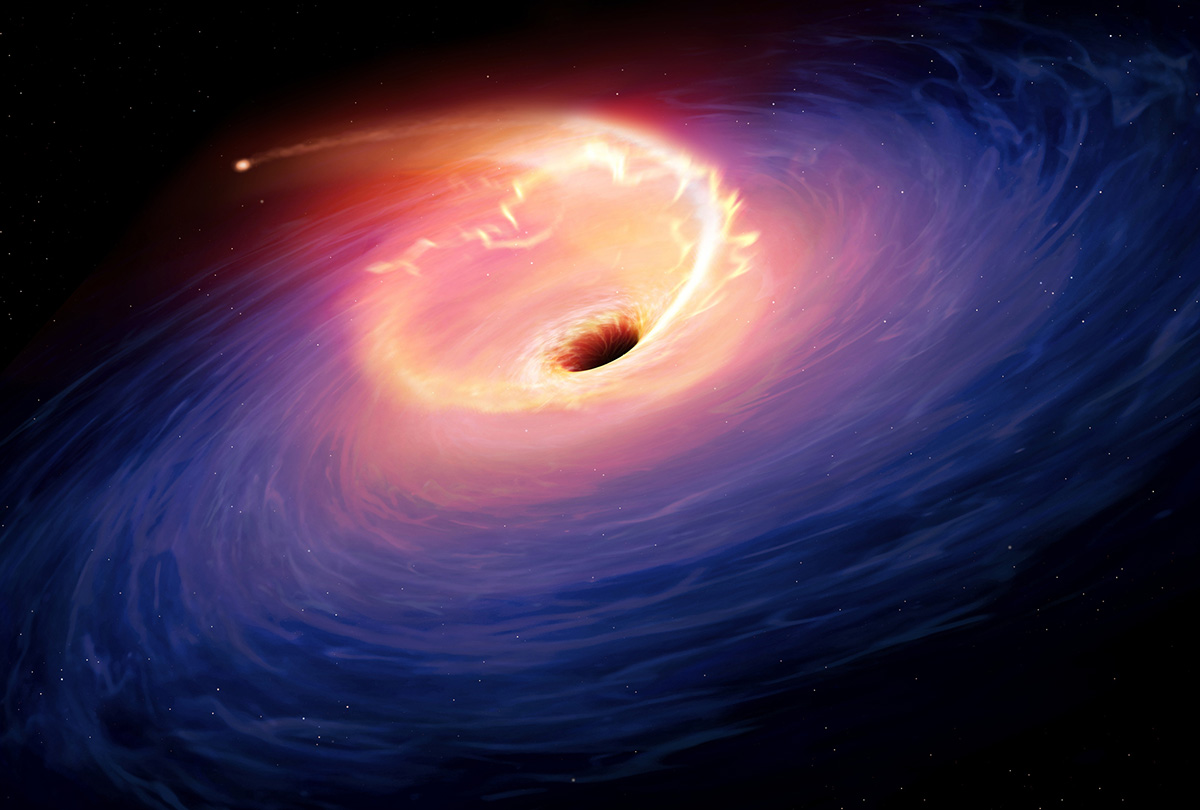
Our Galaxy was shaped by dramatic mergers with neighbouring systems, now given names that range from the dramatic (the Kraken) to the absurd (the Gaia-Enceladus Sausage).
There is even some evidence that the birth of our own Sun was part of a burst of star formation triggered by such an encounter.
Disappearing evidence
Yet the effects of a merger won’t be obvious forever.
Encounters with the Galaxy’s bar, the gravitational tides induced by our satellite galaxies (the Magellanic Clouds), passages through spiral arms and the occasional close encounter can all affect how stars move as they orbit the disc, washing out even previously clear signatures of important past events.
More recent mergers may also kick over the traces left by the previous ones, though the bigger and more recent the merger, the more obvious the traces it leaves in today’s Milky Way.
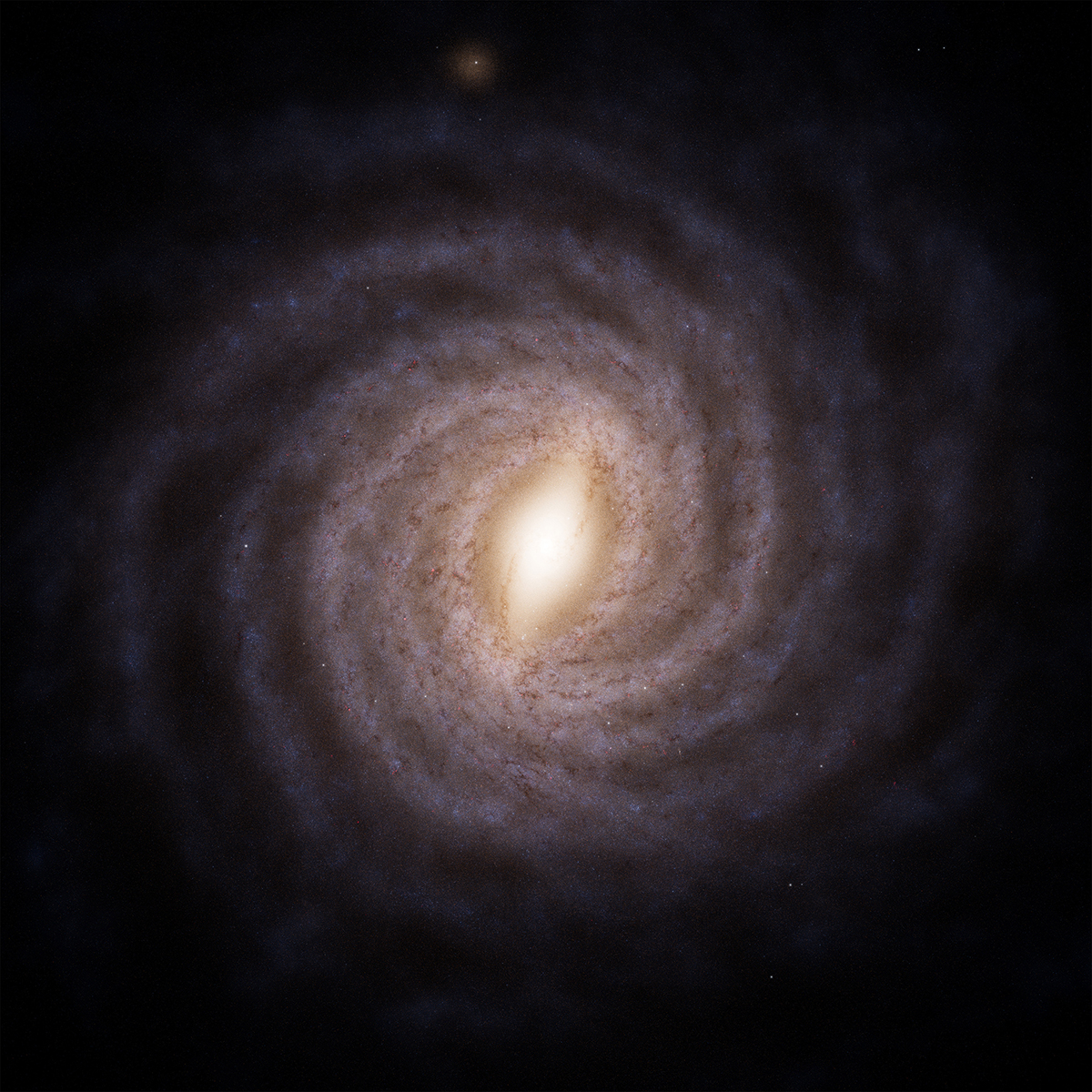
Recreating the Galaxy
Thanks to Gaia, we have reached the point where it’s worth thinking about how much these various effects hide from us.
That’s the aim of new research led by Lina Necib at Harvard and a US-based team
of collaborators.
They use galaxies similar to the Milky Way drawn from the vast TNG50 cosmological simulation.
Such supercomputer Universes are now capable of doing a reasonable job of making realistic galaxies, and as these systems evolve on a chip, we know their merger histories in perfect detail, making it easier to test what we can measure.
Unusually for astronomers, the team use a branch of mathematics known as information theory to quantify how much any measurement we might make can tell us.
The results are fascinating. Different types of mergers produce signatures which can be more or less persistent.
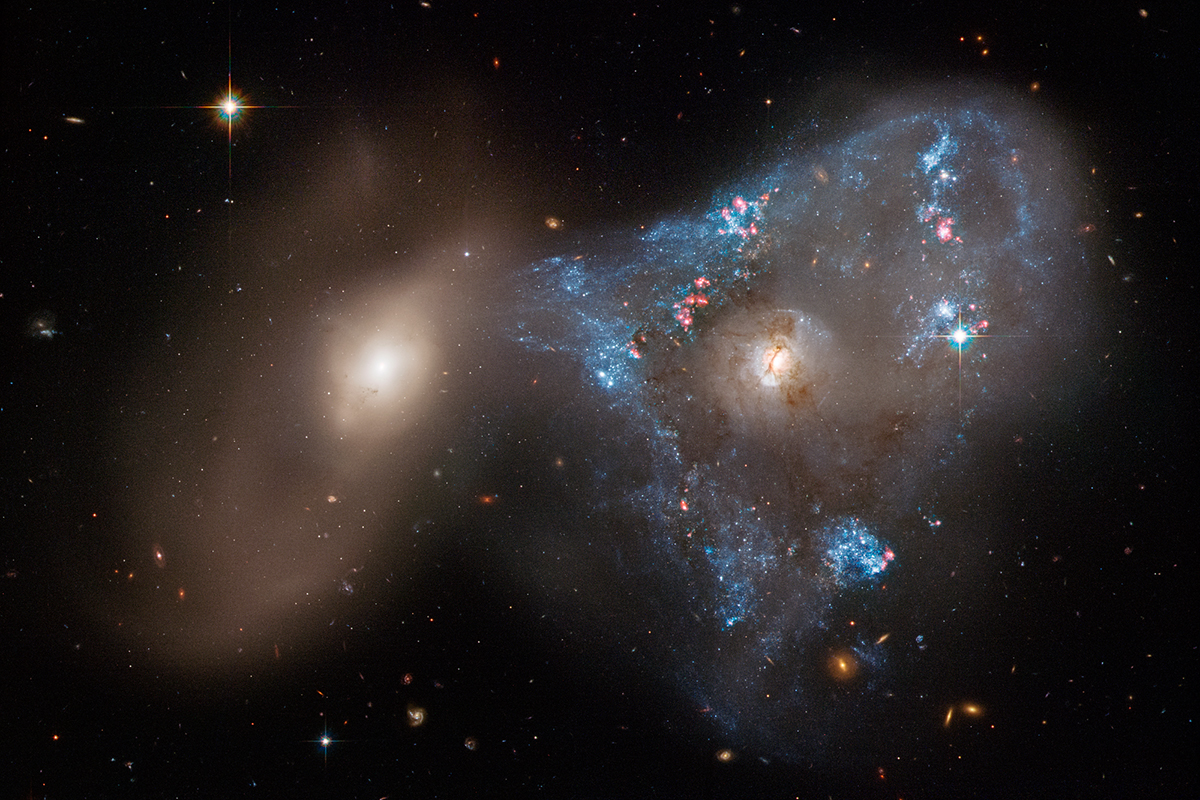
For example, if a satellite galaxy scores a direct hit on the main Milky Way disc, rather than coming in obliquely, the violence of the collision will ensure stars are quickly added to our Galaxy’s disc – but they will also quickly blend in with the local population, hiding any evidence of their origins.
Such mergers do still produce long-lasting effects on the Milky Way’s gravitational potential (think of it as a map of the Galaxy’s gravitational pull), but while easy to read in a simulation, it’s not something we can observe directly in the real Universe.
Why we need to keep looking
When the authors consider what we can see – the movement of the stars – they find the speed at which stars in the innermost parts of the Galaxy whizz around their orbits, and the additional mixing that they’re subject to, washes out information faster.
Within five or six billion years – half the life of the Galaxy – there will be essentially no trace of a merger left.
Therefore, to understand the fate of the Galaxy, we should look outwards to stars in the outermost halo of the Milky Way, where stragglers can still tell us about the distant past.
Gaia will get us so far, but to look further back in time it seems we’re going to need new surveys of the obscure outer reaches of the Galaxy. Sounds like fun!
Chris Lintott was reading Galactic Amnesia: The Information Washout of the Milky Way Merger History by Lina Necib et al. Read it online at: arxiv.org/abs/2605.04138