
If both NASA and the Chinese space agency achieve their short-term lunar ambitions, we could see human beings putting feet on the surface of the Moon before the decade is out.
NASA aims to land astronauts on the Moon by 2028 via its Artemis IV mission, while the China National Space Administration is aiming to put its first taikonauts on the Moon by 2030.
However, two key issues with permanent human settlement on the Moon remain.
More on living in space

Firstly, where are humans going to live on the Moon? And secondly, how to manage the dangers of lunar dust, which is known to be sharp, abrasive and plentiful.
A new study by engineers at Rice University in Houston, Texas and Iowa State University, USA, may have come up with a solution that could solve both problems at once.
Using Moon dust to build habitats on the lunar surface.

Return to the Moon
NASA's Artemis II mission saw astronauts fly around the Moon for the first time since the Apollo missions.
Artemis III will practise docking manoeuvres in low-Earth orbit and, if all goes to plan, Artemis IV will land humans on the Moon for the first time since Apollo 17.
China, too, has ambitions to land humans on the Moon by 2030.
In fact, the two agencies' parallel lunar ambitions are seen by some to be a new 'space race', much like that of the Cold War period when the USA and Soviet Union competed to dominate crewed spaceflight and land on the Moon.
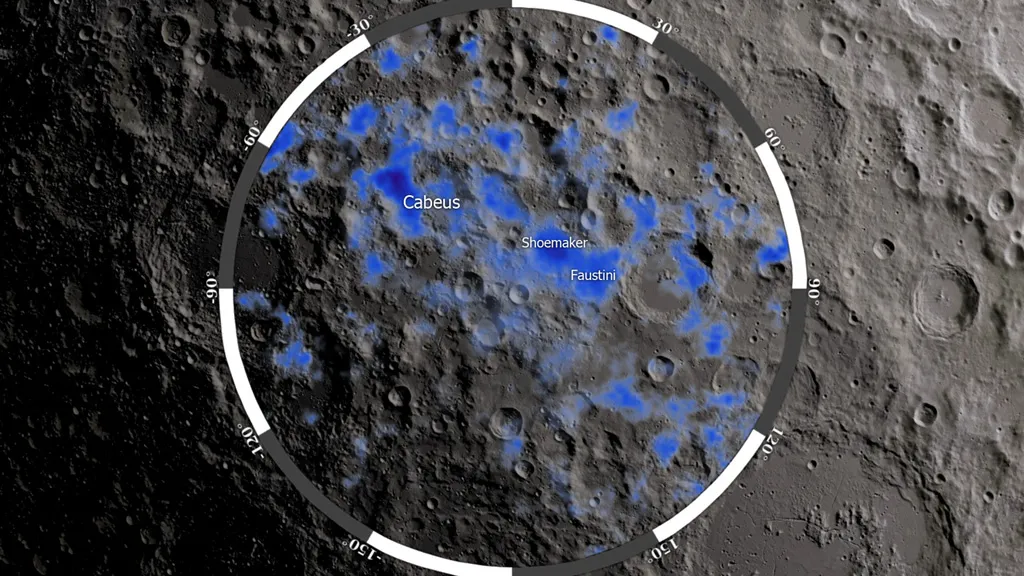
This time, both NASA and China are targeting the Moon's south pole for their crewed missions, because previous studies have found this region of the Moon to have water ice that could be vital to sustained human presence on the lunar surface.
The problem with dust
Lunar dust is a big problem.
This fine material covers the surface of the Moon and contains silicate, which is known to cause significant health problems on Earth in professions like mining, where it can lead to inflammation and scarring of the lungs.
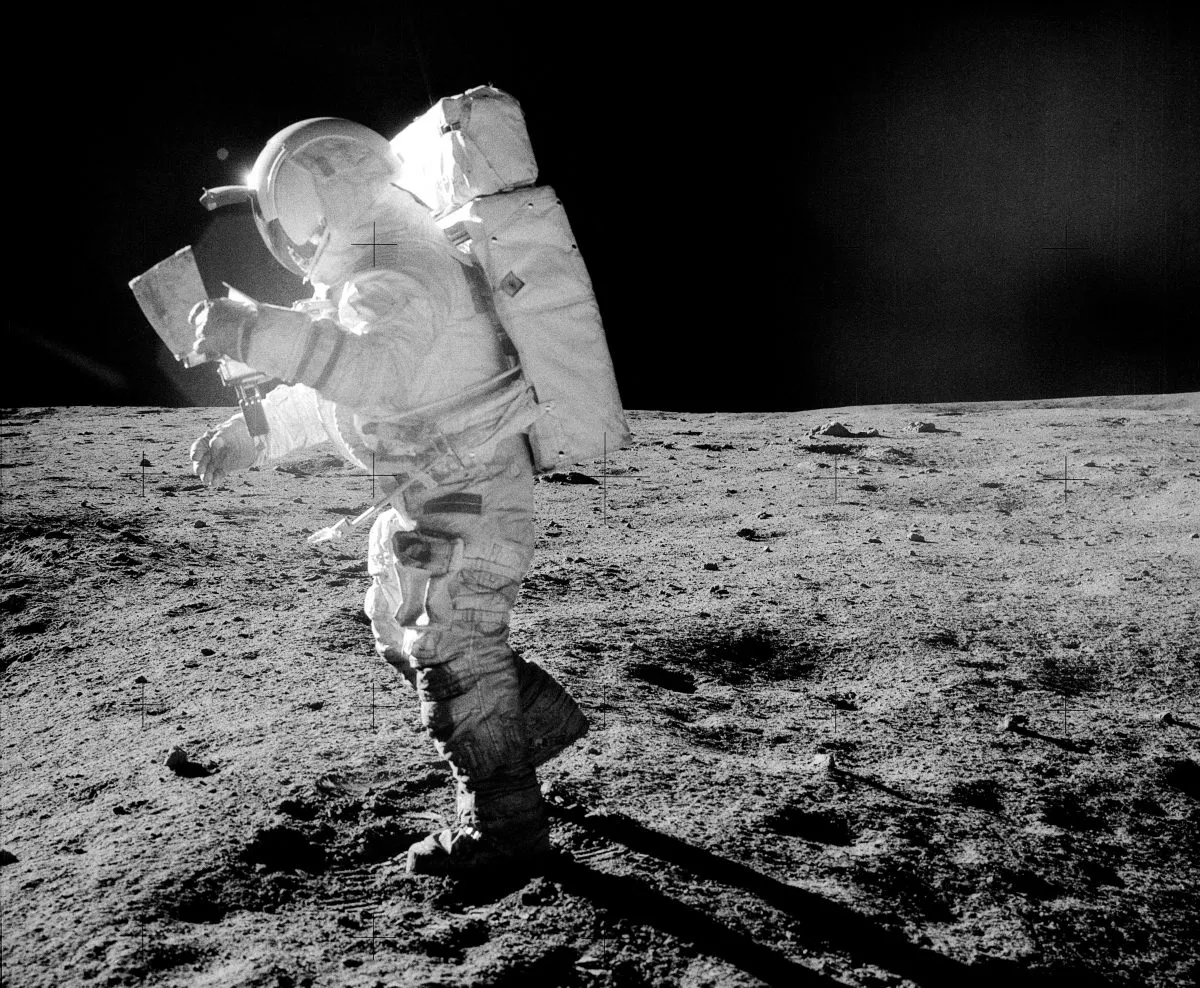
During the Apollo missions to the Moon, lunar dust corroded layers of spacesuit boots and wrecked the vacuum seals of containers that were used to collect samples for return to Earth.
Moon dust is both fine and sharp, like broken glass. What's more, lower gravity on the Moon enables particles of dust to remain suspended in the air for longer.
But, say engineers, this dangerous Moon dust could be vital for building habitats and infrastructure on the Moon.
Building houses from Moon dust
The study was led by Denizhan Yavas, assistant teaching professor of mechanical engineering at Rice, and Ashraf Bastawros of Iowa State University.
It shows how on Earth, a material that simulates lunar regolith – or Moon dust – can be used to strengthen advanced composite materials.
"This work started with a simple but powerful question," Yavas says.
"Lunar dust is typically viewed as a major obstacle for exploration because of how abrasive and pervasive it is.
"We asked whether that same material could instead be used as a resource – something that could actually improve the performance of structural materials."

The team looked at how the lunar regolith simulant could be combined with fibre-reinforced polymer composites, a type of lightweight material widely used in aerospace and engineering.
Integrating the simulant for reinforcement, they found toughness and resistance to damage increased up to 30-40%.
"Our results show that you can take a material that is inherently challenging and convert it into something structurally beneficial," Yavas says.
"That shift in perspective is critical for building sustainably beyond Earth and enabling long-term exploration.
"Instead of only trying to keep lunar dust away, we began to think about how to use it. That led us to this concept of embedding it directly into composite systems as reinforcement."

The team say composite materials could be reinforced with lunar material to build habitats, protective barriers and other infrastructure on the Moon.
This could be vital as a solution to the huge fuel consumption and cost of launching materials from Earth to the Moon.
If astronauts can construct what they need to survive with what's already on the Moon, it could provide a huge boost to building a human settlement.
For example, water ice on the Moon could be melted down for drinking water, but also converted into oxygen for breathing and for rocket fuel.
So too, according to this study, lunar dust could be used to reinforce materials for the purposes of building lunar habitats.
"Our long-term vision is to design materials that are not only high performing but also deeply integrated with the environment in which they are built," Yavas says
"For the moon, that means leveraging lunar regolith as much as possible to create resilient, scalable infrastructure."
Read the full paper via Advanced Engineering Materials.


