
NASA's Curiosity Mars rover has discovered what NASA is calling "the most diverse collection of organic molecules ever found on the Red Planet."
As many as 21 different carbon-containing molecules were identified in a Mars sample analysed by the rover, and seven of those have never been detected on the planet before.
The discovery is another step towards confirming whether or not Mars could ever have hosted life, or whether it still does today.

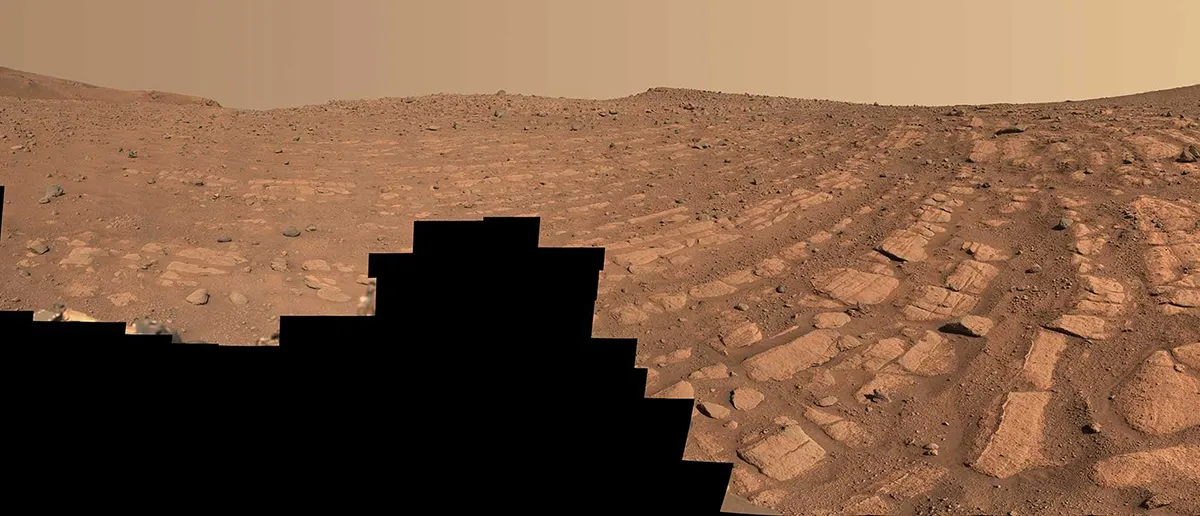
Ancient Mars – what we know
Planetary scientists say that, billions of years ago, Mars was much warmer and wetter than it is today.
It had a thicker atmosphere and had lakes and rivers flowing with liquid water, the evidence of which can still be seen today.
That means ancient Mars could theoretically have had the right conditions for life to emerge.
Numerous discoveries made by rovers on Mars in recent years have shown that Mars contains organic molecules, which are the building blocks out of which life may arise.
However, what's not clear is whether these organic molecules are indeed linked to some kind of life, or whether they were produced by geological processes.

Curiosity's latest find
In 2020, NASA's Curiosity rover drilled into and analysed a rock it found on Mars.
Now scientists confirm the sample contained 21 different carbon-containing molecules, seven of which have never been detected on Mars before.
The team say the organic molecules could have been created by biological or geological processes, but their discovery is further evidence Mars had the right chemistry to support life, billions of years ago.
As well as this, it shows such molecules can survive preserved in rocks even after billions of years of exposure to Mars's harsh, radioactive atmosphere.

A sample of Mars's history
The rock sample in question was collected on Mars's Mount Sharp, and has been nicknamed 'Mary Anning 3' after a famous fossil collector and paleontologist.
Mount Sharp was covered by lakes and streams billions of years ago, evidence of which can be seen in the clay minerals that have preserved organic compounds – the building blocks of life.
One of the molecules, nitrogen heterocycle, has never been discovered on Mars before, and is considered a predecessor to RNA and DNA.

"That detection is pretty profound because these structures can be chemical precursors to more complex nitrogen-bearing molecules," says Amy Williams of the University of Florida in Gainesville, USA, lead author of the paper.
"Nitrogen heterorcycles have never been found before on the Martian surface or confirmed in Martian meteorites."
Curiosity also discovered benzothiophene, a molecule often found in meteorites, which are thought to have distributed pre-biotic chemistry across the early Solar System.

Is Mars filled with organic chemistry?
In 2025, a separate study discovered the largest organic molecules ever detected on Mars, and we know that Mars once contained oceans of liquid water.
"This is Curiosity and our team at their best. It took dozens of scientists and engineers to locate this site, drill the sample, and make these discoveries with our awesome robot," say mission project scientist Ashwin Vasavada of NASA’s Jet Propulsion Laboratory.
"This collection of organic molecules once again increases the prospect that Mars offered a home for life in the ancient past."
The disocveries were made using Curiosity's Sample Analysis at Mars (SAM) instrument, which receives samples of pulverised Martian rock drilled by the rover.
Then a high-temperature oven within Curiosity heats the material and analyses the gasses released.
The SAM instrument can also perform 'wet chemistry' by mixing samples with solvent to identify molecules.

The team tested the same technique with a chunk of the famous Murchison meteorite on Earth, which is over 4 billion years old.
They say a Murchison sample was found to break larger molecules into some of the ones seen in Mary Anning 3, including benzothiophene.
This, the team say, suggests the molecules on Mars could have been generated from the breakdown of more complex compounds relevant to life.
"It was a feat just figuring out how to conduct this kind of chemistry for the first time on Mars," says Charles Malespin, the SAM instrument’s principal investigator.
"But now that we’ve had some practice, we’re prepared to run similar experiments on future missions."

