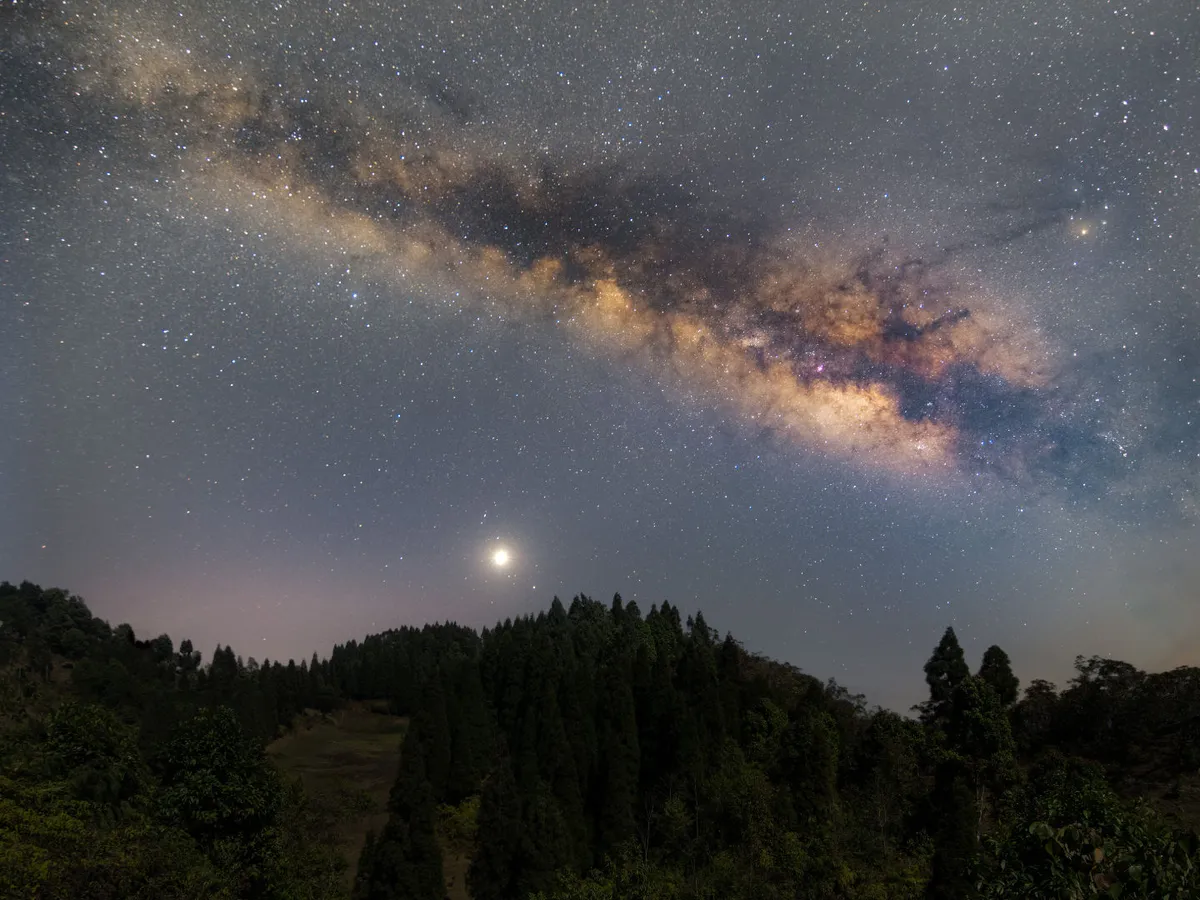
Astronomers say they've successfully traced the chemical fingerprints of a galaxy outside our own Milky Way for the first time.
This, they say, is a breakthrough for 'space archaeology', as the team have been able to reconstruct the life story of the distant galaxy, revealing how it grew and merged with other galaxies over a period of 12 billion years.
"This is the first time that a chemical archaeology method has been used with such fine detail outside our own galaxy," says Lisa Kewley, lead author, Harvard professor and director of the Center for Astrophysics.
"We want to understand how we got here. How did our own Milky Way form, and how did we end up breathing the oxygen that we're breathing right now?"
More space science

The chemistry of cosmic history
To understand how galaxies grow, astronomers can analyse the elements they contain.
The team behind this study looked at spiral galaxy NGC 1365 – known as the Fornax Propeller Galaxy or the Great Barred Spiral Galaxy – using data from the TYPHOON galaxy survey.
TYPHOON is carried out at Las Campanas Observatory in Chile's Atacama Desert, one of the darkest, most unspoiled astronomical sites in the world.
When astronomers look at distant galaxies, they can only observe them from one perspective. Some galaxies are 'face-on' relative to Earth, and some galaxies are 'edge-on' relative to Earth.
NGC 1365 is face-on from our perspective, so the team were able to achieve a resolution sharp enough to study individual star-forming clouds.
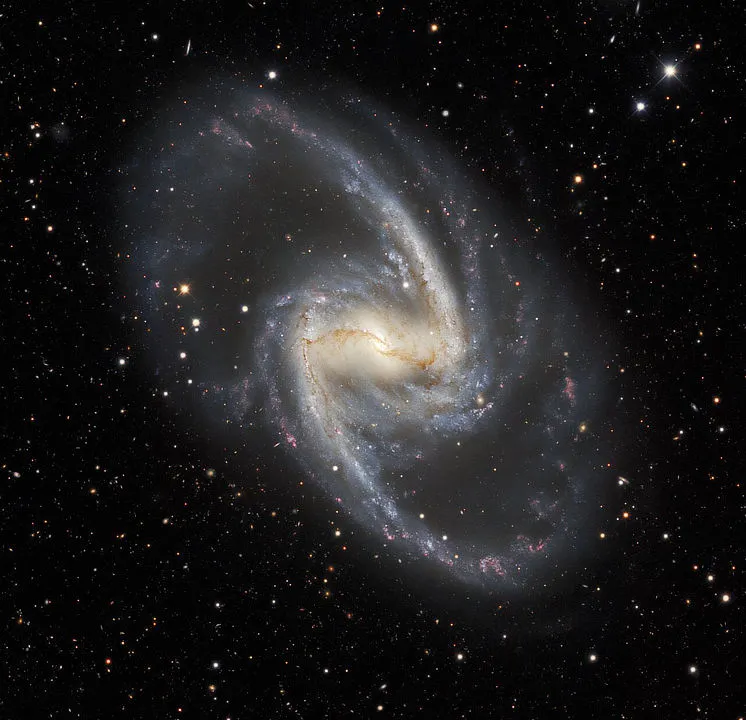
Image processing: Travis Rector (University of Alaska Anchorage/NSF’s NOIRLab), Jen Miller (Gemini Observatory/NSF’s NOIRLab), Mahdi Zamani & Davide de Martin (NSF’s NOIRLab)
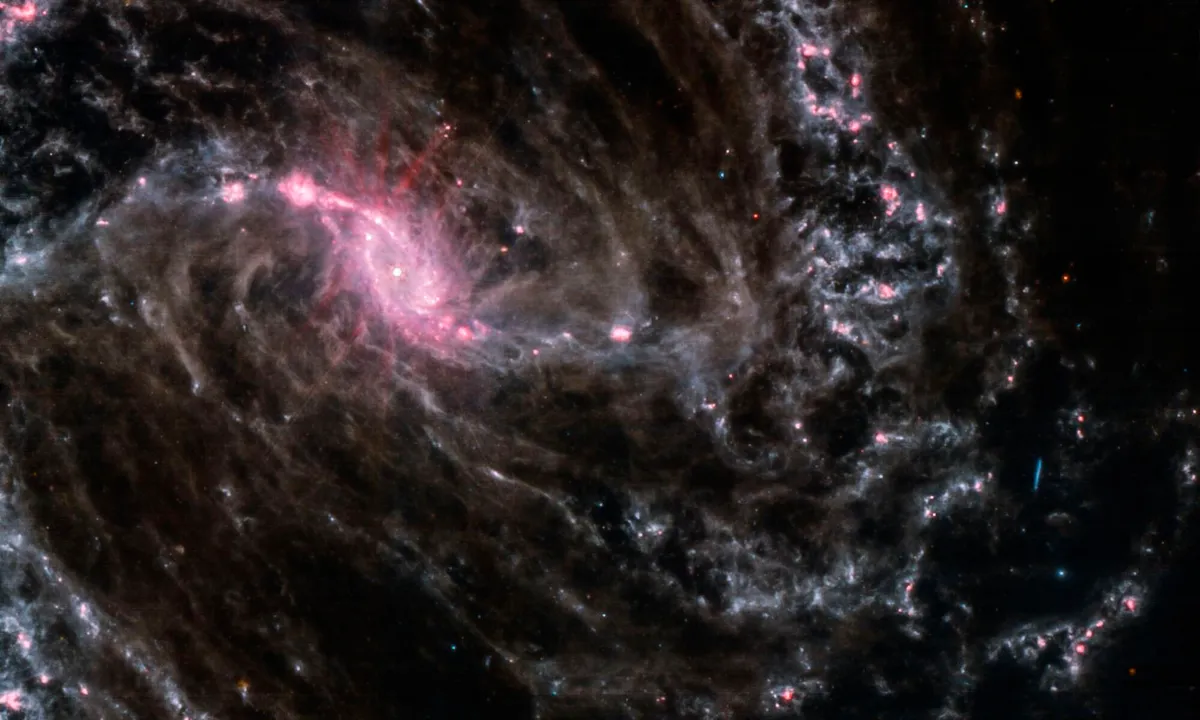
When young, hot stars shine, their ultraviolet light excites nearby gases. This causes elements like oxygen to produce distinct lines of light.
By mapping these oxygen patterns, scientists can see a record of the galaxy's past.
Typically, the centres of galaxies are rich in heavy elements, while the outer edges have less.
This distribution is shaped by numerous factors, such as where and when stars were born, the effects of 'supernova' explosions, the movement of gas in and out of the galaxy and whether the galaxy has collided and merged with other galaxies throughout its history.

12 billion years of cosmic chaos
To make sense of the oxygen patterns in NGC 1365, the team turned to the Illustris Project, which is a large archive of computer simulations detailing galaxy formation.
The simulations track everything from the Big Bang to the present day, including the motion of gas, the birth of black holes and chemical evolution.
After searching through simulations of about 20,000 galaxies, the researchers say they found a near-perfect match for NGC 1365.
This allowed them to infer how the galaxy evolved over 12 billion years, which is almost the total age of the entire Universe.
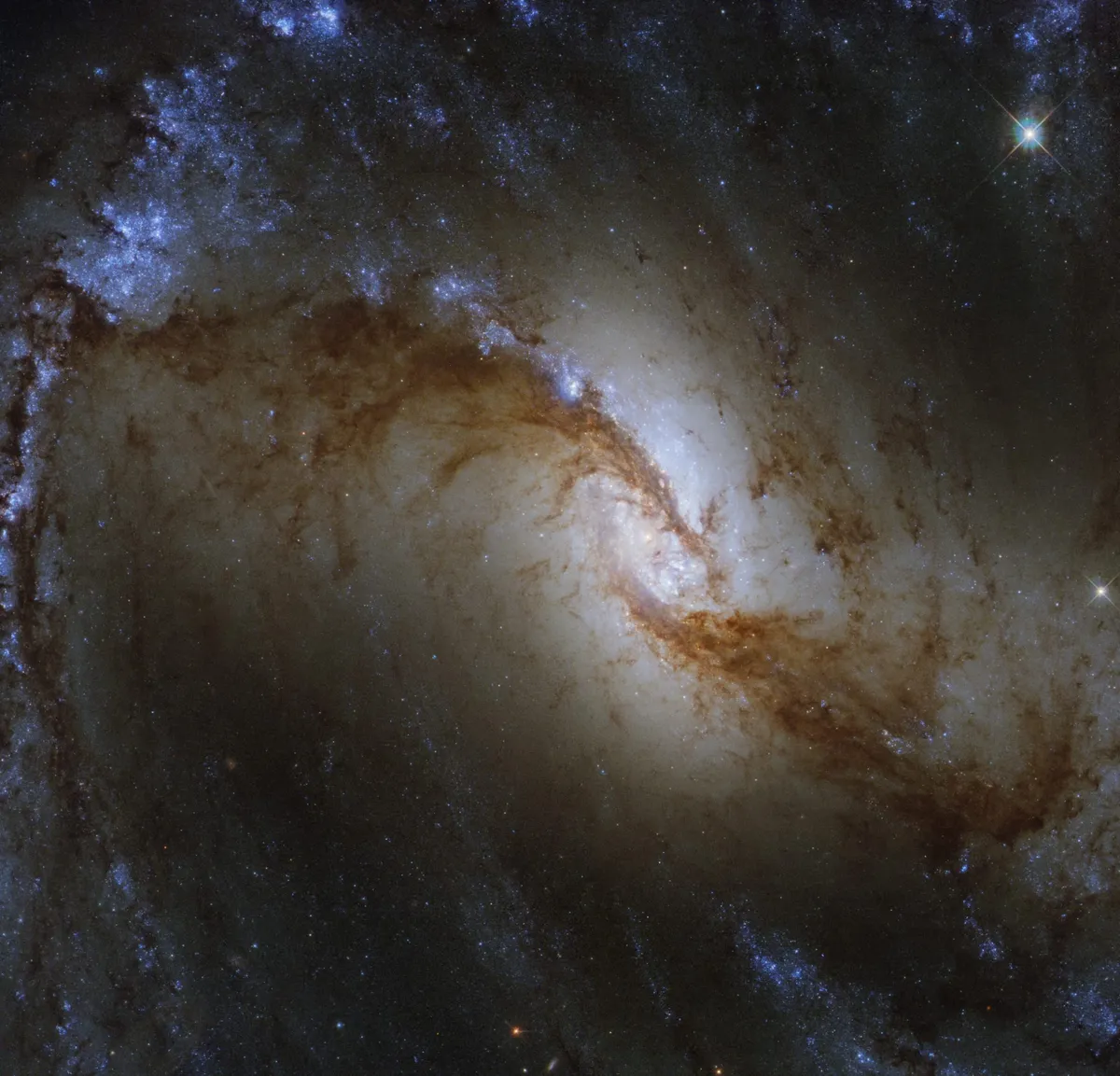
They found that NGC 1365 began life as a small galaxy. Its central region formed early, quickly becoming rich in oxygen.
Then over billions of years, the galaxy grew into a giant spiral by merging with smaller dwarf galaxies.
The gas in the outer spiral arms appears to have formed much later – within the last few billion years – fed by these cosmic mergers.
A window into humanity's origins
Because NGC 1365 shares similarities with our own galaxy, the Milky Way, the team say it's giving them a glimpse into our galactic history.
By comparing the Milky Way to galaxies like NGC 1365, astronomers say they can determine whether our galaxy’s formation was typical or unique.
"This study shows really well how you can produce observations to be directly aided by theory," says Kewley.
"I think it's also going to impact how we work together as theorists and observers, because this project was 50 percent theory and 50 percent observations, and you couldn't do one without the other. You need both to come to these conclusions.
"Do all spiral galaxies form in a similar way? Are there differences between their formation? Where is their oxygen distributed now? Is our Milky Way different or unique in any way?
"Those are the questions we want to answer."
Read the full paper at Nature Astronomy