
Could there be alien life out there in the cosmos, waiting to be discovered?
This is surely one of the biggest mysteries in science: the question as to whether we are alone in the Universe, or whether some form of life exists – or has ever existed – beyond Earth.
More on alien life

Popular interest in the topic of alien life rarely wanes, but it certainly got a boost in the headlines this week after former US President Barack Obama said aliens "are real".
To clarify, what the former president actually said was "They’re real, but I haven’t seen them, and they’re not being kept in Area 51. There’s no underground facility"
Obama was speaking to American podcaster Brian Tyler Cohen, and responding to a simple question: "are aliens real?"
The idea of a former US President publicly declaring "aliens are real", unsurprisingly, took the internet by storm.
It precipitated a surge in online debate as to whether or not Obama was confirming the existence of a government conspiracy to keep secret the existence of intelligent alien beings.
Unsurprisingly, Obama felt the need to clarify, once the podcast had aired, and subsequently posted on his official Instagram channel:
"I was trying to stick with the spirit of the speed round, but since it’s gotten attention let me clarify.
"Statistically, the Universe is so vast that the odds are good there’s life out there.
"But the distances between solar systems are so great that the chances we’ve been visited by aliens is low, and I saw no evidence during my presidency that extraterrestrials have made contact with us. Really!"

Is alien life really likely?
Obama, it seems, was referring to some pretty startling statistics that have been concluded by scientists and astronomers over the past few decades.
Firstly, we know that life does exist in the Universe, in the form of us, human beings, and all our co-inhabitants of planet Earth.
And if life does exist on one rocky world orbiting a very ordinary star, couldn't life exist – or once have existed – elsewhere in the Galaxy, let alone the wider Universe?

Since the field of exoplanet study exploded in the 1990s, astronomers now have confirmed over 6,000 exoplanets: planets orbiting stars beyond our Solar System.
In fact, scientists now say that, for every star you can see in the night sky, there's likely at least one planet in orbit around it.
There could be up to 400 billion stars in our Galaxy alone, and ours isn't even a particularly enormous galaxy.
Some scientists say this makes the chances of life existng beyond Earth – even if it's simple, microbial life – quite high. Others say no conclusions can be made unless direct evidence is found.
But one astrophysicist has weighed in on the debate following Obama's comments, to say she does think it likely that alien life could exist out there in the cosmos.
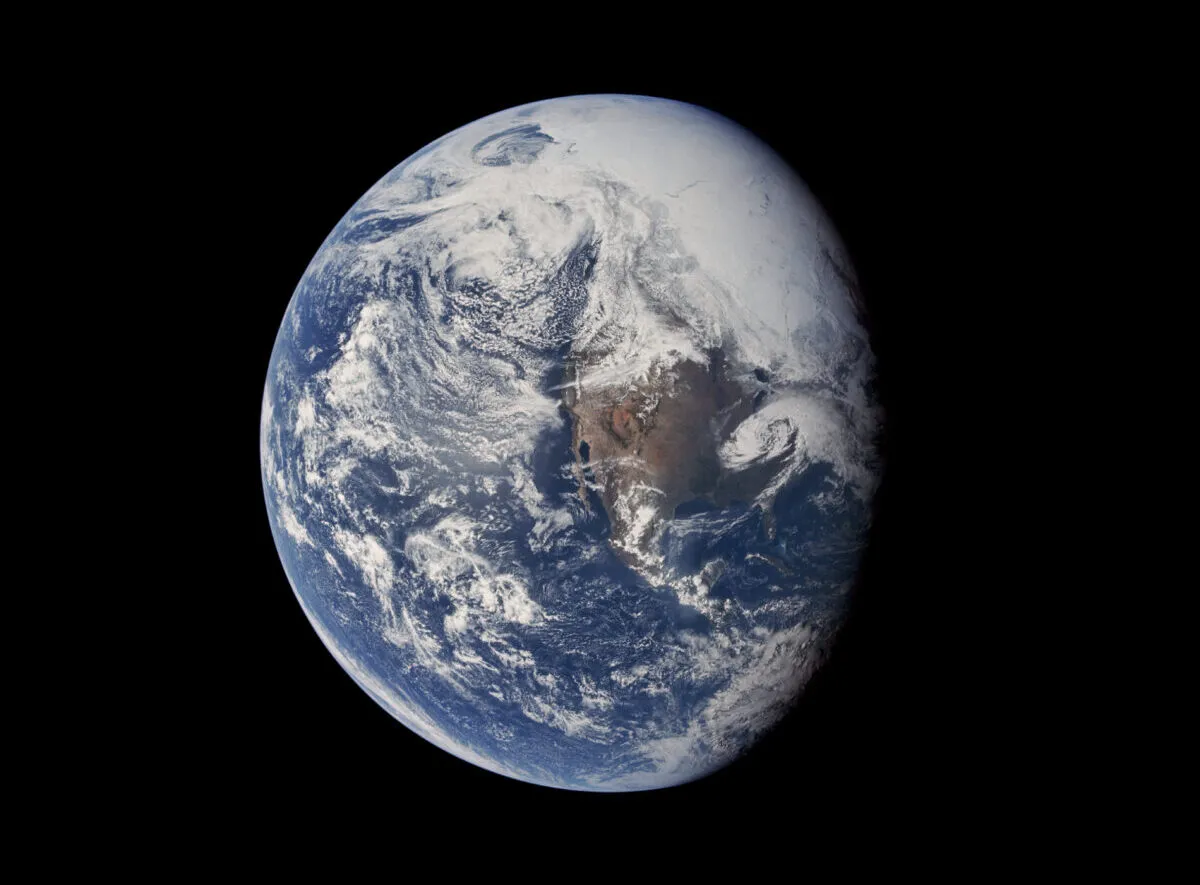
Could Obama be right about aliens?
Dr Sara Webb is an astrophysicist at Swinburne University of Technology in Melbourne, Australia.
"I agree with Barack Obama, and I immediately understood what he meant," she says.
"As a scientist, I’ll say this with confidence: I think aliens exist. Not because we’ve seen them. Not because we’ve met them. And not because we have direct, tangible evidence (yet). But because of the odds."
Dr Webb points to the fact that the observable Universe contains at least two trillion galaxies.
Each of these galaxies has hundreds of billions of stars, and most of those stars very likely host planets.
So if life could flourish on Earth in extreme environments at the bottom of our oceans, in Antarctica, within acidic lakes and even in nuclear reactors, couldn't life have evolved on other temperate, rocky planets?
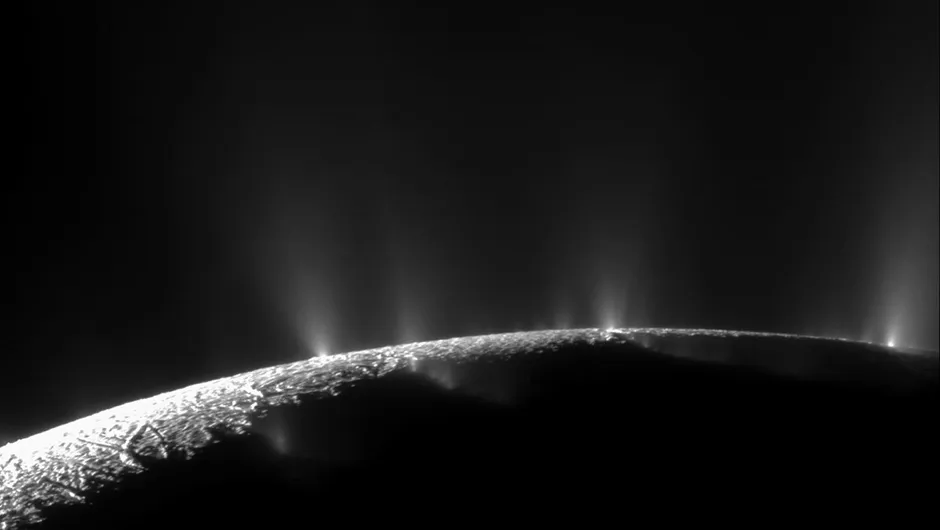
Even in our own Solar System we find habitable conditions in liquid oceans beneath the frozen surface of icy moons, such as those orbiting Jupiter and Saturn.
So while there's been no confirmed detection of life elsewhere in our Solar System, astronomers have found that conditions for life do exist beyond Earth, even within our minuscule corner of the Galaxy.
"If life happened here, in this vast cosmic lottery, it feels statistically improbable that we are the only winning ticket," Dr Webb says.
"The Universe has had 13.8 billion years to run that experiment over and over again."
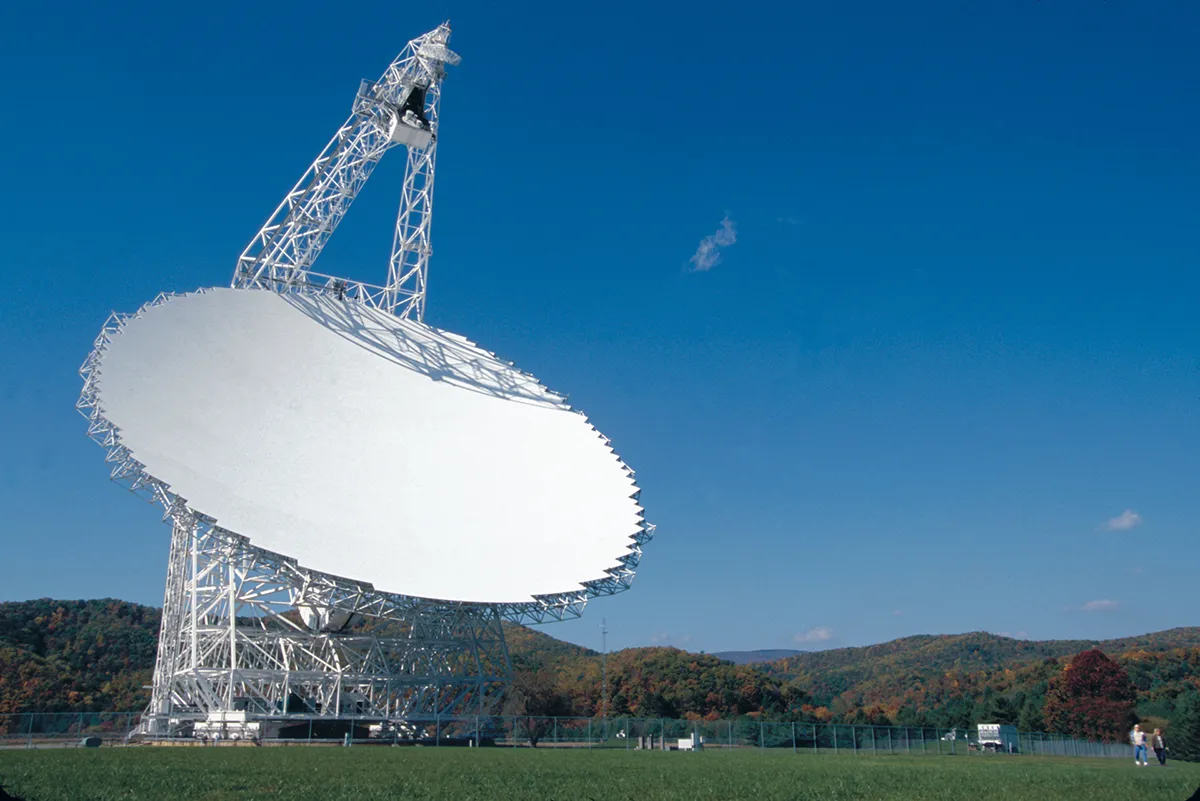
Making contact
Finding microbial life in on an icy moon is one thing, but could we really expect to ever make contact with intelligent life?
Some astronomers use enormous radio telescopes to search for signals from technologically advanced alien species across the Galaxy. It's known as SETI, or the Search for Extra-Terrestrial Intelligence.
Dr Webb notes the vastness of the Universe, and how our communication with any potential intelligent alien species is restricted by the speed of light.
That makes receiving and sending communications very difficult, and likely impossible to do within one human lifetime.
"Do I think we’ll shake hands with extraterrestrials anytime soon? Probably not," she says.
"Do I think we’ll find evidence – microbial, atmospheric, or something unexpected? I hope so. Maybe even in our lifetime.
"Somewhere, under another sky, orbiting another star, there may be a civilisation looking up at their version of the night sky… wondering if they are alone too."
What are your thoughts on alien life? Let us know by emailing contactus@skyatnightmagazine.com


