
Step outside and observe the Orionid meteor shower tonight and you'll witness one of autumn's best meteor showers at its peak.
Right now 21 October, is the best time to see the 2026 Orionid meteor shower, as the shower reaches peak activity this evening and into the early hours of Sunday.
The Orionids occur every year from 2 October – 7 November just as the nights are beginning to get longer and darker, making it one of the best autumn meteor showers.
In 2026, the shower's peak is expected at 13:00 BST (12:00 UT) on 21 October, which makes the nights of 20/21 and 21/22 October the best for spotting them.
For the full picture, read astronomer Pete Lawrence's guide to the Orion meteor shower, and scroll down for Orionid top tips
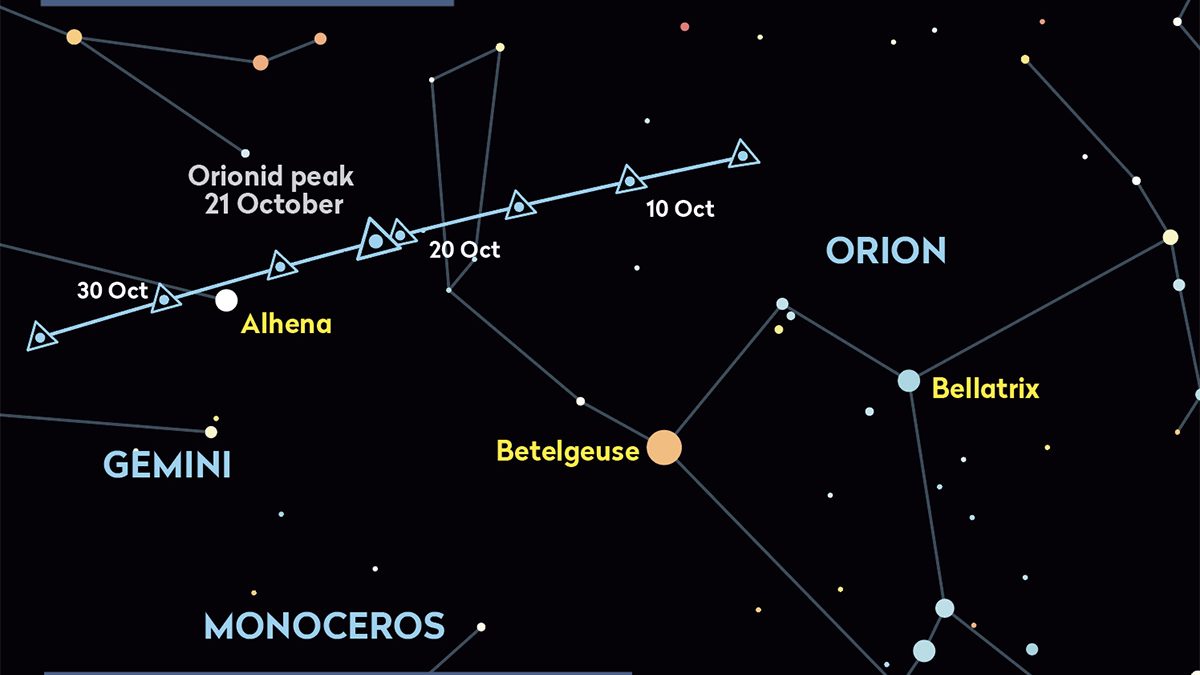
Orionid meteor shower quick facts
During the Orionid meteor shower peak tonight, the Moon will be nearly full, which will make observing the meteor shower a bit trickier than previous years.
Meteor showers are caused when Earth passes through the dust stream left behind by a comet (or sometimes an asteroid) when it orbits the Sun.
Tiny particles burn up in Earth's atmosphere, creating a meteor shower display, and peak activity occurs when Earth passes through the densest part of the stream.
The shower 'radiant' is the point in the sky from which the meteors appear to emanate.
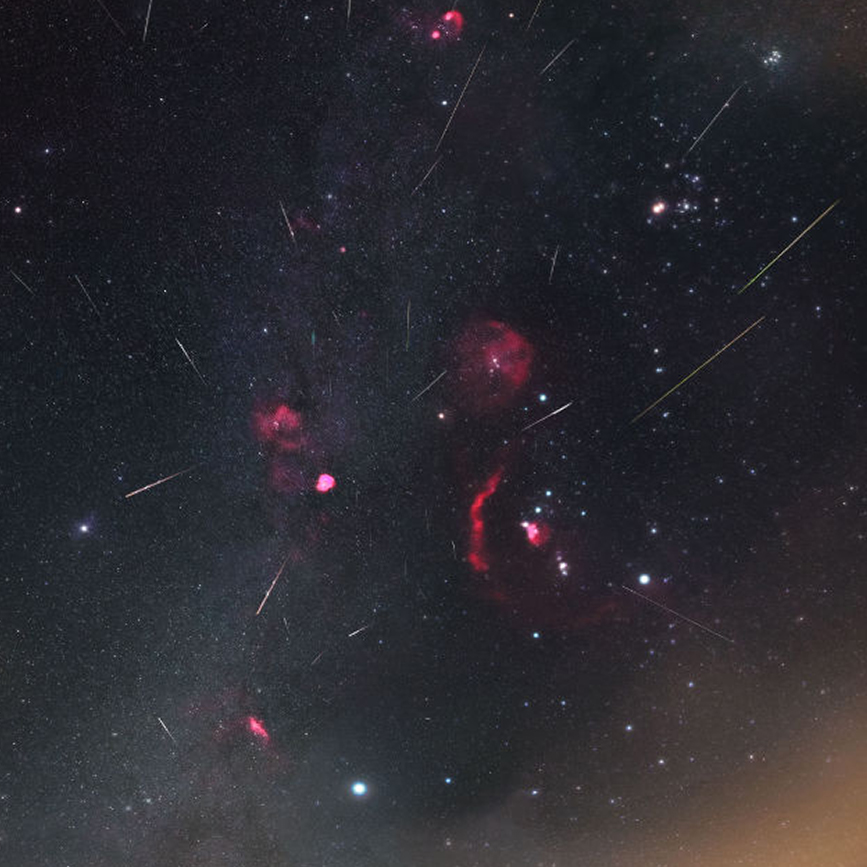
The Orionid meteor shower is caused by the dust stream of comet 1P/Halley - Halley's Comet. That means if you see an Orionid tonight, you're seeing a piece of Halley's Comet burning up in the atmosphere.
Its radiant is close to the constellation Orion, meaning Orionid meteors appear to come from this direction.
For more on this, read our guide what causes a meteor shower.
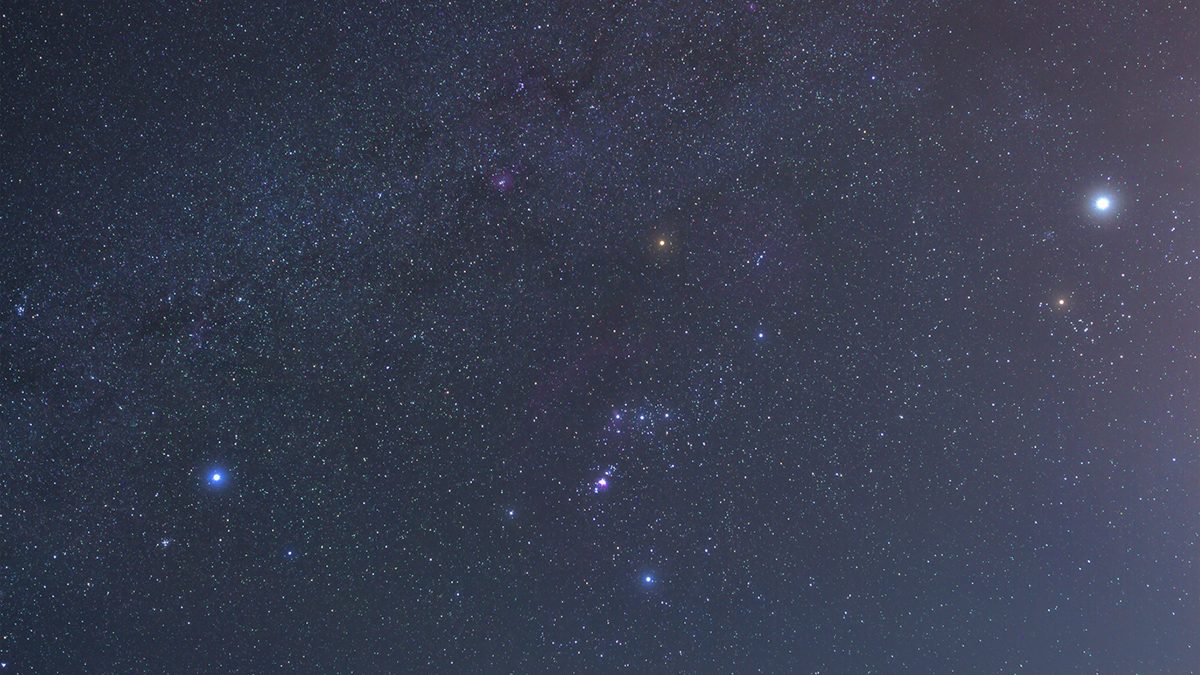
How many Orionids you'll see
At peak activity, the Orionid meteor shower has a ZHR (Zenithal Hourly Rate) of around 20 meteors per hour.
The ZHR is really a representative figure, incidicating the number of meteors you would see under perfect conditions.
You'll likely see less than the quoted ZHR figure, especially because the nearly full Moon's glare will wash out many of the dimmer meteors, but the Orionid meteor shower is one of autumn's best meteor showers.
Our tip would be to position yourself so that the Moon is hidden by, say, making sure it's obscured by a tall building, for example.
The Orionids can produce good trails as long as you give yourself time to become properly dark-adapted and spend a period of at least 30–60 minutes outside, looking up.
Below are some quick tips for seeing an Orionid.
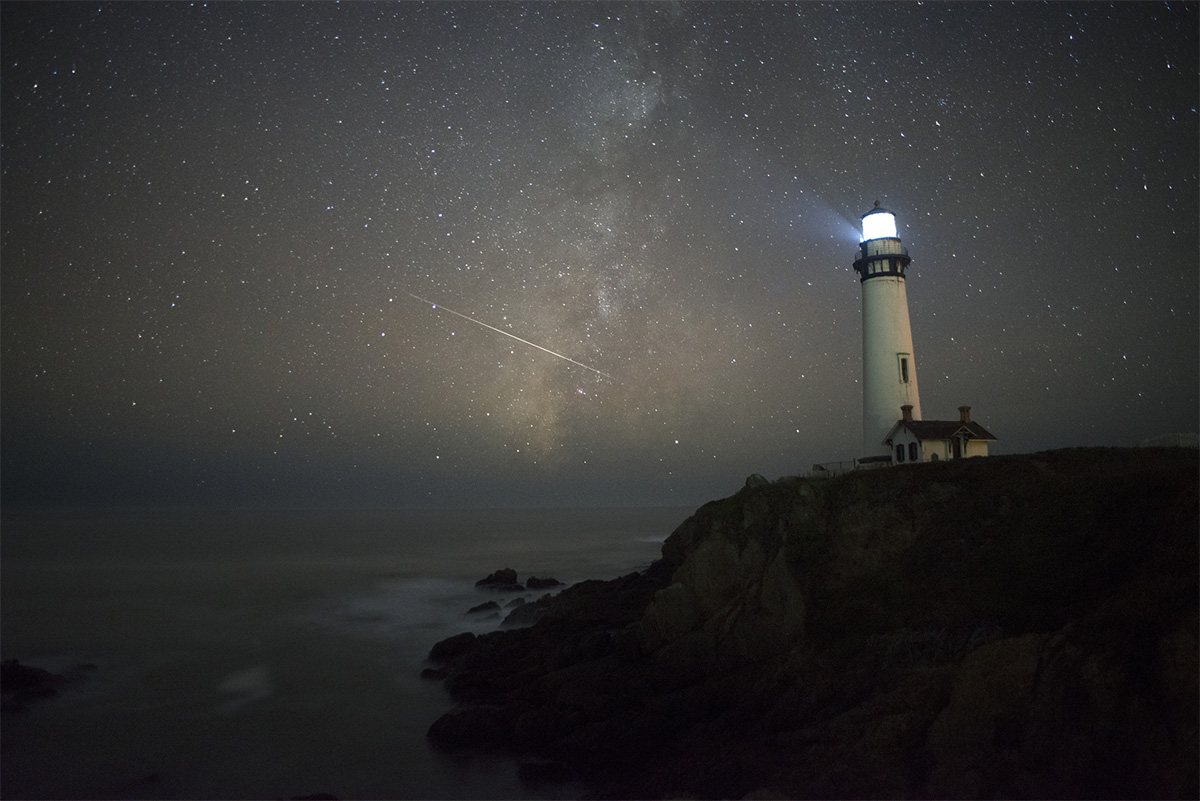
Tips for observing the Orionid meteor shower
- Find a location that's dark, away from light pollution
- Wrap up warm, as meteor observing can get chilly
- Use a reclining chair to help prevent neck cramp when looking up
- Allow 20 minutes for your eyes to adapt to the darkness so you can see better
- Observe in a group and take turns to note down a record of what you see
- Look 60° up in the sky in any direction
- The radiant is close to Betelgeuse
- If you can trace the trail of a meteor back to Orion, chances are you've seen an Orionid meteor
Did you spot an Orionid meteor? Let us know by emailing contactus@skyatnightmagazine.com

