
The annual Orionid meteor shower is one of autumn’s stargazing highlights, offering a chance to spot dust and debris from Halley's Comet burning up in the night sky.
While peak activity occurs on the nights of 20/21 and 21/22 October with a zenithal hourly rate of around 20 meteors per hour, a bright near-full Moon will make viewing tricky during those dates.
Following a few practical steps will give you the best possible chance to adapt to the dark and enjoy these fast-moving shooting stars.
Read our complete guide to observing the Orionid meteor shower
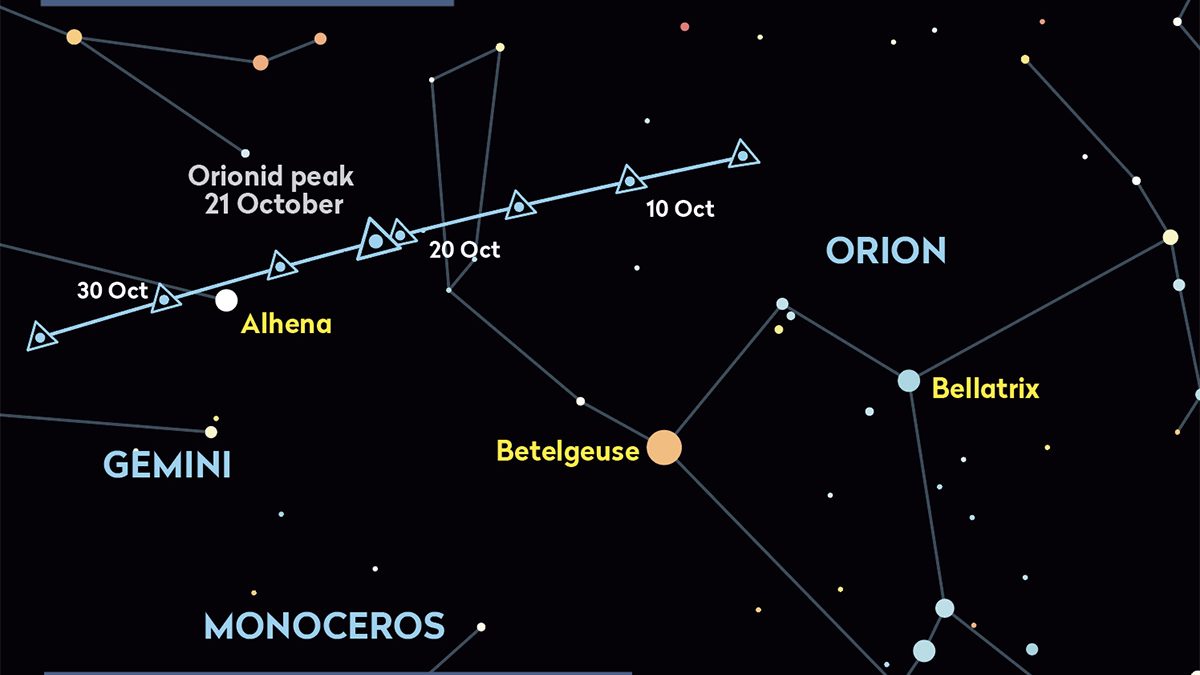
Don't wait for the peak: Because a high, nearly-full Moon will wash out many meteors around the 20–22 October peak, it makes more sense to start observing now, when the Moon is not yet full and sets around midnight.
Get to a dark sky: Find a comfortable, dark location far away from artificial light – known as light pollution – that offers a clear horizon and a wide view of the sky.
Wear warm clothing: Wrap up in plenty of warm layers, even if temperatures feel fairly mild at the start of your viewing session. Meteor-watching involves lots of standing still, which means you could quickly get cold when doing so outside on an autumn evening.
Recline to avoid neck strain: Use a garden chair, sun lounger, recliner or astronomy chair so you can lie back and comfortably view the sky without getting neck cramp.
Let your eyes dark-adapt: Give your eyes about 20 minutes to adjust to the darkness and you'll see more. This is good advice when doing any form of stargazing.
Protect your night vision: Use a red light to navigate in the dark and set your phone screen to red so you don't ruin your night-adapted vision.
Look 60° up: Aim your gaze around 60° – two thirds the way up – in the sky in any direction
Observe in groups: Team up with friends or family so you have more eyes on the sky to spot faint meteor trails as they appear.
Keep a shared logbook: Take turns writing down observations as group members spot meteors, to build an accurate record of your session.
Trace meteor trails back to Orion: The shower's radiant – the point in the sky from where the meteors seem to originate – is near Betelgeuse in Orion. If you can trace a meteor's path back to this area, you have successfully spotted an Orionid.
Share your meteor photos and observations with us by emailing contactus@skyatnightmagazine.com

