
There's a six-planet alignment visible in late February 2026. Sound familiar?
Cast your mind back to February 2025 and you'll likely remember the seven-planet parade that was visible in the evening sky.
Mercury, Venus, Mars, Jupiter, Saturn, Uranus and Neptune were all there for a brief moment after sunset, making for the chance to see seven planets of the Solar System in the night sky at once.
More planet advice

Excitement is now growing around a similar planet alignment set to be visible on 28 February 2026, but in reality the planet alignment can be seen from today, as of late February.
However, this time it's a six-planet alignment, because Mars is not visible this month.
Get weekly stargazing advice and Moon phases delivered to your email inbox by signing up to receive the BBC Sky at Night Magazine e-newsletter

But how visible will the planets be during this February 2026 planet alignment, and what can we really expect?
Here, we'll take a look at each of the planets in turn, revealing when they're visible and what the six-planet parade will really look like.
Firstly, though, a word on safety. Observing this planet parade will mean observing some planets low in the west just after sunset.
Make sure you only observe these planets once the Sun is set, as looking at the Sun directly could seriously damage your eyesight.
Quick links
Jump to:
- Six alignment planets at a glance
- Mercury
- Venus
- Jupiter
- Saturn
- Uranus
- Neptune
- How to see it
- Key questions answered
- Why planet alignments happen
Read a pro astronomer's top tips for the February 2026 planet alignment
Six planets of the alignment at a glance
- Mercury: Very low in the west just after sunset – tricky to see
- Venus: Very low in the west just after sunset – tricky to see, but brighter than Mercury
- Jupiter: High in the south-east after sunset – easy to see with the naked eye
- Saturn: Low in the west after sunset – tricky to see, but higher than Mercury and Venus
- Uranus: High in the southwest after sunset – binoculars likely required
- Neptune: Low in the west after sunset – near Saturn, but requires a telescope (not advisable so close to the Sun)
Read on for more detailed descriptions of observing each planet in the February 2026 alignment.
Mercury
It feels like it's been a long time since we had good views of Mercury in the night sky.
That's because the closest planet to the Sun is an 'inferior' planet, which means it sits between Earth and the Sun, and is therefore closer to the Sun in the evening sky than the outer planets.
In February 2026, Mercury is technically an evening planet, but it sets in the west so close to sunset that it wasn't really visible at the start of the month.

By 19 February, Mercury reached its furthest position from the Sun, known as 'greatest eastern elongation'.
That means that Mercury didn't really join the February 2026 planet alignment until after this date.
By 28 February, Mercury is setting much longer after sunset than it did at the start of the month, but it will have got dimmer, making it tricky to see.
More amazing Chandra observations

Venus
Venus, like Mercury, is also an 'inferior' planet. And like Mercury, its appearance in our evening sky will improve throughout February, setting in the west much later after sunset each night.
Venus won't be as dim as Mercury, but it will still be low down in the sky, making it hard to see.
By 28 February, Venus and Mercury are close together in the sky, so if you can manage to spot one, you may be able to find the other!
Venus will require a very flat, clear western horizon and good timing to catch it at the point after the Sun has set, but before Venus sets itself.

Jupiter
We skip Mars and move straight to Jupiter, as the Red Planet isn't visible in the February 2026 planet parade.
Although Jupiter is past its peak – which it reached in January 2026 – and was technically better viewed at the start of February, it's still the best planet to see in the night sky at the moment and by far the easiest to see in the planet parade.
By sunset on 28 February it's high in the eastern sky, higher than the Moon and close to bright stars Castor and Pollux in Gemini.
If you only see one planet during the February 2026 alignment, it's probably going to be Jupiter.

Saturn
Like Jupiter, Saturn has been good to observers recently, but that's changing as we approach the end of February 2026.
The best time to see the ringed planet was at the start of February, because now, at the end of February, it's setting in the west close to sunset.
In fact, Saturn only just above Venus and Mercury in the evening twilight, so you'll still need a relatively clear horizon to see it.
But that does mean that the western horizon will play host to a nice cluster of naked-eye planets, Saturn, Venus and Mercury all huddled together and making up one half of the six-planet parade.

Uranus
An ice giant of the outer Solar System, Uranus is high in the sky in February 2026, much like Jupiter is.
Although tricky to see with the naked eye even at the best of times, it does currently have high altitude in its favour, making it another potentially easy member of the six-planet parade to spot.
In February 2026, Uranus is located beneath the Pleiades star cluster in Taurus.
It was best seen at the start of the month, but after Jupiter, is still probably the second easiest planet to see in the sky in February 2026. You'll likely need binoculars or a telescope to spot it.
Neptune
The most distant planet in the Solar System has been near Saturn in the night sky for some time now, and now that Saturn and Neptune are setting close to sunset, that makes Neptune the trickiest of the six alignment planets to see at the end of February 2026.
There was a nice meeting between Neptune, Saturn and the crescent Moon on 19 February.
By 28 February, Neptune is low on the western horizon by sunset, close to Saturn. And because you always need a telescope to see Neptune, that means extreme caution must be taken.
Catching a glimpse of the setting Sun through an unfiltered telescope could seriously damage your eyesight, so this is something that should only be attempted by a seasoned astronomer who knows what they're doing.
The Sun would need to be fully set below the horizon before such a feat should be attempted. If in doubt, don't attempt it.

How to see the February 2026 planet alignment
So what does all this mean in terms of the six-planet alignment of 28 February 2026? Where should you look and when?
All the planets in the alignment have been visible since mid-February onwards. It's just that Venus and Mercury are best seen towards the end of the month.
To add a bit of realism into the hype that's building around this planet parade, in reality this is not an easy alignment of planets to see.
Four of the planets set in the west just after the Sun, and one of those – Neptune – is only visible through a telescope (which is not advisable when it's so close to the setting Sun.

There's a tendency for the hype around planet parades to suggest that six or seven planets are going to by positioned in a neat line across the sky, each one high above the horizon and visible with the naked eye.
That's never going to be the case.
But if you want to try and see the February 2026 planet parade for yourself, there are a few things you can do.
One important thing is to find a clear western horizon. Most of the planets will be clustered around the western horizon at sunset, which means you'll need all the help you can get to spot them.
You won't have much time to see Mercury and Venus before they set below the horizon.
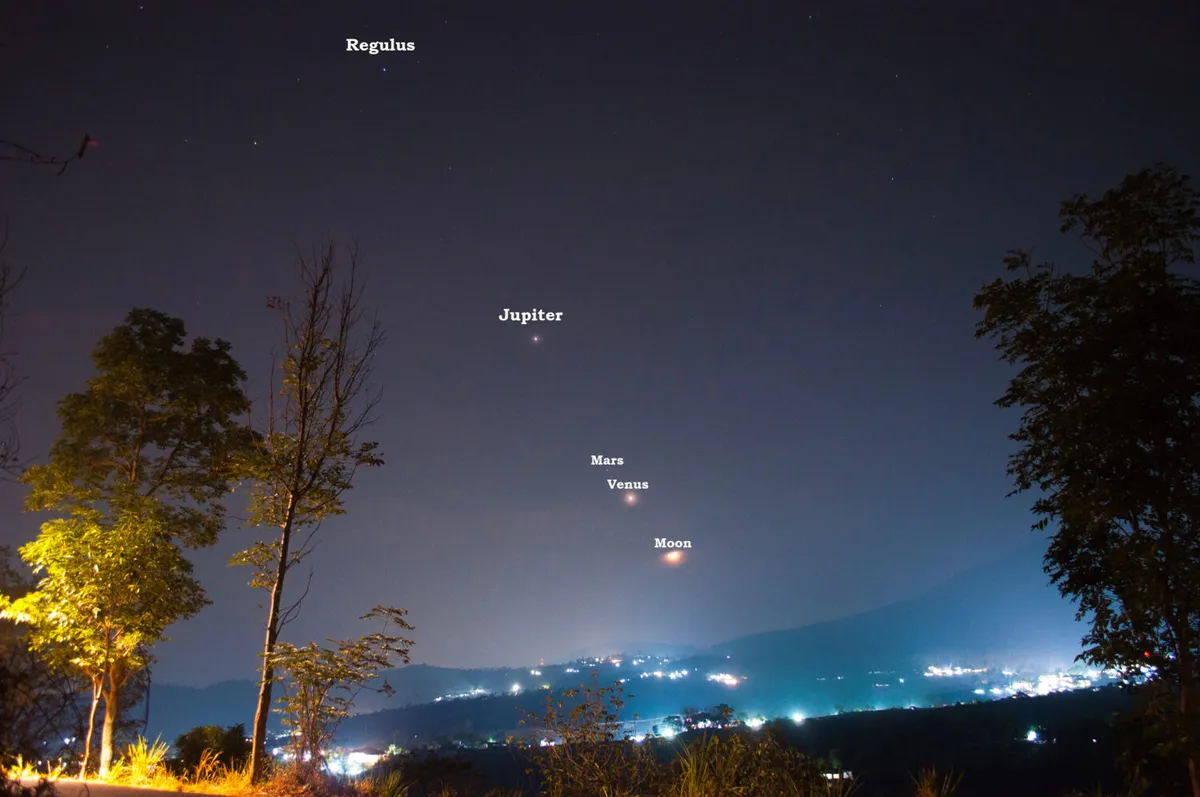
And, as previously mentioned, that means extreme care must be taken, so you don't accidentally catch a glimpse of the setting Sun with your naked eye or – much worse – through binoculars or a telescope.
That being said, a flat, clear western horizon could give you every chance of seeing Mercury, Venus and Saturn in the evening twilight just after sunset.
Neptune would require a telescope, and this does come with the added danger of observing the western horizon in the evening twilight.
Uranus will be much higher in the western sky, while Jupiter will be high in the southeast, completing the six-planet parade.

Key questions answered
Can you see the planet alignment without a telescope?
Yes, you can see the planet alignment of February 2026 without a telescope. In fact, it's advised to not attempt to observe Mercury, Venus, Saturn or Neptune with a telescope, as they'll be close to the setting Sun. Neptune is only ever visible with a telescope, but on this occasion, observing Neptune with a telescope should only be attempted by a seasoned practical astronomer.
Jupiter and Uranus are safe to observe with a telescope as they're high in the sky after dark and not close to the Sun. You don't need a telescope to see Jupiter, but a telescope will reveal its striped bands and largest moons. Uranus is technically visible with the naked eye, but you'll need clear, dark skies. Binoculars or a telescope will give you a better chance of seeing Uranus.
Where's the best place to watch the planet alignment?
The planet alignment is visible from North America, the UK and Europe, among other regions, and the best place to observe it is away from the bright lights of towns and cities, where the skies are darker.
Find a clear, flat western horizon to give yourself the best chance of seeing Mercury, Venus and Saturn between sunset and their dipping below the horizon.
What time do the planets align?
All six planets are already there in the sky before the Sun has begun to set; it's just that you can't see them in daylight.
The trick is to wait until sunset so the sky is dark enough to see Mercury, Venus and Saturn in the west. Jupiter and Uranus are much higher in the sky. Uranus sets around midnight and Jupiter sets just before dawn.
How long will the planetary parade last?
Not long. The alignment will technically end as soon as Mercury and Venus set below the horizon, which won't be long after sunset.
You'll have around an hour longer to see Saturn before it disappears. Uranus is visible until around midnight, and Jupiter is visible until just before sunrise the next morning.
Why planet alignments happen
Every once and a while, planet parades and planet alignments seem to crop up in our news feeds, as stories of multiple planets appearing in the sky, in a line at once, make headlines.
Why do planet parades happen? They're not as unusual as you might think
When we look into the night sky and observe planets among the stars, we're really looking out across the plane of our Solar System.
After our Sun formed, the leftover star-forming ingredients of gas and dust formed a rotating disc surrounding it.
Out of this flat disc, the planets and their moons eventually formed, which is why the planets of the Solar System all essentially orbit the Sun on the same flat plane.

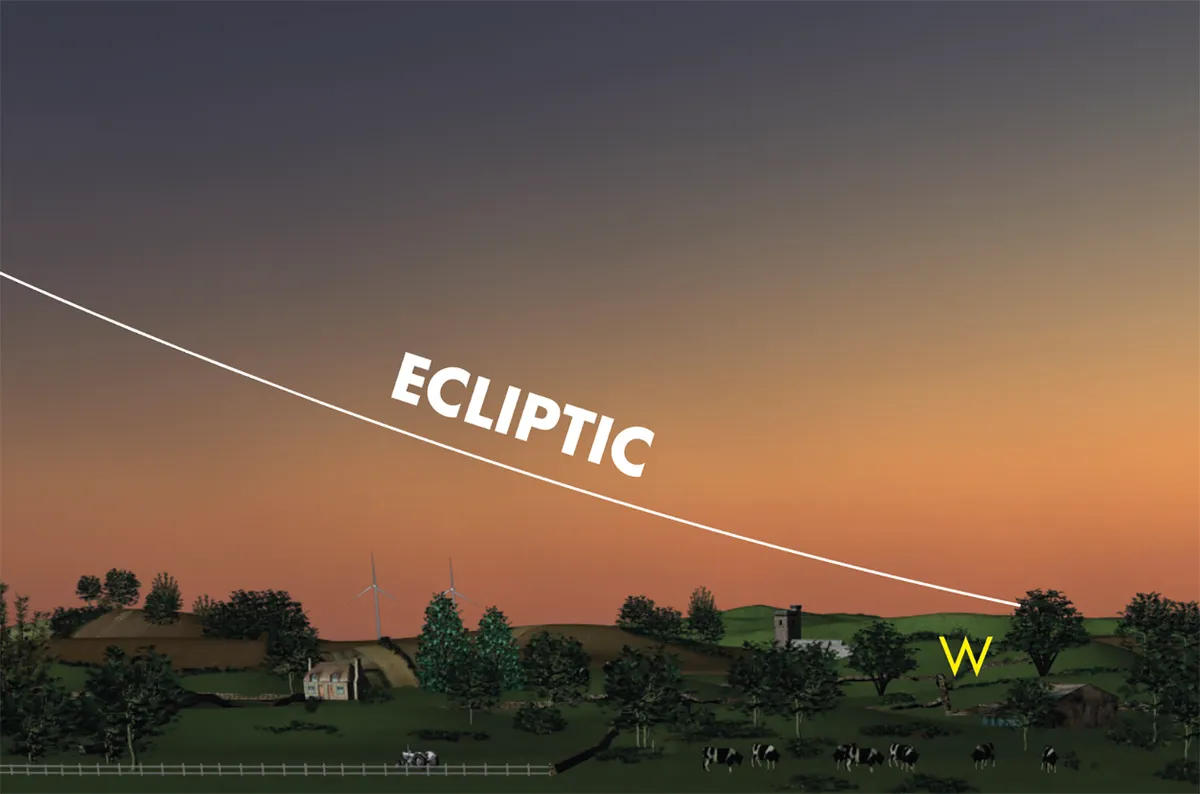
We can see the plane of this disc in the night sky in the shape of an imaginary line called the ecliptic, which is the path the Sun appears to travel across Earth's sky over the course of a year.
Whenever a Solar System planet is visible from Earth, it will always be located near the ecliptic.
That's why, when multiple planets are visible in the sky at once, they can all be found along the same path. But this path isn't straight: it's curved.
So when multiple planets are visible in the sky at once, they'll all share the same patch of sky, relatively speaking, because when we look the planets along the ecliptic, we're really looking out across the plane of the Solar System.
If you observe or photograph the planet alignment of February 2026, get in touch by emailing contactus@skyatnightmagazine.com

