
An international team of physicists using the world's most powerful particle collider have made a discovery that sounds like something dreamt up by a seasoned sci-fi writer.
The team have helped confirm that quantum entanglement, one of the strangest phenomena in physics, occurs even among some of the heaviest and most fleeting particles.
The discovery was made using the Large Hadron Collider at CERN and published in Physical Review Letters.
More amazing science

Quantum Entanglement – a primer
Albert Einstein famously dubbed quantum entanglement "spooky action at a distance."
It refers to a phenomenon where two particles originating from the same source remain connected, regardless of how far apart they travel from one another.
That means that, if a measurement is taken of one particle – such as its spin, for example – it reveals information about its entangled partner.
Scientists say quantum entanglement is key to technologies such as next-generation sensors, ultra-secure communication networks and quantum computers.
In the case of quantum computers, entangled qubits allow multiple calculations to be performed simultaneously rather than individually.
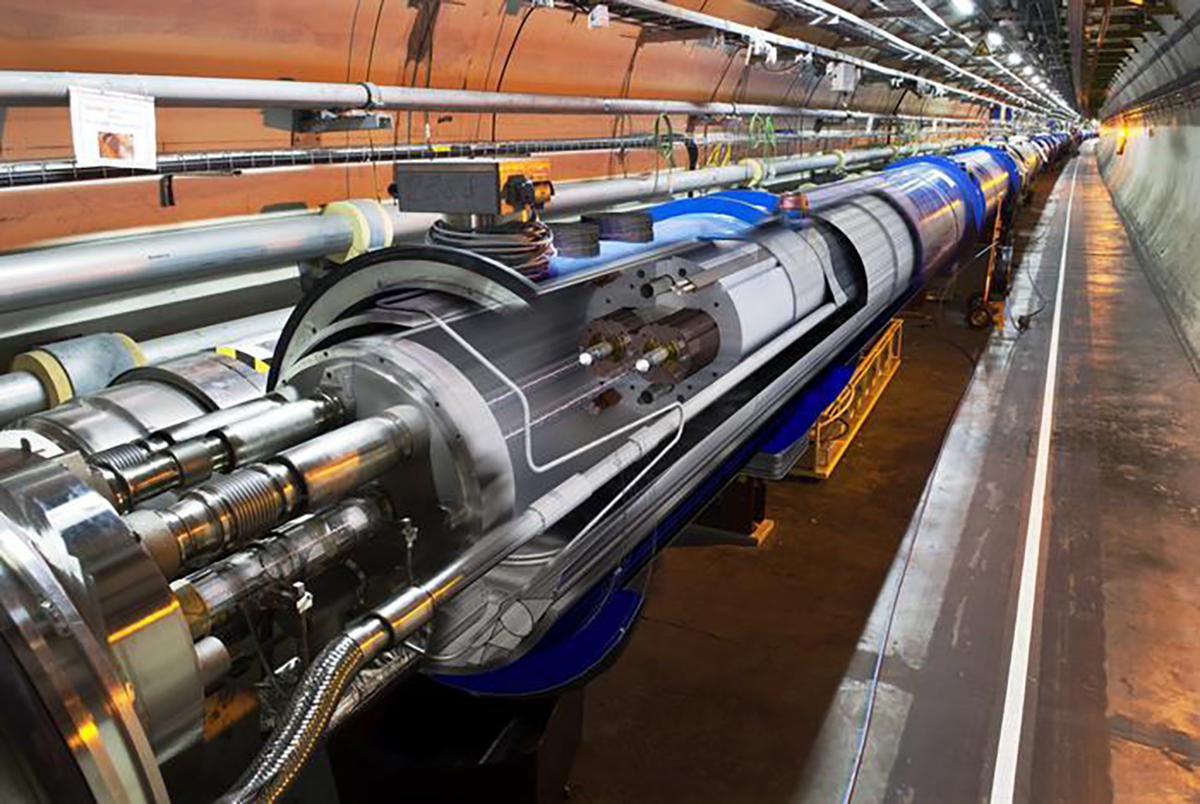
Testing quantum mechanics at extreme energies
Entanglement has previously been demonstrated in photons, electrons and trapped ions.
But scientists didn't know whether it would be present under more extreme conditions, such as short-lived particles produced during highly energetic collisions.
To find out, an international team of scientists used the ATLAS experiment at CERN’s Large Hadron Collider in Switzerland.
The team looked for entanglement in pairs of sub-atomic particles known as Z bosons, which exist for only a fraction of a second before decaying.
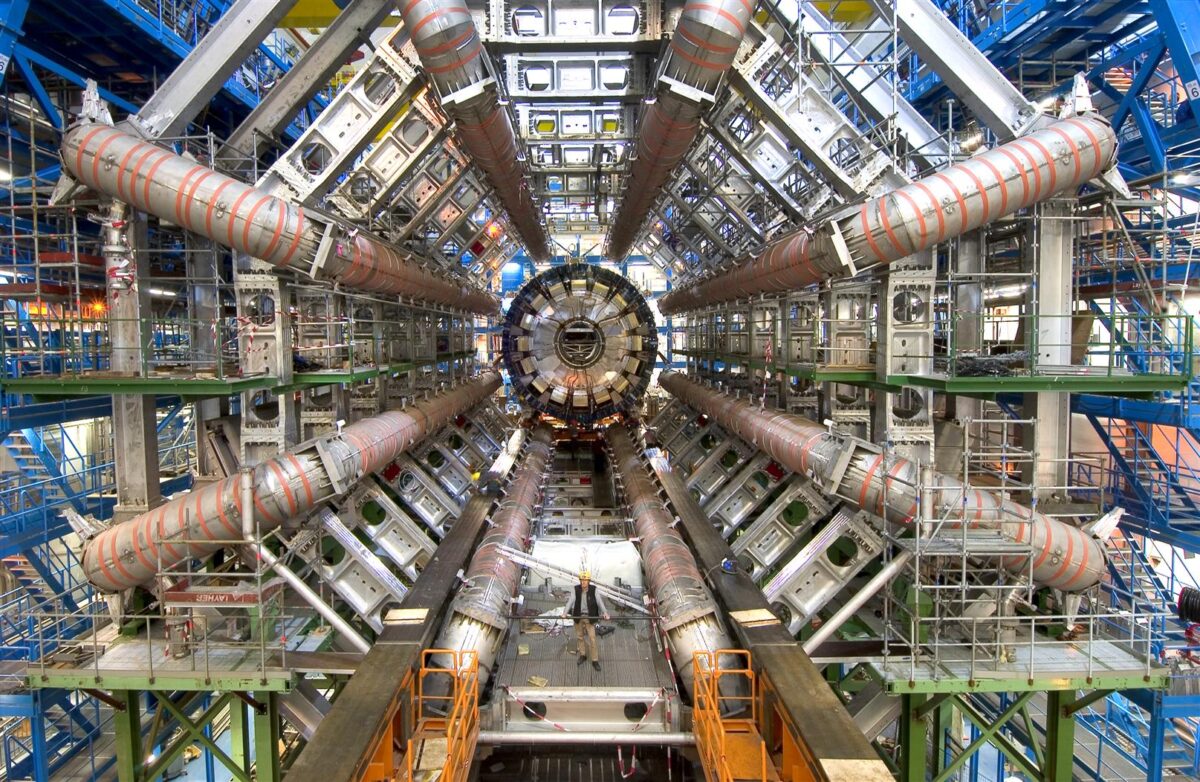
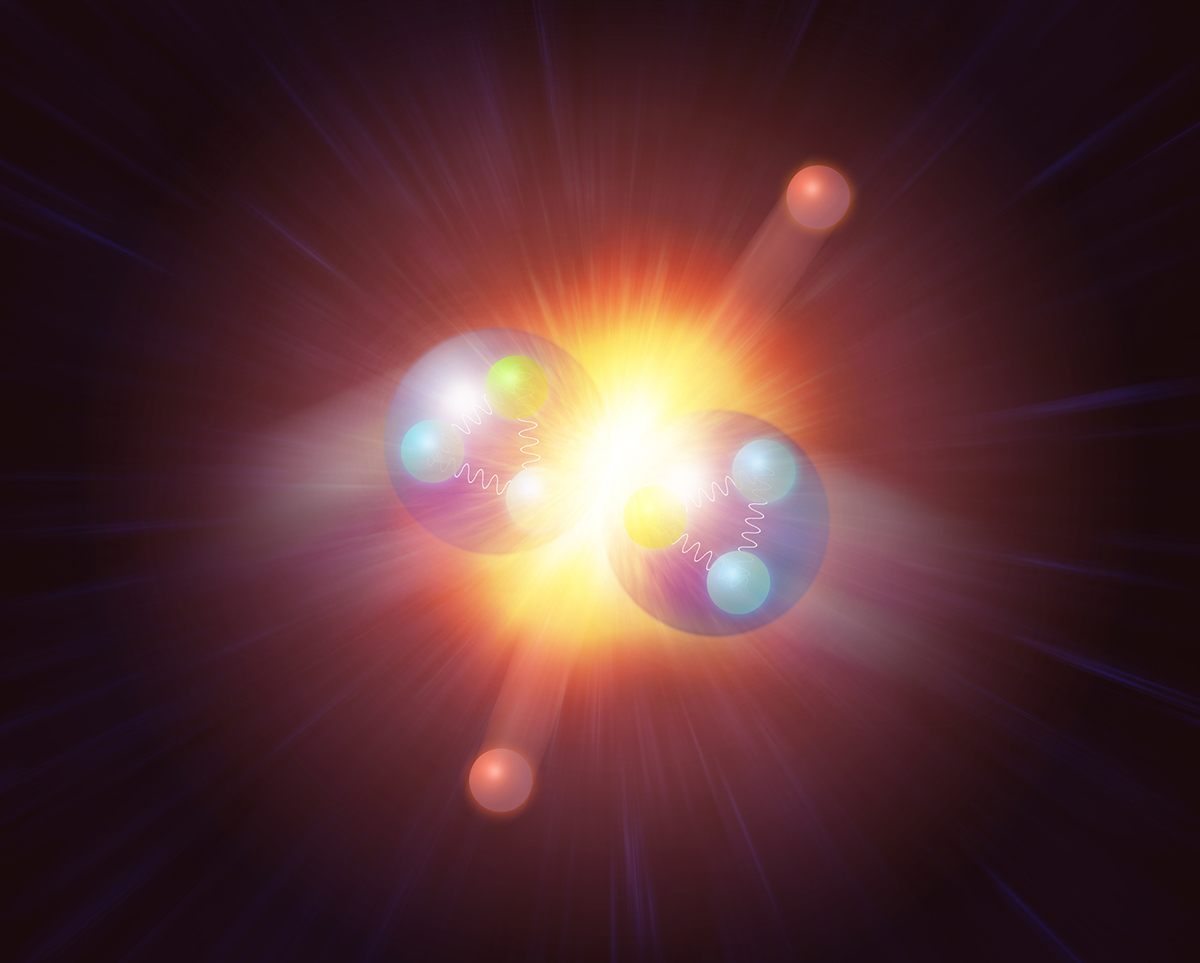
The scientists smashed protons together at 99.99% the speed of light, generating collision energies of 13 trillion electron volts.
These massive collisions are what creates Higgs bosons, the particle famously discovered during a major breakthrough with the Large Hadron Collider in 2012.
Higgs bosons then briefly split into pairs of short-lived Z bosons, before each decays further into electrons or muons.
And although Z bosons vanish in a fraction of a second, the ATLAS detector was able to measure the directions of the resulting electrons and muons.
The team were then able to infer the Z bosons' spins and found strong evidence the pairs were indeed entangled.
It's one of the highest-energy confirmations of quantum entanglement ever recorded.
Why it matters
The team say the discovery is part of an effort by scientists to borrow tools and ideas from quantum information science and apply them to particle physics.
They say that's helping scientists come up with new, more sensitive ways of analysing collider data and thereby beginning to unravel physics beyond our current understanding of the Universe.
Study co-author Professor Alan Barr at the University of Oxford’s Department of Physics says: "We’re used to thinking of entanglement as something delicate, seen in laboratory experiments with single photons.
"Finding it alive and well among particles as heavy and short-lived as Z bosons, created in some of the most violent collisions we can produce on Earth, shows just how fundamental and robust this quantum effect really is.
"It’s a nice reminder that the same strange rules of quantum mechanics that may one day power quantum computers are at work everywhere in nature, even at the extreme energies of the Large Hadron Collider."
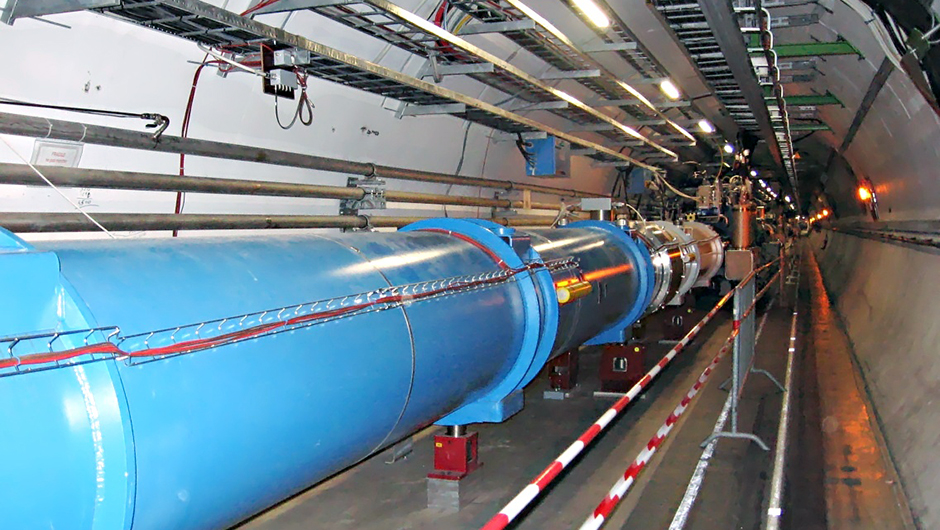
Credit: CERN
Professor Daniela Bortoletto, also at the University of Oxford's Department of Physics, is the UK coordinator for producing the modules for the upgraded ATLAS detector’s pixel system.
"This measurement demonstrates the scientific power of the ATLAS collaboration and the unique capabilities of CERN's Large Hadron Collider," she says.
"Oxford researchers have played a leading role in developing these new approaches to studying quantum phenomena at the highest energies, and we are proud to contribute to an international effort that is opening new ways to explore the fundamental laws of nature."

