
“The most intriguing part to me is that this seems to have just formed recently,” says Amy Simon at NASA’s Goddard Space Flight Center.
"The question is, why did it suddenly form now when we haven’t seen one before?"
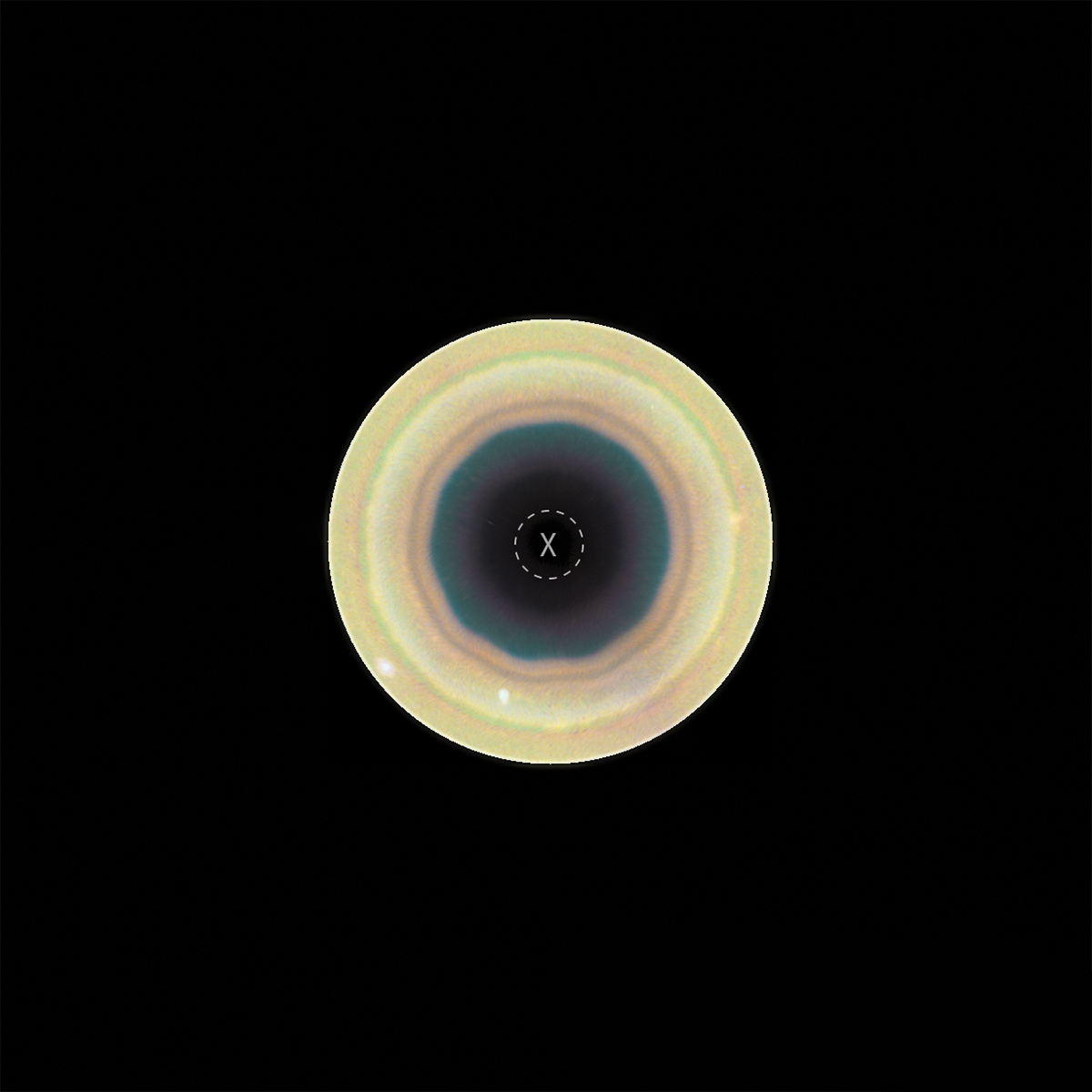
Scientists have spotted a strange, 10-sided feature in Saturn's clouds. The strange decagon was spotted encircling the planet's south pole by the Hubble Space Telescope.
A regular-sided jet pattern has never been observed in Saturn's southern hemisphere before. So what is it and what's going on?
More Saturn science
Shapes in Saturn's storms
Saturn is mostly made of gas – specifically hydrogen and helium – and its atmosphere rages with ferocious winds that can reach speeds of up to 500 miles per hour (800 kph).
Within this stormy atmosphere, a strange 10-sided shape has formed at the south pole.
It's not the first geometric pattern spotted at Saturn. Astronomers have previously spotted a similar 6-sided shape at its north pole: Saturn's famous hexagon storm.
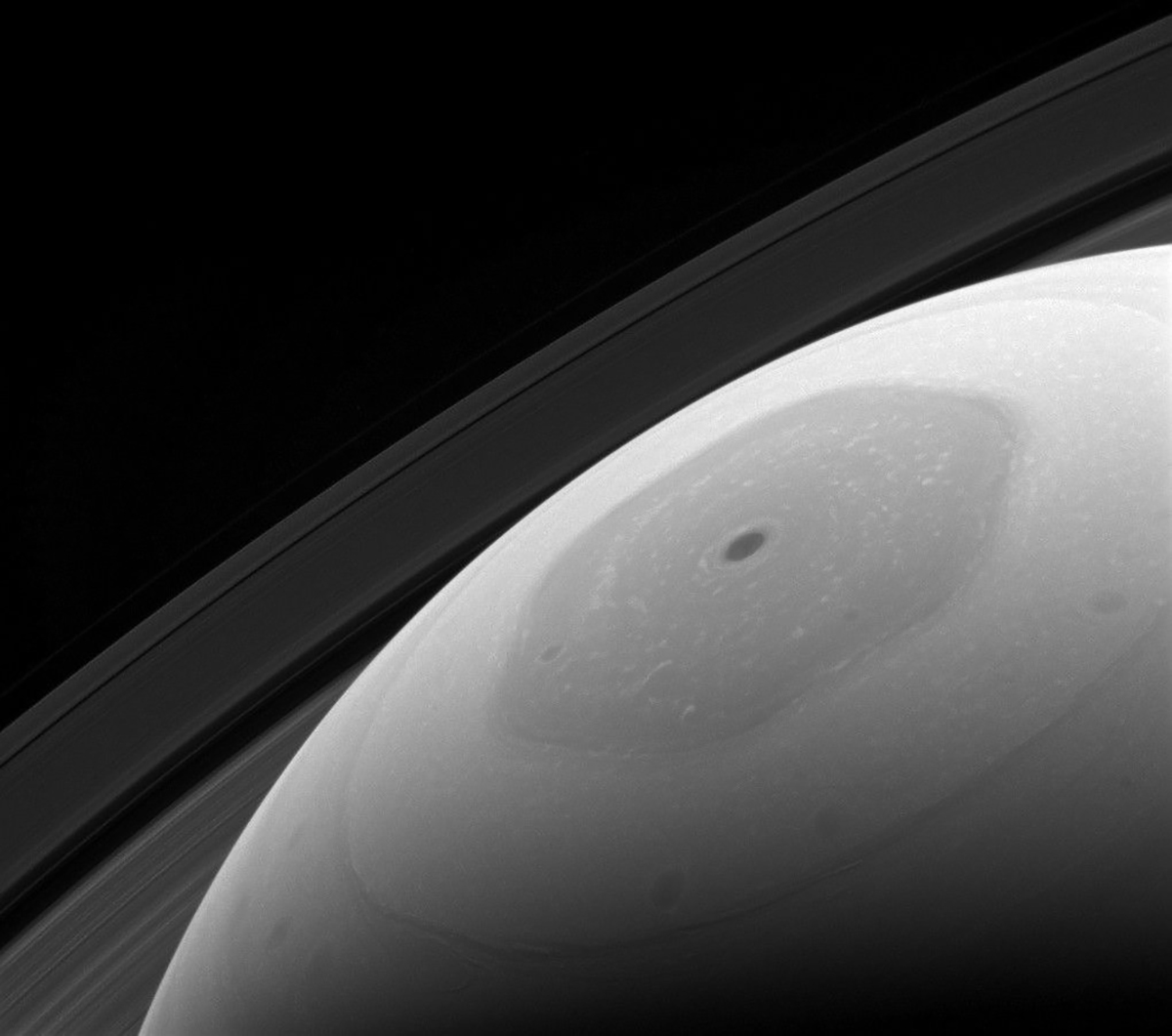
But, say scientists, the 10-sided shape at the south pole is distinctly different, meaning we may be seeing a new atmospheric phenomenon developing on the ringed planet.
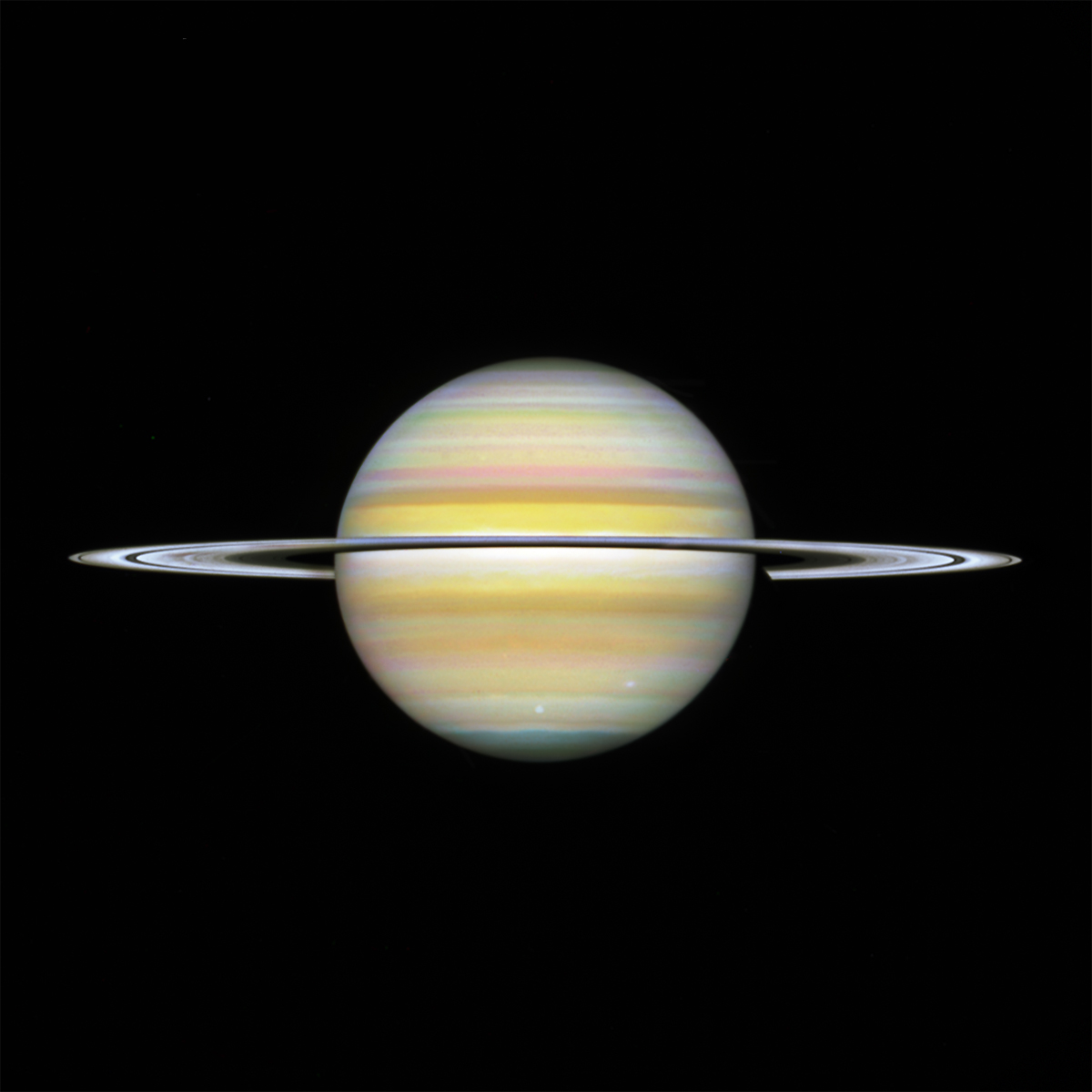
Planetary scientists were able to observe the 10-sided pattern develop over time by looking at years of Hubble Space Telescope observations dating back to 2023.
The discovery was made because Saturn’s changing seasons have slowly brought the planet’s south pole back into view from Earth.
That's when astronomers first spotted it.
Teasing out Saturn's decagon
Agustín Sánchez-Lavega of the University of the Basque Country in Spain and lead author of the study, first spotted hints of Saturn's decagon via the university's Planetary Virtual Observatory Laboratory website.
The site collects images of Solar System planets captured by observers all over the world.
In 2024, Sánchez-Lavega and amateur astronomers Trevor Barry and Jean-Paul Oger noticed a subtle band along Saturn's southern pole.
Additional 2025 imagery from the ground hinted they were in fact looking at a decagon storm on Saturn.
Hubble’s vantage from space gave the team the views they needed to compete the picture.
"Given Saturn’s symmetry in its north-south jet stream system, we have been searching for a counterpart to Saturn’s northern hexagon on the south pole in Hubble images since 1990," says Sánchez-Lavega.
"Images from the Cassini spacecraft, which orbited Saturn between 2004 and 2017, showed no inkling of a long-lived formation, either. The Hubble data confirmed the feature’s presence back to 2023."
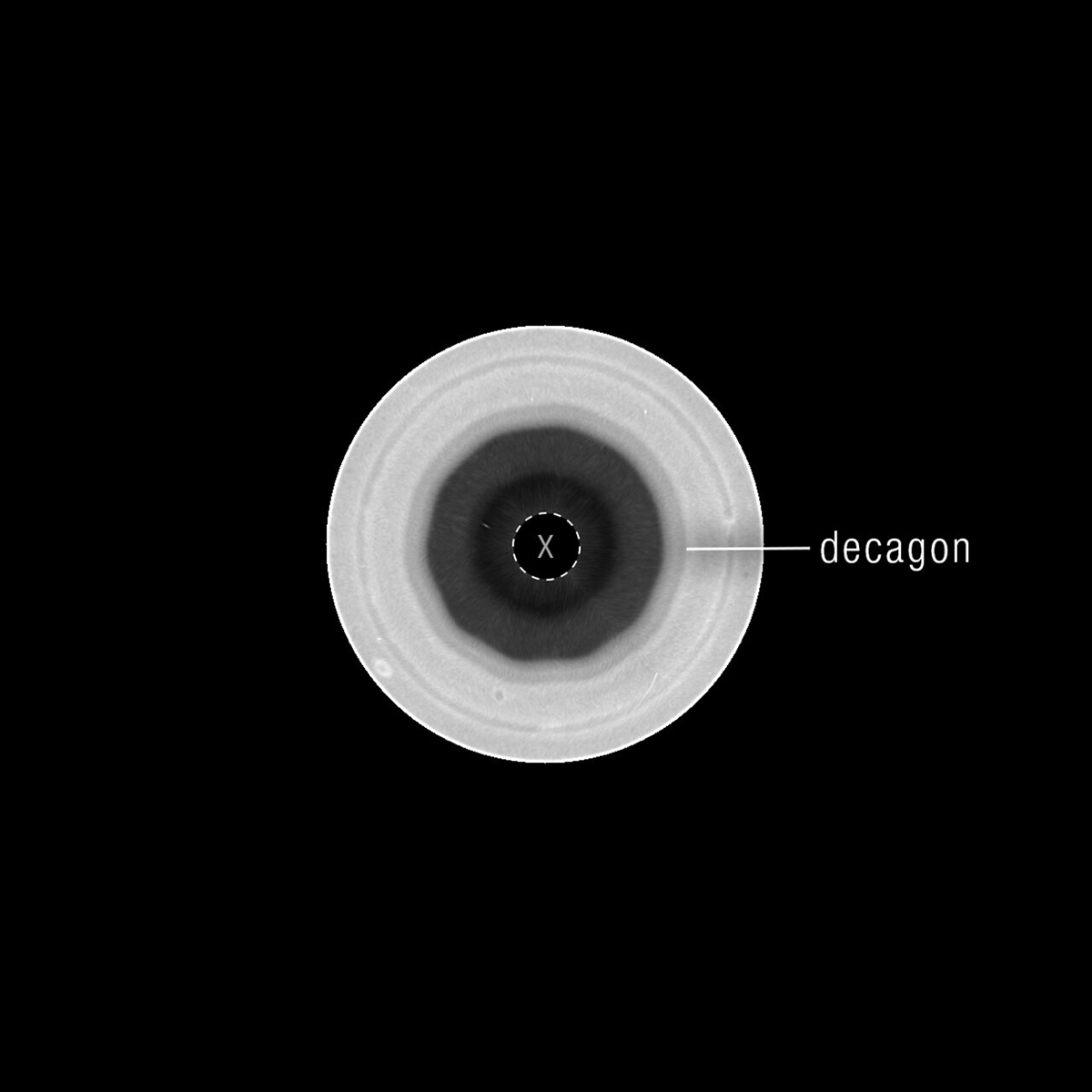
What is the feature and how did it form?
The wave is located within one of Saturn’s jet streams and stretches far below the planet's cloud tops through multiple layers of the atmosphere.
It's not just a cloud-level feature, but a large atmospheric structure.
The decagon’s position appears to shift because Hubble has gathered multiple images in different wavelengths of light, giving astronomers views of different altitudes in Saturn’s atmosphere.
"We’ve never seen anything quite like this in Saturn’s southern hemisphere," says Amy Simon, study co-author.
"The northern hexagon has been there every time we’ve looked for more than 40 years. This feature is different – it appears to be strengthening, giving us the rare opportunity to watch a giant atmospheric pattern develop.
The team say further study is required from Hubble and the James Webb Space Telescope.
And the team will also study computer models to try and work out how the decagon formed, how long it will last and how it compares to the hexagon at Saturn's north pole.

