
Sugars are some of the most important building blocks for life as we know it. They form the structural backbone of our DNA and RNA and keep our metabolic processes running.
Because of this, scientists studying the origins of life on Earth have long wondered how the very first sugars formed on our planet.
Scientists say laboratory experiments show that sugars don't form in large enough quantities under the prebiotic conditions of early Earth to kickstart the emergence of life.
And while sugars like ribose and glucose have been found inside meteorites and asteroids – suggesting they may have formed in the primordial cosmic cloud out of which our Solar System grew – no sugar had ever been directly detected in the vast emptiness of interstellar space.
Now, scientists have just detected sugar in interstellar space for the first time.
More amazing science
Sweet discovery at the centre of the Galaxy
An international team of researchers led by Izaskun Jiménez-Serra from the Centro de Astrobiología in Madrid, Spain, say they've identified the first sugar ever detected in interstellar space.
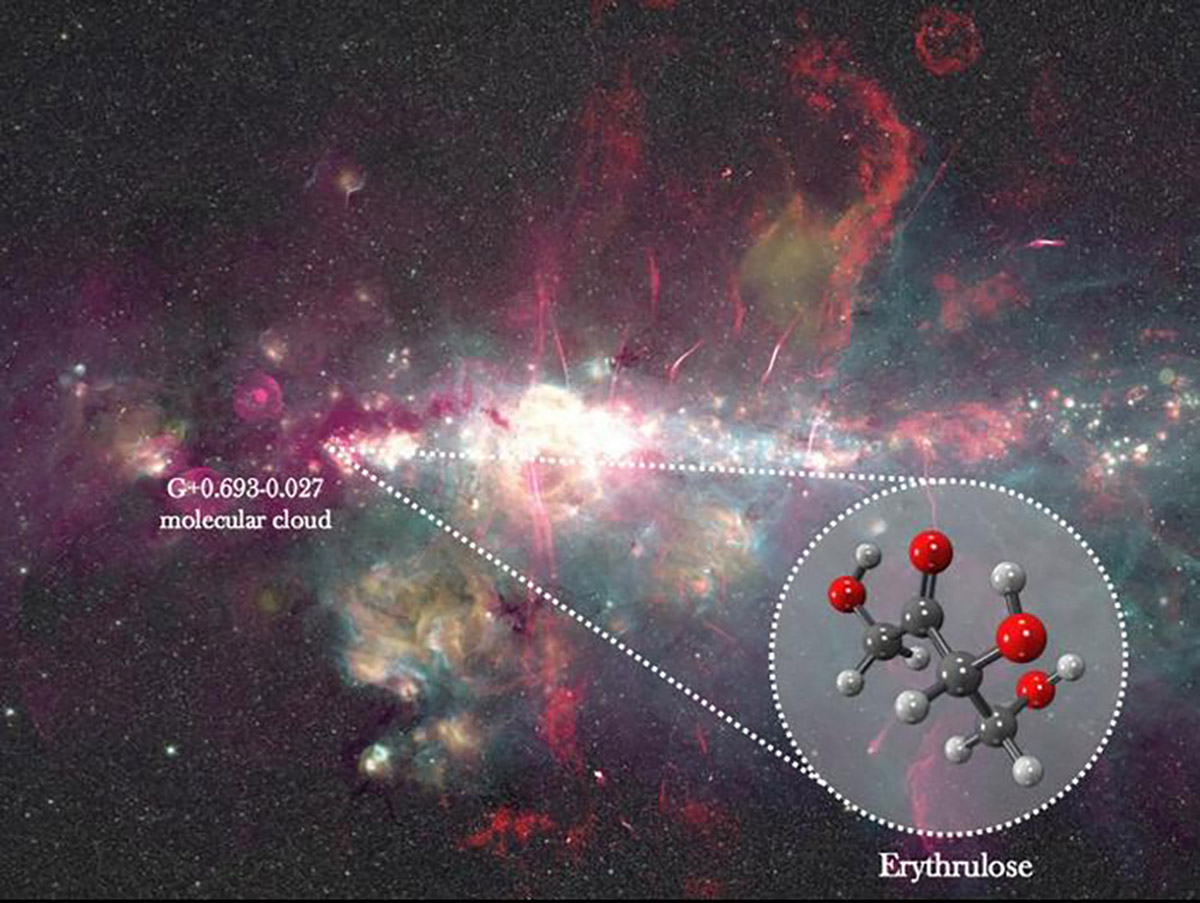
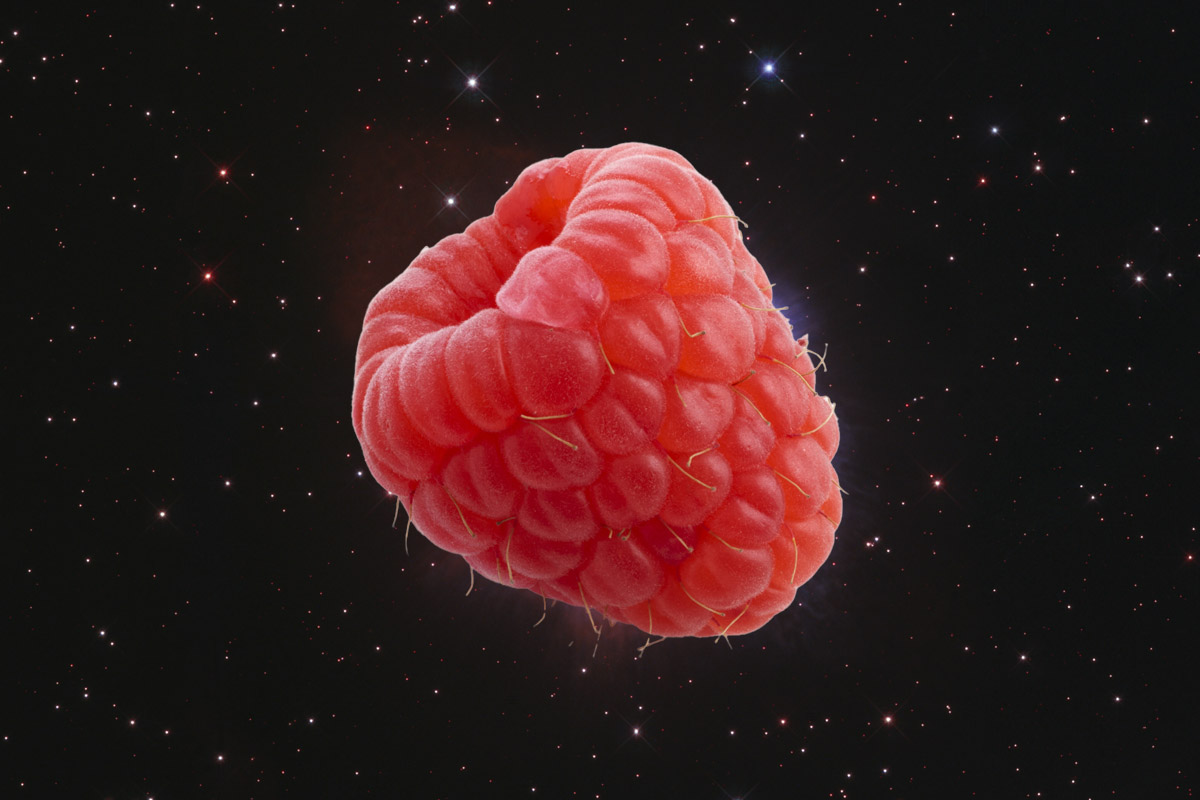
It's called 'erythrulose' and it's a four-carbon ketose sugar. On Earth, it's commonly found in raspberries, as well as in sunless tanning lotions.
The team detected the sugar within a giant molecular cloud known as G+0.693−0.027, which sits near the centre of our home galaxy, the Milky Way.
The breakthrough was made using broadband spectroscopic surveys from two ground-based telescopes: the 40-meter Yebes radio telescope and the 30-meter telescope at the Institute for Radio Astronomy in the Millimeter Range (IRAM).
In spectroscopy, scientists can study light from distant objects and use that information to learn about the object's chemistry.
Sugar, sugar everywhere
To confirm they had found the cosmic sugar, the researchers matched 12 spectral lines – light signatures – from the molecular cloud with the laboratory spectrum of erythrulose, which had been previously measured at the University of the Basque Country.
They say that not only is the sugar there, but it's surprisingly abundant.
The study revealed that erythrulose is at least eight times more abundant than similar, simpler three-carbon sugars – none of which were detected in the same region.
"This finding was unexpected, as the prevailing view in astrochemistry is that interstellar molecules grow in size through the sequential addition of carbon atoms," explains Jiménez-Serra, lead author of the study.
Building sugar in the deep, dark cosmos
How could this complex sugar form in the cold depths of space?
Collaborating with chemists from the University of Extremadura in Spain and Radboud University in the Netherlands, the team were able to pin down how they think it came to be.
Rather than building up carbon-by-carbon as, the team suggest erythrulose might form inside interstellar ices via the merging of simpler, two-carbon molecules: namely, alcohols and aldehydes.
A recipe for life on Earth?
The discovery could help scientists solve the mystery of how life on Earth got its start.
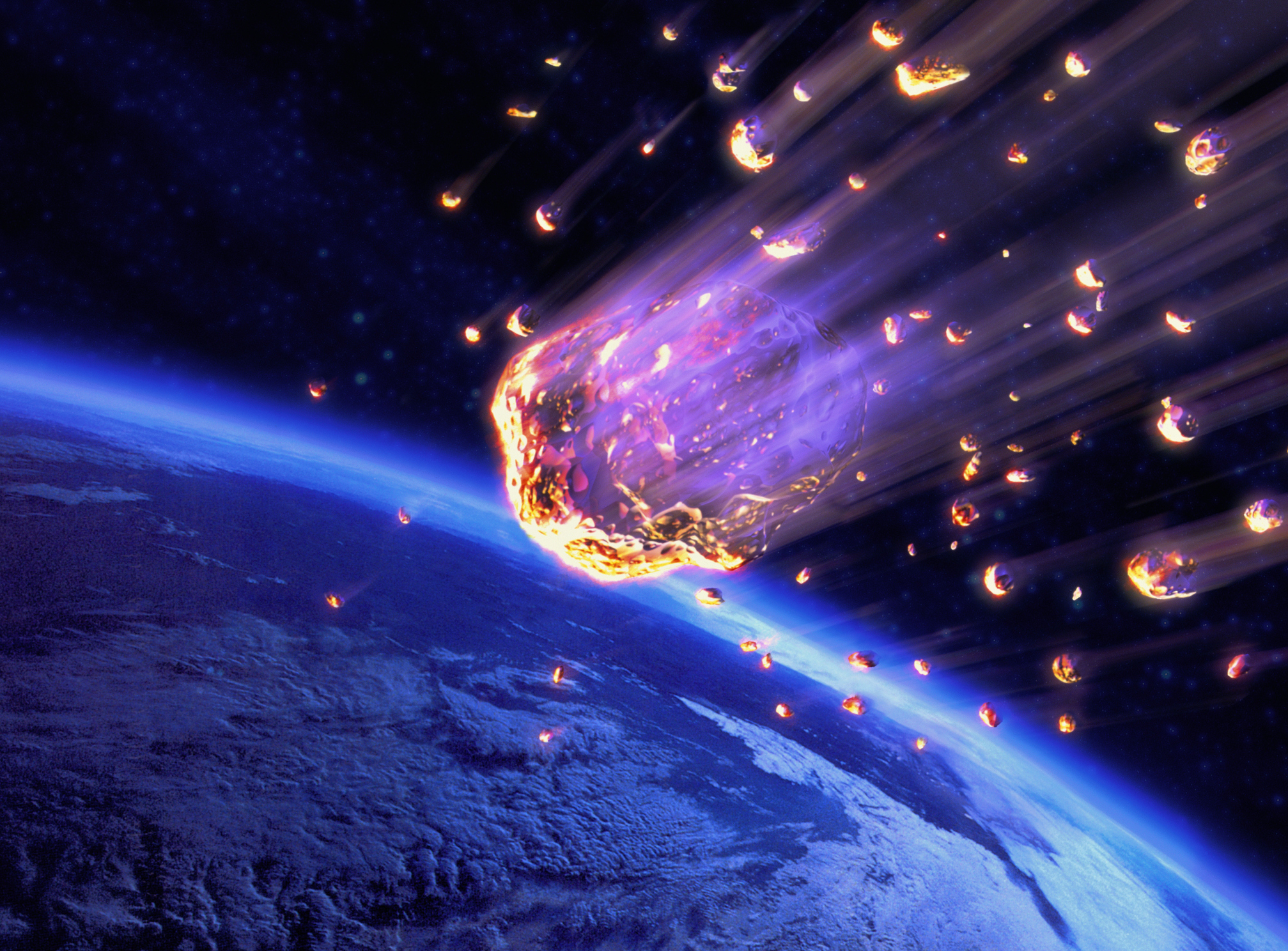
Based on how much erythrulose they measured in the G+0.693−0.027 cloud, the researchers estimate that 0.5 to 50 million tonnes of this sugar could have been delivered to Earth's surface during the 'Late Heavy Bombardment', which is a period of intense asteroid and comet impacts that occurred around 4 billion years ago.
Instead of a need for the sugars to have been formed on Earth, the team say our young planet could have received a delivery of pre-made sugars from space.
This could have provided the raw materials needed for Earth's very first metabolic and self-replicating biological processes to emerge.
"The detection of erythrulose is very exciting because it opens up the possibility of discovering in space other sugars such as ribose, which is part of RNA, and other important molecules for the origin of life," says Carlos Briones, a co-author of the study.
Read the full paper at Arxiv

