
Get the key facts in our 1-minute dive into this story about China's space station
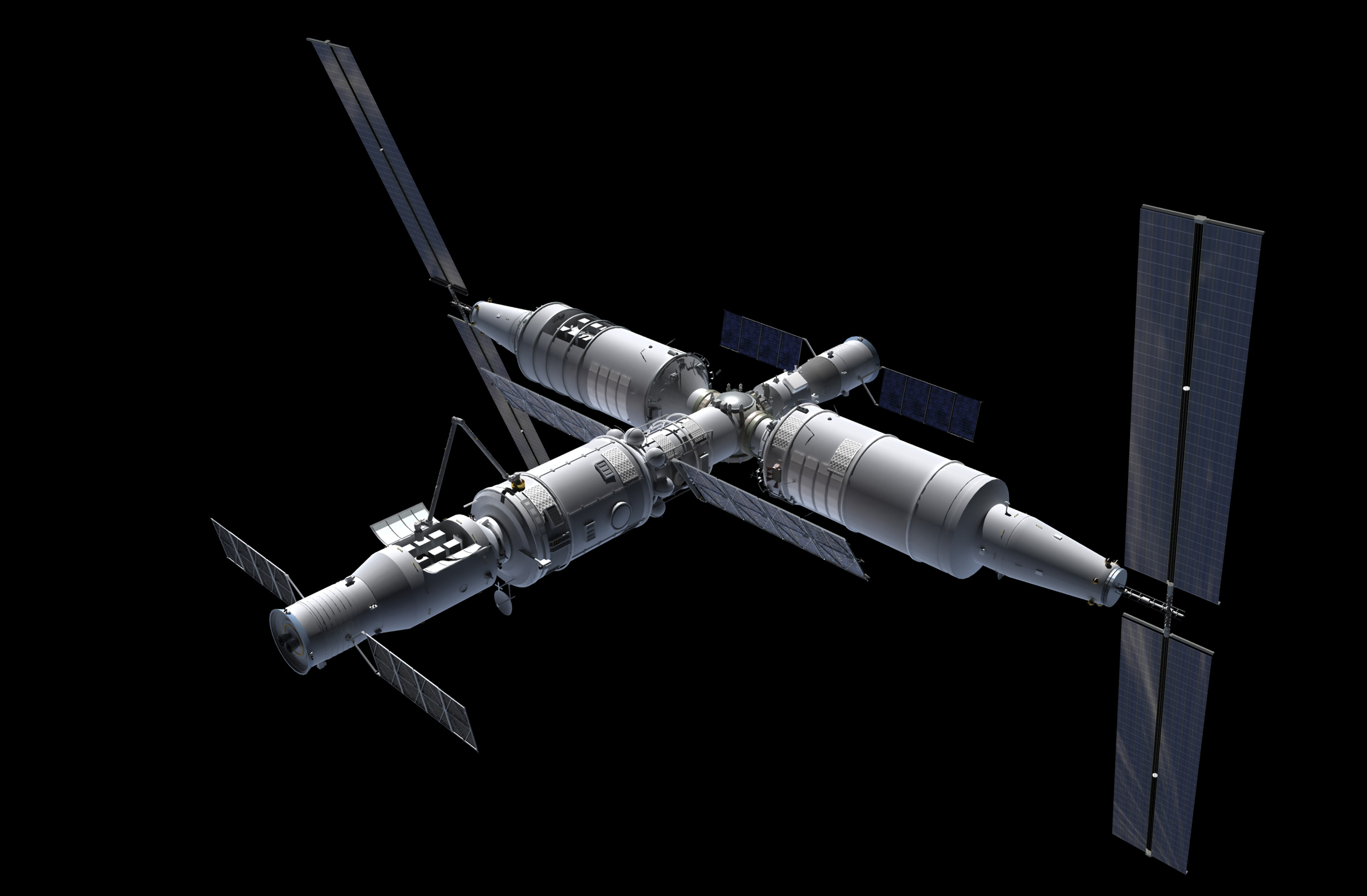
Online claim: Social media users previously shared a conspiracy theory claiming a glass of water on China's Tiangong space station proved its crewed spaceflight program was faked.
Skeptical: Viewers questioned why neither the liquid nor the glass itself floated away in the weightless environment
Key questions: Shouldn't the glass be floating? Why is the liquid resting in the bottom of the glass?
Live broadcast: The contested video originated from a live-streamed science lesson conducted by the Shenzhou-13 crew in late 2021.
AP investigation: The Associated Press debunked the theory in 2023 as part of their ongoing efforts to address widely-shared misinformation.
Surface tension: University of Chicago space historian Jordan Bimm explained that surface tension and molecular attraction keep water clinging to the glass in clumps without dispersing.
Behind scenes: China's space program posted a video showing astronaut Wang Yaping pouring water through a straw and securing a glass with adhesive strips.
Ping-pong test: A follow-up experiment showed a submerged ping-pong ball remaining suspended underwater rather than floating, matching microgravity physics.
External verification: University of Manchester researcher Molly Silk noted that China has little reason to fake footage and the space station's presence is verified by international actors like the US.
Established success: China's sophisticated space program is further demonstrated by major achievements such as the Chang'e 5 and Chang'e 6 lunar missions.
Get the all the facts in our full story on the controversy surrounding the glass of water on China's space station

