Astronomers have caught a star exploding in a distant galaxy. It could help them tell how fast the Universe is expanding

Astronomers have caught a star exploding in a distant galaxy. It could help them tell how fast the Universe is expanding

Astronomers have captured a supernova named SN 2026ahvu, located in a spiral galaxy 50 million lightyears from Earth

Get monthly inspiration to your door with BBC Sky At Night Magazine - subscribe today


Astronomers have observed and captured images showing the explosion of a star in a distant galaxy.

The exploding star – known as a supernova – is named SN 2026ahvu and is located in a spiral galaxy 50 million lightyears from Earth.

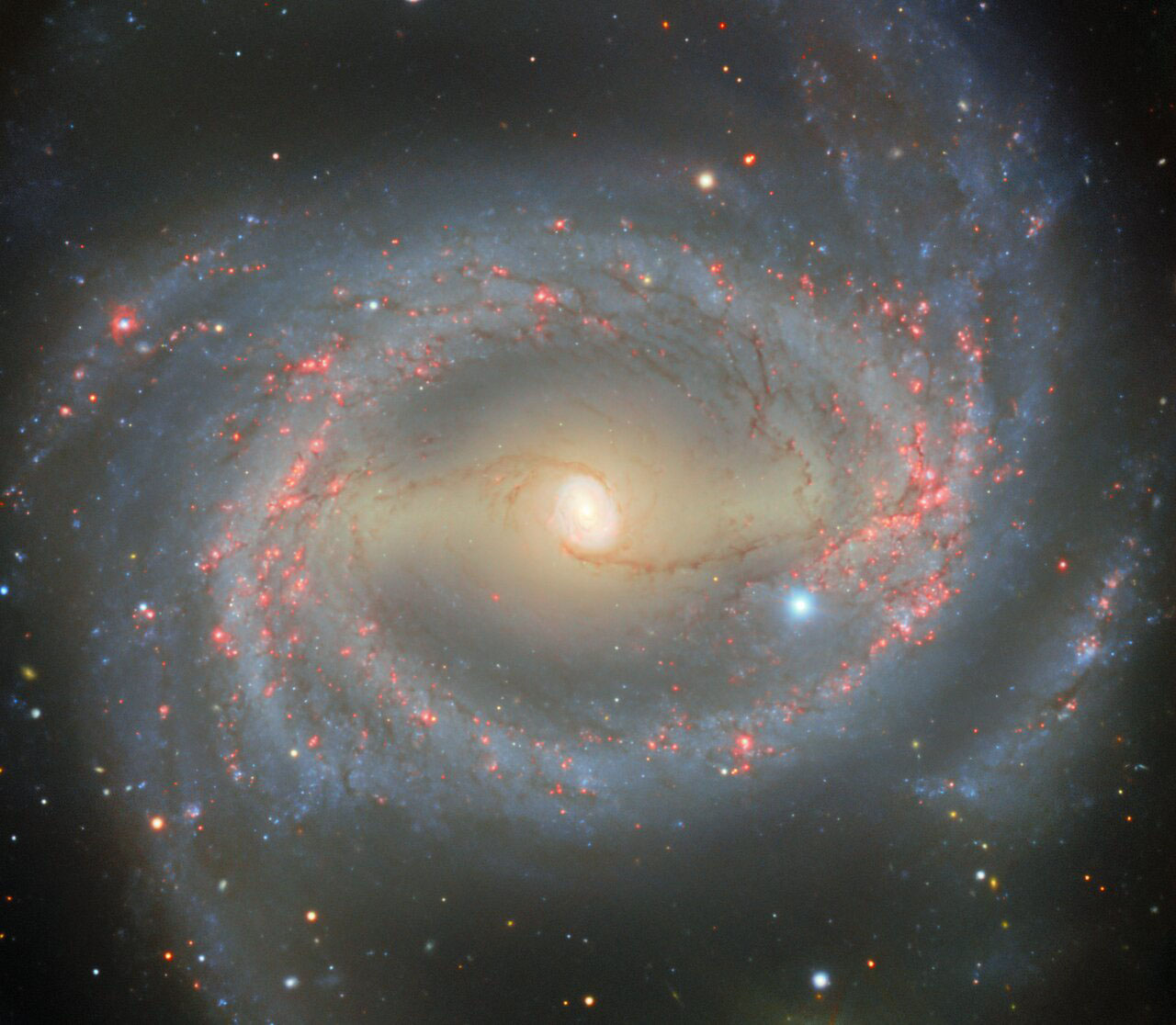
Catalogued NGC 1433, the spiral galaxy was observed and imaged by the Dark Energy Camera and the International Gemini Observatory.

The supernova has been caught early – there are 'before' and 'after' images of the galaxy – and it's still approaching its expected maximum brightness.

What's more, the team behind the observations say amateur astronomers should be able to spot the supernova using small to medium telescopes.

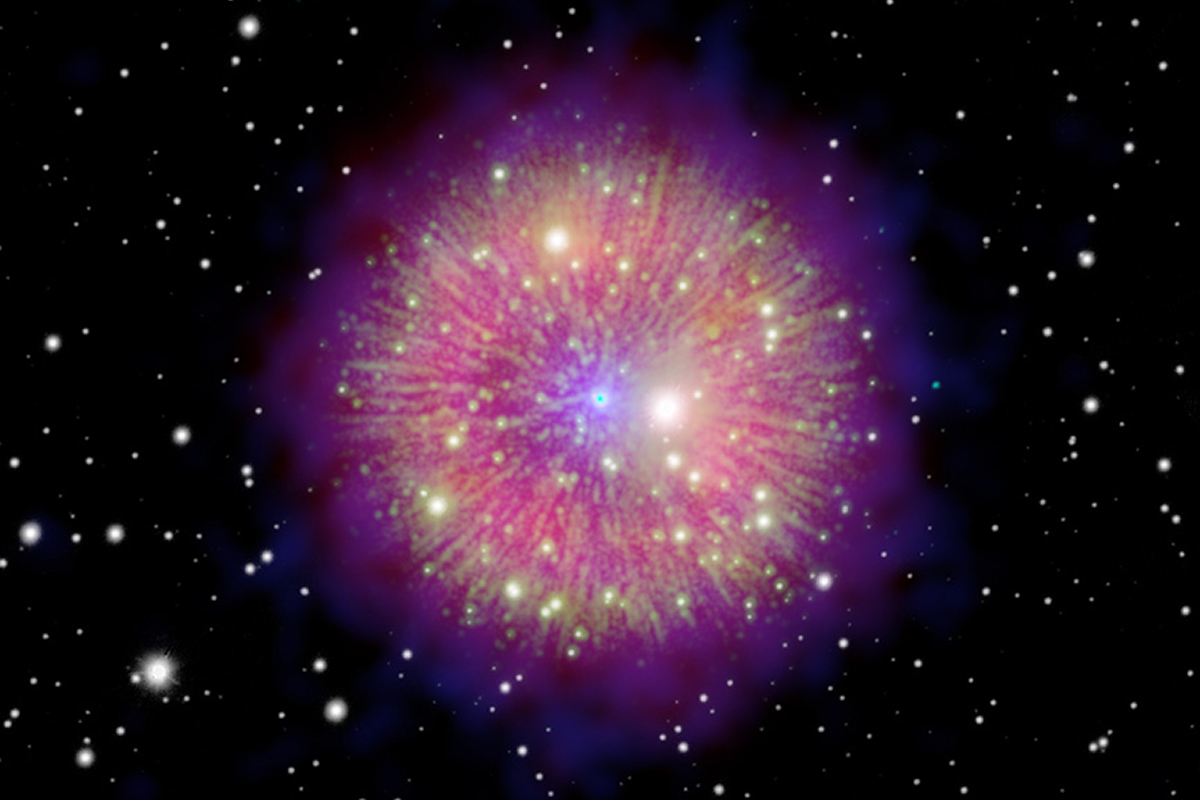
The remnants of SN 1181, a supernova explosion that was visible in the night sky in the year 1181. Credit: X-ray: (Chandra) NASA/CXC/U. Manitoba/C. Treyturik, (XMM-Newton) ESA/C. Treyturik; Optical: (Pan-STARRS) NOIRLab/MDM/Dartmouth/R. Fesen; Infrared: (WISE) NASA/JPL/Caltech/; Image Processing: Univ. of Manitoba/Gilles Ferrand and Jayanne English
Credit: X-ray: (Chandra) NASA/CXC/U. Manitoba/C. Treyturik, (XMM-Newton) ESA/C. Treyturik; Optical: (Pan-STARRS) NOIRLab/MDM/Dartmouth/R. Fesen; Infrared: (WISE) NASA/JPL/Caltech; Image Processing: Univ. of Manitoba/Gilles Ferrand and Jayanne English
Supernova SN 2026ahvu in the spiral galaxy NGC 1433. The supernova is a bright point of light below and to the right of the centre. Credit: International Gemini Observatory/NOIRLab/NSF/AURA. Acknowledgments: PI: S. Dahm (NSF NOIRLab/Gemini). Image Processing: J. Miller & M. Rodriguez (International Gemini Observatory/NSF NOIRLab), T.A. Rector (University of Alaska Anchorage/NSF NOIRLab), D. de Martin & M. Zamani (NSF NOIRLab)

An unfolding cosmic explosion

SN 2026ahvu is giving astronomers an opportunity to study a stellar explosion as it happens.

NSF NOIRLab, which operates the Dark Energy Camera, says it's coordinating observations across its facilities and inviting other observatories to join the study.

The supernova's home is NGC 1433, a barred spiral galaxy 50 million lightyears away, which can be seen from Earth in the Southern Hemisphere constellation Horologium.

New images of supernova SN 2026ahvu from the Dark Energy Camera and the Gemini South telescope show how the explosion suddenly appeared as a bright point of light in the galaxy.

Continuing observations show the supernova is changing in appearance from night to night.

Discovery of SN 2026ahvu

Supernova SN 2026ahvu was discovered by the famous Asteroid Terrestrial-impact Last Alert System (ATLAS), which is perhaps most famous for its discovery of comets, notably its recent discovery of interstellar comet 3I/ATLAS.

The automated observatory found SN 2026ahvu on 2 November 2026.

It was then confirmed to be a young Type Ia supernova, which is an explosion that happens when a white dwarf – the dense remnants of a dead star – pulls in matter from a nearby companion star.

Type Ia supernovae are important because they're 'standard candles'. They always burn with the same brightness, so astronomers can observe how bright they appear from Earth and compare it with how bright they really are, then use that to work out how far they are and thus measure distances across the cosmos.
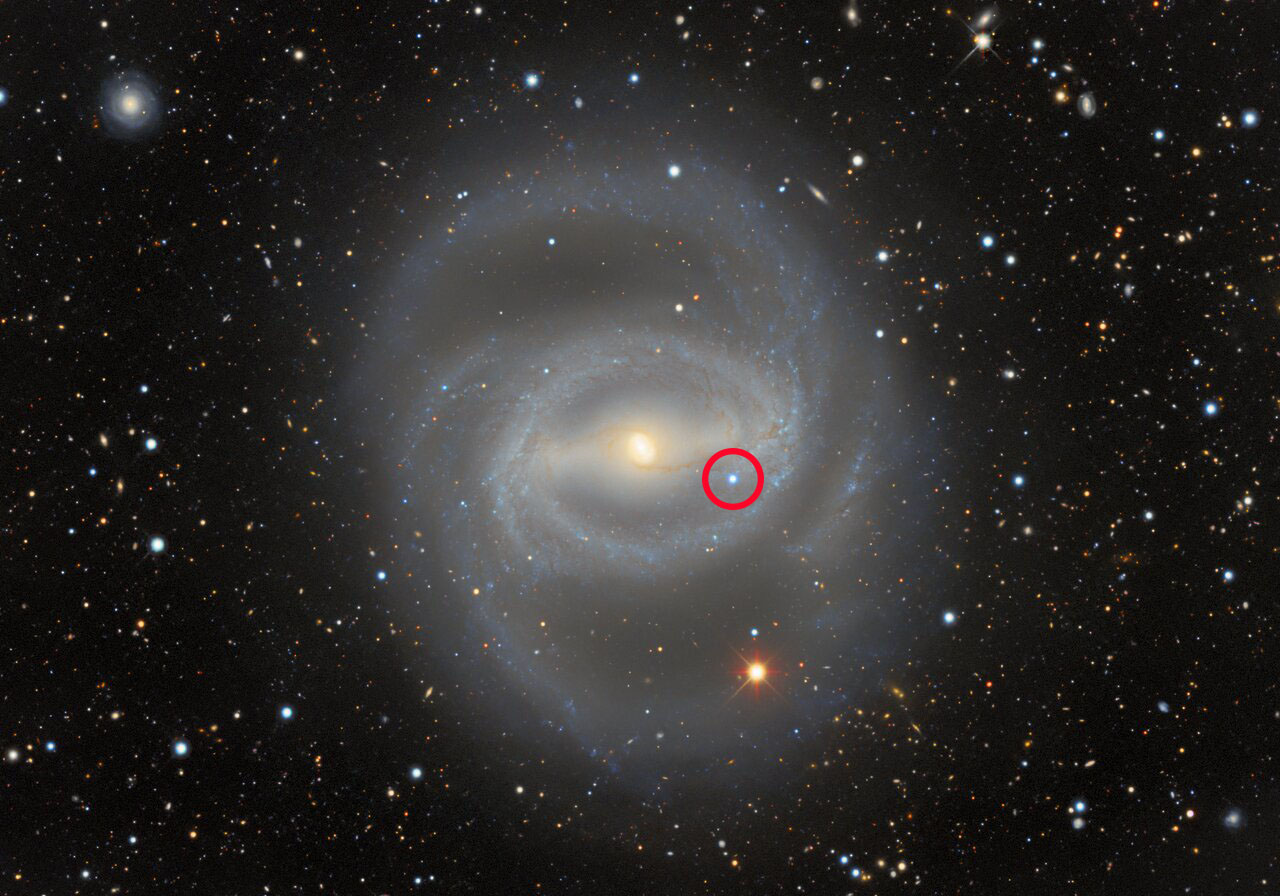
Supernova SN 2026ahvu captured by the Dark Energy Camera (DECam). The supernova appears as a bright point of blue light below and to the right of centre. Credit: CTIO/NOIRLab/NSF/AURA. Acknowledgment: PIs: G. Narayan & T. Murphey (University of Illinois at Urbana-Champaign). Image processing: M. Zamani & D. de Martin (NSF NOIRLab)
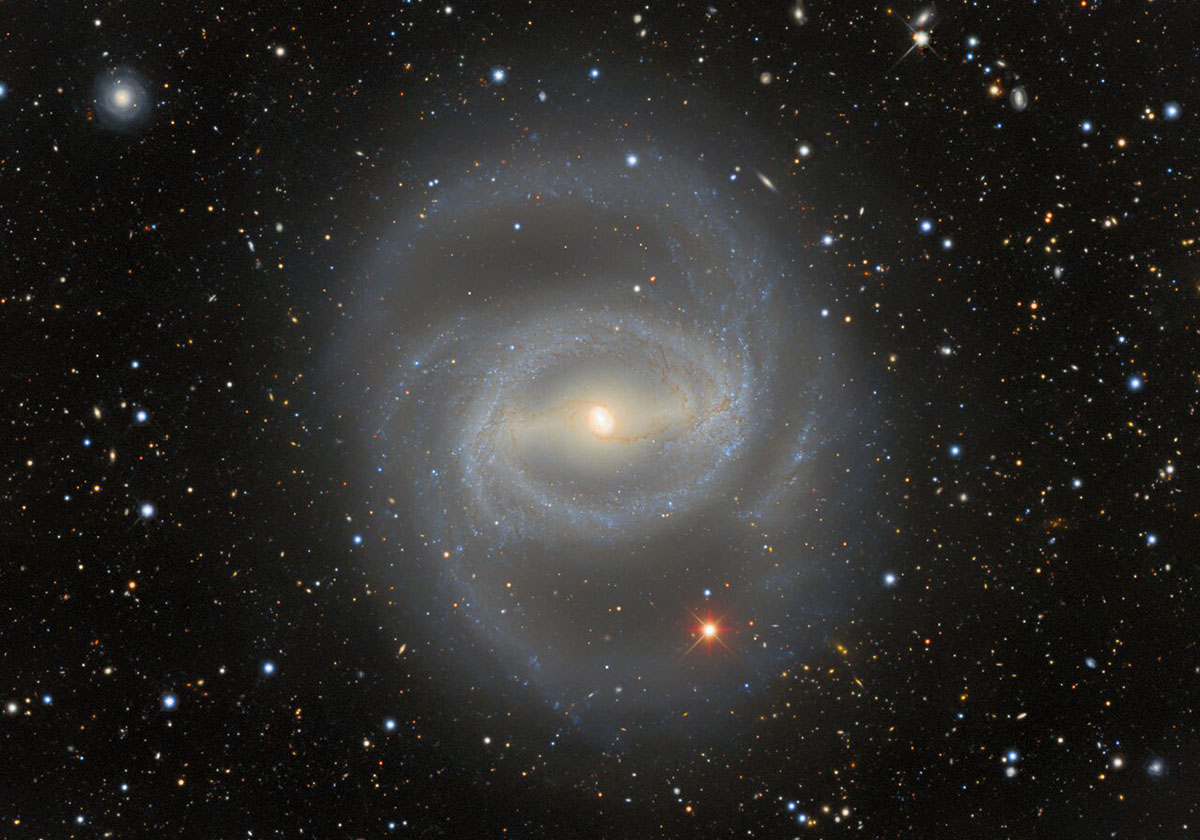
A 'before' image showing galaxy NGC 1433. Credit: CTIO/NOIRLab/NSF/AURA. Acknowledgment: PIs: G. Narayan & T. Murphey (University of Illinois at Urbana-Champaign). Image processing: M. Zamani & D. de Martin (NSF NOIRLab)
Supernova SN 2026ahvu captured by the Dark Energy Camera (DECam). The supernova appears as a bright point of blue light below and to the right of centre. Credit: CTIO/NOIRLab/NSF/AURA. Acknowledgment: PIs: G. Narayan & T. Murphey (University of Illinois at Urbana-Champaign). Image processing: M. Zamani & D. de Martin (NSF NOIRLab)

When discovered, SN 2026ahvu's apparent magnitude (brightness) was about +17. Within days, that had brightened to +13.5 (in astronomical magnitude, the lower the number, the brighter the object).

The supernova can be seen to the right and slightly below the galaxy’s centre and is expected to reach a maximum brightness of magnitude +10.5 to +12.1 between 18 and 23 November 2026.

This is giving astronomers a rare opportunity to witness the development of the explosion and gather evidence as the expanding debris evolves.

'Before' and 'after' images are allowing astronomers to compare the surrounding environment before and after SN 2026ahvu's explosion.

The studies could even help astronomers learn more about Type Ia supernovae and how they can be used to measure the expansion of the Universe.

If you observe or photograph SN 2026ahvu, share your images and observations with us by emailing contactus@skyatnightmagazine.com


Footer banner
This website is owned and published by Our Media Ltd. www.ourmedia.co.uk
© Our Media 2026