A team of astronomers has discovered a 'disappearing planet' orbiting a star 1,000 lightyears away from our Solar System.
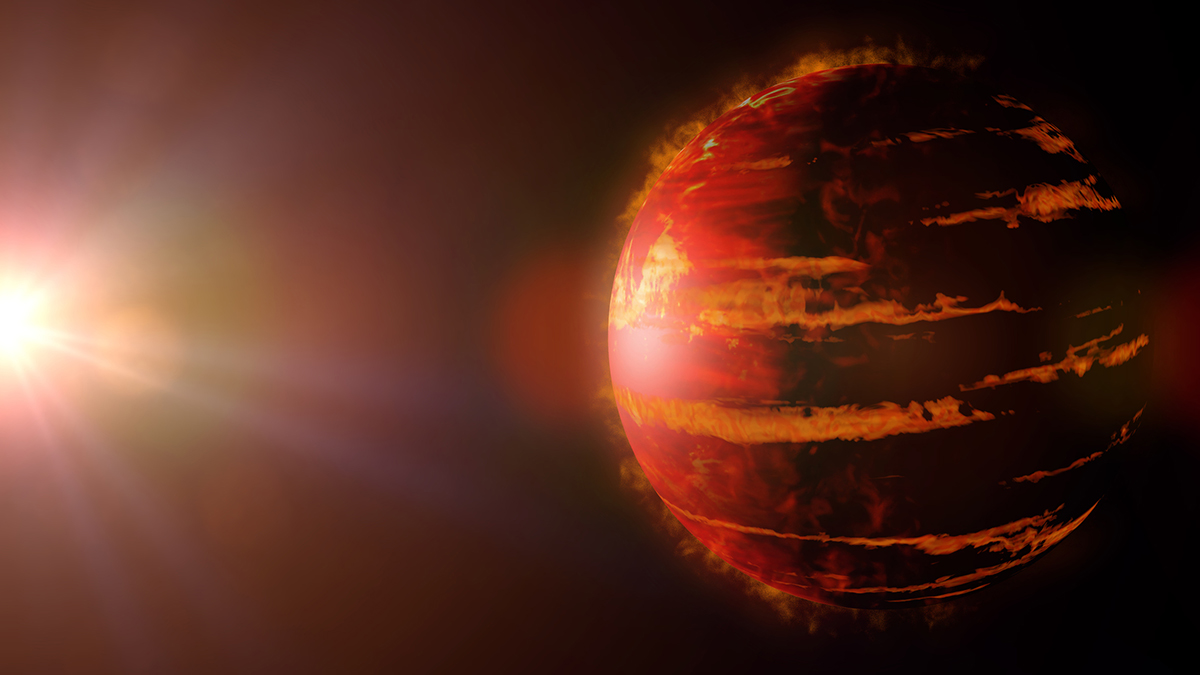
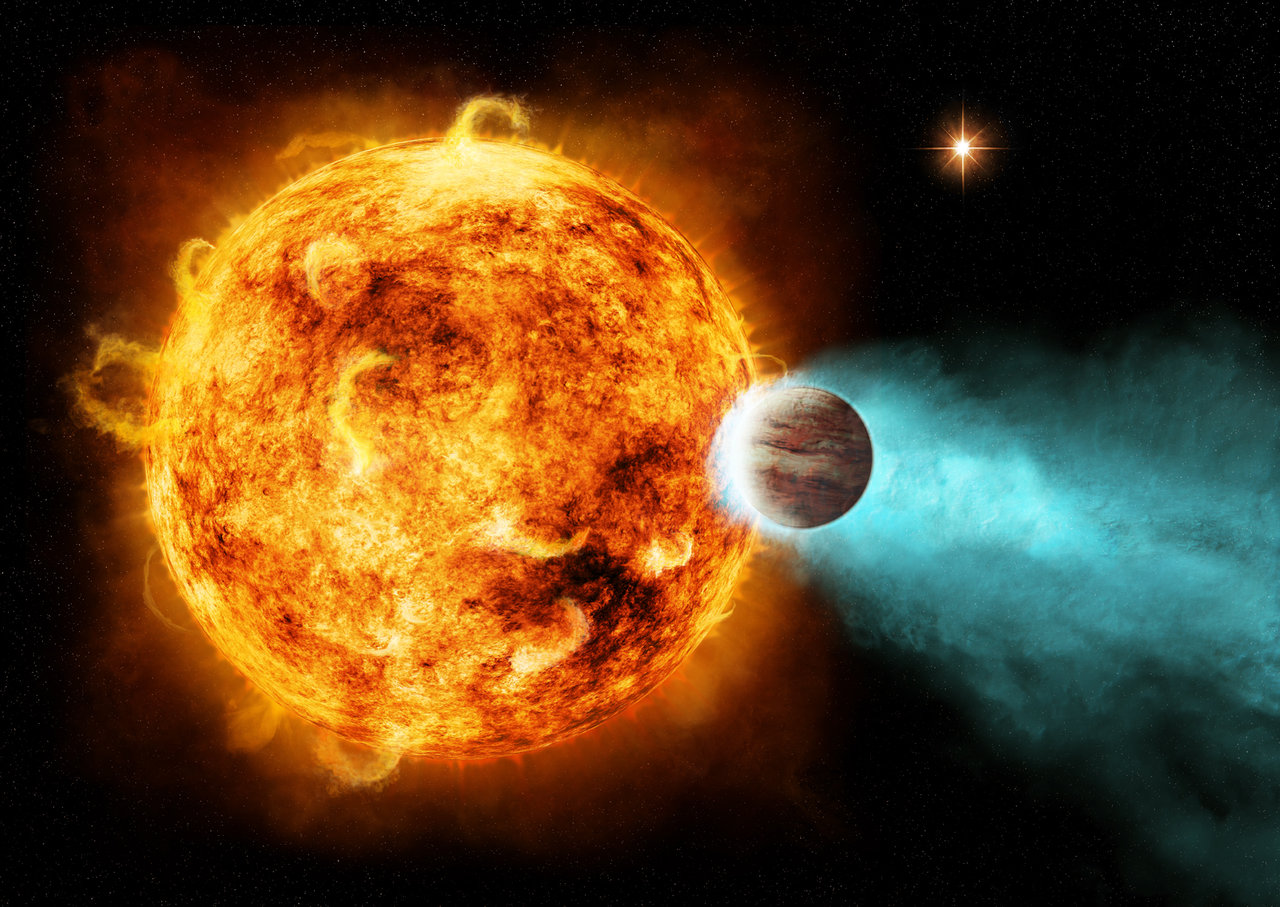
The exoplanet, known as TOI-2535 b, is a type of world known as a 'hot Jupiter', which means it is a large gas giant – like Jupiter in our own Solar System – but orbits very close to its host star.
In fact, TOI-2535 b orbits its star in only 8.25 days, which is 10 times faster than the orbit of the closest star to our Sun, Mercury.
Strangely, the team observed TOI-2535 b pass in front of its host star several times over a period of 7 years.
Then they stopped seeing it altogether. The solution to the disappearing planet lies in the gravitational pull from a neighbouring world.
More on exoplanets

How the disappearing planet was first discovered
TOI-2535 b was found by NASA’s Transiting Exoplanet Survey Satellite space telescope in images captured of star TOI-2535 between April 2019 and March 2026.
The TESS mission finds distant planets – exoplanets – by looking for small changes in the light of the star.
Those small changes in light are caused by a planet passing in front of the star, known as a 'transit'.
TESS observed the region of the sky multiple times and astronomers noticed that the planet’s transits didn't follow a regular schedule like most other exoplanets.
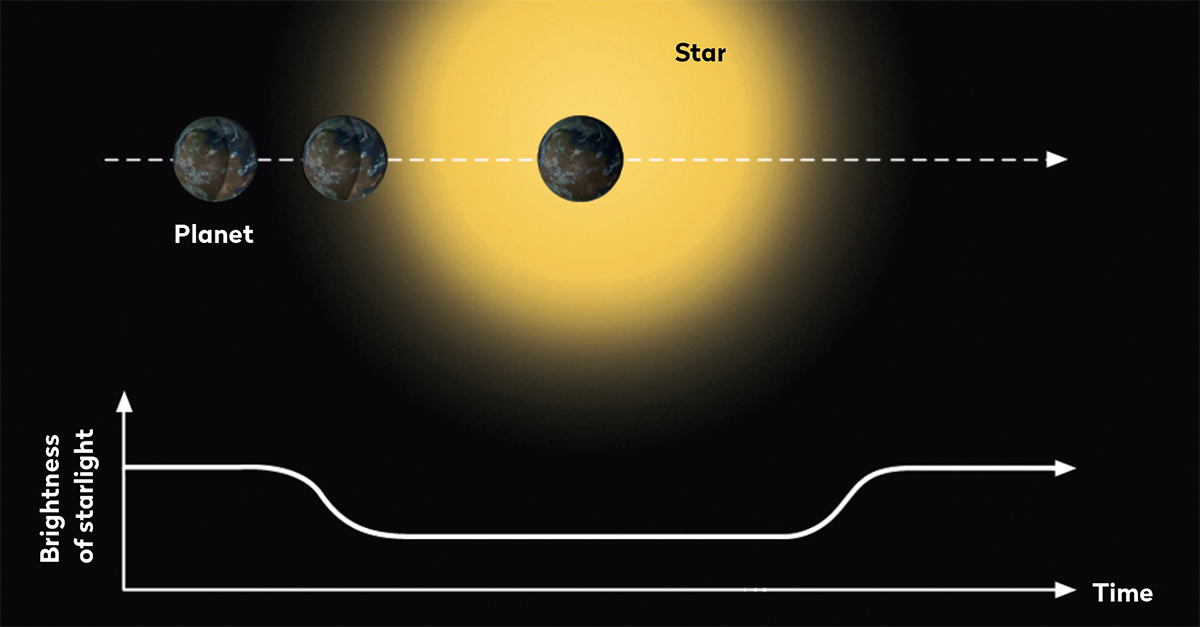
Instead, the transits were either early or late each time, by up to six hours, which is unexpected for a planetary orbit.
And they saw the transits were getting shorter and shallower over the years. Eventually, in 2026, they seemed to stop completely.
The team say that led them to conclude TOI-2535 b's orbit is being affected by the gravitational pull of a nearby planet, whose orbit is tilted relative to that of TOI-2535 b.
Data shows the two planets are making each other’s orbits wobble, causing each to circle their star obliquely and vanish from view from time to time.
Disappeared right in front of our eyes
"We think of the universe as resembling clockwork, where everything is regular, but that’s not true," says Samuel Yee, a 51 Pegasi b Postdoctoral Fellow at UCLA and the paper’s corresponding author.
"If there are multiple planets in a system, they can affect each other’s orbits. We know of a few systems that are like this.
"This is the most extreme example we’ve seen because the two planets are interacting so strongly. The planet’s orbit is tilting so quickly that its transit disappeared while we were watching."
TOI-2535 b will next transit its star sometime in 30 to 50 years, but the team say its hidden planetary neighbour could appear sooner.
"If the Moon’s orbit around the Earth was perfectly aligned with the Earth’s orbit around the sun, we would see an eclipse every month," says UCLA astrophysicist and paper co-author Erik Petigura.
"But because the Moon’s orbit is tilted, eclipses are less common. The tilt of the Moon’s orbit is a relic of its violent formation history, which resulted from a collision with the early Earth."
A clue to TOI-2535 b's formation?
The team say their observations could reveal how planet TOI-2535 b formed.
They found that TOI-2535 b is a hot Jupiter based on the size of its transit and further observations.
The team say that, while hundreds of hot Jupiters have been found orbiting distant stars, they don’t normally have neighbours that are massive enough and close enough to affect their orbit.
They are now trying to figure out how hot Jupiter exoplanets could migrate towards their host star from further away.
One possibility is that the planet gets thrown into an elliptical – egg-shaped – orbit by, for example, the gravitational pull of another object.
Another possibility is that a planet might get pulled along with other planets in the protoplanetary disc, which is the dusty disc surrounding young stars, out which planets grow.
However, the team say this scenario would be expected to leave a 'flat' system of planets orbiting a star, without orbital tilts between the planets.
The wobble of TOI-2535 b suggests that components of the system may have interacted with each other, causing the orbits of the planets to become tilted.
"Because TOI-2535 b has a close neighbour, it probably migrated by slowly spiraling in instead of getting flung in," Yee says.
"We may be seeing a formation channel that doesn’t happen very often but is very interesting."