
Earth and Venus orbit the Sun side by side and, compared to the icy, gassy giants of the outer Solar System, the two planets are relatively similar.
So why is it that Earth has a Moon – indeed, our other neighbour Mars has two – but Venus has none?
Scientists have come up with an intriguing new theory. They say Venus ate its own moon.
More on Venus
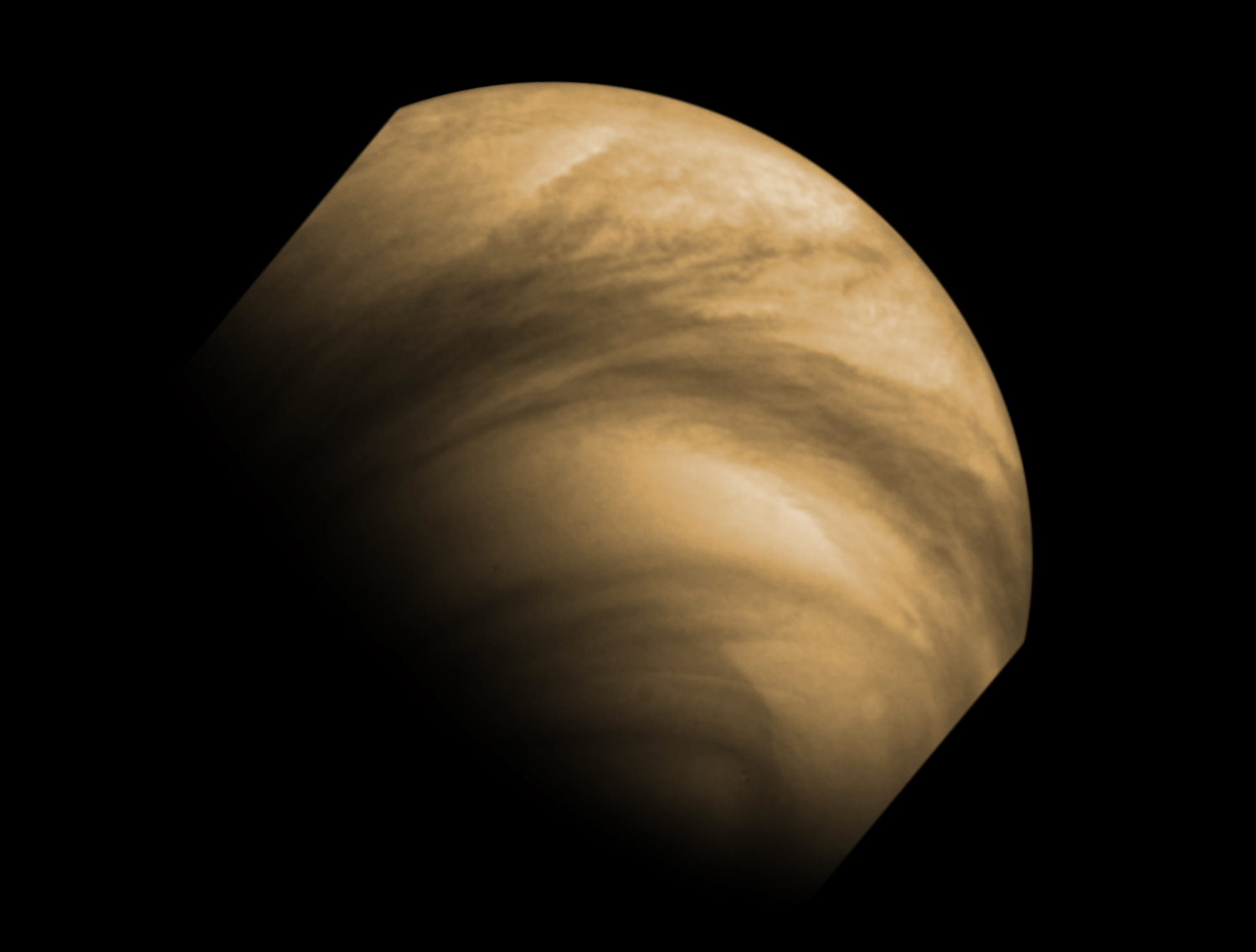
The story of Venus's lost moon
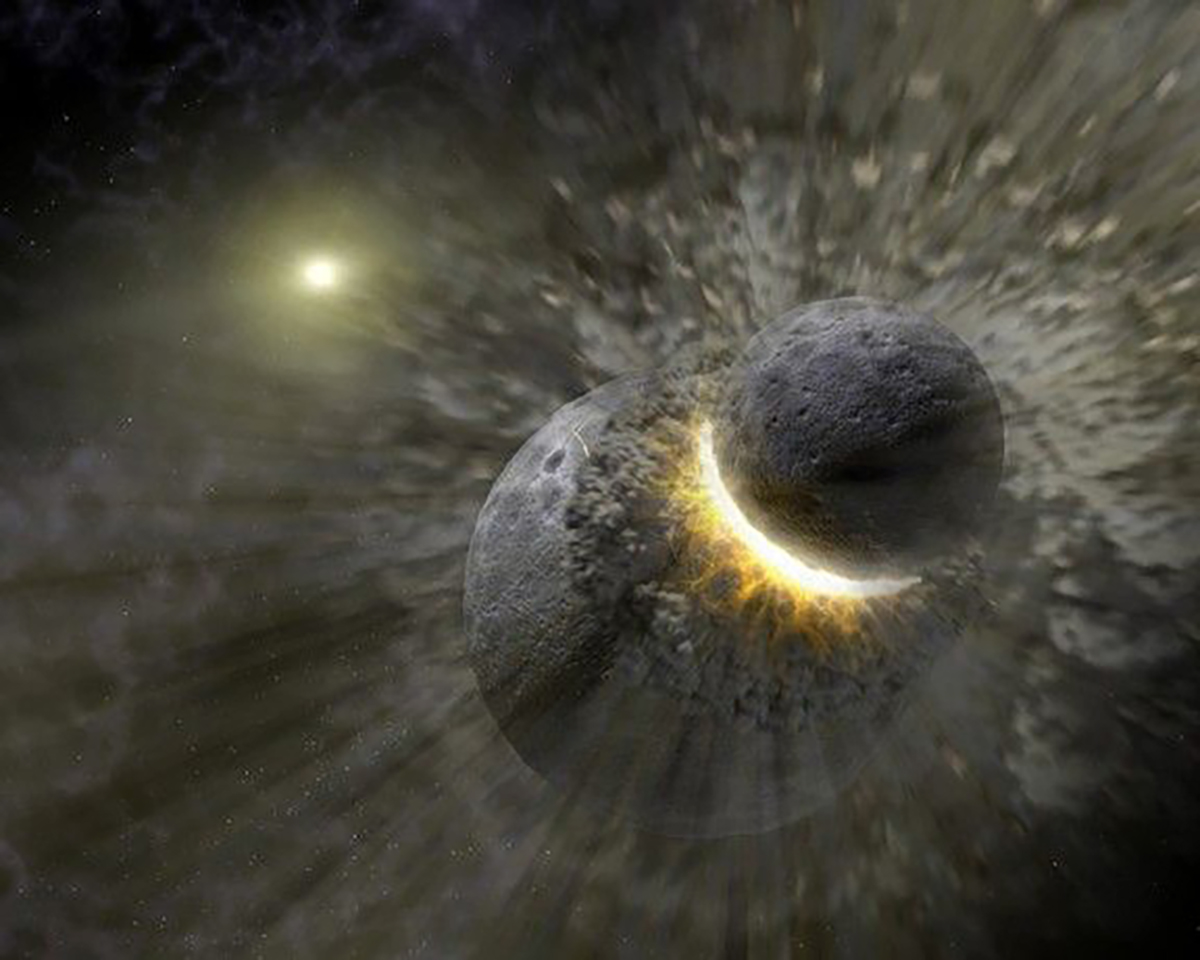
Earth's Moon is thought to have formed when a small planetary body – name Theia – smashed into our home planet during the more chaotic early days of the Solar System.
Scientists have previously suggested that Venus may have had a moon at one time, but the Venusian satellite was obliterated when it got hit by a much bigger body.
Another theory regarding Venus's lack of a moon suggests Venus simply never experienced a collision – like Earth did – that formed a moon in the first place.
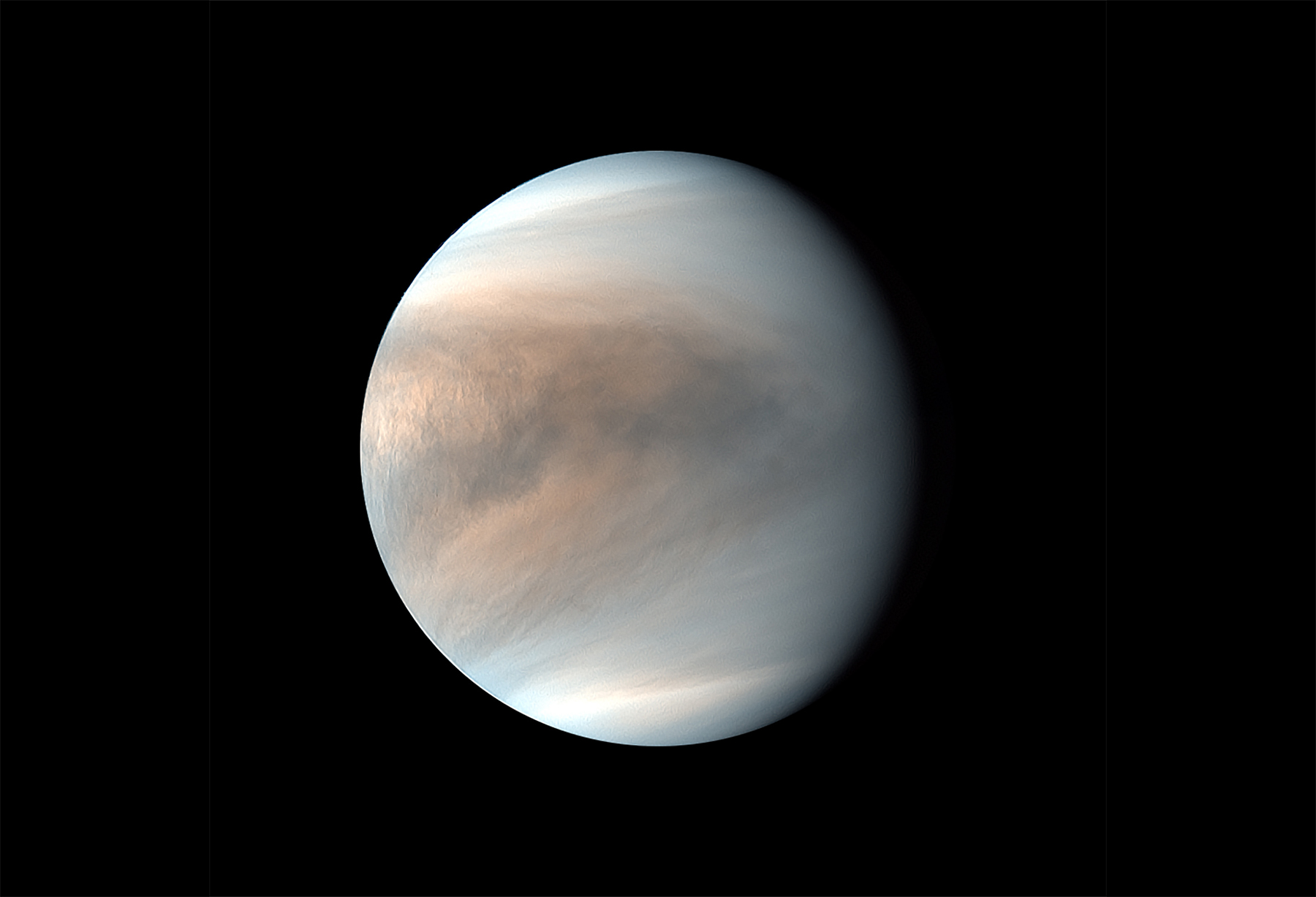
Gravity always wins
A team of scientists at the University of California, Riverside in the USA have published a study in The Astrophysical Journal that says neither of the theories explain Venus's sans-satellite status.
"My study shows Venus didn’t require a catastrophe to arrive at what we can see today," says UCR astrophysicist and lead author of the study Stephen Kane.
"It turns out the gravity of the planet itself, combined with the rate at which it spins, naturally caused Venus's moon to collapse on top of it."
Key to this theory is the fact that Earth's Moon is gradually floating away from it, year by year.
Scientists know this because the Apollo astronauts left mirrors on the lunar surface that scientists can bounce lasers off to accurately measure the distance from Earth to the Moon.
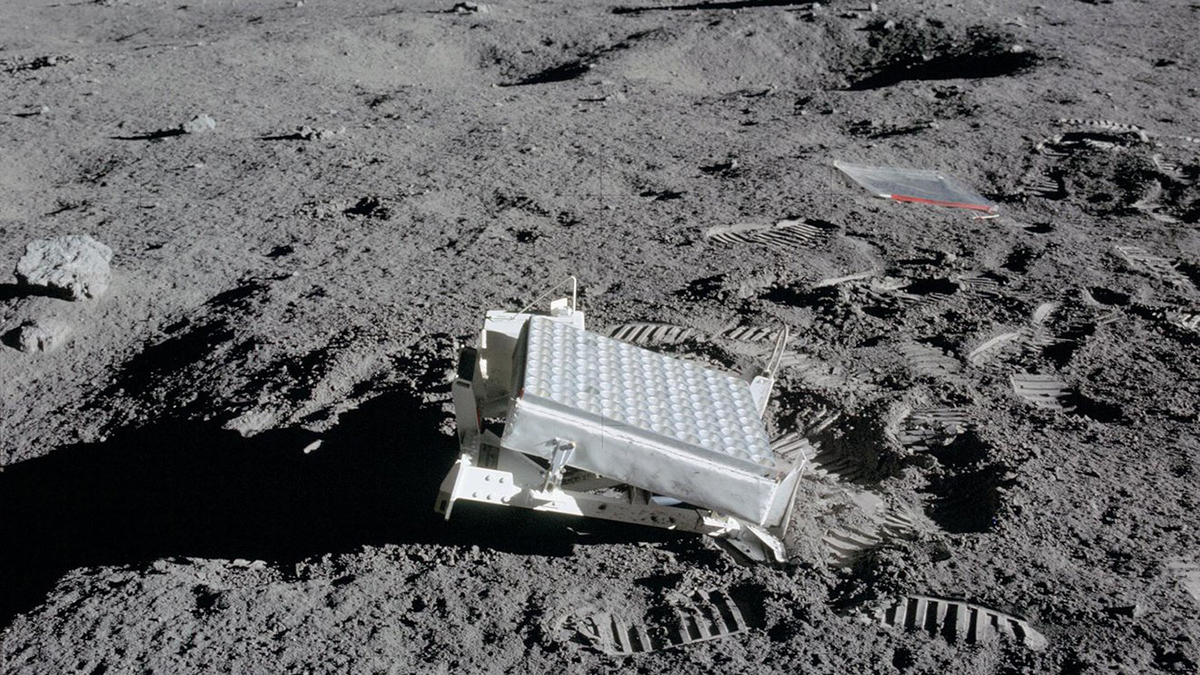
The results show that the Moon is moving away from Earth at a rate of 3.8cm (1.5 inches) a year.
"We know that the Moon is slowly moving away from Earth at a rate of around 4cm per year,” Kane says.
This is happening, Kane says, because Earth spins so fast – once every 24 hours.
The energy from this rapid rotation is transferred to the Moon, causing it to move away from Earth.
But Venus, the scientists say, is the exact opposite. It takes Venus 243 Earth days to complete a single rotation.
So rather than moving away, that slow spin combined with Venus's gravity would cause a moon to spiral inward.
Proving the theory
Kane produced computer models that adopt the physics of how planetary bodies interact through gravity.
He started by reproducing the evolution of Earth and its Moon as a test, to make sure the model was working correctly.
Kane then used the models to change Venus’s rotation rate and the size of its hypothetical moons.
He tested Venusian moons with masses ranging from half to ten times the mass of Earth’s moon.
The team say that in most of the simulations, Venus's hypothetical moon crashed into its host planet.
What's more, the more massive the moon, the faster it crashed into Venus.
"When I made this discovery, I was shocked," says Kane. "I thought surely the broad range of scenarios I was exploring would lead to a variety of results. But it all went pretty much in the same direction."
The team point out that their study doesn't prove Venus ever did have a moon, but that if it did, it probably wouldn't have survived.
No smoking gun
Could planetary scientists ever uncover conclusive evidence that Venus did have a moon?
The team say finding physical evidence of such a collision would be difficult.
About 80% of Venus’s surface is similar in age, which scientists says is evidence of a major resurfacing event a billion years ago that would have erased a lot of planet’s geological history.
But could there be evidence of a Venusian moon hidden beneath the surface of the planet?
Seismic studies have shown structures inside Earth that could be remnants of the collision that formed our Moon.
Perhaps similar measurements on Venus could offer clues about whether it once absorbed its own moon.
However, Venus is a hot, acidic world that's not conducive to hosting robotic rovers and orbiters in the way Mars is.
That makes in-the-field study of Venus's surface very difficult.
Could Venus have hosted life?
The team say, if such a collision did ever occur on Venus, it could help scientists understand whether the planet was ever suitable for hosting life.
They say a moon crashing into Venus would have transferred energy and angular momentum to the planet and could have altered its rotation, geology and climate.
If Venus ever did have oceans or other conditions that could support life, the team say, a large impact could have dramatically changed the course of the planet's evolution.
But is a moon necessary for a planet to host life – and should we therefore be looking for exoplanets with moons in the search for life beyond our Solar System?
"My feeling is there are benefits to having a moon, but it isn’t required for habitability," Kane says.
"The Moon has definitely changed the way Earth has evolved through time, but we don’t fully know how important that role is.
"When people think about Earth twins around other stars, one question they ask is, 'Does it have a moon?'
"My study shows a disturbing scenario for many of those cases. If these planets don’t rotate fast enough, the moon will crash to the surface, and that would change the course of history for those planets."
Read the full paper via the Astrophysical Journal

