A new image processing technique has improved the James Webb Space Telescope’s ability to spot exoplanets orbiting distant stars – and has seen the emergence of a planet around a distant star that had previously been lost in imaging noise.
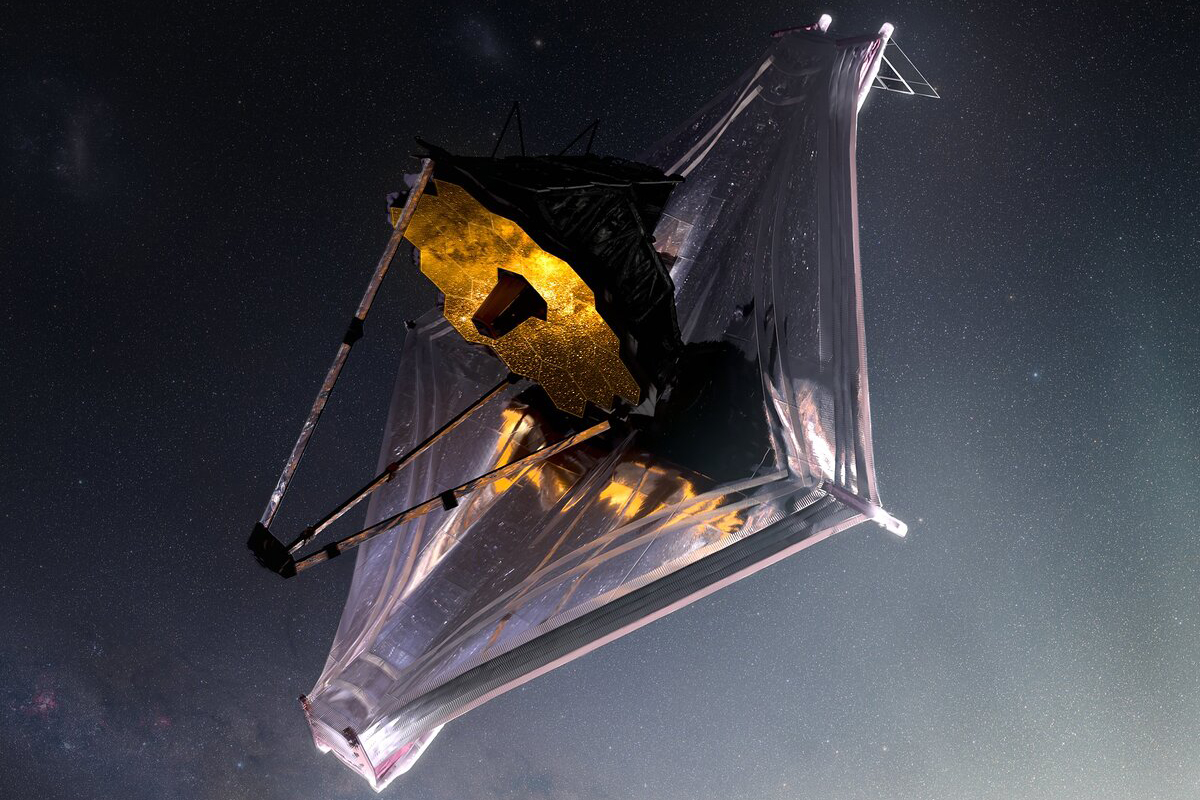
The JWST is the most advanced space telescope currently in operation, but it’s not perfect.
Small thermal changes can cause its mirror to expand or contract, while the motors in the cryocoolers that keep the instrument at the required temperature can cause the mirror to vibrate.
These fluctuations are tiny – measure in picometres – but they’re enough to affect how light travels through the telescope and cause glare.
And glare is a problem when it comes to spotting exoplanets, because they’re hard enough to spot even without it.
More Webb exoplanet discoveries
Spotting planets in the glare of distant stars
Even the largest, brightest exoplanets can be up to 100,000 times fainter than their host stars.
This makes them difficult to see at the best of times, because the light from the star blocks out the light coming from the planet.
And if you add in extra glare caused by imperfections in the imaging equipment, the situation worsens.
To get around this problem, the research team – led by Jason Wang, an assistant professor of physics and astronomy at Northwestern University in Illinois, USA and Rodrigo Ferrer-Chavez, a PhD candidate at the university – developed a new technique that combines physics-based modelling with machine learning.
This system is used to model the way that light travels through the telescope and then corrects the resulting image to eliminate any glare caused by physical imperfections within the scope.
This is said to improve the telescope’s light sensitivity by as much as 15 times.
The team then applied their new technique, which they’ve dubbed ‘FLIP’ (Physics-based Learning for Imaging Planets), to existing JWST images of three stars: HIP 65426, 51 Eridani and TYC 5899.
Once the FLIP system was deployed, the image of 51 Eridani revealed a giant exoplanet in orbit around it that hadn’t previously been visible.
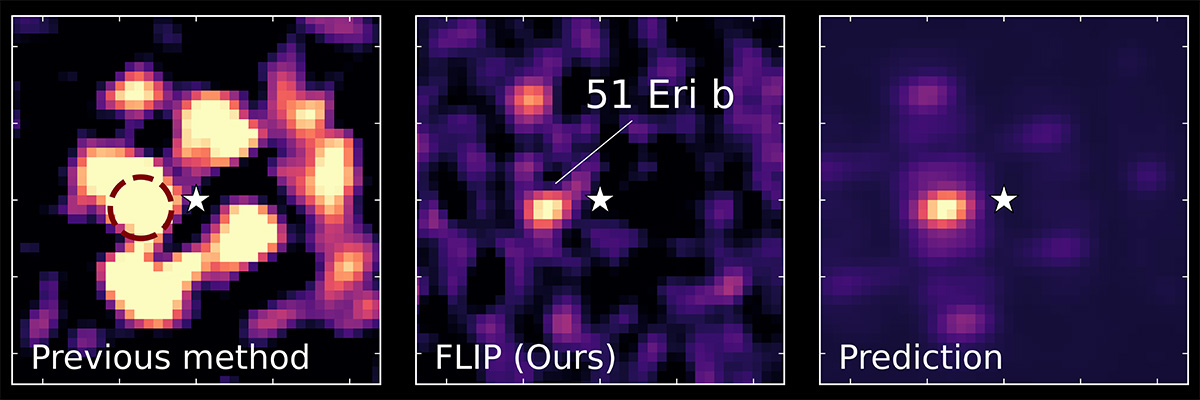
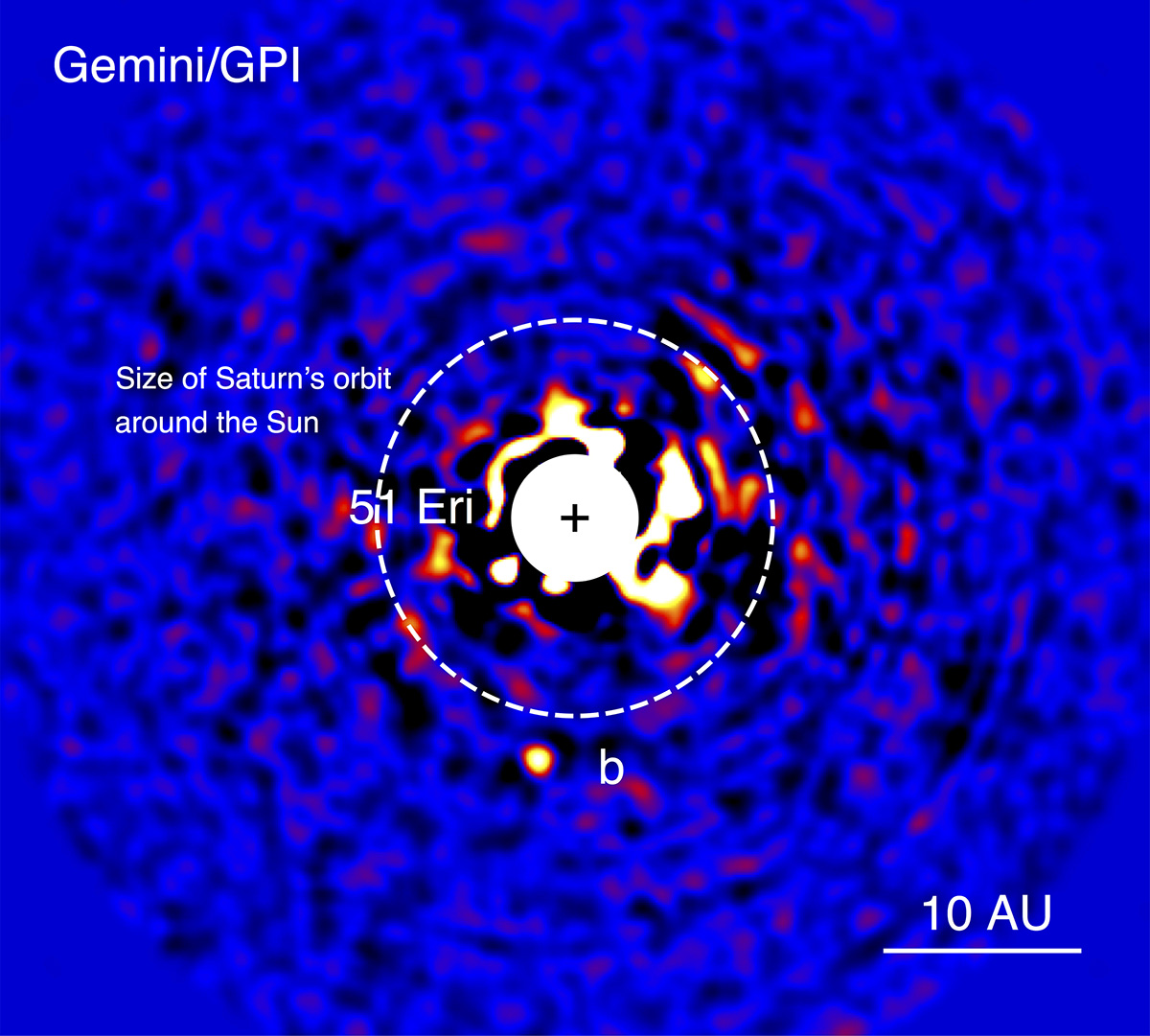
It’s important to note that this isn’t a new discovery: the giant exoplanet in question, 51 Eridani b, had previously been spotted with ground-based telescopes.
The research does, however, point towards an expanded role in exoplanet detection for the JWST, and suggests a method by which we might discover many more exoplanets in the future.
What’s more, it’s an upgrade that can be made without having to send a craft to the Space Telescope itself.
"We know of no planets around other stars that are like those in our own Solar System," says Ferrer-Chavez.
"It’s not that they don’t exist. It’s that we cannot see them. Every time we improve our techniques, we discover new types of planets.
"By finding more planets, we can better understand how planetary systems form and evolve, and ultimately how typical our own solar system truly is."
The team published their findings in November 2026 in the journal Nature.