
The sheer mass of enormous cosmic objects warps spacetime and can even magnify light from distant objects, enabling astronomers to see them more clearly.
This ‘cosmic magnifying glass’ effect may sound like science fiction, but it's science fact, and it's called gravitational lensing.
Dr David Lagattuta is an astronomer and research scientist at Durham University who studies the distribution of mass in the Universe and how galaxies and stars evolve over time.
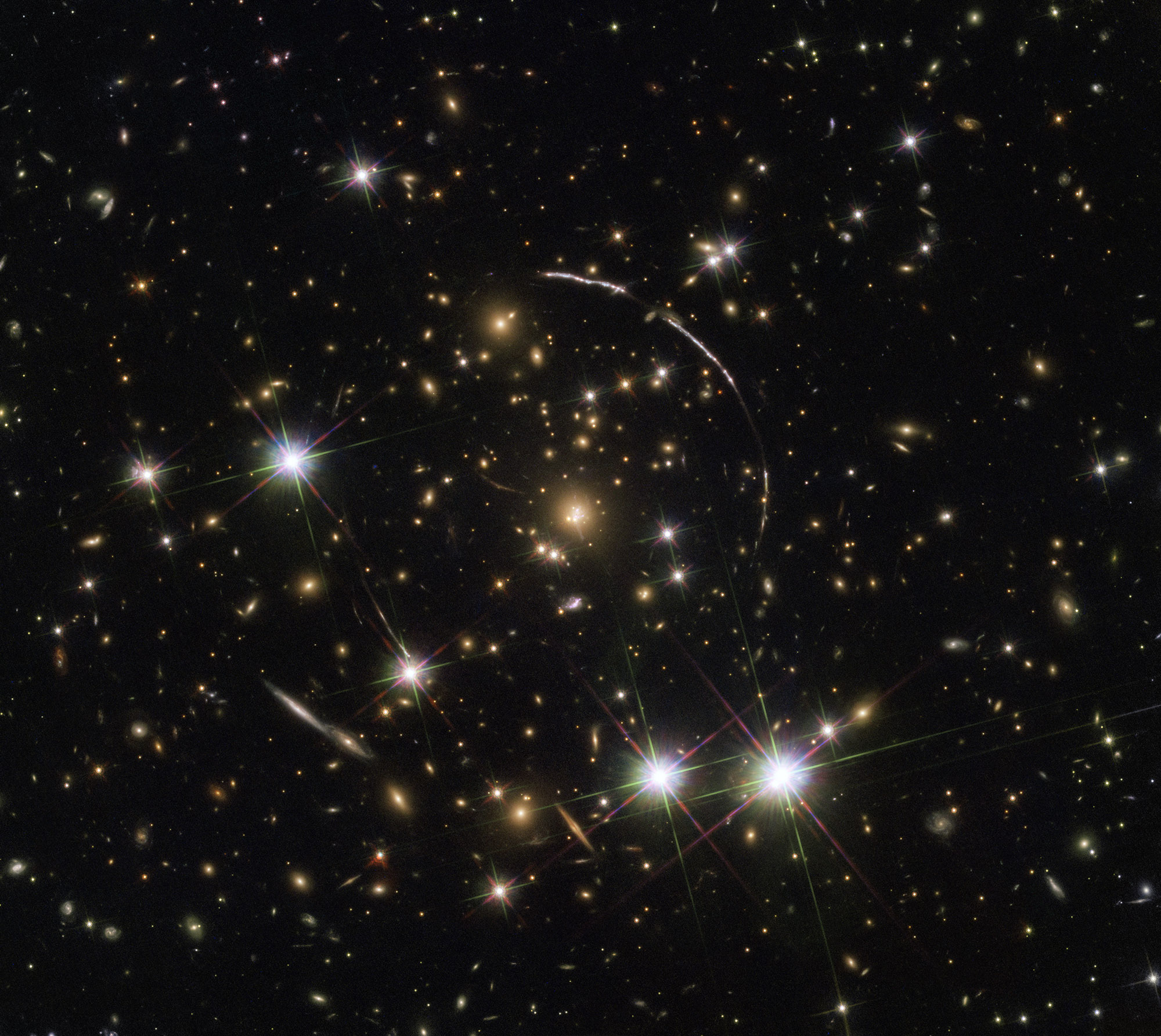
He’s also an expert on the mysterious, invisible substance known as dark matter, which holds galaxies together.
We got the chance to talk to him about how one cosmic magnifying glass helped a team of space-science sleuths discover previously unseen stars with the James Webb Space Telescope (JWST).
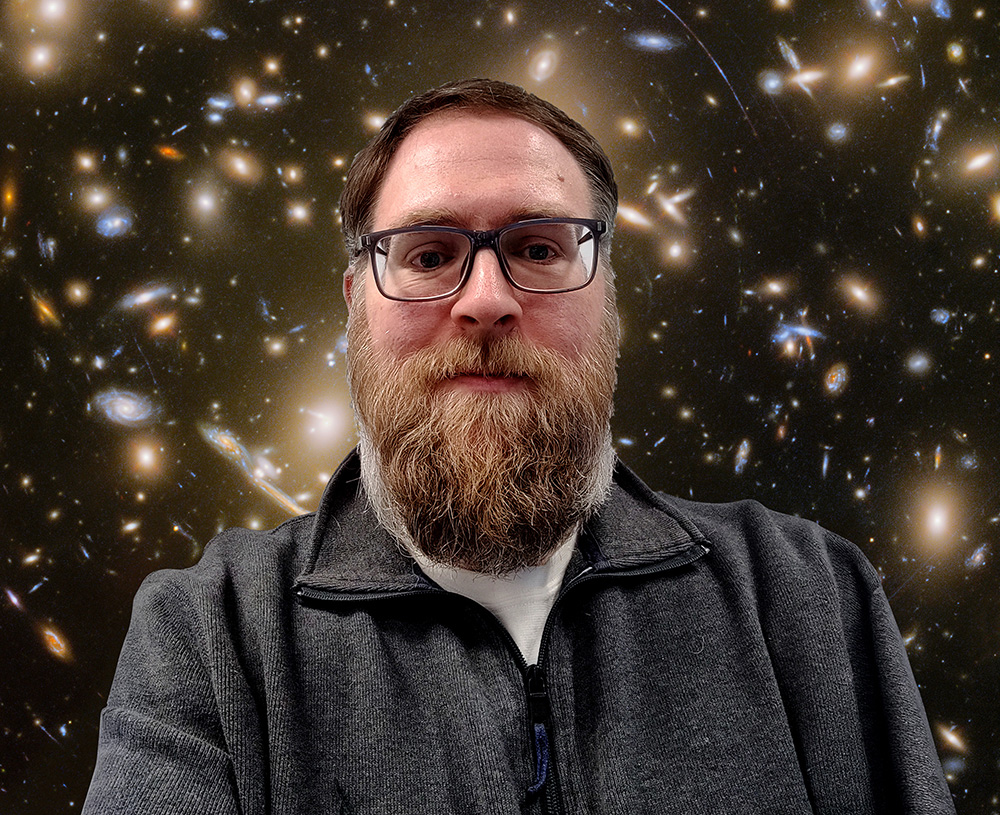
Why is gravitational lensing used by astronomers?
Gravitational lensing really is lensing by gravity. If, under normal circumstances, you're looking at a galaxy that's far away, light from that galaxy shines in all directions.
A little bit gets to you, a little bit goes to your left, a little bit goes to your right.
But if there's a massive object, say a galaxy or galaxy cluster, in between you and the thing that you're looking at, then the mass of that object bends the fabric of space.
This is what we call spacetime. Light travels on paths in this spacetime, and if it's bent, light will bend too.
So the light gets focused towards you and makes the object appear brighter and bigger.
That's the concept of gravitational lensing, but instead of the lens being a piece of glass, it's a big galaxy.
Tell us about your study with the Dragon Arc
The bigger the mass, the better the lens it makes. There are different lenses that we know of in the Universe: galaxies, stars and clusters.
Because galaxy clusters are so big, they tend to be the best lenses – Abell 370 is one of them.
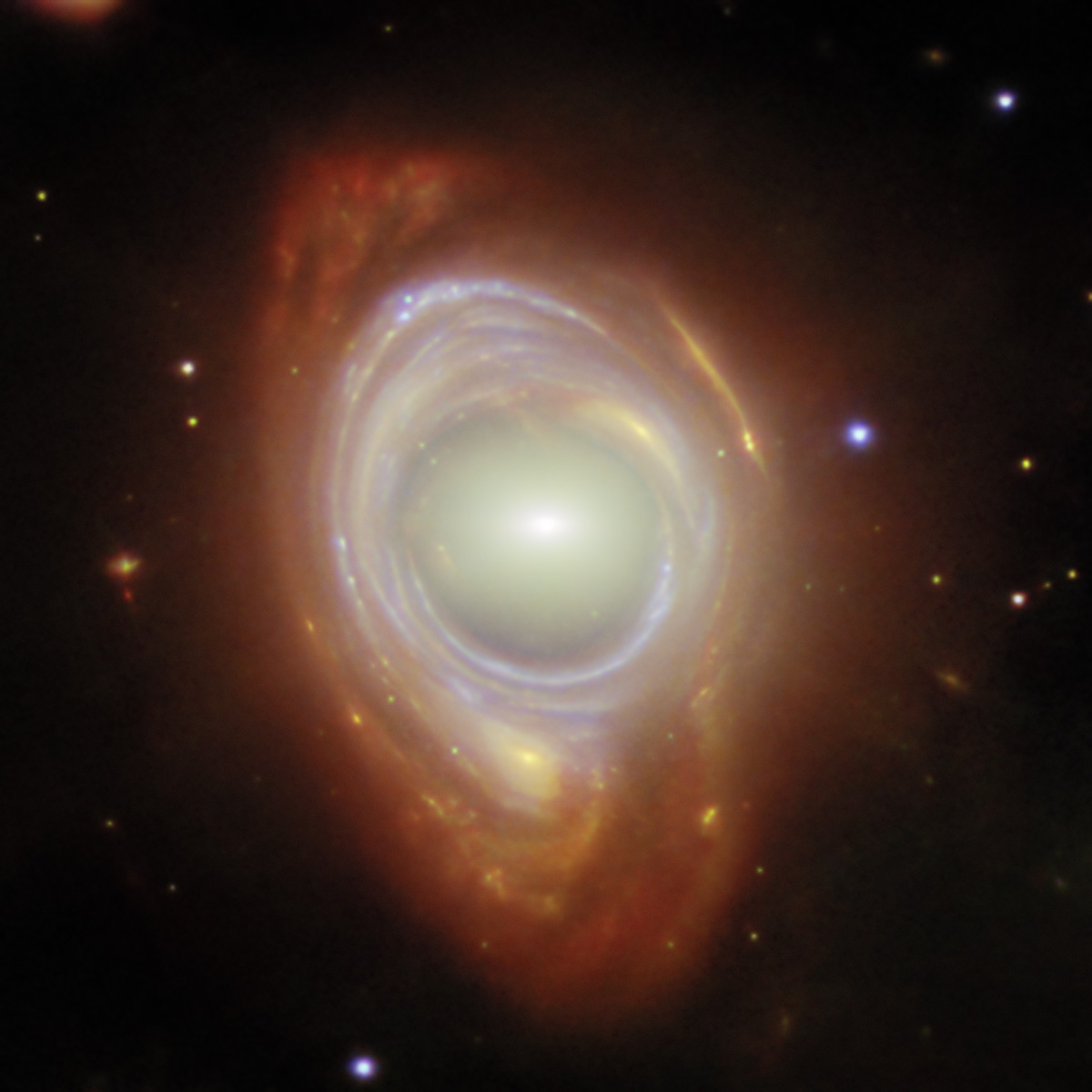
We already knew of the Dragon Arc [light from a distant galaxy that has been distorted into an arc shape by gravitational lensing, found in Abell 370]. It is the first lens arc that was discovered.
The concept of gravitational lensing has been known about since the days of Einstein in the early 1900s.
It took until around 1979 for astronomers to find any gravitational lenses at all. And then, a few years after that, they saw an ‘odd blue arc’ in Abell 370.
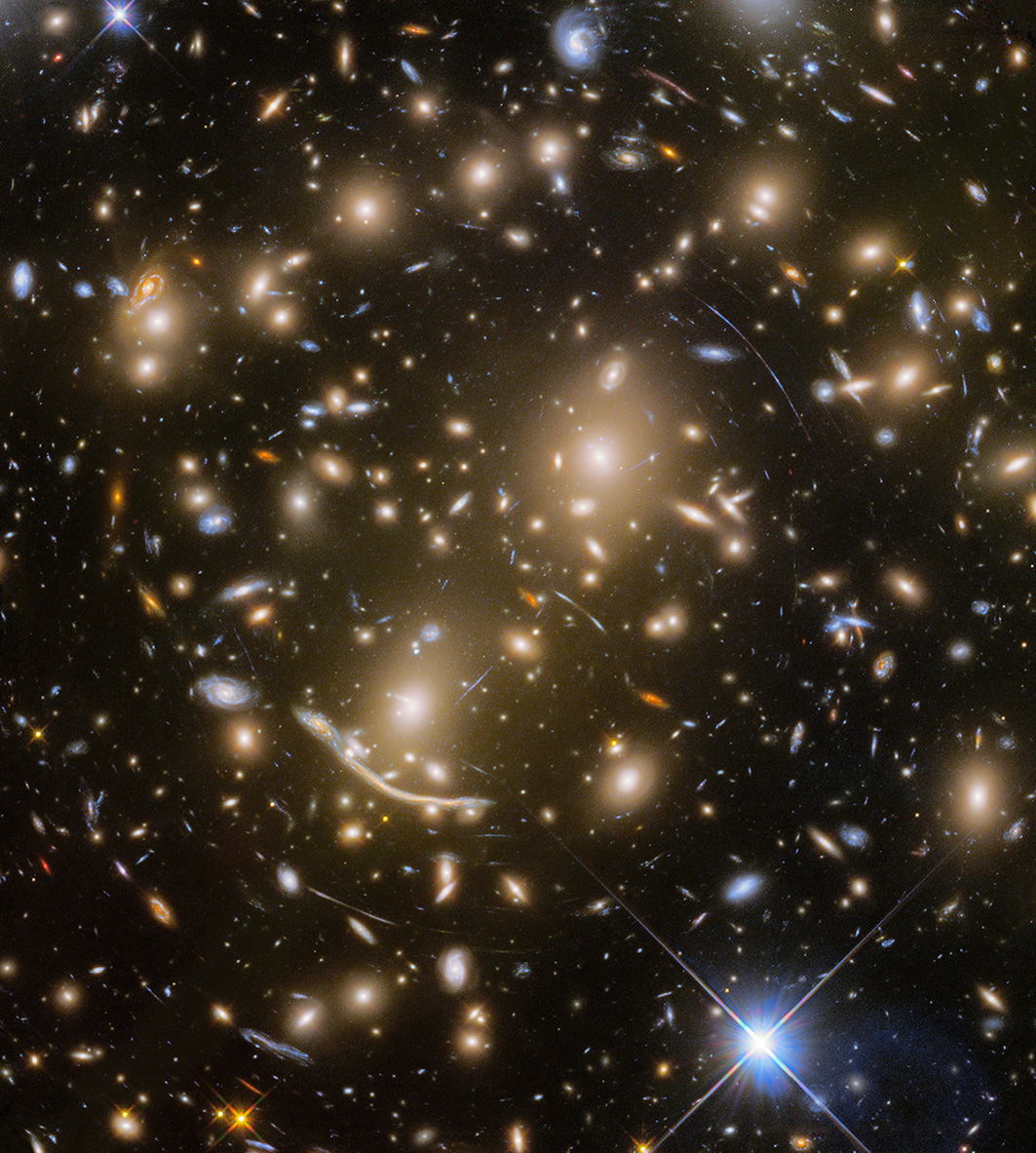
For perspective, the galaxy cluster Abell 370 is about 5 billion lightyears away. The Dragon Arc is another few billion lightyears beyond that, about 8.5 billion lightyears away.
When we look at galaxies that are far away, what we see is the light that's combined from all the stars in the galaxy.
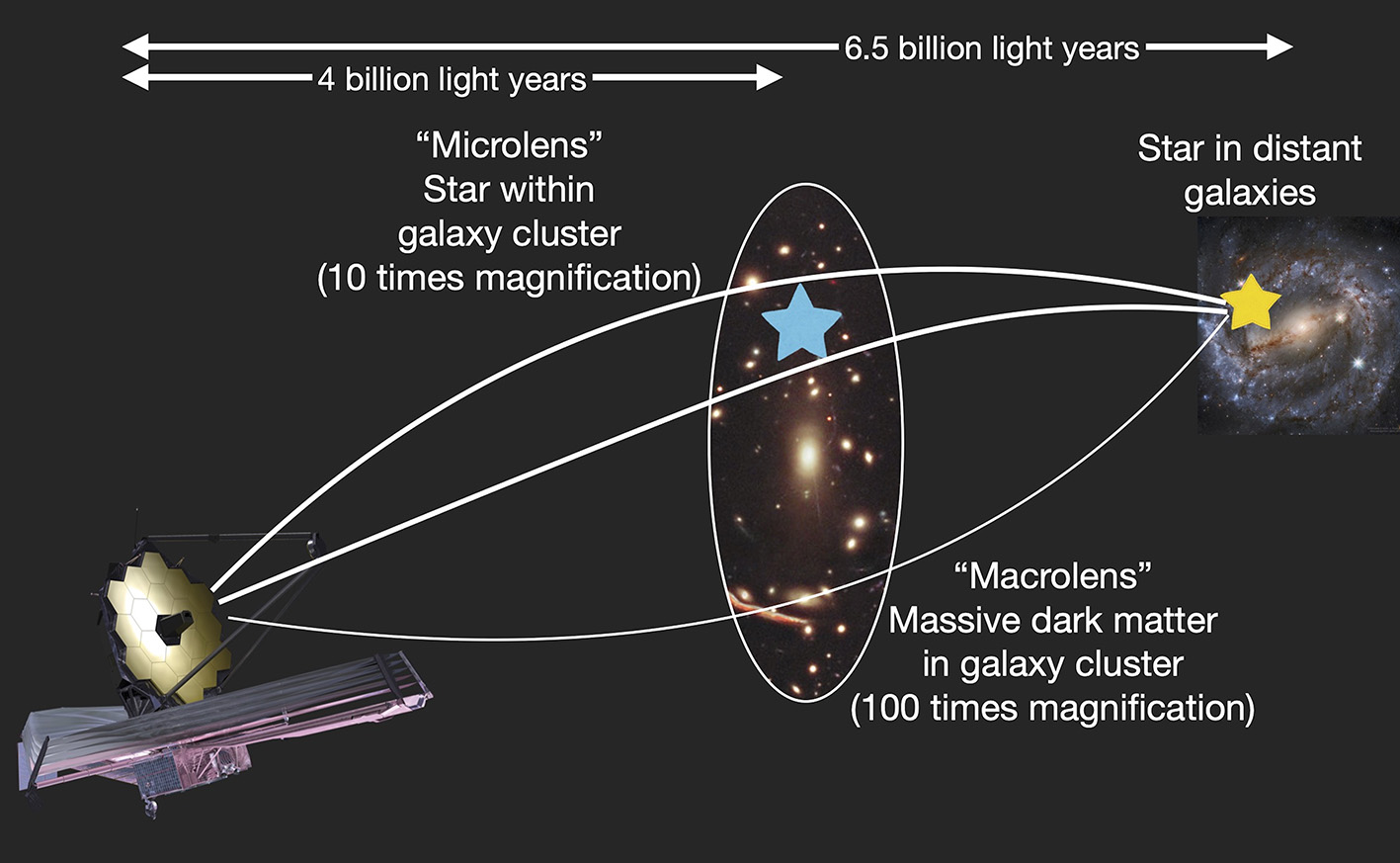
We then used a secondary technique called microlensing. It’s a subset of gravitational lensing that focuses on a very tiny area.
Amazingly, the micro lenses that were in Abell 370 helped reveal individual stars in the Dragon Arc.
By using JWST we ended up finding far more stars than anybody thought we would – 44 in total. It was a real wow moment.
Would the stars have been observable if you had used a different telescope – Hubble, for example?
Hubble is fantastic, but JWST has several advantages. The big thing is the resolution.
Using a different instrument you’d see a little fuzzy blob – it could be a star, a group of stars or a small patch of gas.
With JWST that uncertainty goes away. You see a dot, which means it must be some kind of star.
The other thing is that JWST can see through the patches of dust that obscure stars.
Stars are often surrounded by a lot of cosmic dust, created when they form. The dust scatters the light away.
When you look at optical wavelengths, which is what our eyes see, you just see big patches of dust.
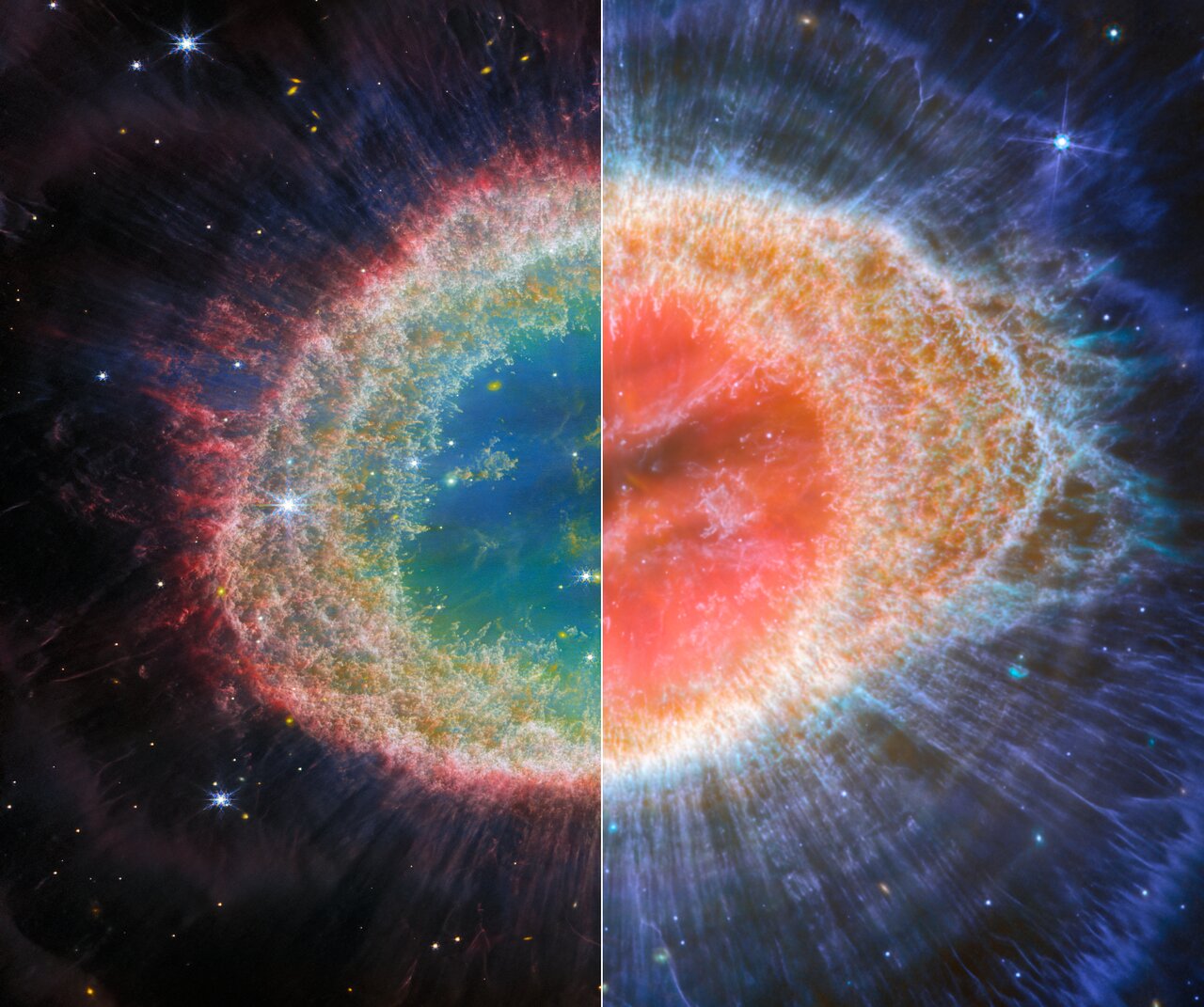
But JWST looks at longer, redder wavelengths of light that pierce through the dust. It has been a real gamechanger.
Why are these stars, and their age, so important?
We know that stars created right after the Big Bang were very different to stars that we see today, like our own Sun.
The reason behind that was in the early Universe the only element was hydrogen – still the most prevalent element in the Universe – but it was pristine.
It made the stars grow and live and die in a unique way. When those first stars started dying, and supernova explosions happened, they injected the Universe with all the other elements that we know.
This new material made stars form in a slightly different way. You need to study stars from one period, then others from a few billion years later, then a few billion years after that, to see how they changed over time.
The stars we’re seeing now are from the midpoint of the Universe, a period called Cosmic Noon. It’s an important anchor point in the lives of stars.
There were some stars in the early Universe, then formation rate started to increase until Cosmic Noon when stars were forming like crazy over the entire Universe.
They were forming at much faster rates than they are now.
In the Milky Way today we perhaps get one new star a year. By comparison, galaxies like the Milky Way would have been forming about 1,000 stars per year, even more in some cases.
What can this study tell us about dark matter?
I’m very much interested in discovering where dark matter is and how it works. Using the study, we can look at where the stars are showing up and where the microlensing events are happening.
The position and the density can tell us a bit about what dark matter is made of.
We take a dark matter theory – that dark matter is a certain type of particle or a type of wave, for example – and work out what its distribution should look like.
We compare this theory to what we see happening in the microlenseing events. We can then use that information to refine or get rid of dark matter models.
It’s work that’s still ongoing.

