
The resounding success of Artemis II’s return to the Moon has rekindled humanity’s interest in our nearest celestial neighbour, drawing our eyes up from the horizon to wonder what new insights can be gained and how lunar science can be advanced.
With nearly six decades of technological advancements behind us since we last ventured to the lunar surface, the future missions in the Artemis programme are set to tackle the mysteries that remain unsolved.
More on Artemis

While the completion of Artemis II took public interest in the return to the Moon to new levels, it also had an important science mission.
Its four crew members were the first humans in history to get such a high-altitude view of the far side of the Moon and their mission was planned to take full advantage of this.

During the fly-by, they took high-resolution images of the far side, revealing surface coloration that will be analysed by lunar geologists.
While analysis of the photography is ongoing, an early indication of what the lunar surface colorations reveal can be taken from minerals and rocks found on Earth, as well as the samples and photography of previous Apollo missions.
Accordingly, brown and red indicate iron-rich rocks and hematite, blue indicates the presence of titanium, while white indicates anorthosite (rocks formed from cooled lava).
Their 6,500km-high (4,040-mile) vantage point inside the Integrity spacecraft also gave the astronauts a unique opportunity to study the complex lava-flooded Mare Orientale and the wider Orientale Basin, affording a wide perspective of this huge impact basin, which from Earth is seen at a very oblique angle on the Moon’s extreme western edge.
Into the eye of Orientale

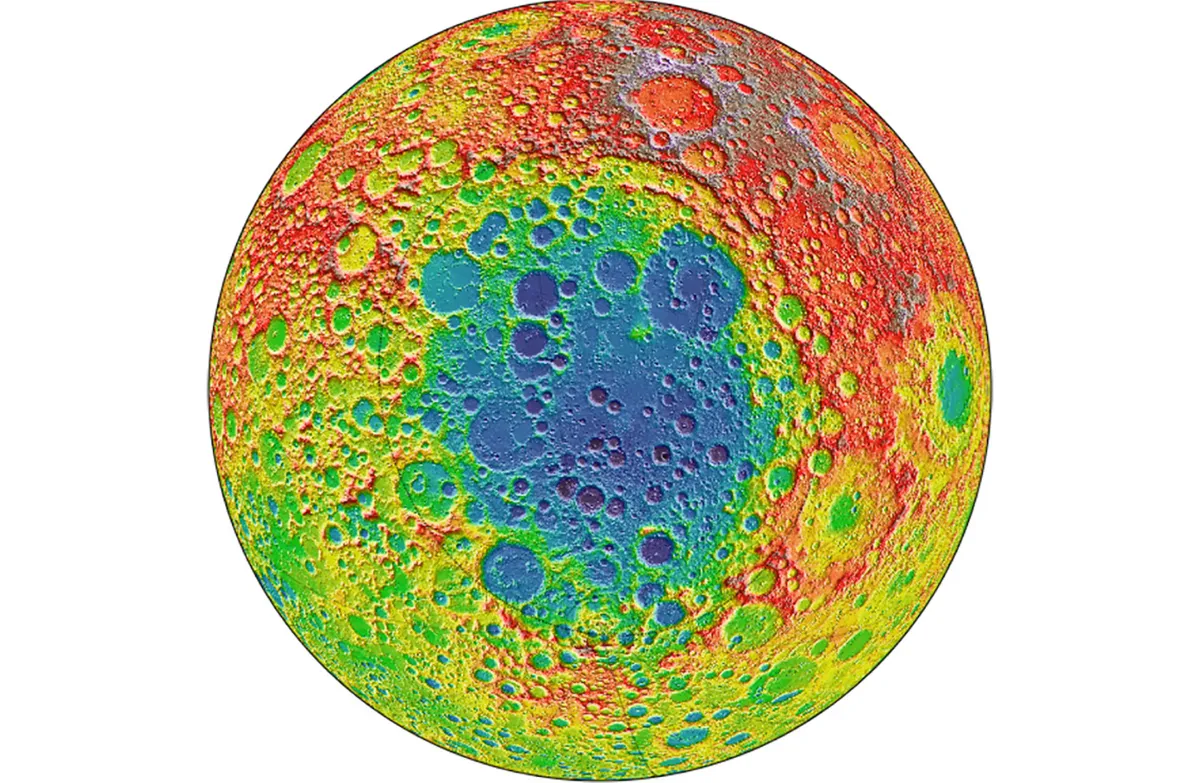
Orientale Basin was formed by a massive asteroid impact 3.8 billion years ago, which left a 930km-wide (577-mile) depression that is 7–8km (4–5 miles) deep.
Geologists are particularly excited to see this impact structure clearly because, unlike other similar impact basins on the near side of the Moon, such as Imbrium, it has not been completely filled in by younger lava flows.
Orientale Basin’s somewhat empty depression allows the crater rim to be seen in cross-section, exposing rocks deep within the lunar crust that it is hoped will provide new clues about the early formation of the Moon.

Orientale Basin also sits in an important position on the boundary of the lunar near and far sides.
Evaluating Artemis II’s high-resolution imagery will help confirm why the near side is more volcanic and why the far side has a greater crustal thickness.
Moreover, Orientale is the textbook example that will serve as a model for impact basins on Mars, as space programmes continue to plan future planetary missions.
Perhaps more immediately, the new imagery will support upcoming lunar landings, with a particular focus on identifying a site for Artemis IV at the lunar south pole.
This unexplored region is unique because satellites have confirmed the presence of permanent ice deposits brought by impacting asteroids, which could serve as a source of drinking water and oxygen for astronauts, as well as rocket fuel.
Artemis II and the need for lunar geology
Ultimately, Artemis II highlights that understanding lunar landscape geology – the study of the Moon’s surface features, rocks and formation processes – is essential for successful future exploration.
Combined with the knowledge gained from studying the Moon’s geology from past Apollo missions, it provides a solid foundation for future lunar missions.
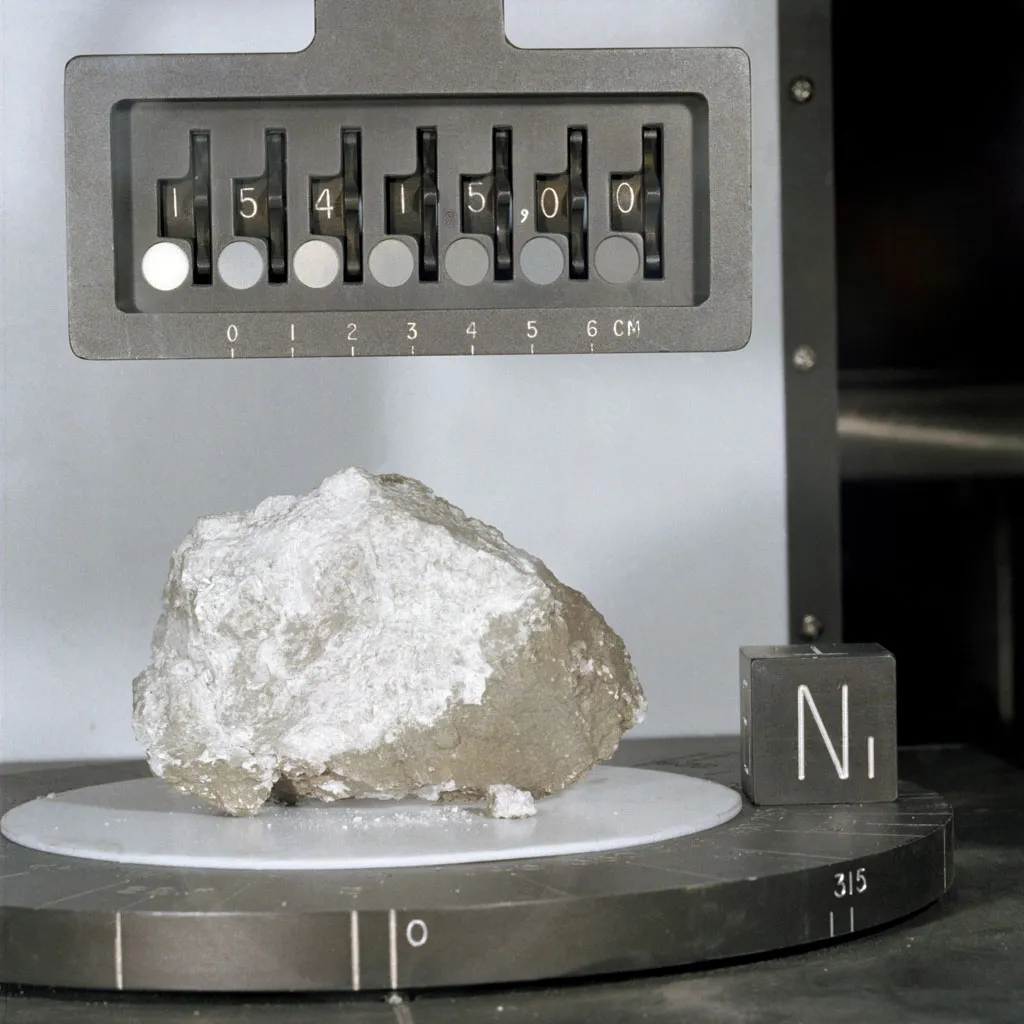
The Apollo programme’s impact on lunar science is vast. In total, 381kg (842lb) of Moon rock was returned to Earth and, once analysed, provided an incredible number of answers to questions about its geology.
From these missions, scientists learned that although it is not tectonically active, volcanism peaked on the lunar surface 3–4 billion years ago and left behind enormous basaltic lava flows.
With the naked eye, we see these as dark maria from Earth (making the classic ‘man in the Moon’ shape).
These dark maria cover approximately 20% of the near-side surface and are comparable to large-scale lava flows seen on our planet.
This is why astronauts often train in rugged, volcanic environments on Earth, like Iceland and Hawaii, which allow them to simulate the challenging terrain they will encounter on the Moon.
While the Moon’s surface is tectonically inactive and lacks plate boundaries like Earth’s, it can still experience moonquakes, which future lunar crews will have to prepare for.
These are thought to be releases in seismic energy due to the thermal expansion and contraction of rock as the Moon’s surface fluctuates between 127°C (260ºF) in daylight and –134°C (–210ºF) at night, or from tidal forces caused by Earth’s gravity.

During Apollo missions 15–17, lunar rovers allowed more extensive travel and geological discovery, traversing 90km (56 miles) in total to complete surface mapping, coring projects, ground-penetrating experiments and the installation of complex monitoring systems.
These were used to measure variables such as surface tremors, as well as heat flow, solar wind and cosmic radiation.
Despite the Moon’s huge distance, the investment in the Apollo programme almost 60 years ago continues to be a valuable source of information about the Moon.
Now we have new findings from the Artemis programme to add to it, which will help us understand our lunar neighbour and ensure the safety of the future visitors who return there.

