
On the hunt for a smart telescope? We've been reviewing smart telescopes ever since the first one arrived on the market.
These astronomical gadgets are fairly new on the scene, and promise to make observing – and photographing – the night sky as easy as pushing a button.
The premise is simple. Turn your smart telescope on and, via an app on your smartphone or tablet, tell it exactly what you want to look at.
More buyer's guides
But you don't observe the target through an eyepiece like a traditional telescope. Instead, the smart telescope continuously stacks an image of the target, producing an ever-clearer view.
This view can then be admired on the screen or shared online via social media.
If you're on the lookout for your first smart telescope, this is the page for you.
Here, we've listed every single model we've ever reviewed, with a quick summary of what our testers thought, and a link to the full review.
We've grouped them together by manufacturer, so you can see all the models we've reviewed from one smart telescope maker at a glance.
Celestron Origin Mark II Intelligent Home Observatory
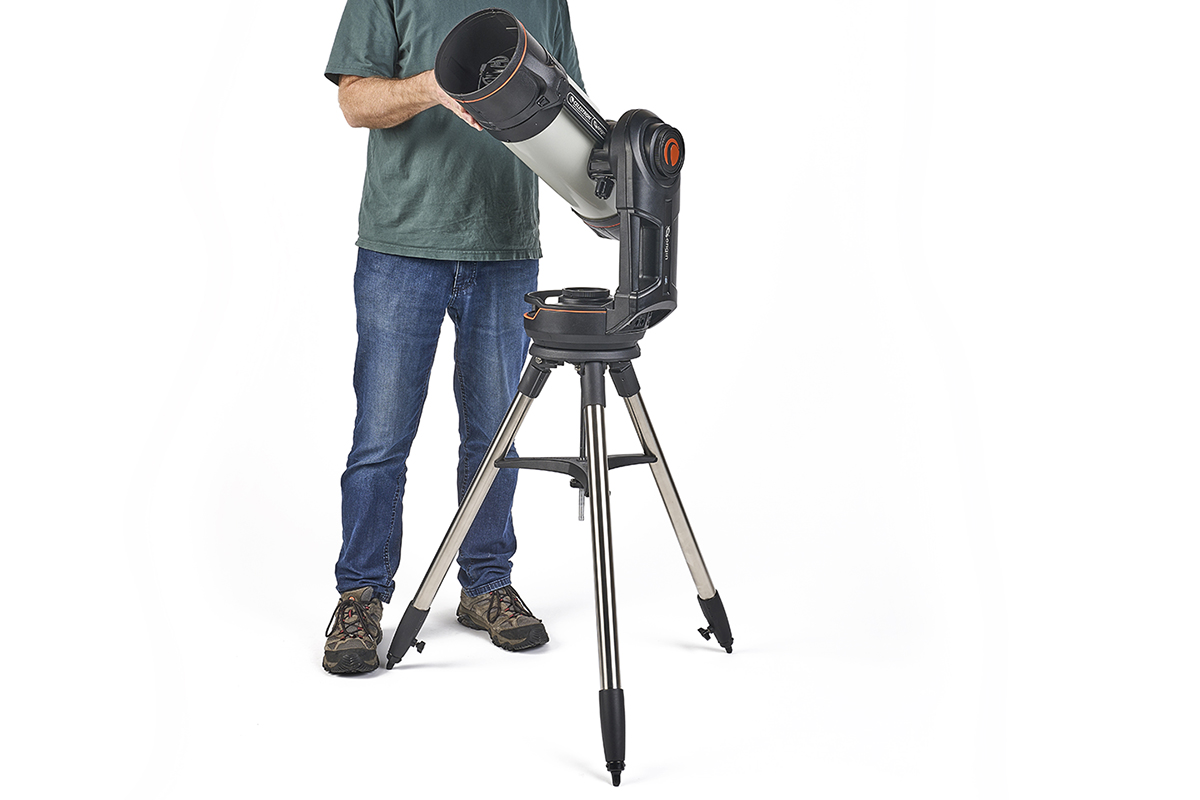
Upgraded from the Mark I, the Mark II replaces the Sony IMX178 sensor with an IMX678 colour sensor featuring Starvis 2 technology.
While the system is larger than most smart scopes, its tube, mount and tripod disassemble without tools.
The automated setup takes under five minutes via the integrated Origin app, which pairs with SkySafari to handle alignment, autonomous focusing, slewing, and real-time stacking using 10-second exposures.
AI algorithms handle automated post-processing, including gradient removal and background stretching.
The altazimuth single-fork mount includes an integrated lithium battery providing about three hours of charge, a sturdy metal tripod and a built-in carry handle.
Key hardware specifications include a 152mm aperture, 335mm focal length and total weight of 18.8kg, with USB and ethernet ports.
The system delivers fast light-gathering performance, handles light pollution well and offers an effective, user-friendly platform for deep-sky imaging.
Read our full Origin Intelligent Home Observatory Mark II review
SQUIRREL_13838334
ZWO Seestar S30
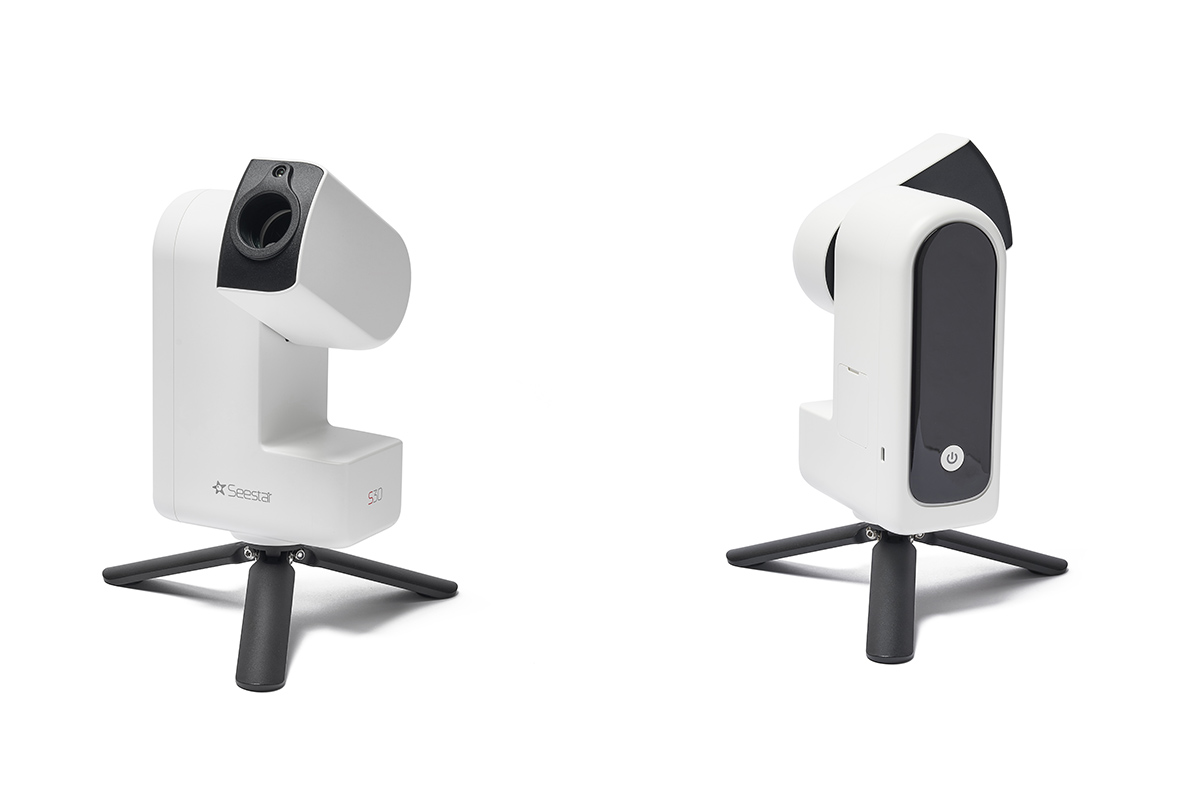
It's aimed at beginners, making it easy to set up and get going.
It has a built-in anti-dew heater that can be toggled on via the app, preventing your optics from fogging up on cold nights.
The S30 has a wide field of view, making it well-suited for larger deep-sky objects and comets.
Our reviewer found it virtually silent during use, with the exception of occasional voice announcements (which can be muted).
It includes a light-pollution filter and a dual-band filter for capturing nebulae under moonlit or urban skies.
Our reviewer loved the Go-To accuracy for deep-sky objects, but said it can sometimes become confused when targeting large, bright objects like the Sun or Moon.
Users watch images generated in real-time on their phone through live stacking, and the app includes an AI de-noise function to clean up the final results.
Due to its short focal length and small aperture, the S30 is not ideally suited for high-detail planetary imaging.
It comes with a tabletop tripod and includes a standard 3/8-inch thread, allowing it to be mounted on any sturdy photographic tripod for better height and stability.
Read our full ZWO Seestar S30 review
SQUIRREL_13213008
ZWO Seestar S50
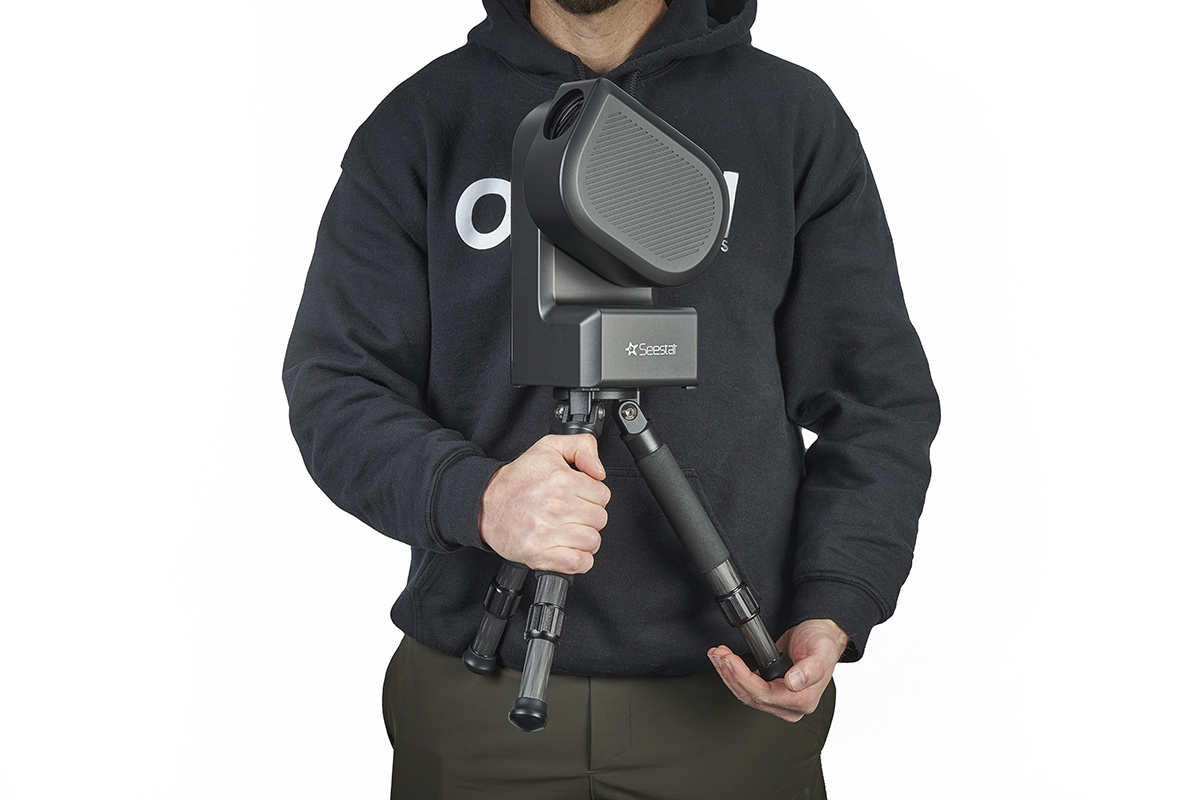
It's a compact, lightweight unit (2.5kg) that comes as a complete package, including an integrated astro camera, telescope and tripod.
The device features an internal dual-band (OIII and H-alpha) filter that allows users to capture faint emission nebulae even from heavily light-polluted areas.
It offers a fast set-up. The system uses plate-solving to automatically sync with the night sky.
The S50 includes an automated focusing system that performs well, with the app providing a pinch-zoom feature to help users manually fine-tune the focus.
Our reviewer found the telescope good at imaging the Sun (using the included solar filter) and the Moon, producing sharp, high-quality results.
It comes with 64GB of internal storage and provides the option to save individual FITS files, allowing extra processing to be done, if desired.
A noted disadvantage is the relatively small field of view that means larger targets may be truncated or difficult to frame fully.
While it can capture larger Solar System objects, its short focal length and small aperture mean it is not ideal for high-resolution imaging of planets.
Read our full ZWO Seestar S50 review
SQUIRREL_13054573
Unistellar Envision smart binoculars
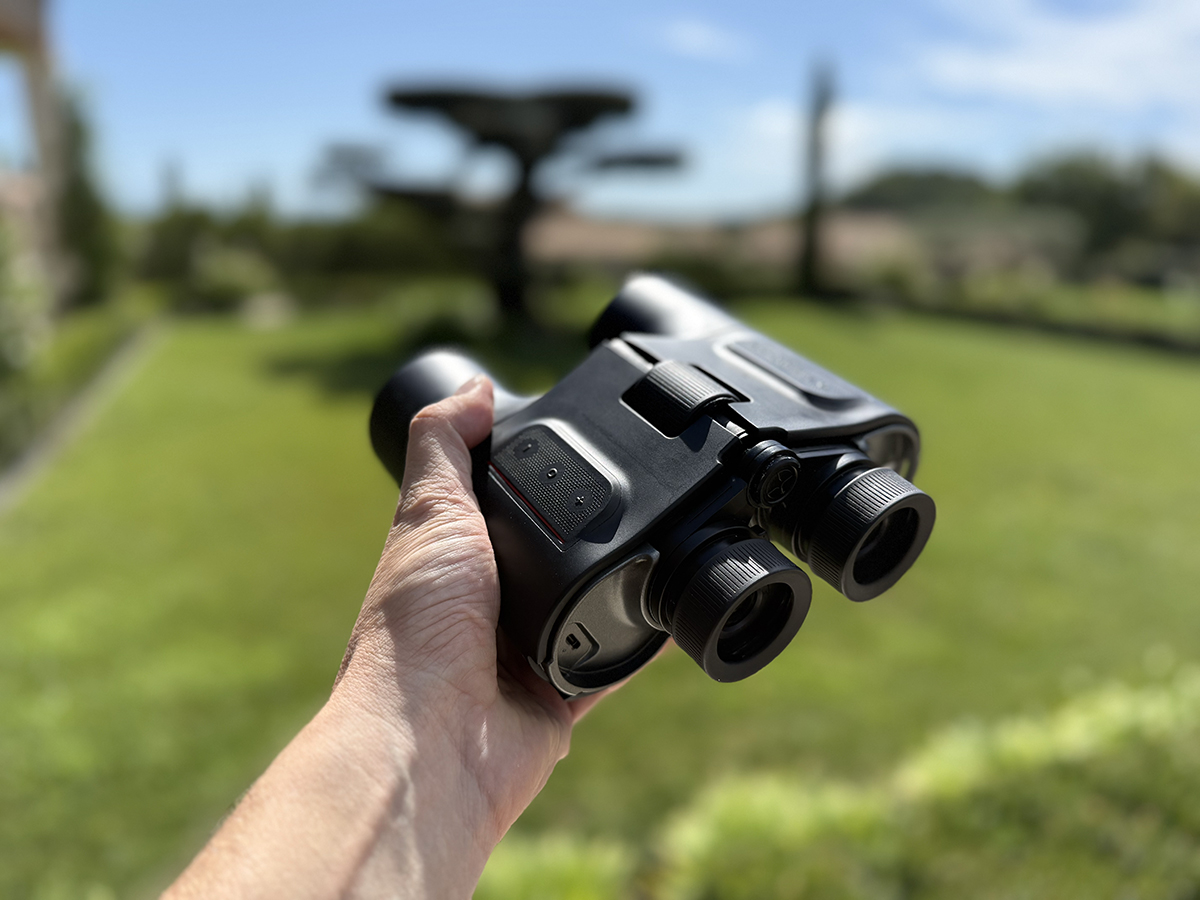
'Target Lock Sharing' allows a user to lock onto a specific object and, when the binoculars are handed to a companion, AR arrows guide them to the exact same spot.
The smart binoculars are designed for both day and night use, identifying terrestrial landmarks like hiking trails and ridges during the day and celestial objects like nebulae and galaxies at night.
The core of the device is a pair of 10x50 Porro-prism binoculars designed by Nikon, using multi-coated BAK4 glass for bright, sharp views.
The AR system is powered by a large database containing about 200,000 stars, 1,000 deep-sky objects and over a million terrestrial landmarks.
If the AR overlays drift due to magnetic interference, they can be recalibrated by dragging and dropping a constellation line back into place via the app.
At 1.2kg, our reviewer found these binoculars heavier than typical 10x50 models, and suggested using a tripod or a reclining chair for long sessions.
To keep the price point lower, the Envision lacks built-in image stabilisation, which our reviewer said was a wise but significant cost-saving measure.
As our review was conducted on prototype software, some features like planetary recognition were not yet functional, although support is promised for the final release.
The AR is described by our reviewer as "light-touch" and unobtrusive. It can be dimmed or completely disabled
Read our full Unistellar Envision smart binoculars review
Unistellar eVscope
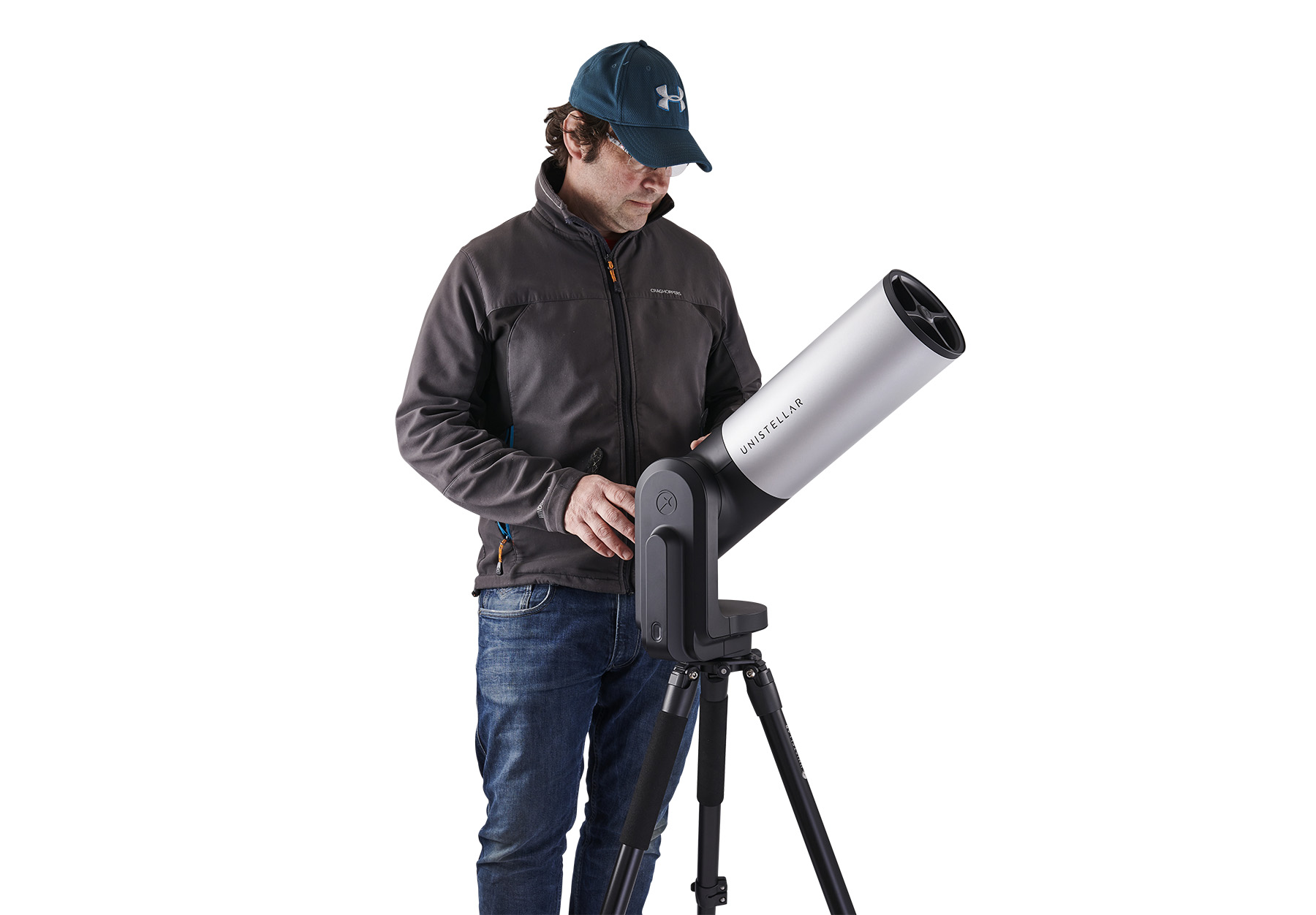
'Enhanced Vision' mode uses live stacking to build up a colour image in real-time, making objects that would normally be faint or invisible in a small telescope get more detailed over time.
Unlike some later 'eyepiece-free' models, this version features a high-resolution display inside a side-mounted eyepiece, allowing for a more traditional telescope experience.
The telescope uses plate-solving to identify its location and orientation by analysing the star field, which helps with set-up.
The system's digital processing is noted for its ability to cut through urban light pollution, revealing galaxies and nebulae that are typically lost to city skies.
eVscope was developed in association with the SETI Institute, allowing users to engage in citizen science by contributing data to professional science projects like detecting exoplanets or tracking asteroids.
The mount, computer and battery are all integrated into the telescope tube, making the entire 9kg system portable and easy to transport in its dedicated backpack.
At 30 arcminutes, the field of view is relatively tight; while it can just fit the Moon, larger deep-sky objects like the Andromeda Galaxy or the Pleiades will be partially cut off.
While much of the scope is automated, focusing is a manual process. A Bahtinov mask is hidden inside the front dust cap to assist in achieving sharp star images.
Read our full Unistellar eVscope review
SQUIRREL_13052210
Unistellar Odyssey Pro
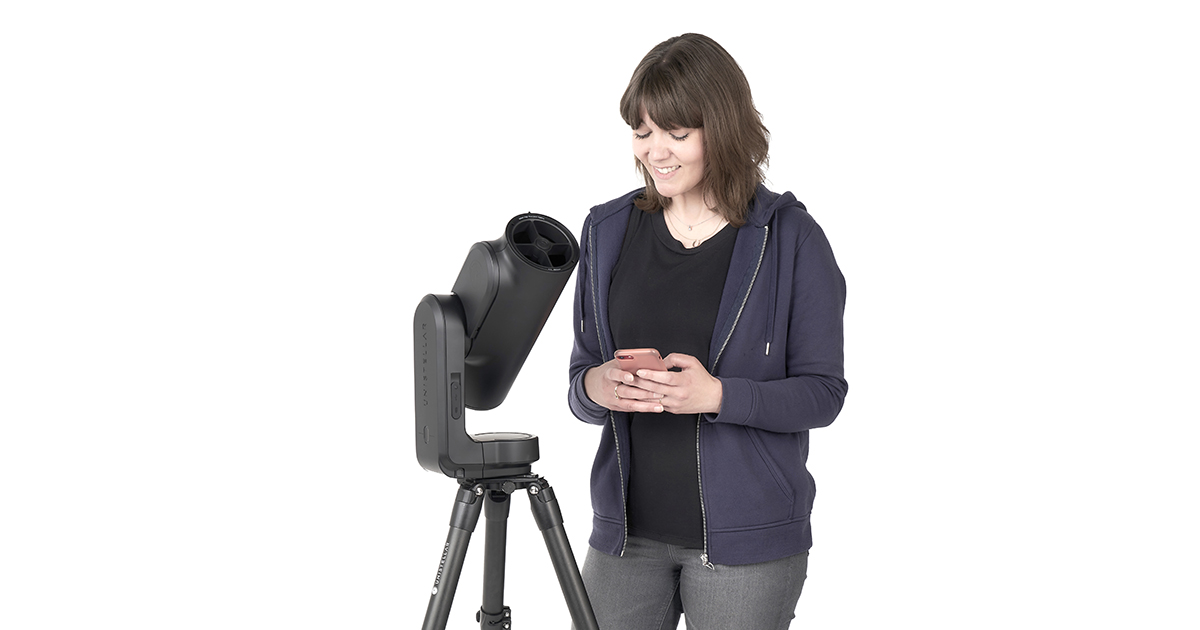
Unlike earlier Unistellar models that required manual focusing with a Bahtinov mask, the Odyssey Pro features an automatic focusing system.
It's promoted as an all-in-one system capable of imaging a range of targets, from faint deep-sky nebulae and galaxies to Solar System objects like the Moon and planets.
The telescope uses a sealed optical system that doesn't require collimation (mirror alignment), making it more accessible for beginners and those who want to set up and go.
It features an 85mm primary mirror with a 320mm focal length (f/3.9).
The model's 'Deep Dark Technology' automatically filters out light pollution and urban skyglow, allowing for clear imaging even from brightly lit city centres.
The Odyssey Pro uses plate-solving to orient itself and point to any object in the night sky within minutes of being turned on.
Users can participate in professional astronomical research by collecting data on events like exoplanet transits or asteroid occultations and uploading to the SETI Institute.
With a field of view of 33.6 x 45 arcminutes, it's well-suited for smaller targets, though larger objects like the Andromeda Galaxy may be too big to fit entirely in the frame.
Our reviewer found the high price reflects the high-end technology, but will put off some newcomers to smart telescopes
SQUIRREL_13052611
Unistellar eVscope eQuinox
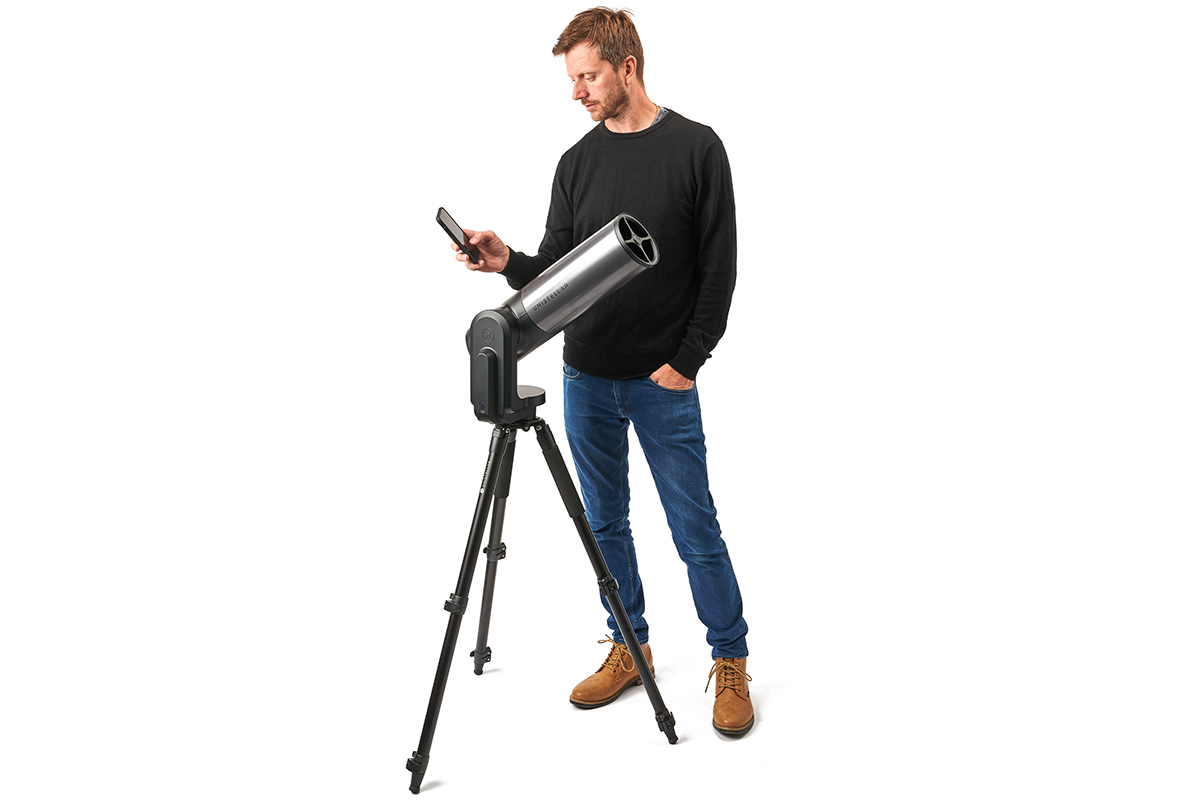
The eQuinox offers a longer runtime of 12 hours compared to the 10 hours of the original model.
It features a significantly larger internal storage capacity of 64GB (four times that of the original eVscope), which is useful for collecting large amounts of raw data.
Our reviewer noted its digital processing, which can counter urban skyglow and make it effective for deep-sky observing from brightly-lit city centres.
The system uses plate-solving to automatically identify its orientation and align itself with the stars.
A Bahtinov mask is built into the lens dust cap. Point it at a bright star and manually adjust a knob at the base of the tube to achieve sharp focus.
The telescope has a fixed field of view of 30 arcminutes, which our reviewer noted is too small to fit the entire Moon into a single frame.
Up to 10 devices can connect to the eQuinox’s Wi-Fi network simultaneously, making it good for group observing and astronomy outreach.
Users can participate in professional research projects with the SETI Institute, contributing data for events like asteroid occultations or exoplanet transits.
Read our full Unistellar eVscope eQuinox review
SQUIRREL_13052210
Unistellar eVscope 2
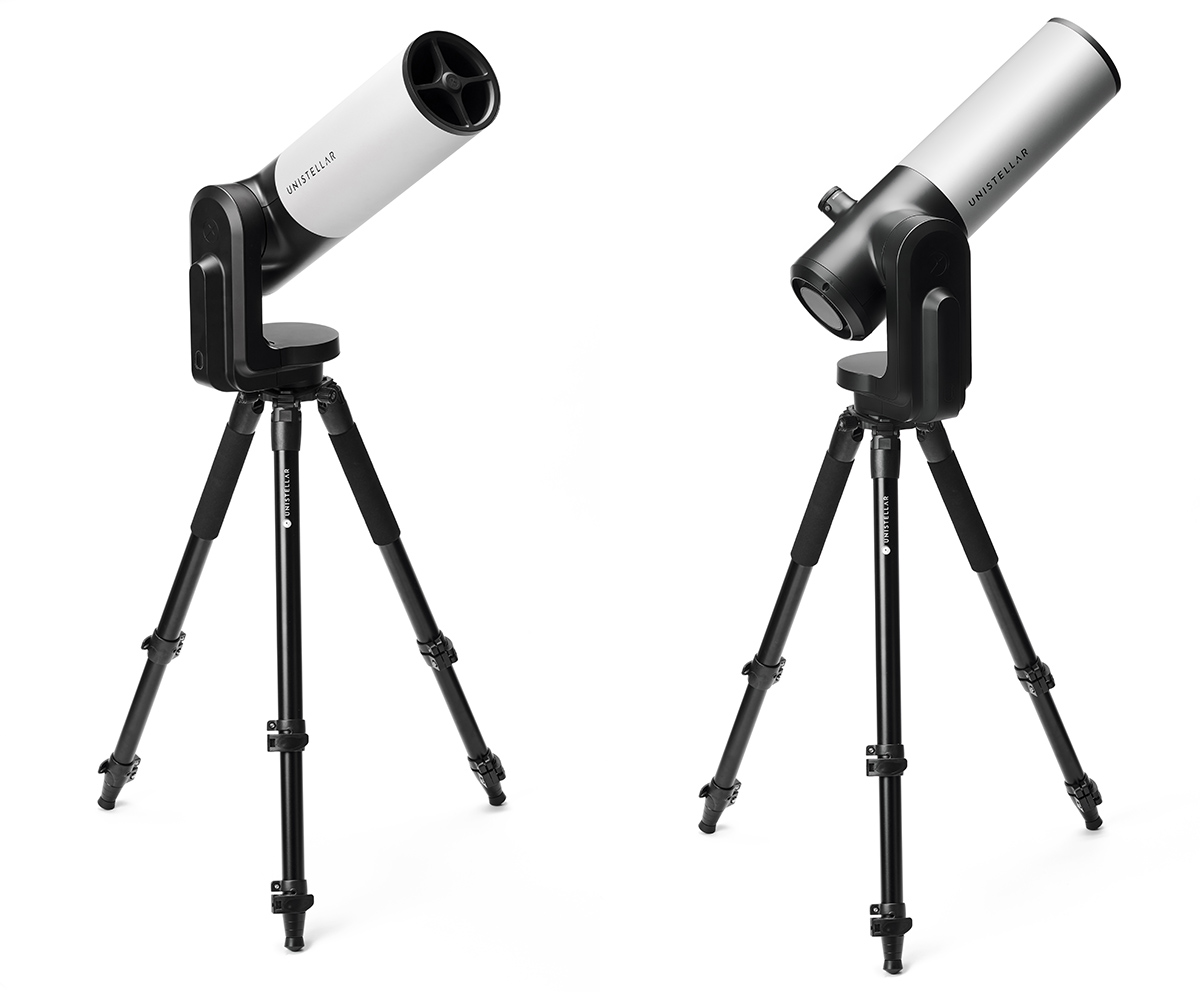
It utilises the Sony IMX347 sensor, which provides a higher resolution (7.7MP) and a larger field of view compared to previous versions.
The increased sensor size allows for a wider 34 arcminute field of view, making it better suited for framing larger deep-sky objects. For reference, this model can fit the whole of the Moon in one frame.
'Enhanced Vision' technology stacks multiple short exposures in real-time to reveal colours and details in galaxies and nebulae that are invisible to the naked eye.
Using plate-solving, the telescope can orient itself and be ready to find objects within minutes of being turned on.
The telescope is operated entirely via a smartphone or tablet app, which includes a database of over 5,000 objects.
Our reviewer said the digital processing is highly effective at filtering out light pollution, allowing for clear views of deep-sky objects from city environments.
Despite its high level of automation, our reviewer said focusing must still be tweaked manually using a Bahtinov mask (included in the dust cap) and a dial at the rear of the telescope.
Users can engage in citizen science by joining missions to track asteroids or observe exoplanet transits, sharing data directly with the SETI Institute.
The unit is designed to be highly portable; it is relatively lightweight and can be easily transported in a dedicated backpack, though it remains a premium-priced instrument.
Read our full Unistellar eVscope 2 telescope review
SQUIRREL_13075792
Unistellar eVscope eQuinox 2
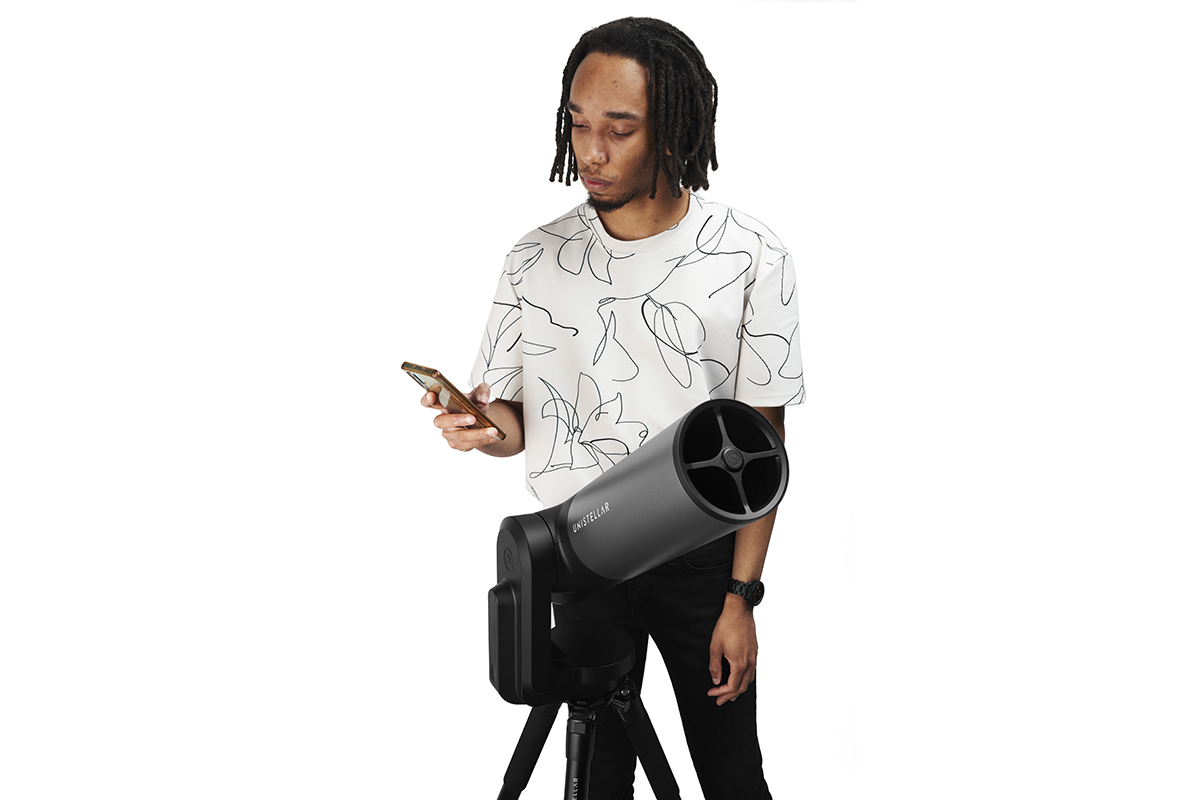
It features a Sony IMX347 image sensor, providing 6.2MP images with improved sensitivity and detail compared to its predecessor.
A significant improvement is the 34 x 47 arcminute field of view, which now allows larger objects like the Andromeda Galaxy, the Pleiades and the Moon to fit in the frame.
'Planet mode' introduces a mode for capturing Solar System planets using 'lucky imaging' to combat atmospheric turbulence.
The telescope can automatically align itself in seconds by plate-solving the stars it sees against an internal database.
'Enhanced vision' uses real-time image stacking to gradually reveal colour and dustier details in nebulae and galaxies that would otherwise be invisible from light-polluted areas.
The telescope is operated via the Unistellar app, which features a database of over 5,000 celestial ranked according to the user's location.
While highly automated, our reviewer said users should still expect to use a bright star and the Bahtinov mask (hidden in the lens cap) to manually tweak the focus.
Our reviewer said the eVscope eQuinox 2's images can be a little "soft", particularly when compared to traditional astrophotography.
The eQuinox 2 allows users to contribute to professional research, such as collecting data on comets or asteroids for organisations like the SETI Institute.
Read our full Unistellar eVscope eQuinox 2 review
SQUIRREL_13074523
Vaonis Hestia
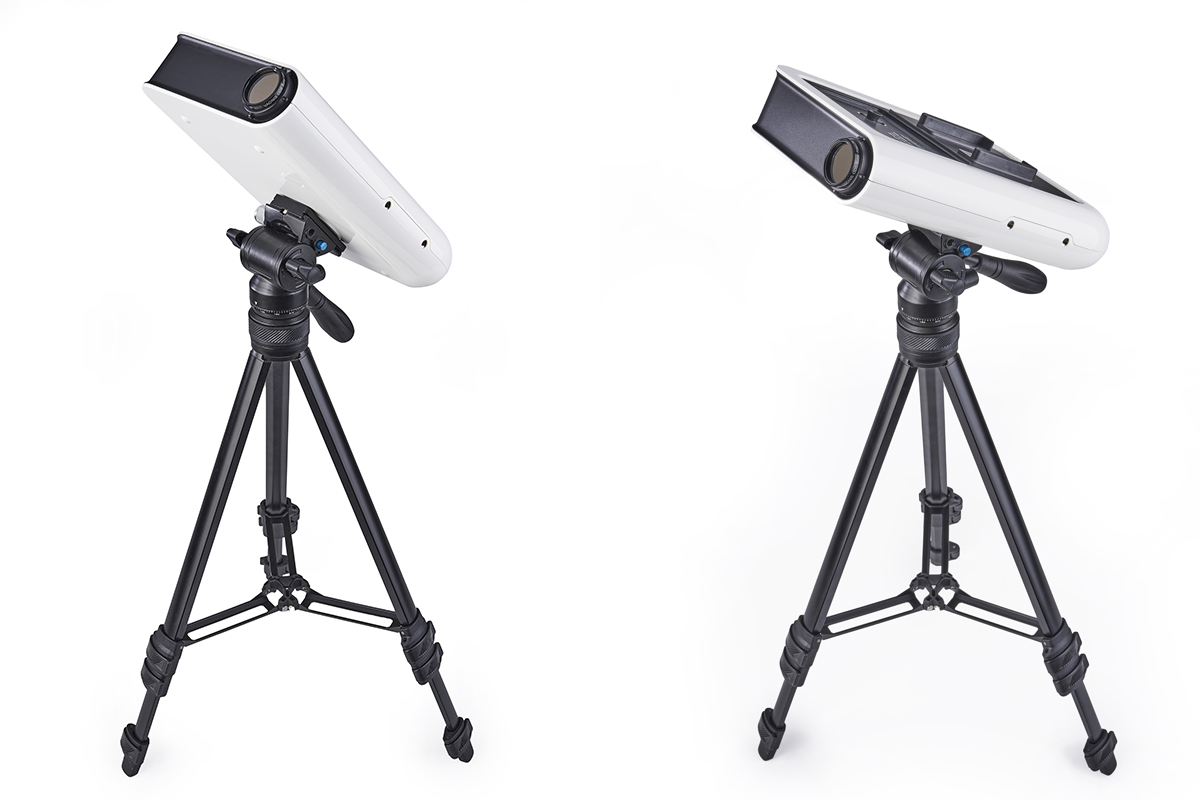
It's about the size of a "lunchbox or a weighty novel", designed to be travel-friendly and taken anywhere.
It uses a method called 'afocal photography', where the smartphone camera is lined up with the Hestia's lens, using two magnetic brackets to cradle and align the phone.
The Hestia has no internal electronics, motors or automatic Go-To functions; all movements and tracking must be done manually by the user.
Its dedicated Gravity app uses the phone’s GPS and plate-solving to provide on-screen instructions that help the user manually locate celestial objects.
Despite the lack of motorised tracking, the app includes a deep-sky mode that can stack multiple short exposures (around 30 shots in a minute) to reveal faint details in deep-sky objects.
Our reviewer said the Hestia is well-suited for imaging the Sun (using the provided solar filter) and the Moon, as these bright targets do not require long, tracked exposures.
Our reviewer also said sharp focus can be "hit and miss", requiring a combination of a manual focus ring on the device and a 'focus assistant wizard' that helps you find the best sharpness.
Vaonis provides a tripod in the 'Hestia Ultimate' release, but the device features a standard 3/8-inch thread, allowing it to be used with other tripods.
Our reviewer said that while its images aren't super-sharp compared to advanced setups, they are rewarding for beginners.
Read our full Vaonis Hestia review
SQUIRREL_13614788
Vaonis Vespera Observation Station
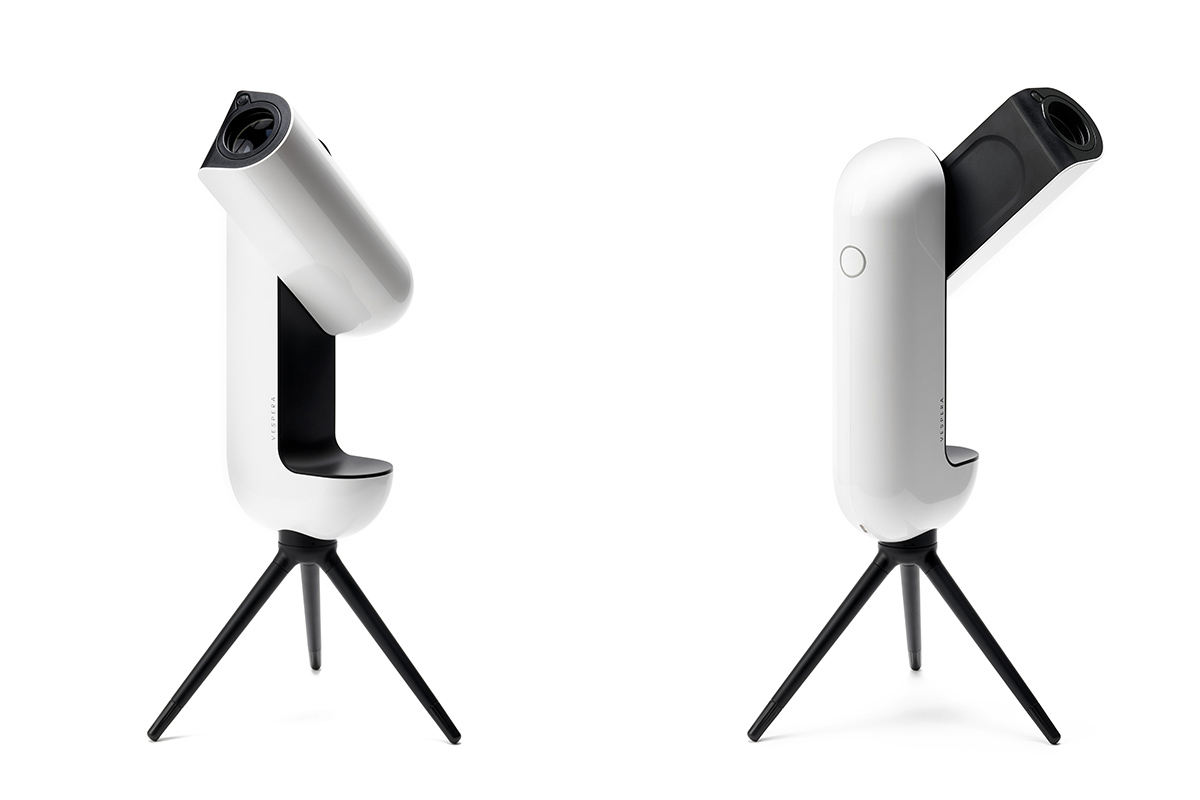
It uses a 50mm f/4 lens system that includes extra-low dispersion (ED) glass to produce sharp images with minimal colour fringing.
The Vespera uses 'Star Field recognition' (plate-solving) to align itself automatically.
All control is handled via the Singularity app, which provides a dashboard to manage observations and suggests targets based on the user's location.
The system uses live stacking to build up images in real-time.
There's no eyepiece – the telescope is designed for digital viewing and photography via a smartphone or tablet.
Weighing 5kg and standing 40cm tall, it's portable.
Our reviewer noted that while it's excellent for wide-field deep-sky objects, the short focal length and small aperture mean it is not ideal for high-detail planetary or lunar imaging.
The device includes 10GB of internal storage and allows users to save files in TIFF or FITS formats for those who wish to process their images further.
Read our full Vaonis Vespera Observation Station review
SQUIRREL_13609045
Vaonis Vespera II
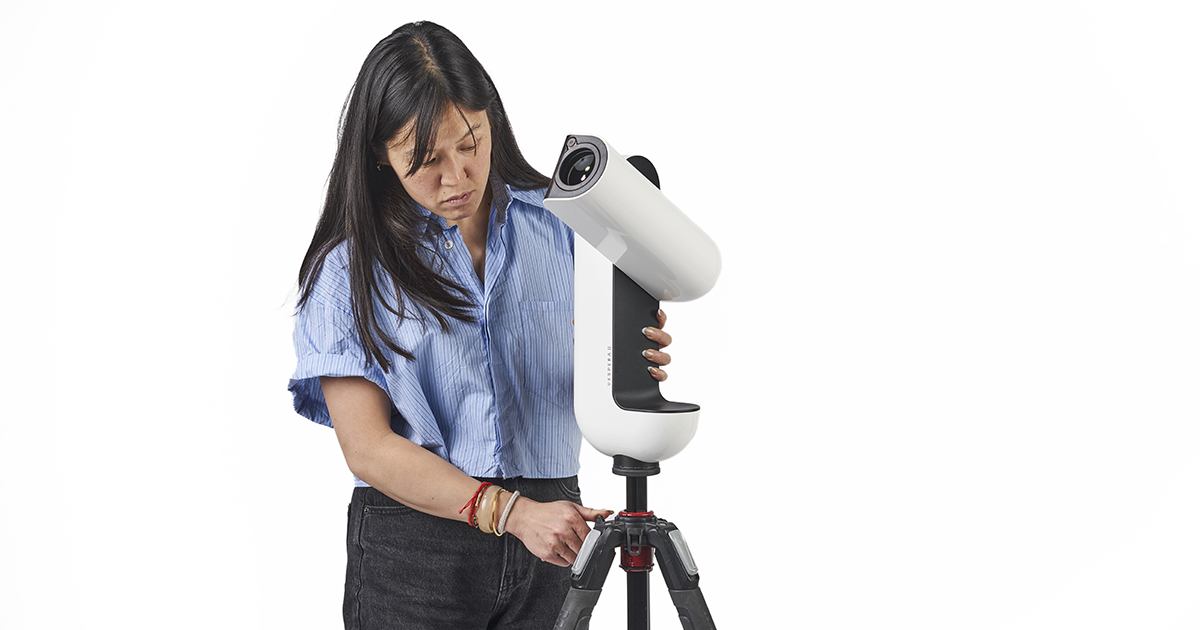
The combination of the 50mm aperture and built-in camera provides a wide field of view (2.5° x 1.4°), making it suitable for capturing large deep-sky objects and the Moon.
It uses a four-element lens system, including extra-low dispersion FPL52 glass, to provide good colour and field correction.
Vespera II has a focal length of 250mm, an increase over the 200mm focal length of the Vespera I.
The built-in computer stacks images on the fly, allowing the user to watch the image improve on their smartphone as more exposures are added.
Once turned on, the unit automatically takes a photograph of the sky to determine where it's pointing and performs its own autofocus.
Our reviewer noted that the Vespera II uses a USB-C port for power, and unlike some other models, the Solo Pack does not include a tripod as standard.
The telescope generates its own wireless network with a 10-metre range, allowing it, for example, to be operated from indoors.
Users can save images as 8-bit jpgs at any time, or choose to save individual sub-frames as 16-bit TIFF or FITS files for manual processing.
An additional feature allows the telescope to automatically produce a stacked mosaic to effectively increase the field of view.
Read our full Vaonis Vespera II review
SQUIRREL_13782412
Vaonis Vespera Pro
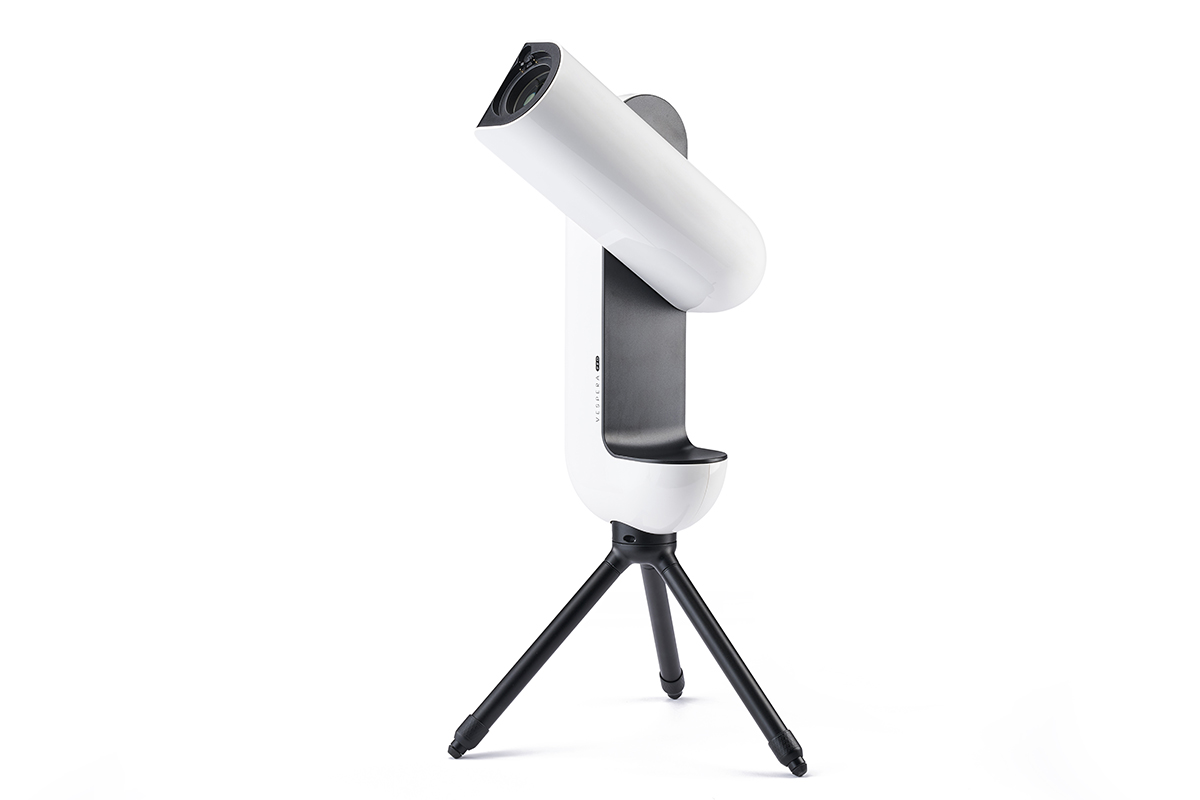
With a pixel size of 2µm, the telescope has a sampling rate of 1.6 arcseconds per pixel, which our reviewer said was "perfect for average seeing conditions."
The unit includes a built-in dew sensor and heater that monitors conditions and keeps optics clear during long imaging sessions.
It boasts 225GB of internal storage, a massive jump from the 25GB provided in the Vespera II, allowing for more high-resolution images and raw files to be saved.
The Vespera Pro's battery capacity offers up to 11 hours of operation on a single charge.
The Singularity app includes a Plan My Night' scheduling function that lets users organise their imaging session in advance, including target visibility and recommended observation times.
Our reviewer described the "noise-free" quality of the captured images, noting they require little post-processing.
Using an optional solar filter and a dedicated Solar Mode in the app, the telescope can find and centre the Sun to capture sunspot details safely.
Our reviewer said one drawback is that the app only allows solar and lunar images to be saved as jpgs, and that they'd like to see a video imaging option included
Read our full Vaonis Vespera Pro review
SQUIRREL_13609045
Stellina Observation Station
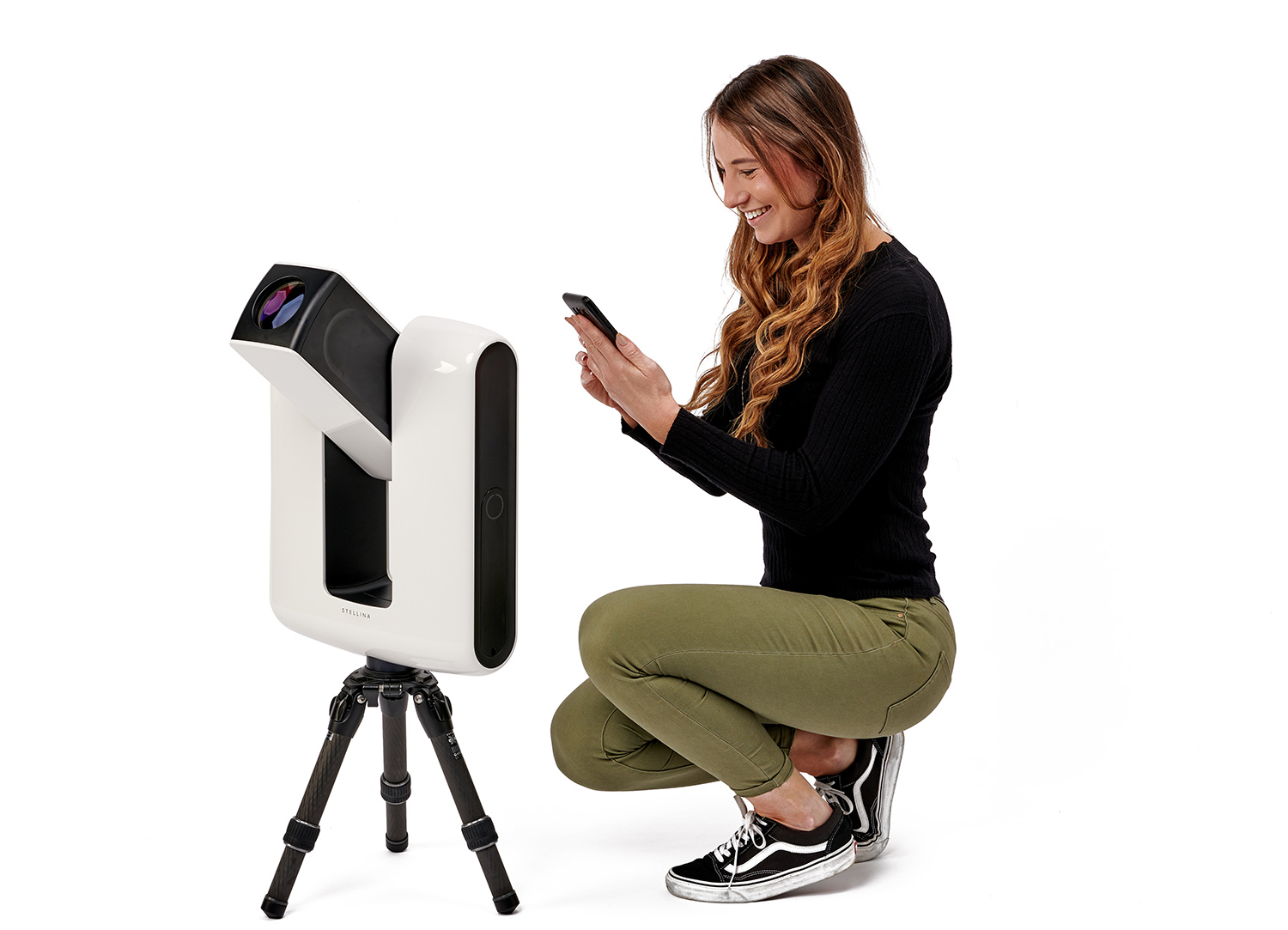
Stellina is a fully automatic system that takes images of deep-sky objects without needing guide scopes, equatorial mounts or external cameras.
The telescope features an 80mm ED doublet refractor with a 400mm focal length (f/5) and includes an integrated dew heater to prevent misting.
It's equipped with a 6.4MP Sony IMX178 sensor and built-in 'city light suppression' filter to help reduce the effects of light pollution.
Because the mount is an altazimuth design, it uses an internal de-rotator to compensate for field rotation during long-exposure live stacking.
It's powered on via a 10,000 mAh battery pack and uses GPS to set the time and location, then it searches the sky to calibrate itself and performs an autofocus.
Images appear on a connected smartphone or tablet through live stacking, where the Stellina's onboard computer builds up the image over time and rejects poor frames.
Up to 20 devices can connect to the Stellina's Wi-Fi network simultaneously, making it useful for outreach or star parties.
The review notes an operating range of 0–40°C, cautioning that it may not be suitable for use in regions where temperatures are regularly below freezing.
Jpgs are saved to the control device, while raw images are automatically stored on external flash drives for manual processing.
Read our full Stellina Observation Station review
Dwarf Mini
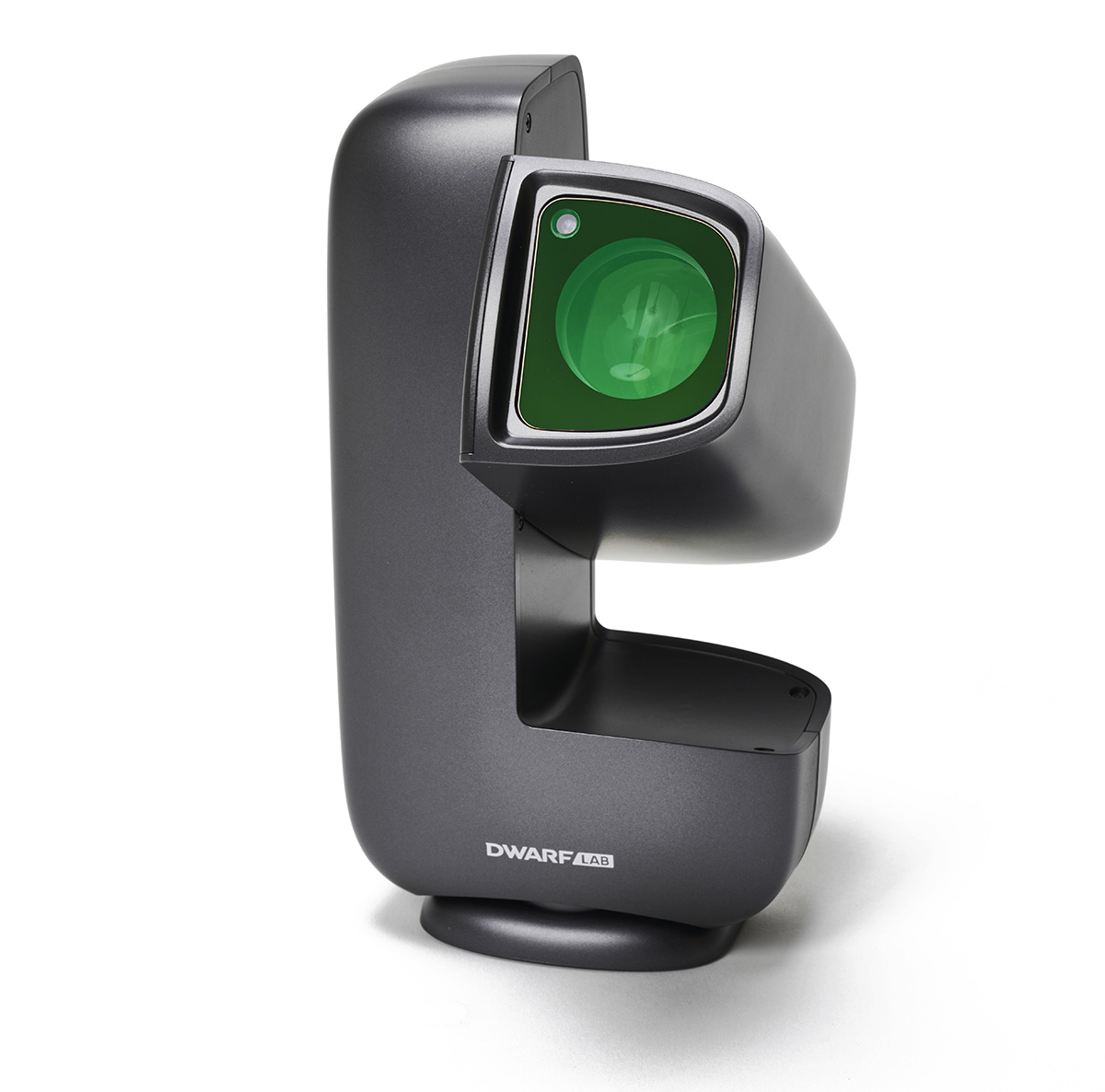
Aimed at budding astrophotographers, it features a dual-lens system, combining a telephoto lens with a Sony IMX662 sensor and a widefield lens using an OmniVision OS02K10 sensor.
It includes built-in dark frame filters, an astro filter and a dual-band filter to reduce light pollution by allowing hydrogen-alpha, hydrogen-beta and oxygen-III light through.
Operated via the Android and iOS DwarfLab app, the Mini connects via Wi-Fi and offers modes for daylight, Solar System, deep-sky and star trails.
The app features an extensive Sky Atlas, SkyFinder, manual exposure settings up to 90 seconds and adjustable gain.
Cloud processing options include Stellar Studio for manual or automated processing and ‘mega stacking’ to combine multiple sessions into a single high-signal image.
Powered by a 7000mAh internal battery lasting four hours, the Mini includes a USB-C cable and a magnetic neutral-density solar filter.
Its base allows 360° rotation and a 225° rotatable lens barrel, mounting easily on flat surfaces or photographic tripods to deliver impressive, stress-free astrophotography results.
Read our full Dwarf Mini review
SQUIRREL_13994446
Dwarflab Dwarf II
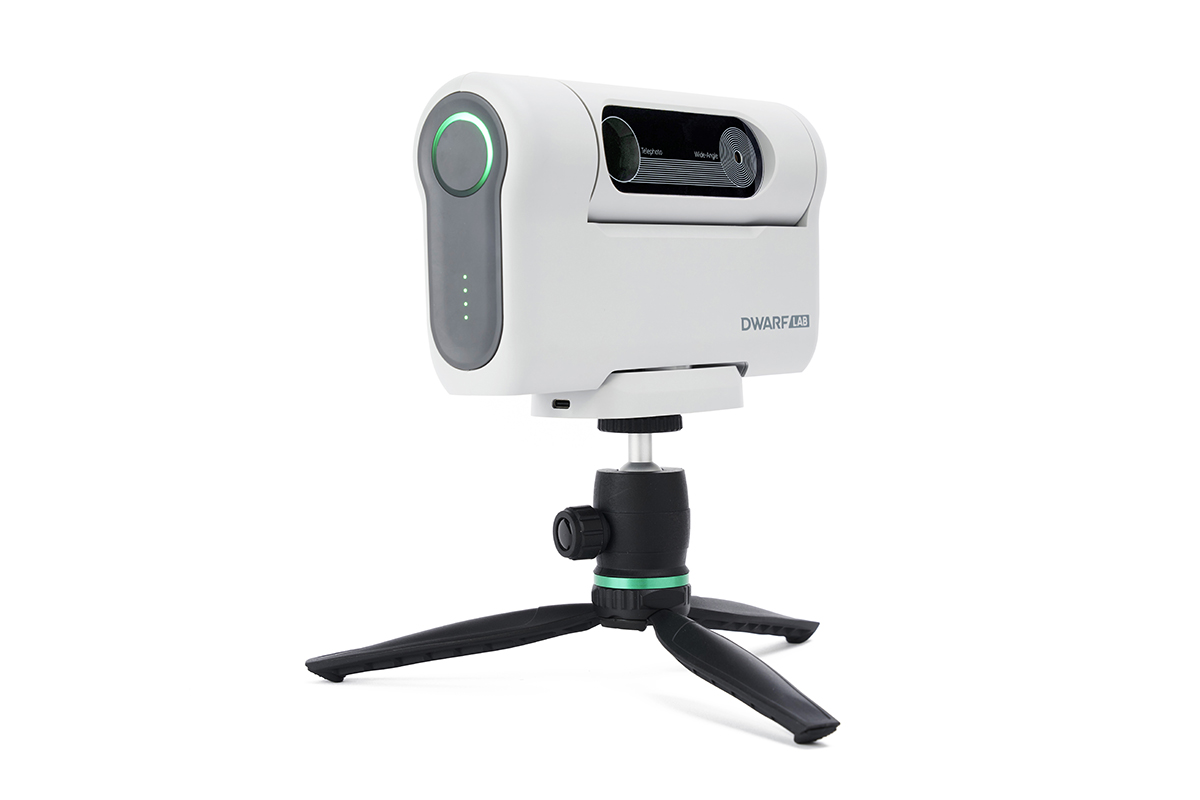
The device features both a wide-angle lens (50° field of view) for alignment and a telephoto lens (equivalent to 675mm, f/4.2) for capturing 8MP images.
During set-up, the telescope takes images of different parts of the sky to perform a calibration so it can accurately find and track celestial targets.
Our reviewer noted that, as it's an altazimuth system, the image frame slowly rotates during long stacking sessions, which is visible in unprocessed images.
Our reviewer also said the built-in object list was noted as "somewhat limited" at the time of review, but this may have been updated since the review was written. Also, users have the option to manually input coordinates for their favourite objects.
The app allows users to set the image format to FITS or TIFF and choose to capture up to 999 individual exposures.
With the Deluxe package's magnetic filter holder and neutral-density filters, the telescope can be used to image sunspots and the Moon.
The Dwarf II is powered by a rechargeable 5600 mAh battery that lasts for approximately three hours and can be charged via USB-C or a power bank.
It provides its own Wi-Fi network for app control and uses Bluetooth to help transfer images from the telescope to a smartphone.
The unit comes with a small table-top tripod but features a 1/4-inch thread, allowing it to be mounted on a standard photographic tripod for extra height.
Read our full Dwarf II review
Dwarflab Dwarf 3
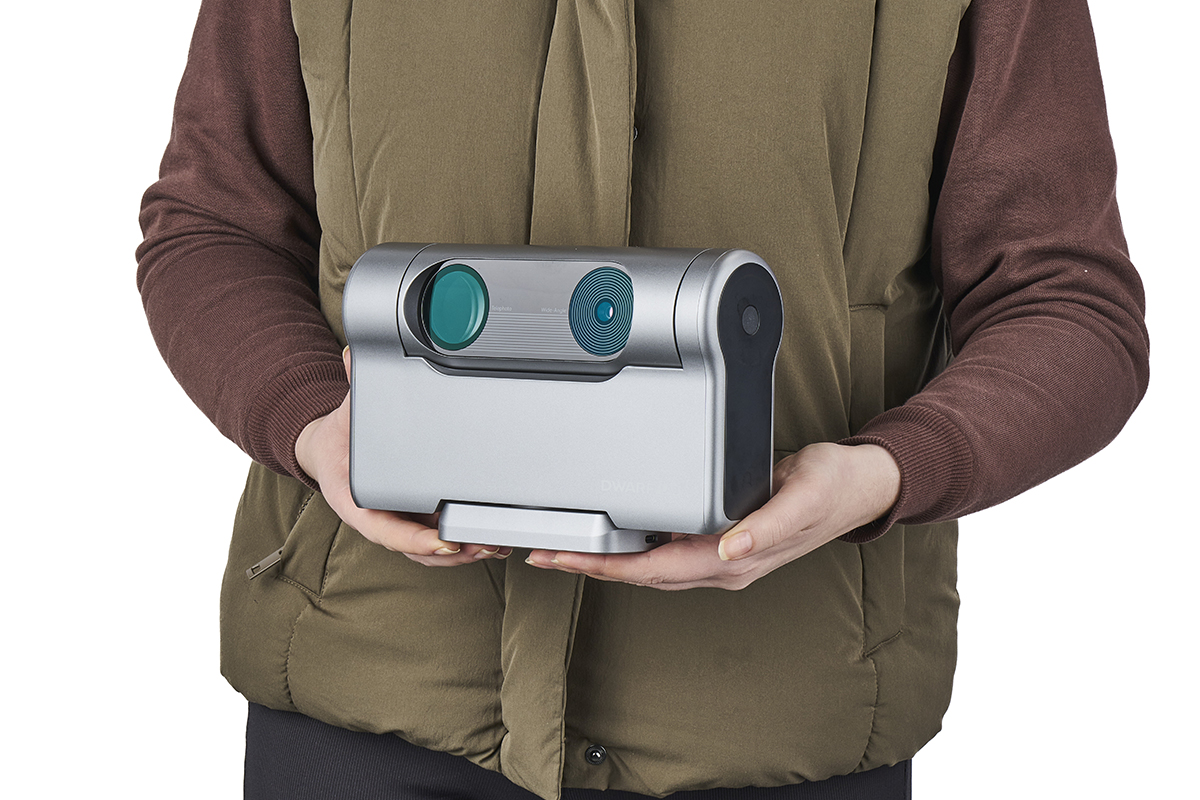
It includes built-in filters that can be switched via the app, specifically a visual filter for daytime/lunar imaging, an astro filter and a dual-band filter for nebulae.
A new 'equatorial mode' reduces field rotation and allows for longer exposures up to 60 seconds.
The telescope uses the Sony IMX678 Starvis 2 sensor, which our reviewer said provides improved low-noise performance and better dynamic range.
For short exposures, the device will automatically plate-solve to perform accurate Go-To manoeuvres to selected targets.
It features 128GB of internal storage and a 10,000mAH battery, which lasted over four hours in near-zero temperatures during testing.
The DwarfLab app manages everything from pairing via Wi-Fi to guiding the user through the EQ mode setup process.
Dedicated modes for the Sun and Moon, combined with included magnetic solar filters, allow for capture of sunspots and lunar crater details.
The app includes an AI feature to reduce image noise during live stacking, which our reviewer tested during lunar and deep-sky imaging sessions.
Unlike the previous model, the Dwarf 3 does not include a tripod as standard, though it features a standard 1/4-inch screw for attachment to any photography tripod.
Read our full Dwarflab Dwarf 3 review
SQUIRREL_13782415
Do you own a smart telescope? Share your best images with us and they could end up appearing in a future issue of BBC Sky at Night Magazine

