They’ve captivated us with their feats of daring in orbit and on the Moon.
These space travellers faced the dangers of space travel with an extra helping of courage, determination and consideration.
From Yuri Gagarin’s history-making first ascent into orbit, to the Space Shuttle’s Hubble Space Telescope repair missions and constructing a space station the size of a football field in zero gravity, human explorers have clocked up countless major accomplishments in space.
More amazing astronauts
But who among them is the greatest? Even to begin selecting that list is no easy task.
We picked astronauts whose achievements were extraordinary, or whose bravery helped saved themselves and their colleagues.
So here are those remarkable of 20 spacefarers, some of whom you may never have heard of (and a few you probably have).
Valentina Tereshkova
Vostok 6 (1963)
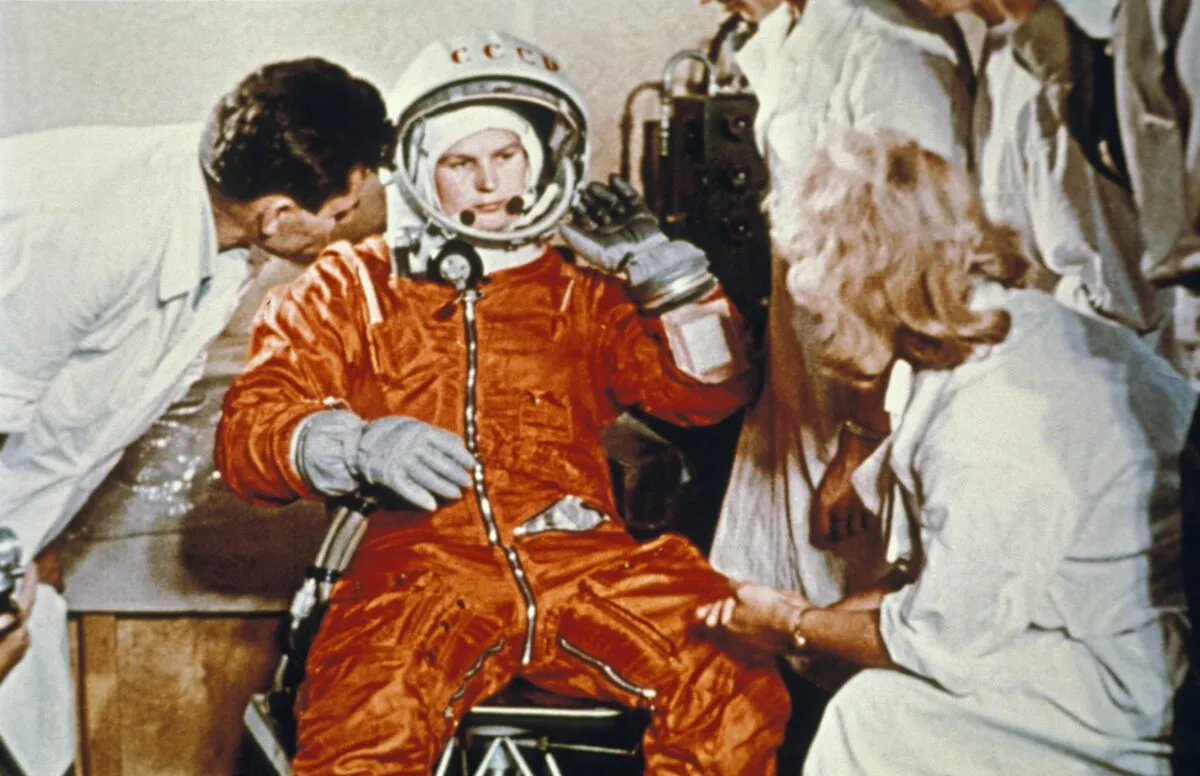
The formidable Soviet cosmonaut is one of the greatest spaceflight pioneers of all, having been the first woman ever to go into space.
Born in 1937 to working class parents, Tereshkova left school at 16 and took up skydiving while working factory jobs – a hobby that led to her becoming, in January 1963, one of the first five women selected for cosmonaut training, from a longlist of over 400 candidates.
Training alongside the Soviet air force, she began studying aviation engineering and was selected as pilot of the Vostok 6 mission, which launched on 16 June 1963. Aged just 26 at the time, she remains the youngest woman ever to have flown into space and the only woman to undertake a solo mission.
The Vostok 6 mission lasted for 2 days 22 hours and 50 minutes – which meant that Tereshkova had, in one fell swoop, racked up more hours’ flight time than all US astronauts up to that point combined. Post-Vostok 6, Tereshkova became a national hero, was awarded the Order of Lenin and toured extensively, including a visit to Queen Elizabeth II in 1964.
She wanted to return to space but was deemed too important to risk her life again, and she instead went on to gain a doctorate in aeronautical engineering and become a Major General in the Soviet air force.
Kathryn D Sullivan
STS-41G (1984), STS-31 (1990) and STS-45 (1992)
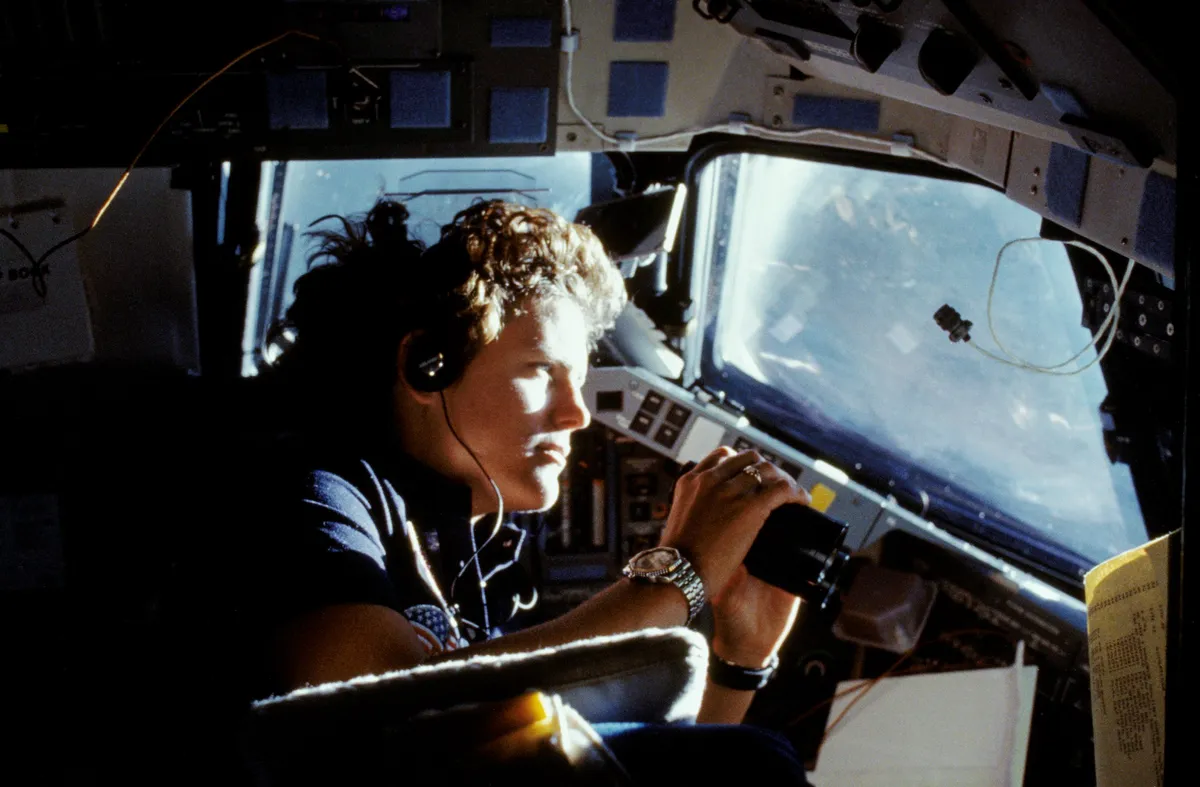
Kathryn D Sullivan wasn’t the first US woman to go into space – that was Sally Ride onboard Shuttle mission STS-7 in 1983. But she’s racked up numerous other achievements that earn her a place on our list, including being the first female US astronaut to undertake a spacewalk.
Born 1951 in New Jersey but raised in California, the young Sullivan gained a BSc in Earth Sciences and a master’s degree in Geology, before applying to become a Space Shuttle astronaut in 1979.
Training alongside Ride, she officially qualified in August 1979 and worked in support roles on several Shuttle missions before eventually being selected for STS-41G a few years later.
Her historic EVA was completed on that mission, while on her second flight, 1990’s STS-31, she was involved in the launch of the Hubble Space Telescope. In total, she racked up 532 hours of spaceflight before leaving NASA in 1993.
Since then she has worked as an oceanographer for the US military and the NOAA – as well as becoming, at the age of 68, the first woman to dive to the bottom of the Mariana Trench.
Anousheh Ansari

Soyuz TMA-9 to the ISS (2006)
Young space fan Anousheh Ansari spoke no English when she emigrated to the United States from Iran in 1984 at the age of 16. A decade later she was in charge of a successful business, Telecom Technologies.
She teamed up with Space Adventures co-founder Peter Diamandis, and organised the $10 million Ansari X Prize to reward the first private suborbital space flight. Burt Rutan’s SpaceShipOne won the competition, sparking a revolution in commercial space travel and becoming the basis for Virgin Galactic’s spacecraft.
In September 2006, Ansari achieved her most cherished ambition, spending eight days on the International Space Station. She performed a series of experiments for the European Space Agency.
Buzz Aldrin

Gemini 12 (1966), Apollo 11 (1969)
Early spacewalkers struggled and floundered outside their capsules, to the point of dangerous exhaustion. Aldrin solved the problem, inventing one of the most important tools in the history of spaceflight: hand to hold on to on the outside of spacecraft.
He was also a mathematical genius with a deep appreciation for orbital mechanics and the Newtonian forces involved in rocket travel, particularly when two ships have to find each other in the immensity of space. His nickname at NASA was ‘Dr Rendezvous’.
Although the immediate aftermath of Apollo 11 left him depressed, he has been the most familiar representative of that unique and small group of men who walked on the Moon.
Neil Armstrong
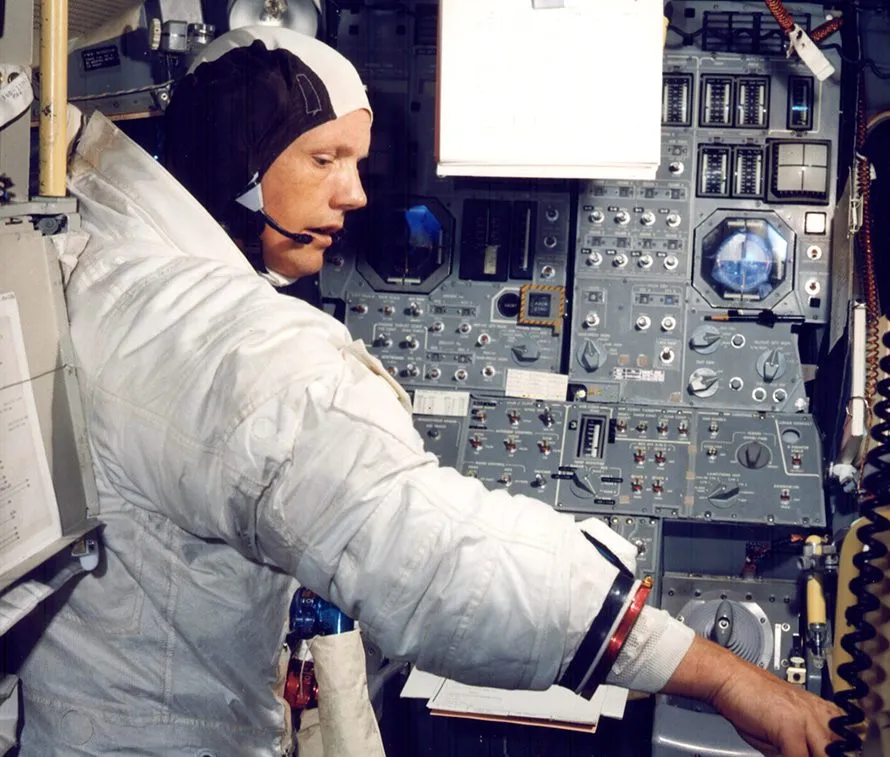
Gemini 8 (1966), Apollo 11 (1969)
If astronauts are expected to be cool under pressure, then Armstrong had that quality in spades.
Shortly after he and his co-pilot Dave Scott had docked Gemini 8 to its unmanned Agena target vehicle, their capsule span out of control because of a stuck thruster. They undocked, and the spinning worsened until both men nearly lost consciousness. It was Armstrong who worked out what to do, and got the wayward capsule back under control.
A few years later, while training on a jet-powered lunar lander simulator, he ejected just seconds before the berserk machine crashed and exploded. An hour later he was back in his office as though nothing had happened.
It’s little wonder NASA chose him for the first lunar landing. He was shy and unexpressive towards his colleagues, but when piloting a space vehicle, he was second to none.
Frank Borman

Gemini 7 (1965), Apollo 8 (1968)
The fatal Apollo 1 fire of January 1967 nearly halted the lunar landing project. Many people thought that the Moon was not worth risking any more astronauts’ lives.
Borman spoke eloquently in Congress and convinced America not to give up. The Apollo 8 circumlunar mission uplifted the entire world at the end of an otherwise troubled year of war, racial violence and political unrest.
Michael Foale

STS-45 (1992), STS-56 (1993), STS-63 (1995), STS-84 to Mir (1997), STS-103 to Hubble (1999), Soyuz TMA-3 to ISS (2003)
In the 1990s, NASA astronauts began visiting the old Soviet-era Mir space station.
The two cultures, Russian and American, did not always get along. But British-born Foale helped save Mir during a potentially catastrophic fire and a cargo ship crash.
His Russian colleagues greatly appreciated Foale’s defence of them during subsequent enquiries. His conduct paved the way for collaboration on the ISS.
Eileen Collins
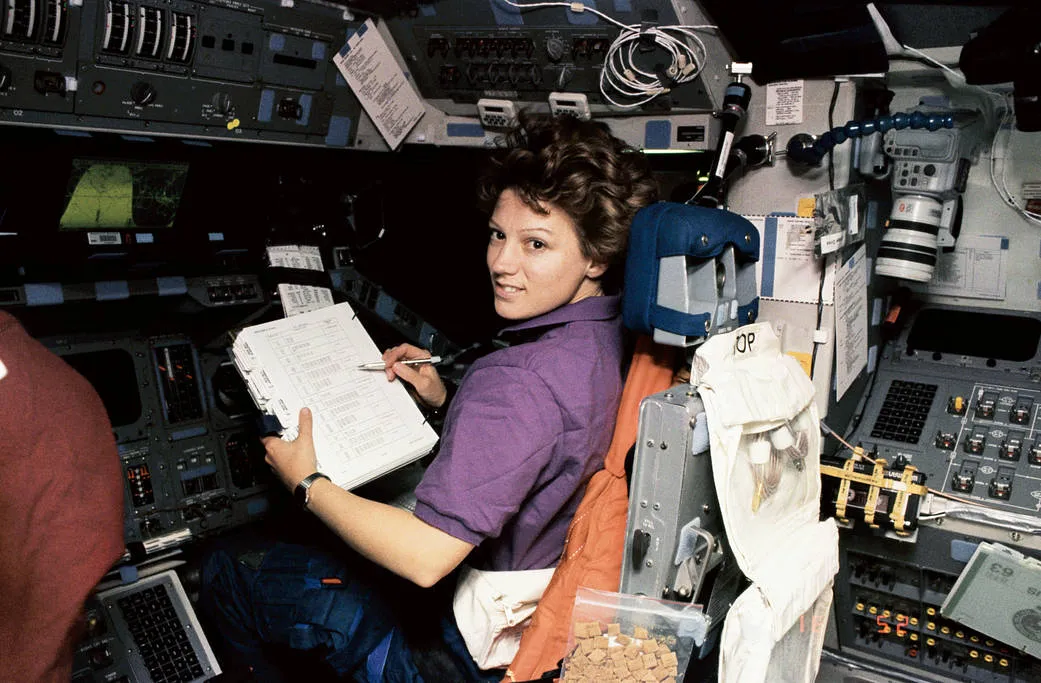
STS-63 (1995), STS-84 (1997), STS-93 (1999) and STS-114 (2005)
Eileen Collins was the 24th female astronaut to fly onboard the Space Shuttle – but the first to be selected as a Shuttle pilot (for 1995’s STS-63 mission) and the first to be made Shuttle commander (STS-93, 1999).
Born in 1956, Collins graduated from Syracuse University with a degree in mathematics and joined the USAF, where she trained as a pilot and became only the second woman to qualify as a test pilot.
After joining NASA in 1990 she flew four Shuttle missions, one of which (STS-93) was responsible for the deployment of the Chandra X-Ray Observatory while her final mission, STS-114, marked NASA’s “return to flight” after the 2003 Columbia disaster.
Yet Collins very nearly never flew at all, due to a slight weakness in her left eye and a suspected heart murmur. She is proof positive that where there is a will, there is usually a way!
Yuri Gagarin
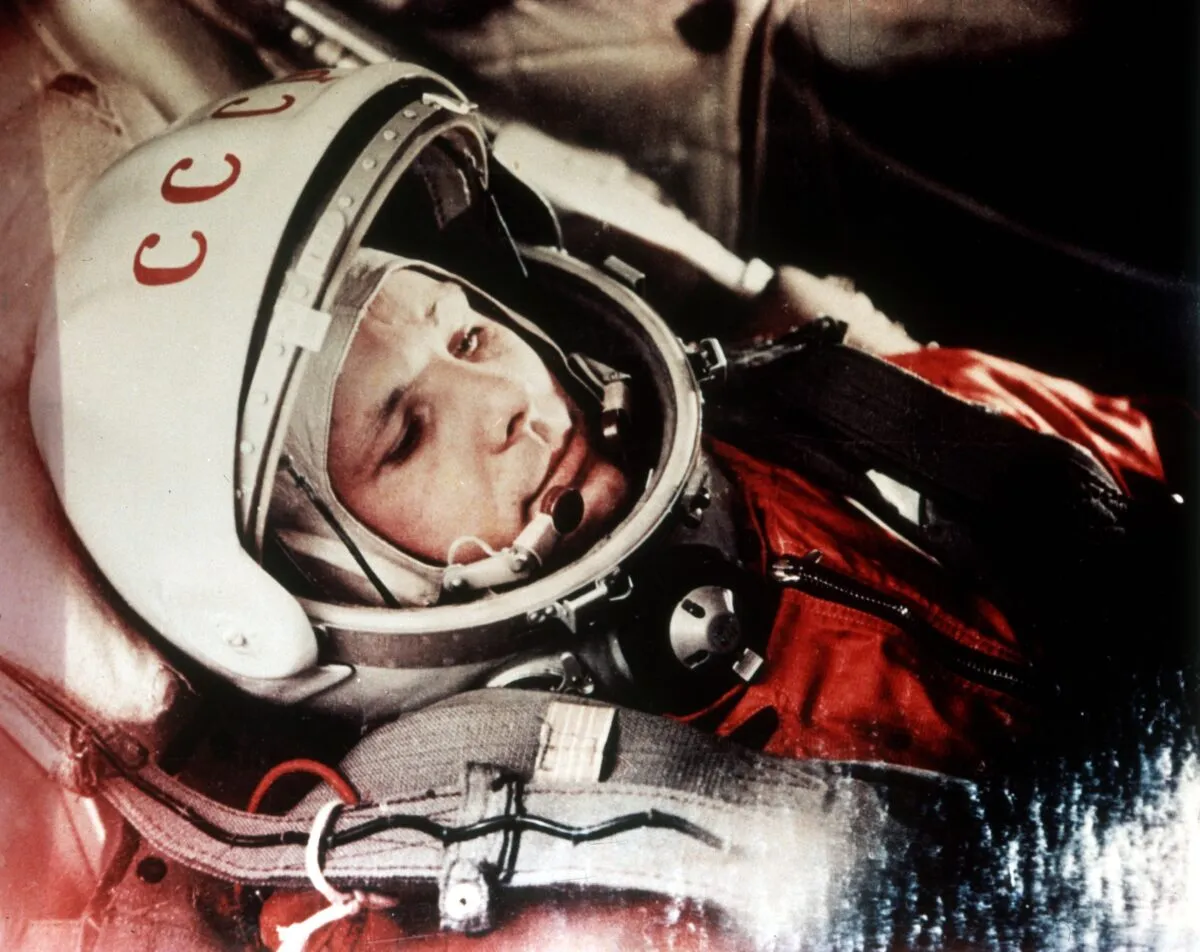
Vostok-1 (1961)
Yuri Gagarin was the first person to journey into the unknown of space.
His historic flight, on April 12th 1961 was a short one, lasting just 108 minutes and spanning just a single orbit, but if we could go back in time and choose who should represent all of humankind as the first ever space traveller, then Yuri Gagarin would be a good choice.
Charming, diplomatic, brave and boyishly good-looking, he became a global superstar on his return to Earth, and gave the Soviet Union its proudest moment of hope.
Sergei Krikalev

Soyuz TM-7 to Mir (1988), Soyuz TM-12 to Mir (1991), STS-60 (1994), STS-88 to ISS (1998), Expedition 1 to ISS (2000), Expedition 11 to ISS (2005)
On his second visit to space, Krikalev found himself in an unusual situation, nursing the ailing Mir station during 1991 as beneath him, back on Earth, the Soviet Union collapsed with the end of communism.
It was an often solitary experience because resupply missions were disrupted during the chaos. He is a veteran of three International Space Station missions, and has accumulated more time in space (803 days) than anyone else.
Peggy Whitson
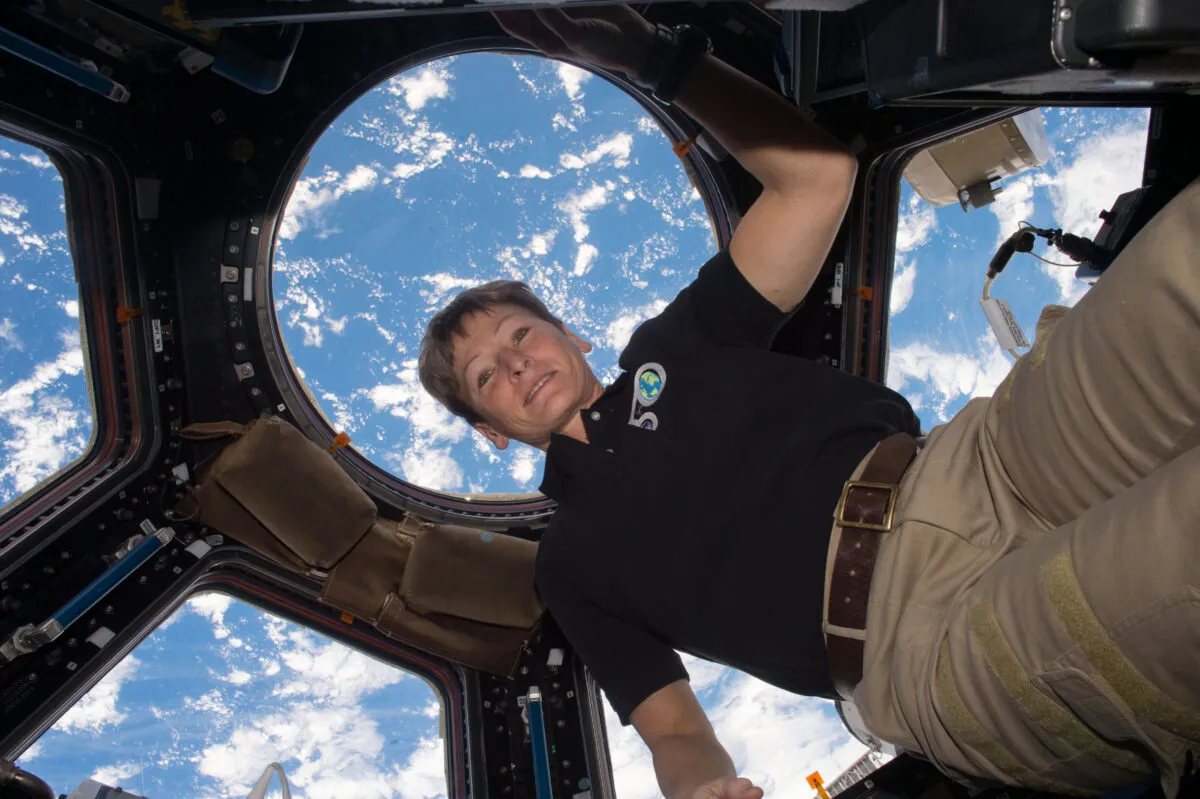
STS-111/113 (2002), Soyuz TMA-11 (20077), Soyuz MS-03/04 (2016), Axiom 2 (2023), Axiom 4 (2025)
Former NASA Chief Astronaut Peggy Whitson holds both the female and US records for most days’ spaceflight, having spent 695 days off-Earth – that’s nearly two years of her life!
In fact, Whitson’s entire career has been characterised by her breaking new ground and setting new records. Born in rural Iowa in 1960, she graduated in biology and chemistry and initially worked as a research biochemist – indeed, she first went to NASA in a scientific role in 1989, not applying for astronaut training until 1996.
Since then, her achievements have included becoming the first woman to command the ISS and NASA’s first female chief astronaut, as well as conducting more spacewalks than any other female astronaut, and being the oldest woman to complete one.
She remains a working astronaut – though these days for private spaceflight company Axiom Space.
James Lovell
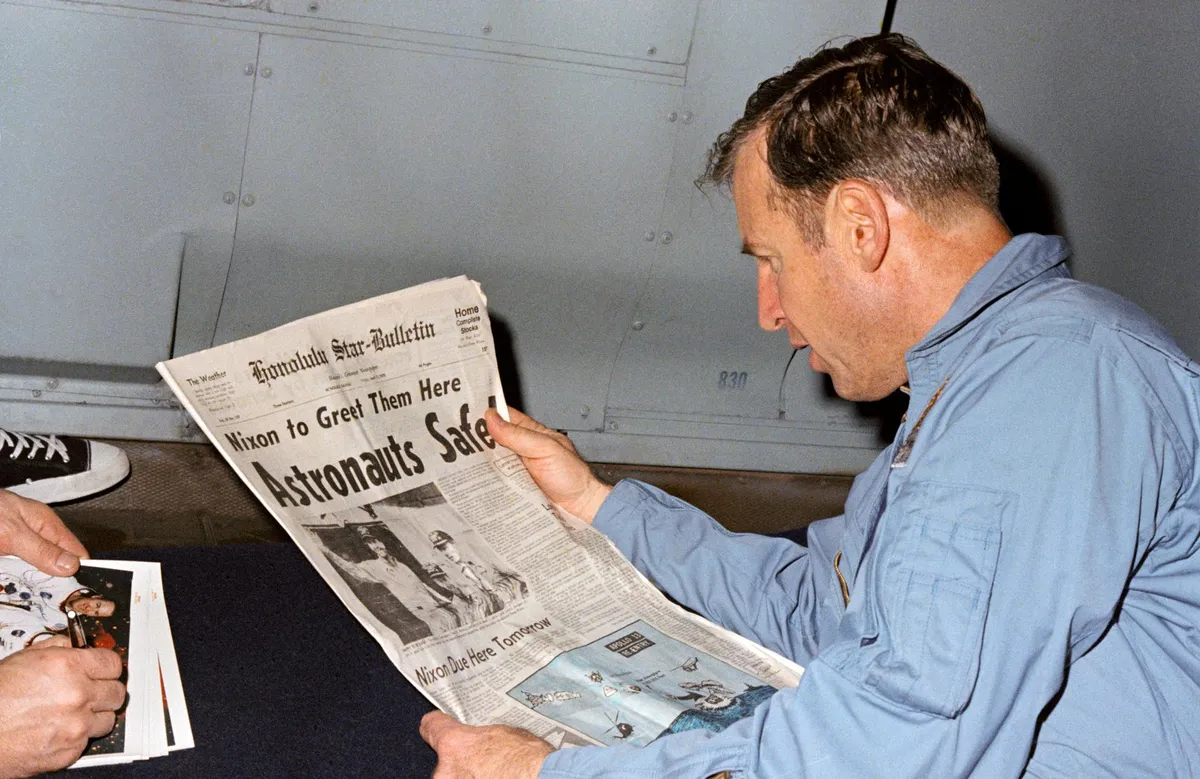
Gemini 7 (1965), Gemini 12 (1966), Apollo 8 (1968), Apollo 13 (1970)
Staring through the windows of Apollo 8 as it rounded the Moon for the first time, Lovell hoped that a future mission might allow him to actually walk on the lunar surface. As commander of Apollo 13, he was annoyed when an oxygen tank explosion in the rear service module instantly ruled out any chance of a landing.
Then, as it became clear that more than simple disappointment was at stake, he took on a greater challenge: holding his crew together as they worked with Mission Control to bring the stricken capsule home. Lovell’s ‘failed’ mission became a heroic success.
Alexey Leonov
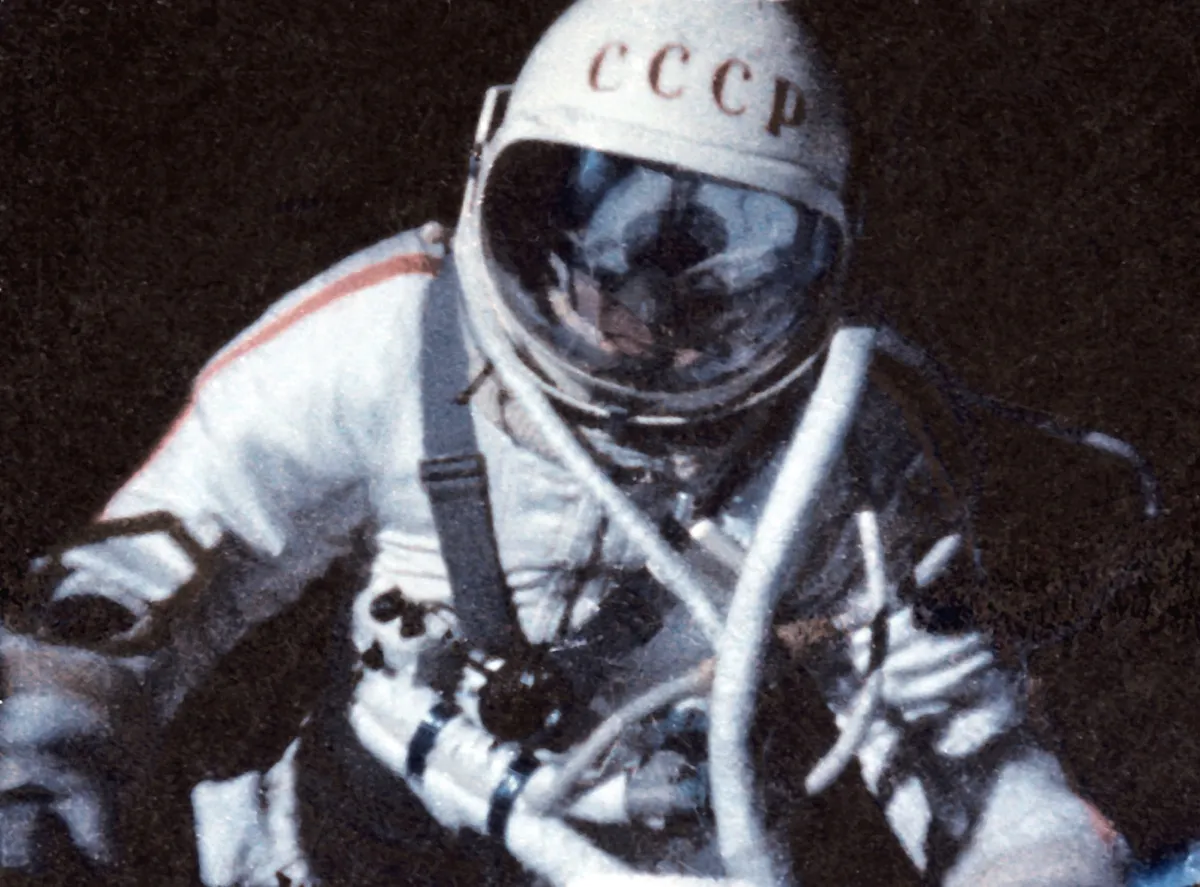
Voskhod 2 (1965), Soyuz 19 (1975)
Leonov joined the first group of cosmonauts at the dawn of the Space Age, and was a close friend of Yuri Gagarin. He made the first spacewalk in history, and it nearly killed him.
His pressure suit ballooned in the vacuum, and he had to let some of the air out so that he could squeeze back into the tube-shaped airlock of his tiny Voskhod capsule. Undaunted, he volunteered for Russia’s lunar landing project.
It would never happen, but he commanded the Russian vehicle during the 1975 Apollo-Soyuz docking mission.
Bruce McCandless II

STS-41-B (1984), STS-31 (1990)
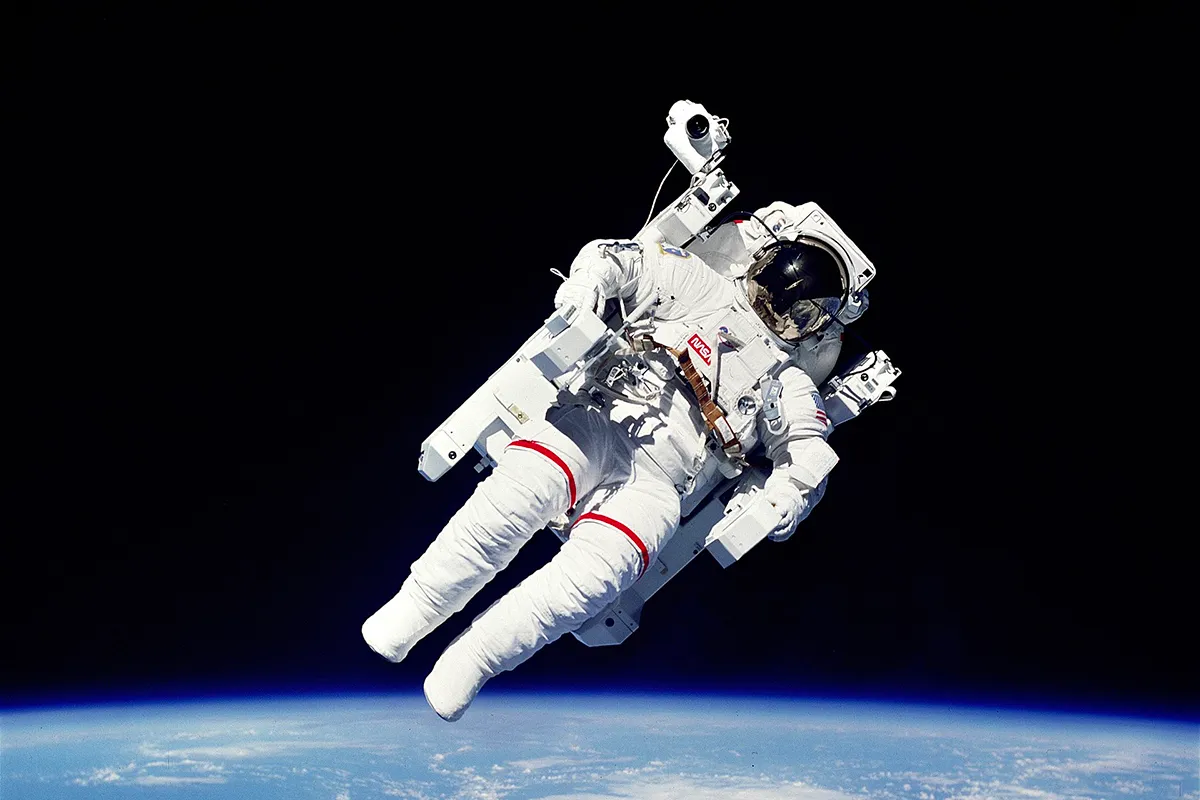
Dozens of science fiction movies have portrayed one of the worst nightmares that any space traveller could experience: drifting alone in the vacuum, beyond all hope of rescue.
In 1984 the daring McCandless became the first astronaut to deliberately cut loose from his craft (Space Shuttle Challenger) and float completely independently in space.
Then he fired small gas thrusters in his chair-like Manned Maneuvering Unit and headed off, alone, into the void.
NASA wanted to see if astronauts could be more flexible when conducting extra-vehicular activity, especially when retrieving drifting satellites. It was a controversial experiment, for which McCandless needed nerves of steel.
Story Musgrave

STS-6 (1983), STS-51-F (1985, STS-33 (1989), STS-44 (1991), STS-61 (1993), STS-80 (1996)
Joining NASA before the end of Apollo, Musgrave is the only astronaut to have flown missions on all five Space Shuttles.
He led the team of spacewalkers on the first Hubble repair mission in December 1993, rescuing perhaps the most important telescope in history.
He then became a superb ambassador for space and is one of the few astronauts who can really explain ‘what it’s like’ to fly into orbit.
Valeri Polyakov

Soyuz TM-6 (1988), Soyuz TM-18 to Mir (1994)
If anyone can say that they’ve shown how to survive a trip to Mars it’s Vareri Polyakov. He clocked up an uninterrupted, record-breaking session aboard the Mir space station that began on 8 January 1994 and didn’t end until 437 days later.
When he returned to Earth Polyakov walked unaided from his capsule to a nearby chair and reputedly lit up a cigarette to celebrate.
His first stay on Mir in 1988 lasted 240 days, during which he helped out with 22 days’ worth of science experiments and set up links with amateur radio enthusiasts.
His record-setting feat took extraordinary dedication, but he accepted this gruelling test of endurance on behalf of space explorers to come.
As he put it: “It is possible to preserve your physical and psychological health throughout a mission similar in length to a flight to Mars and back.”
Harrison Schmitt
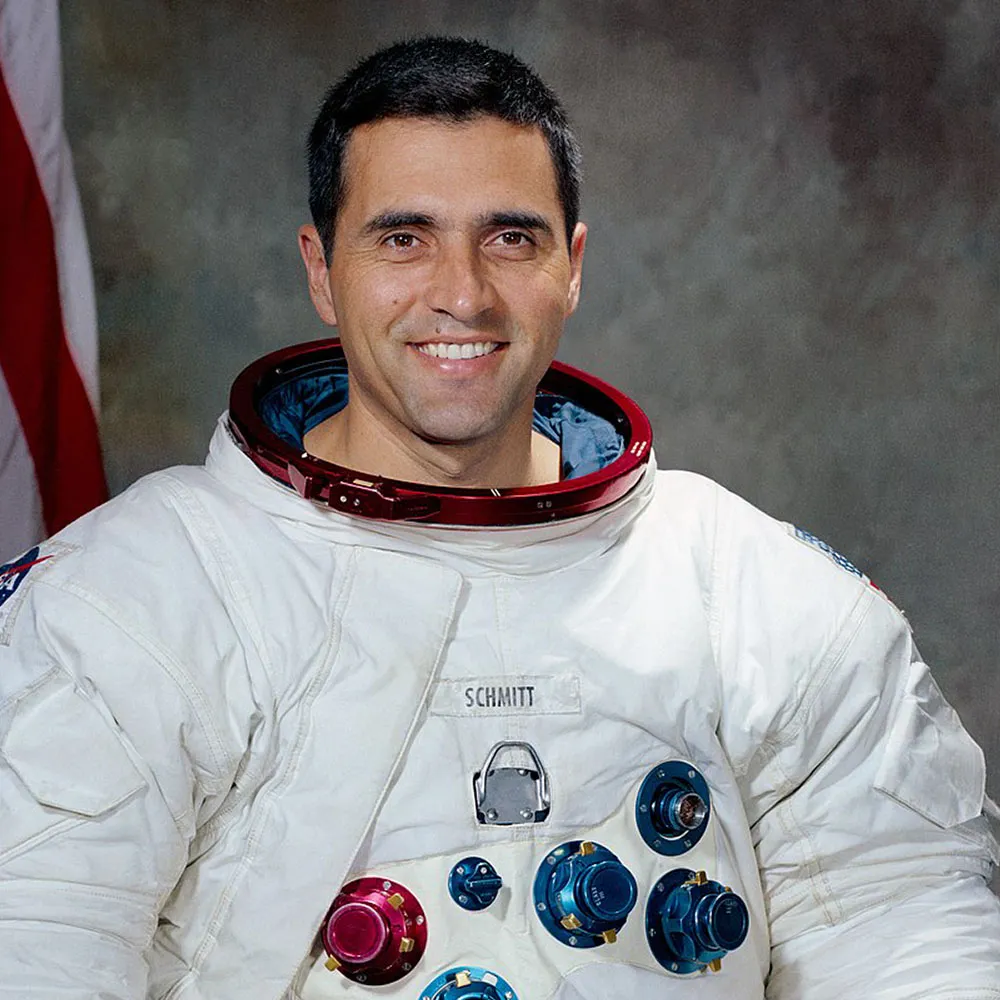
Apollo 17 (1972)
Apollo was a dangerous business. Most of the lunar astronauts were chosen for their flying skills and knowledge of engineering, so it is hardly surprising that only one of the dozen men who walked on the Moon genuinely knew anything about its magnificently desolate landscape.
Schmitt qualified as a geologist long before joining NASA, and although he made only one space flight, he is distinguished today as the first and only scientist to set foot on the Moon, during the last crewed mission to the lunar surface, Apollo 17.
Alan Shepard

Mercury-Redstone 3 (1961), Apollo 14 (1971)
NASA’s early rockets were prone to disastrous explosions. Shepard volunteered to fly one into suborbital space aboard the Freedom 7 mission on May 5th, 1961, knowing that his chances of survival were balanced on a knife-edge. His prize for success was instant fame as America’s first space traveller.
Failure would mean not just his death, but humiliation for his country in the midst of a tense Cold War with the Soviet Union.
His history-making flight lasted just 15 minutes, and came less than a month after Gagarin’s more substantial orbital triumph, but Shepard assuredly had the ‘right stuff’ that we associate with America’s early astronauts.
John Young
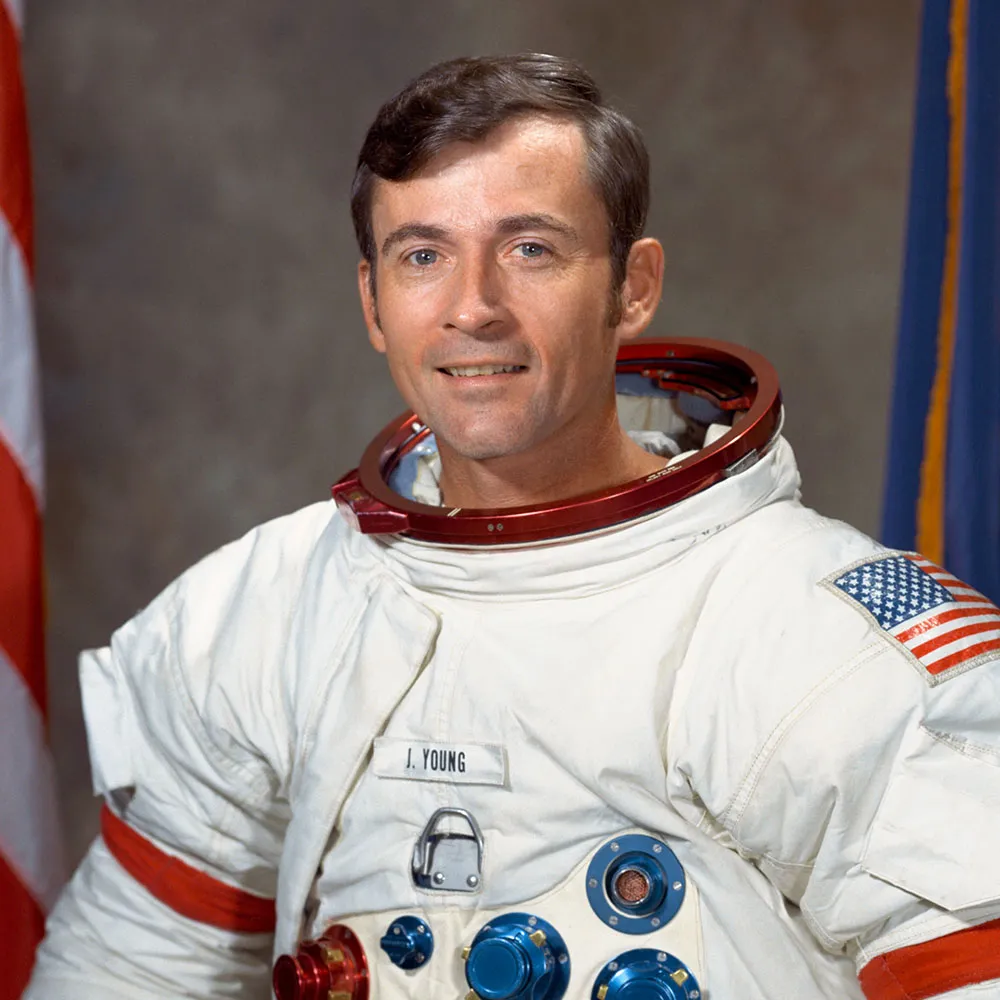
Gemini 3 (1965), Gemini 10 (1966), Apollo 10 (1969), Apollo 16 (1972), STS-1 (1981), STS-9 (1983)
Young was the ultimate astronaut. He flew every spacecraft NASA had to offer, apart from Mercury. He participated in two Gemini flights, tested the Apollo Command Module and Lunar Module in lunar orbit, and walked on the Moon.
Then he took the Space Shuttle into orbit for its operational debut in 1981, commanding it again in 1983 for a Spacelab mission.
Young was as fine a pilot as Neil Armstrong, but much easier to get along with. He also played a crucial role on the ground, as chief astronaut from 1974 to 1987.
Ask any veteran astronaut to pick his favourite colleague from NASA’s pioneering days, and John Young would be a prime contender.
Christina Koch
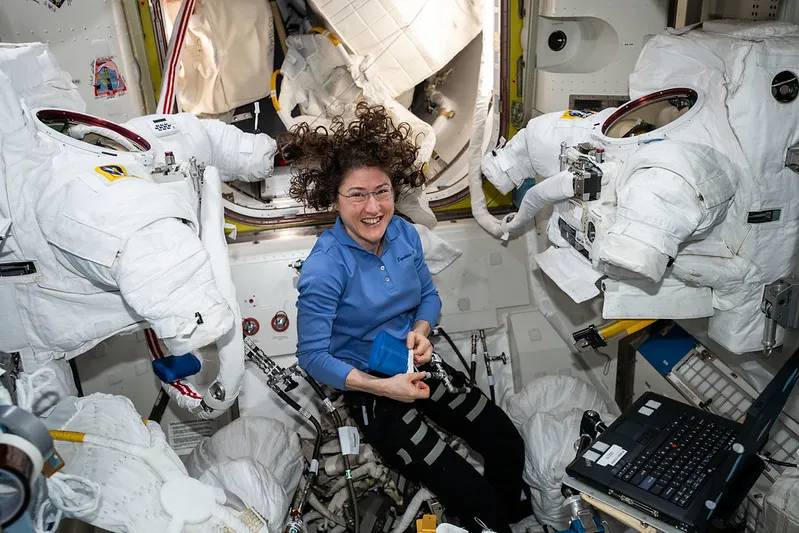
Soyuz MS-12/13
Christina Koch is a former International Space Station flight engineer who was selected as a crew member for NASA’s much-hyped 'return to the Moon' mission Artemis II.
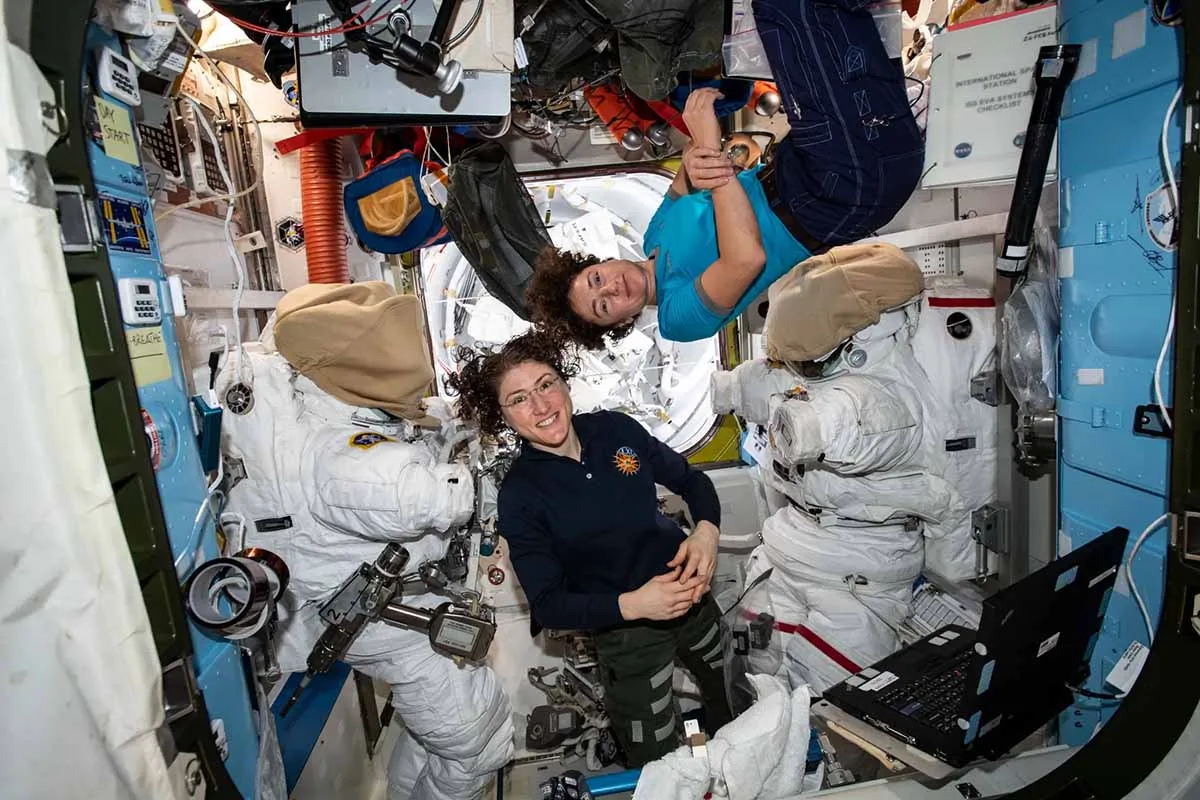
Born 1979 in Michigan, Koch earned bachelor’s and master’s degrees in electrical engineering and physics before graduating from the NASA Academy in 2001. She holds the female record for the longest continuous time spent in space (328 days) and, alongside Jessica Mair, conducted the first all-female spacewalk in 2019.
But the achievement she'll likely most be remembered for is that in 2026, during Artemis II, she'll become the first woman to fly beyond low-Earth orbit.
What astronauts did we miss on our bravest list? Let us know by emailing contactus@skyatnightmagazine.com