Unless you’ve been avoiding the news completely recently, you can’t have helped noticing that tomorrow, 18 November 2026, marks something of a milestone in human space exploration.
Because at 10:16 UTC (05:16 EST / 02:16 PST), after journeying through space for nearly 50 years, Voyager 1 will be precisely one light-day from Earth.
That’s the furthest distance any human-built craft has ever travelled, by a quite considerable margin.
This is undoubtedly a remarkable achievement, and we remain in awe of the talented scientists and engineers who were able to build a machine capable of such a feat.
And at a time, remember, when human civilisation was so primitive, we still thought digital watches were a pretty neat idea (thank you, Douglas Adams!).
But human beings are impatient creatures. So many of you will doubtless be wondering: if it takes this long to travel a single lightday, how long will it take for Voyager 1 to travel a full lightyear?
More on Voyager
Voyager 1's lightyear – here are the numbers
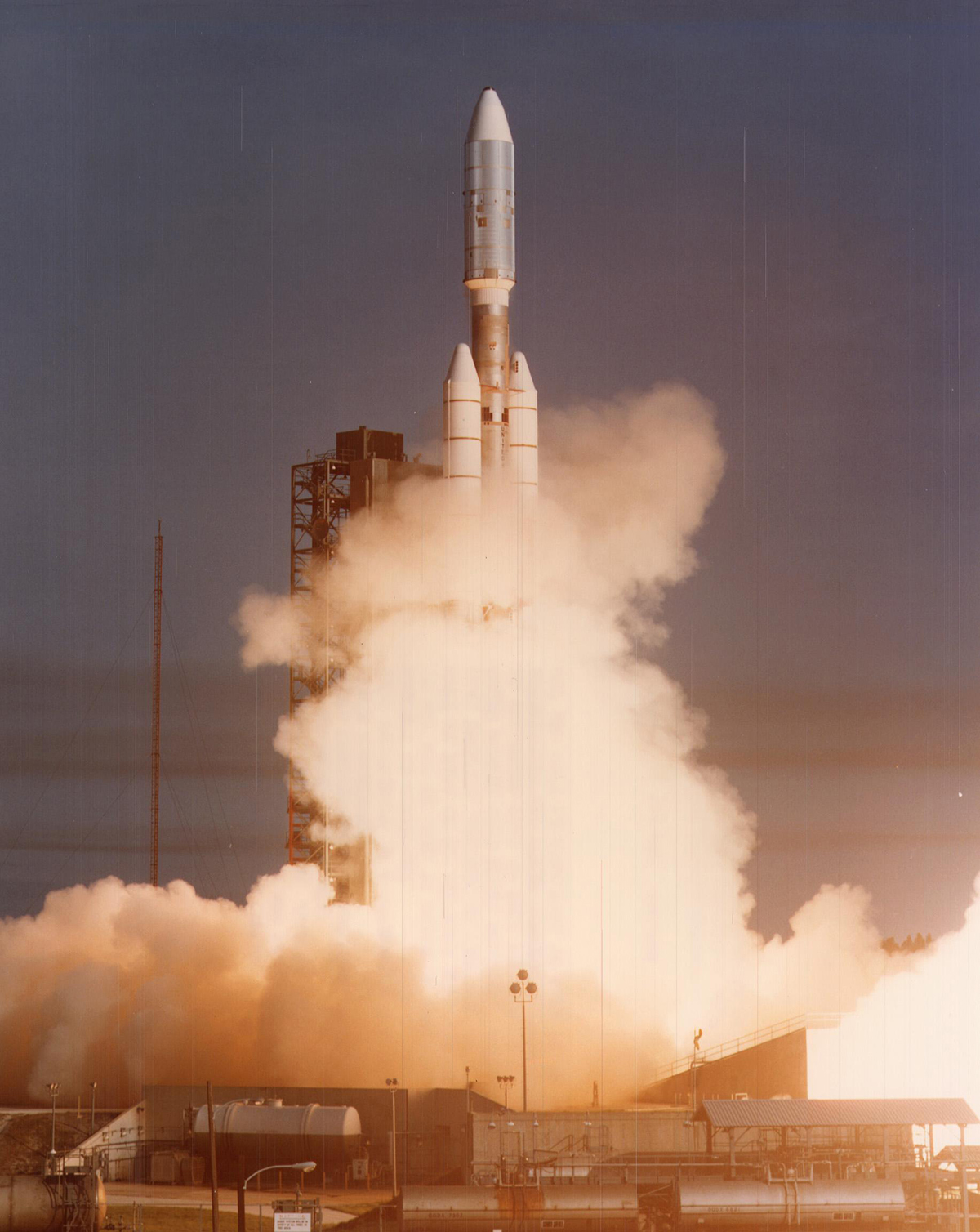
That’s a question that’s fairly easy to answer mathematically. Voyager 1 launched on 5 September, 1977 and will reach its one light-day milestone on 18 November, 2026.
That’s a total of 17,970 days – and as there are 365 days in year, all we need to do, to work out how long it will take to travel one lightyear, is multiply the number of days travelled to date by 365.
Multiplying 17,970 x 365 gives us a total of 6,559,050 days. But then, of course, to express that in years we need to divide that by 365 again – so it will take Voyager 17,970 years to travel a single lightyear.
If that’s not clear, then let’s do a more approximate calculation.
Voyager’s taken a little over 49 years to travel one light-day, but a lightyear is 365 times further. So multiply 49 years by 365, and you get a figure of 17,885 – near to our first sum, the difference being due to a) leap years and b) the fact that Voyager has been travelling for 49 years, two months and 11 days – not just 49 years.
Where will we be then?
A week may be a long time in politics, but nearly 18,000 years is a long time in anyone’s money! So exactly how far from Earth will Voyager 1 be by then?
Well, one lightyear, obviously – which means 9.64 trillion kilometres, or 5.88 trillion miles. That’s equivalent to travelling around Earth's equator 240.5 million times – a long old way, however you look at it.
And now for the bad news… that’s nothing. We’re back to Douglas Adams again: "you may think it's a long way down the road to the chemist, but that's just peanuts to space."
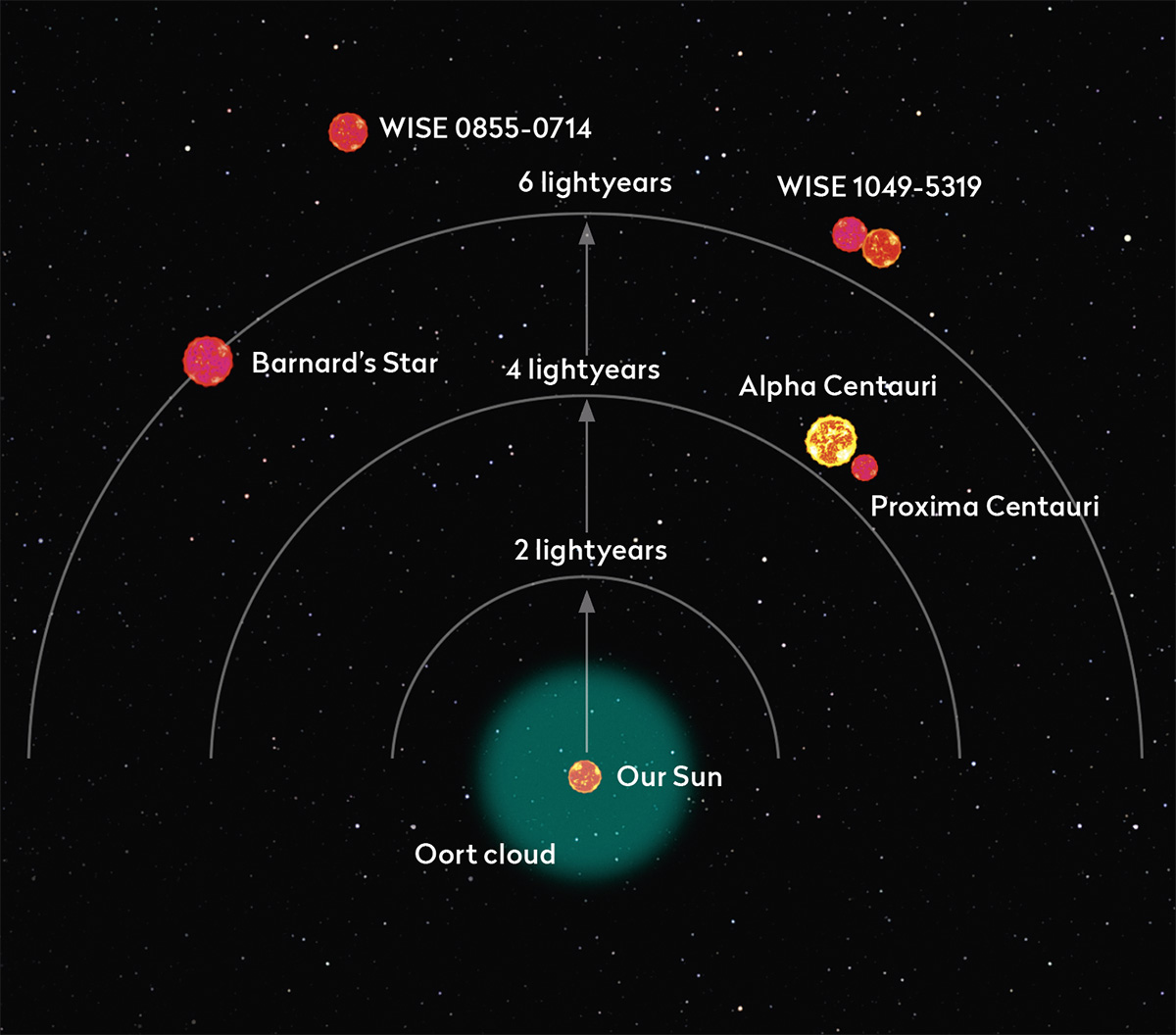
The nearest star to Earth (apart from the Sun), for instance, is Proxima Centauri. That’s 4.25 lightyears away, so it would take Voyager more than 72,000 years to get there.
Now let’s think about some other familiar objects.
The Pleiades? Around 400 lightyears away.
The Pillars of Creation? About 6,500-7,000 lightyears.
The Andromeda Galaxy? 2.5 million lightyears.
And galactically speaking, of course – Andromeda is our nearest major galactic neighbour.
So we’ve still got a long way to go before we’re whizzing around the cosmos like they do in science fiction films!
All the same: as of tomorrow, humankind will have managed to send a craft nearly six thousand billion miles into space. And that’s remarkable.
What are your thoughts on the Voyager mission? Let us know by emailing contactus@skyatnightmagazine.com