
Scientists like to extend the useability of spacecraft for as long as possible, but all good things must come to an end.
Often this end is explosive, as the spacecraft is commanded to deliberately impact the body it had been studying.
This can be for all kinds of reasons: avoiding contamination of life from Earth in areas where alien life could already exist; to find out what’s under the surface of a world; or even for testing planetary defences.
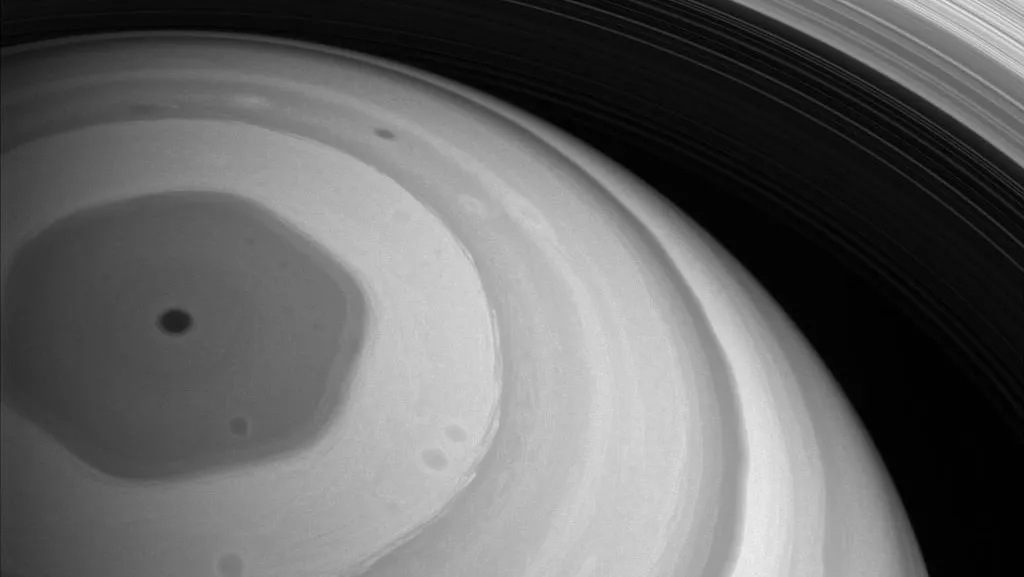
This isn’t done lightly, and sometimes a probe’s fiery demise wasn’t part of the mission plan.
But there’s no doubt that each time it’s happened we’ve learnt something new about the Universe, and protected future scientific discoveries.
Here are four worlds where we’ve left a fiery impact with our space tech, whether intentionally or not.
Galileo at Jupiter
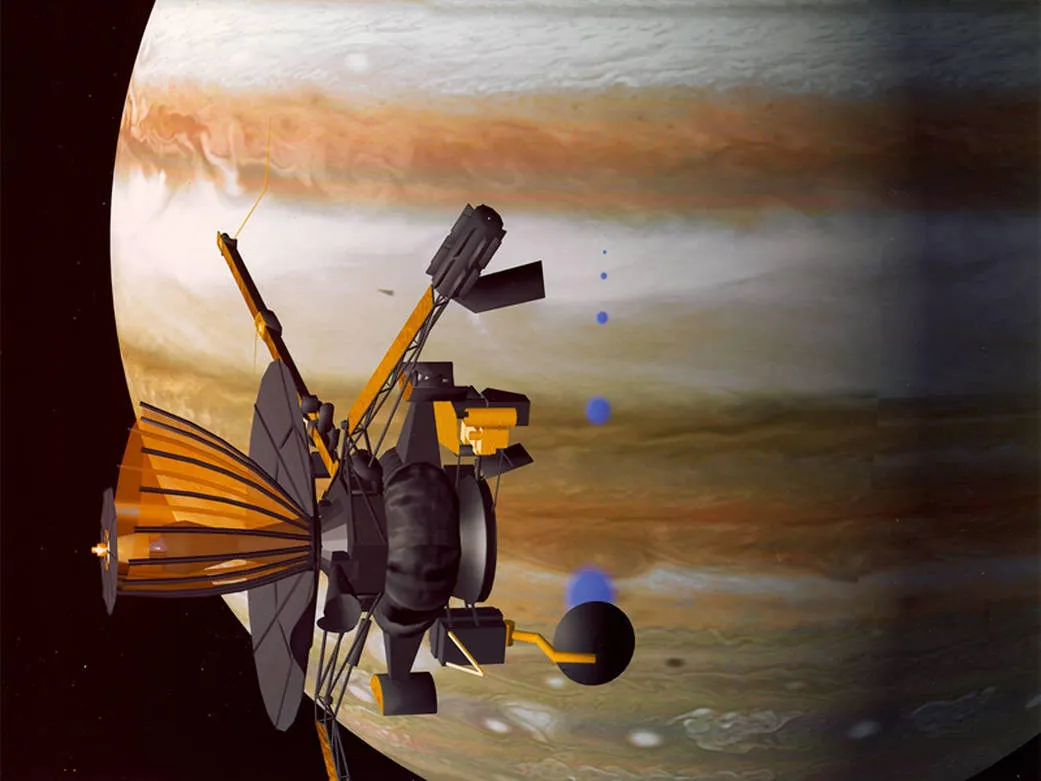
When the Galileo mission was launched back in 1989 there were no plans for it to end up as a fireball streaking through the atmosphere of Jupiter.
It took five years for it to travel to the gas giant, and it was designed to collect data on the planet and its Moons for three years.
It ended up staying for nine years, and in doing so made a very exciting discovery that also sealed its fate.

After detecting evidence of underground saltwater oceans on Jupiter's moons, Europa, Ganymede and Callisto, the decision was made to destroy Galileo rather than leaving it in orbit.
Its trajectory was changed so it descended into Jupiter’s clouds.
The spacecraft had started to run out of fuel after orbiting the planet 34 times, and mission controllers were concerned it could potentially drift into the trajectory of one of these moons, risking accidentally seeding them with microbes from Earth.

During its descent, scientists took the opportunity to study Jupiter’s magnetic field and radiation belts, and the charged particles surrounding it, using the craft’s instruments.
Galileo ended its life burning up in a fireball across the Jovian sky in September 2003, pulverised by the immense pressure of its atmosphere.
Cassini at Saturn

The Cassini-Huygens mission was sent to the same fate in September 2015 after it completed its 1.45 billion km (1 billion miles) mission to Saturn.
After dropping the Huygens probe to explore the atmosphere and surface of Saturn’s moon, Titan – the most distant landing to date in our Solar System – the Cassini spacecraft then detected a warm, saltwater ocean beneath the icy crust of Enceladus, another of the planet’s 274 known moons.
The contamination risks for this potentially life-containing world were deemed strong enough to justify destroying the £2.45 billion ($3.26 billion) probe.

"Cassini's own discoveries were its demise," said Earl Maize, who managed the Cassini mission.
However, the plan to destroy the probe created an almost completely new mission for the plucky spacecraft.
As part of its ‘Grand Finale’, in its final approach Cassini dove through the unexplored space between Saturn and its rings 22 times.
These very close passes provided invaluable images and data about the planet.
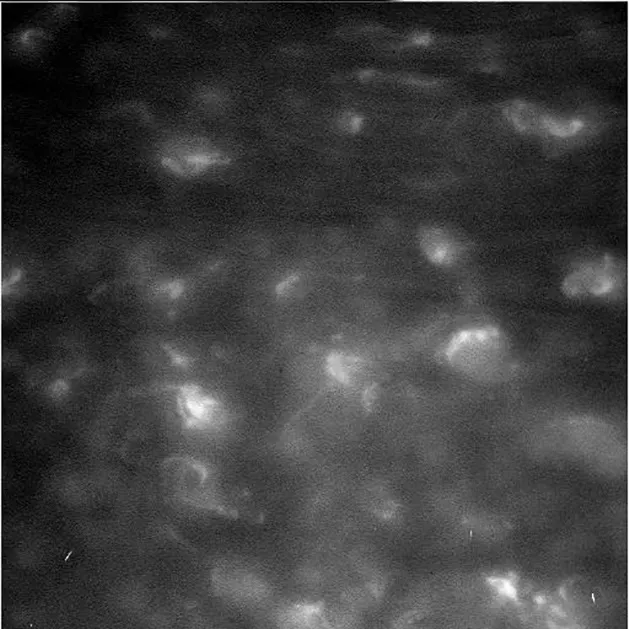
Of course, it’s hard to crash-land on a planet that doesn’t have a true surface, but the extreme pressures and temperatures found in Saturn’s upper atmosphere vaporised the craft.
A question arises here, however: if Cassini was crashed into Saturn to prevent possible contamination, why did it parachute the lander Huygens onto the surface of Titan?
The answer is that astrobiologists and planetary protection experts were far more concerned about contaminating Enceladus than Titan.
Although Titan’s surface and atmosphere were found to be teeming with organic chemicals – including many that form the basis of life on Earth – its frigid surface temperature of –179ºC (–280ºF) means that life as we know it could not have formed there.
As the European Space Agency explained at the time: "Titan’s harsh environment is expected to kill microorganisms that may have hitchhiked from Earth on board the clean space probe."
DART at asteroid Dimorphos

Rogue asteroids pose a big threat to Earth – just ask the dinosaurs.
And we didn't really have a way to defend against them, until the Double Asteroid Redirection Test (DART) mission came along in 2022.
It was designed to test whether asteroids could be deflected away from us by, yes, you’ve guessed it, crashing a spacecraft into them.

The asteroid chosen was Dimorphos, a near-Earth object – although, still well over 8 million km (5 million miles) away – that is 160 metres (525 ft) in length.
It orbits a larger asteroid called Didymos, and was chosen because it gave the mission team the ability to monitor changes in that orbit to work out if the impact would affect the asteroid’s trajectory.
DART hit Dimorphos at a speed of 23,760 km/h (14,760 mph), which gave it 19 billion joules of kinetic energy – roughly equivalent of 5 tons of TNT.
The impact was enough to successfully jolt the asteroid and change its orbit.
As it approached the asteroid it took images and beamed them back to Earth at the rate of one per minute.
Sixteen million kg (35.3 million lbs) of material from Dimorphos was blasted into space from the impact.
That’s less than 0.5% of its total mass, but it was still 30,000 times greater than the mass of the spacecraft.
This had a compounded effect: the flying rubble gave the asteroid a push several times stronger than the collision from the spaceship itself.
"The plume of material released from the asteroid was like a short burst from a rocket engine," says Ramin Lolachi, a research scientist from NASA’s Goddard Space Flight Center.
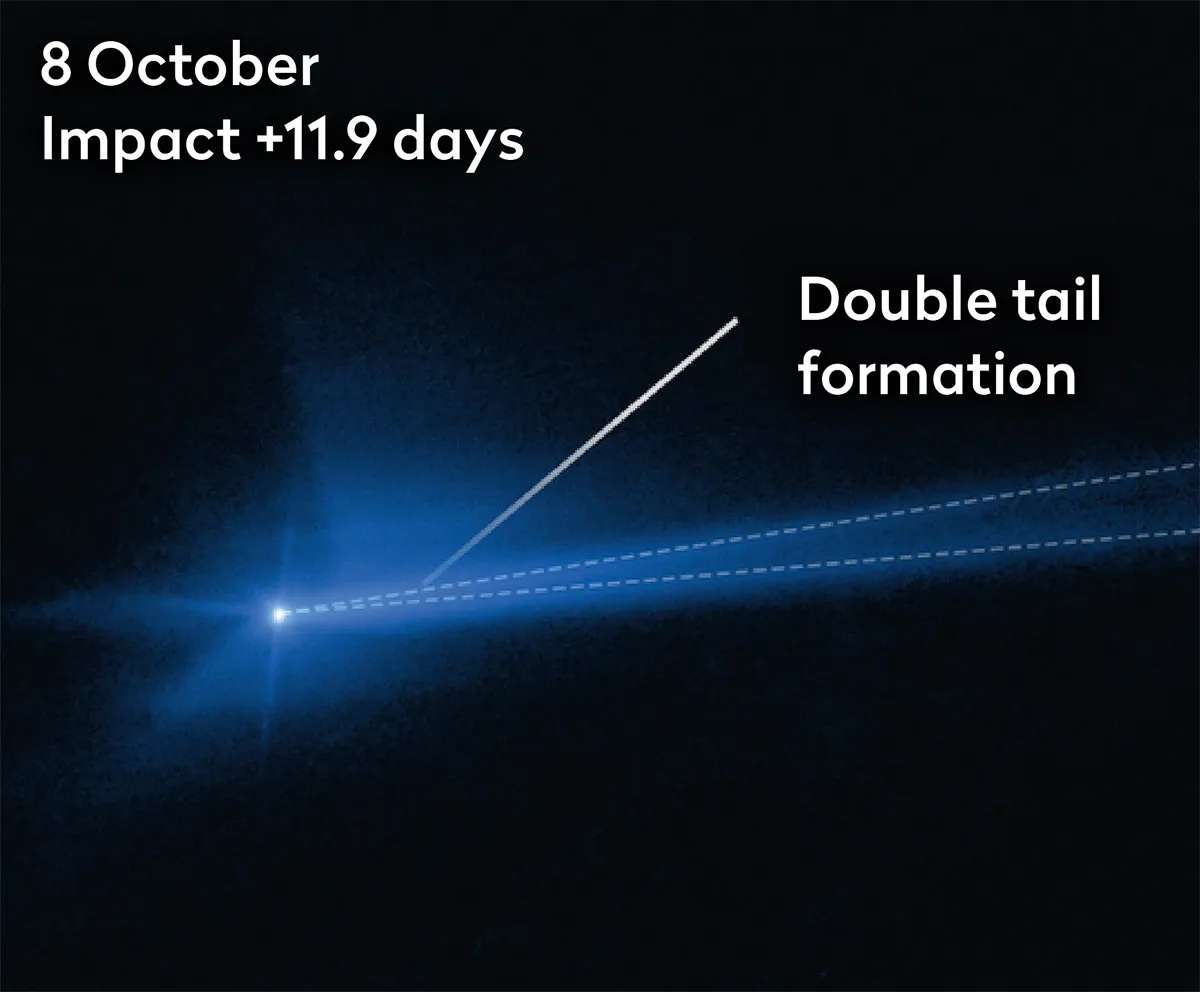
The mission was a success and DART proved that a small lightweight spacecraft could be effective in diverting an asteroid.
"Now we have an additional line of defence against these kinds of external threats," says Professor Derek Richardson, a DART investigation working group lead.
Luna 2 at the Moon
Unsurprisingly, the world we’ve crashed into the most times is our nearest.
The Moon is littered with dozens of spacecraft – and human-made craters – all put there in the name of research.
Well, mostly.
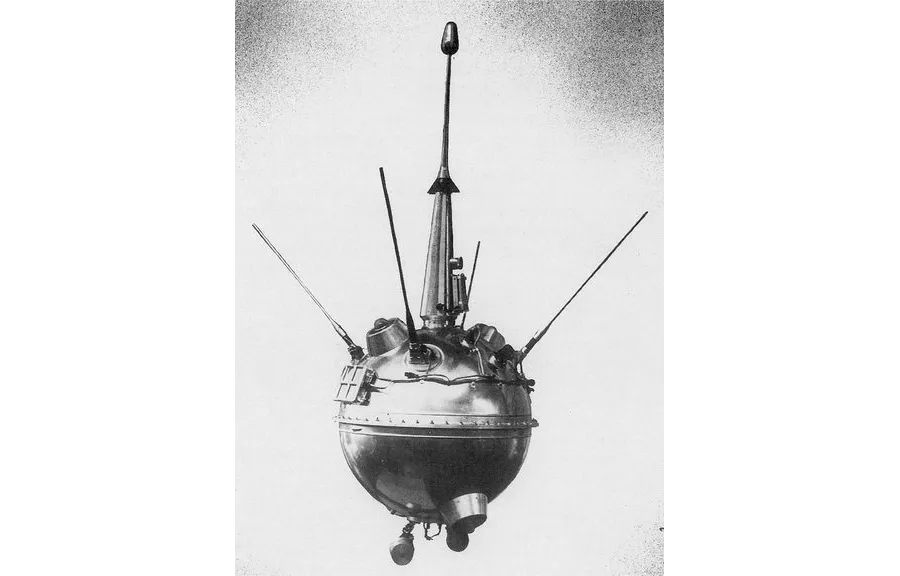
We first deliberately crashed into the Moon on a fact-finding mission completed in 1959.
The Soviet Union’s Luna 2 was the first human-made object to demonstrate that we had the accuracy to ‘land’ on the Moon.
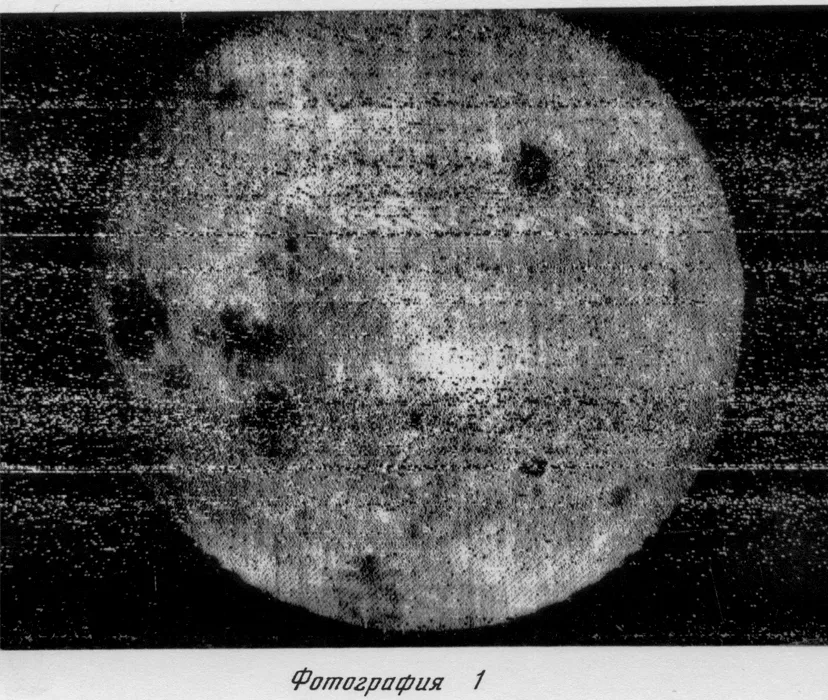
On its way, it measured for radiation belts and magnetism around the Moon, finding nothing.
It also released a trail of sodium gas so astronomers could follow its progress.
Luna 2 then hit the lunar surface at a speed of approximately 3km per second (6,700 mph), likely leaving a crater tens of metres wide, though the exact impact site remains unknown due to the limited tracking technology of the era.
This marked the beginning of a series of Russian missions designed to gather more information about landing on the Moon by deliberately impacting it with increasingly sophisticated spacecraft.
NASA followed this up between 1961 to 1965 with nine of their own ‘kamikaze’ spacecraft, the Ranger probes.
The US designed these to test the possibility of spaceflight, and introduce new technologies, including three-axis stabilisation (so the spacecraft didn't have to spin), solar power, data transmission to Earth, and rocket jets to target precise locations on the lunar surface.
Only five of them successfully hit our lunar neighbour, the others either lost control in orbit or missed their target entirely.
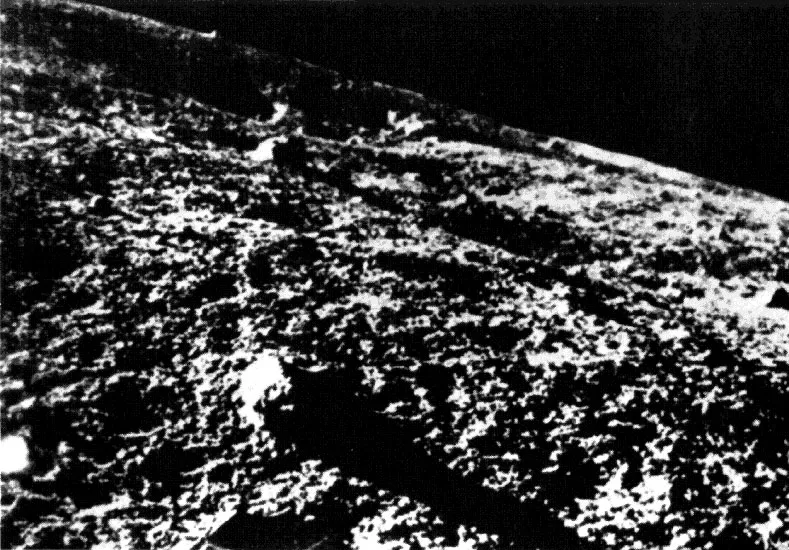
Three were able to beam back images of the lunar surface showing details of the terrain never seen before.
The Americans and Russians then took it in turns to bombard the Moon with their space tech, racing to be the first to collect the data needed to win the Space Race with a human Moon landing.

Even after NASA has mastered how to ‘soft-land’ on the Moon, the bombardment didn’t stop.
In the 1960s and 1970s, massive Saturn V rocket stages were aimed at the Moon after they had carried various Apollo spacecraft to their destinations.
The impacts were used to create ‘Moonquakes’ so the interior of the Moon could be studied via seismic waves.
Lots of lunar satellites also ended up in craters of their own creation, as it was notoriously difficult to keep them orbiting using the Moon’s uneven gravity.
This included all five of NASA's Lunar Orbiters (1966-1972), four Soviet Luna probes (1959-1965), two Apollo sub-satellites (1970-1971), Japan's Hiten spacecraft (1993) and NASA's Lunar Prospector (1999).
Later, planned crashes were used to determine if there was water on the Moon.
In 2009 NASA's Lunar Crater Observation and Sensing Satellite (LCROSS) sent a projectile – Centaur, the rocket that took it to the Moon – into a permanently shadowed crater at the lunar south pole.
LCROSS then had four minutes to fly through the debris flung up by the smash to picture and analyse the revealed material.

LCROSS then plunged into the Moon as well, being watched by NASA’s Lunar Reconnaissance Orbiter (LRO).
Both impacts produced a spray of sub-surface Moon dirt that otherwise would not have seen sunlight for billions of years.
The mission did indeed reveal water was present (in the form of ice), as well as other useful materials for potential future Moon inhabitants such as fuels like hydrogen gas, ammonia and methane, and some light metals, such as sodium, mercury and even silver.
So that was $79 million (£60 million) well spent!
Other Moon crashes were less intentional. Back in 2019 what was to be the first privately funded lunar landing didn’t quite go to plan.
The private spacecraft Beresheet, built by Israeli company SpaceIL, accidentally turned its engine off during its descent.
Although they did get manage to turn the engine back on, it was too little, too late, and the washing-machine sized lander smashed into the surface.
This crash may have introduced a new form of Earth life to the Moon: Beresheet was carrying thousands of hardy microscopic animals known as tardigrades.
These creatures can exist without water, in freezing temperatures and high levels of radiation. If they survived the crash, they may still be lying dormant, waiting to be reanimated.

One of the most recent unintentional crashes on the Moon was also a commercial spacecraft.
Japan’s iSpace's Resilience lander, and the innovative micro buggy it was carrying, suffered what’s referred to as a 'hard landing’ - its laser rangefinder malfunctioned, meaning the craft didn’t slow down fast enough.
The company also crashed its previous attempt back in 2023 in a similar way.
The small metres-wide craters both missions left have since been detected as dark smudges by NASA's LRO.
What are your favourite Solar System missions? Let us know by emailing contactus@skyatnightmagazine.com

