For all the questions space exploration seeks to answer, there remains one surprisingly fundamental challenge: how do astronauts use the bathroom in space?
It’s a question often asked with a grin, tinged with curiosity. Despite our technological sophistication, human biology is straightforward.
We eat, we digest, and we produce waste on a schedule that pays no attention to microgravity, mission timelines or the romance of exploration.
And once it’s produced, it has to be dealt with.
More amazing Chandra observations

Improvising in orbit
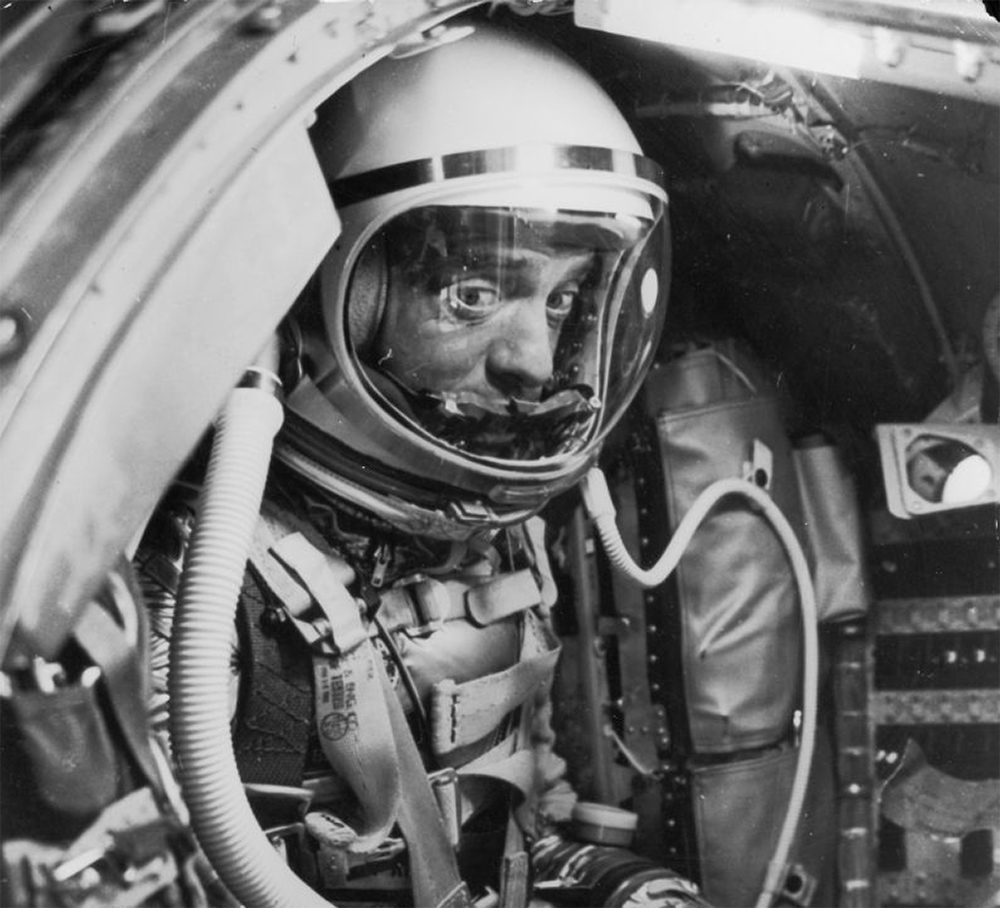
The earliest astronauts managed with far from comfortable conditions.
Alan Shepard, the first American in space, was forced to pee in his spacesuit after a five-hour delay to what was meant to be a 15-minute mission – simply because NASA hadn’t yet planned for the need.
During the Mercury, Gemini and Apollo programmes, spacecraft still lacked a proper toilet. Instead, astronauts relied on improvised solutions.
Number ones were collected using a ‘relief tube’ integrated into the suit – a condom-like sheath connected to tubing that directed liquid into a storage bag, which could later be vented into space.
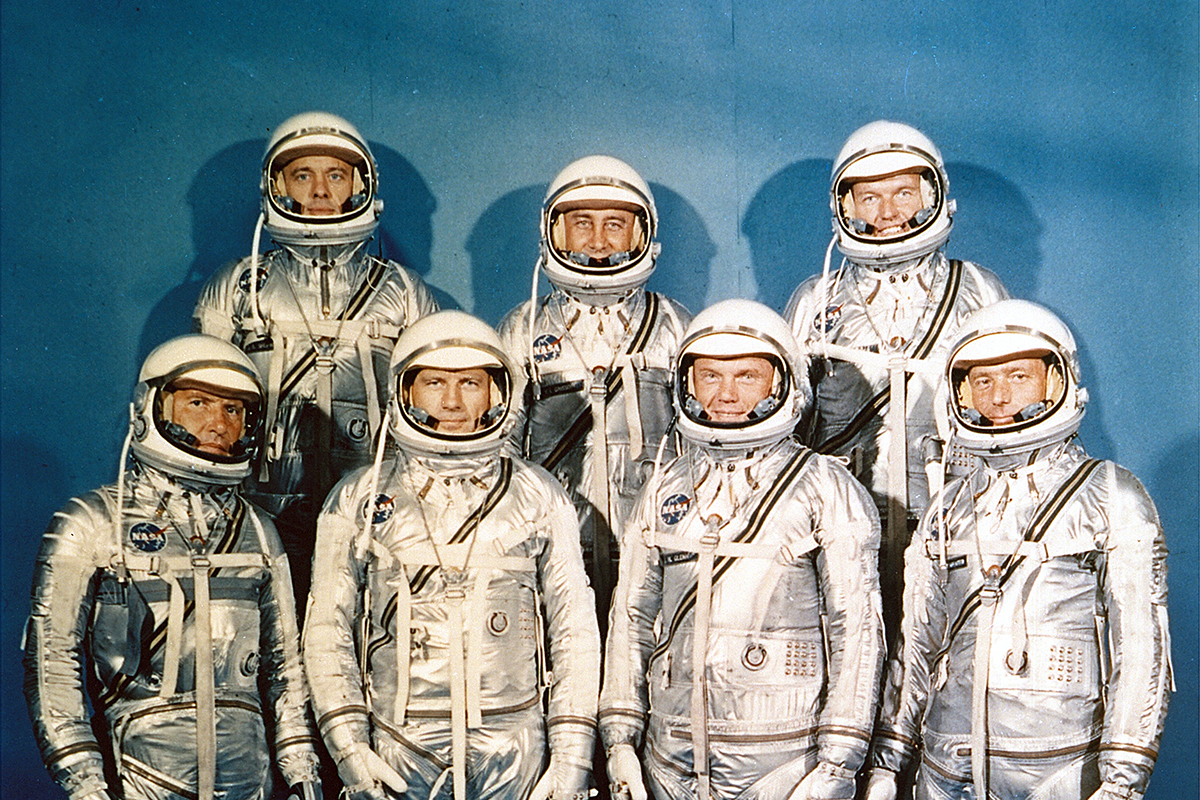
Number twos were more complicated. Astronauts used specially designed plastic bags, shaped somewhat like a top hat.
The rim was lined with adhesive, allowing it to seal against the body. Once used, the bag would be sealed and stored – though not before the astronaut had manually kneaded it to mix in a germicide.
Unpleasant, certainly, but effective – so long as everything went according to plan.

When things go wrong
“Give me a napkin quick. There’s a turd floating through the air.”
Commander Thomas P Stafford reportedly uttered those words during Apollo 10 in 1969.
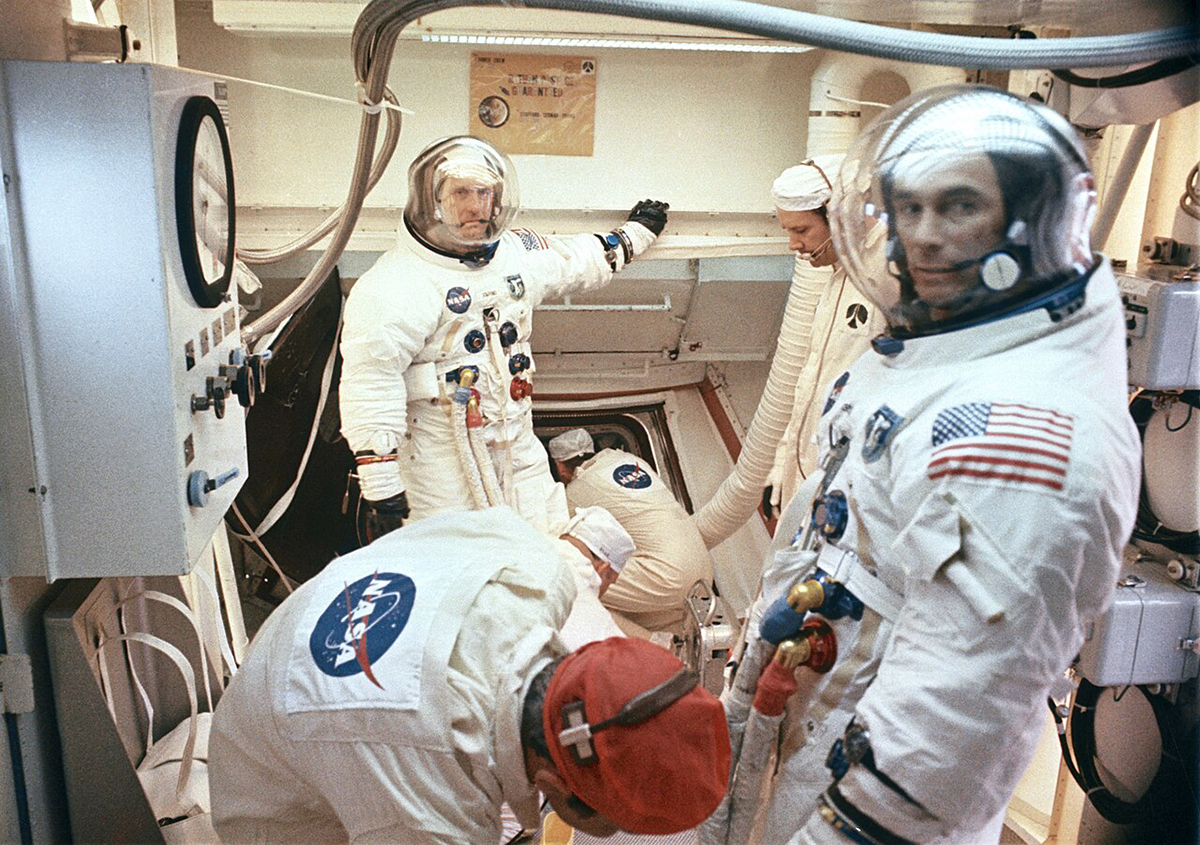
The crucial dress rehearsal for the Moon landing encountered an unusual issue six days into the mission: a stray piece of poo drifting through the cabin.
To this day, none of the crew have claimed responsibility. The incident may, however, have helped push engineers towards designing a more reliable onboard toilet.
The first space toilet
America’s first space station, Skylab, introduced a dedicated toilet in 1973.
Designed by Fairchild Republic, the system became a prototype for later Waste Collection Systems that flew to space.
It used airflow and rotating fans to collect, separate and store waste.
Although astronauts described it as noisy, it was a major improvement over earlier methods.
Its primary purpose was scientific: collecting and returning samples of waste to Earth for studies of calcium balance in microgravity.
The Space Shuttle: aiming for success
It was during the Space Shuttle programme that the Waste Collection System reached maturity. Building on Skylab’s design, airflow became central to its operation.
Fans created suction to guide waste into storage containers, separating liquids from solids.
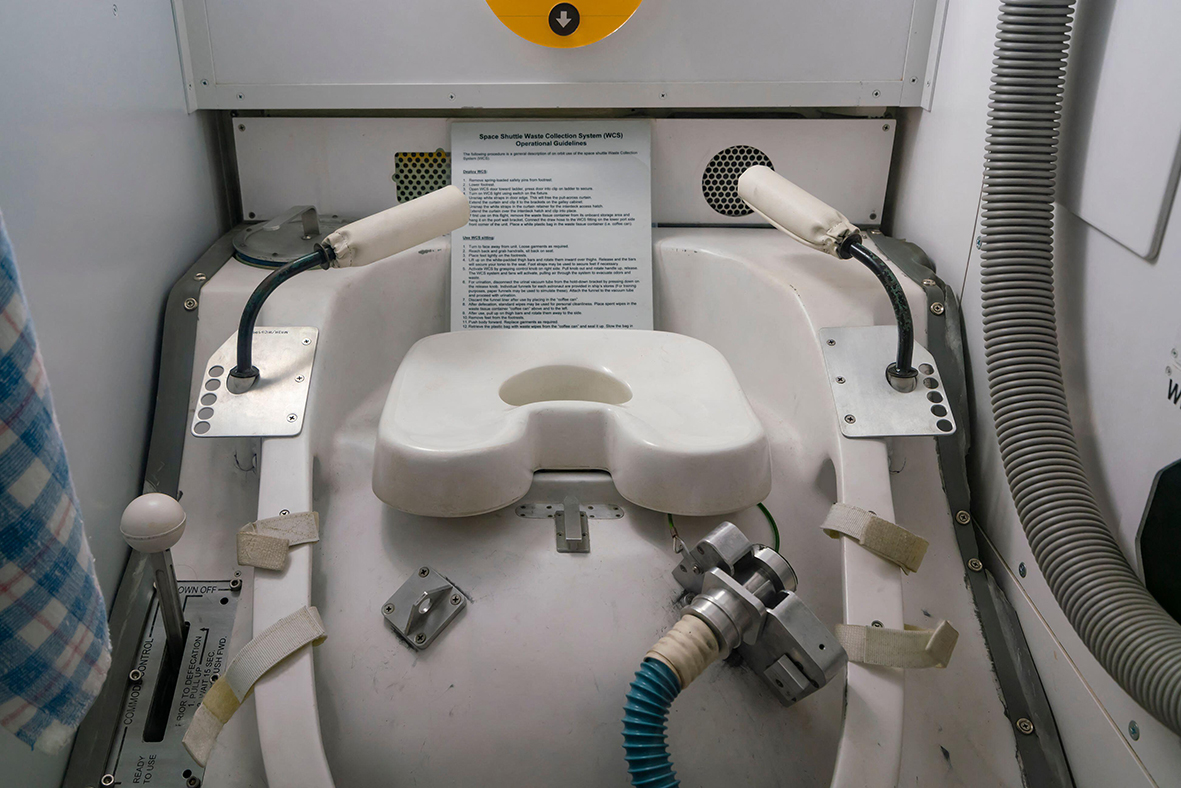
Astronauts used hook-and-loop straps to remain positioned over a small seat, but aim was essential. In fact, toilet training is a specific part of the astronaut training programme to this day.
For the Space Shuttle, training was extensive. To practise passing water, astronauts used a hose; for pooping, practising the careful alignment needed was even more essential as the hole in the seat measured just 10cm (4 inches) across.
NASA even built a simulator with a camera inside the opening, allowing astronauts to practise using crosshairs displayed on a screen.
Not the most dignified preparation, perhaps, but it made life in microgravity significantly more manageable – as long as no one forgot about anything.
Designed for men
But they did forget about something: they forgot about women.
In the early years of spaceflight, women were excluded from astronaut programmes. This was a failure in itself, but it also carried through into system design, creating barriers even after women joined missions.
Waste systems based on sheaths and hoses were poorly suited to female anatomy.
When Sally Ride was selected for the 1983 STS-7 Space Shuttle mission, she worked with engineers to modify the toilet seat and improve usability, as well as ensuring a privacy curtain was included.
Even so, misunderstandings persisted. Ride was famously asked whether 100 tampons would be sufficient for a week-long mission.
Progress has since been made. The toilet aboard the Integrity spacecraft for Artemis II was the first designed intentionally for both men and women. More on that later.

Toilet diplomacy on the ISS
Soviet engineers developed a space toilet before their American counterparts. In the 1960s, a system was installed in the orbital module of the Soyuz spacecraft.
Astronauts did their number ones into a funnelled hose, while Soviet number twos were collected in a metal container lined with a plastic bag and held in place using suction.
Modern versions of this system are still used during journeys to the International Space Station.
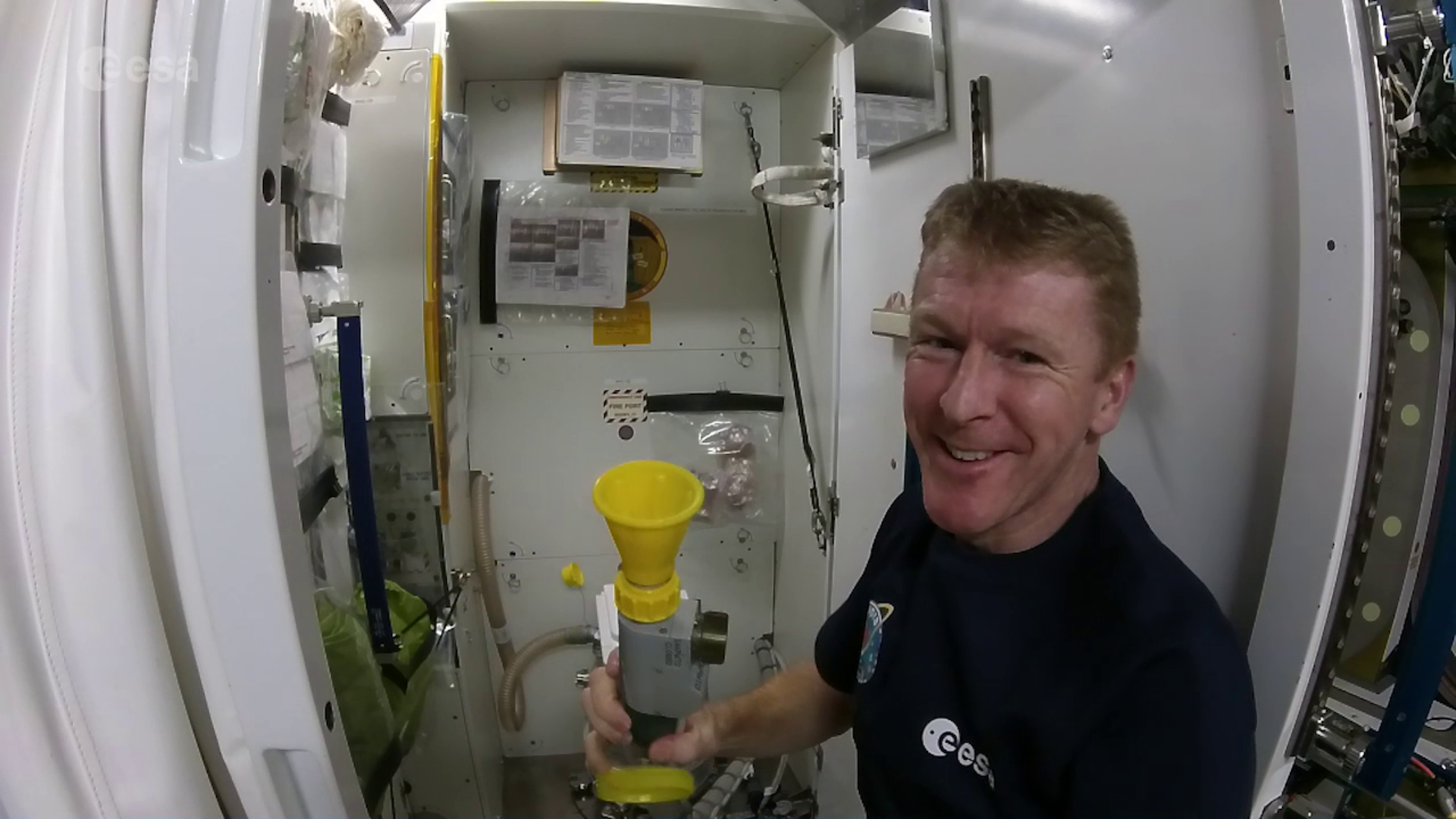
On the ISS itself, there are three toilets, located in the Zvezda, Nauka and Tranquility modules. These use fan-driven airflow systems similar to those developed for the Space Shuttle.
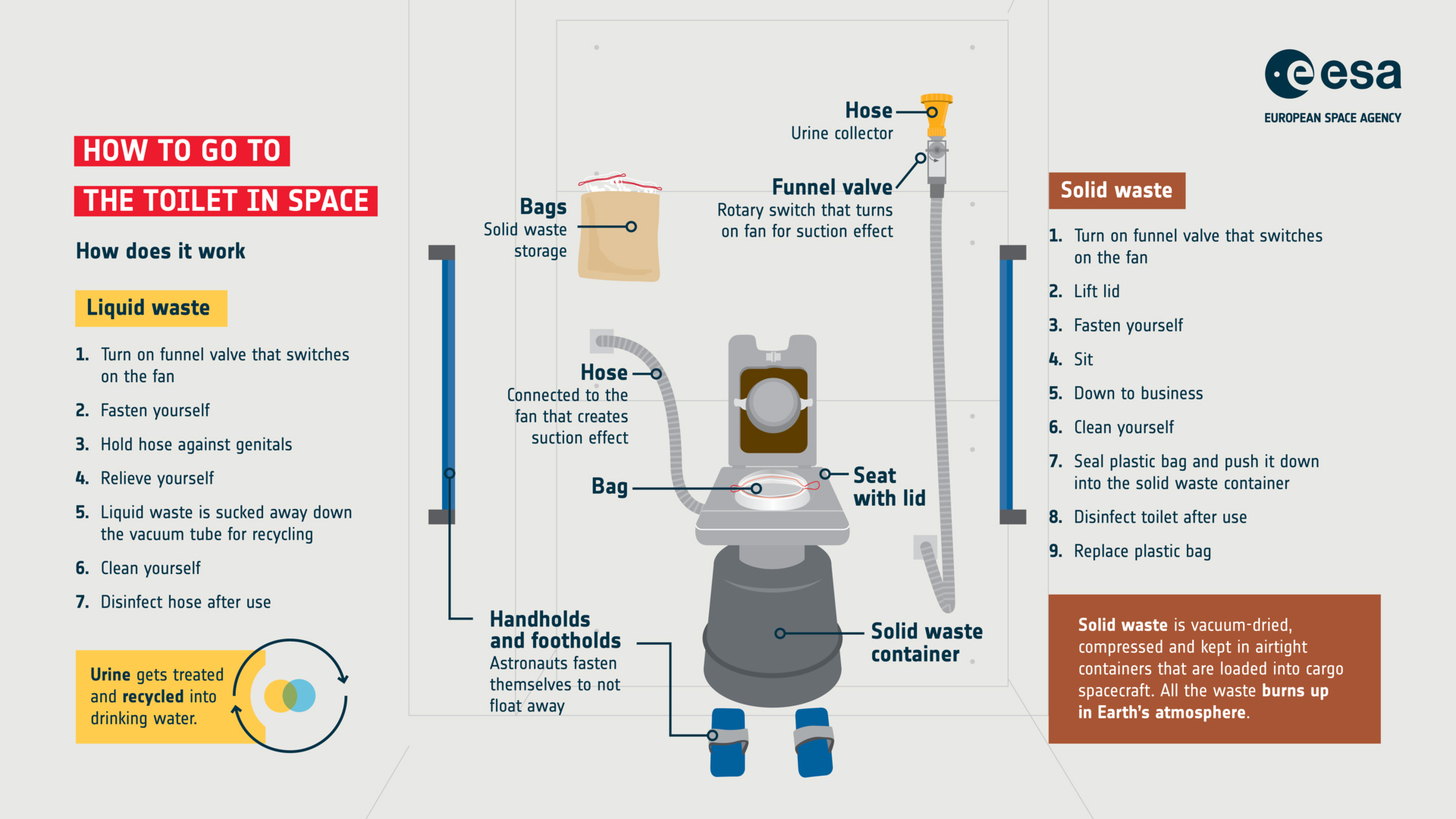
Liquid waste is stored in 20 litre (5 gallon) containers, while solids are sealed in micro-perforated bags and placed into aluminium containers. These are later transferred to the Russian resupply spacecraft Progress for disposal.
The Tranquility module includes a waste and hygiene compartment connected to a urine processor and water recovery system, which recycles urine into drinking water.
This gave rise to a well-known spacefaring phrase: 'Yesterday’s coffee is today’s coffee'.
NASA spent $23 million on the ISS's latest toilet facilities, just so astronauts could spend a penny.
Crew members may use facilities in both Russian and American segments, though preferences are rarely discussed.
In 2008, a pump failure disabled the Zvezda toilet until a replacement part was delivered, carried from Russia in a diplomatic pouch and launched aboard Space Shuttle Discovery.
When things go wrong: Artemis II
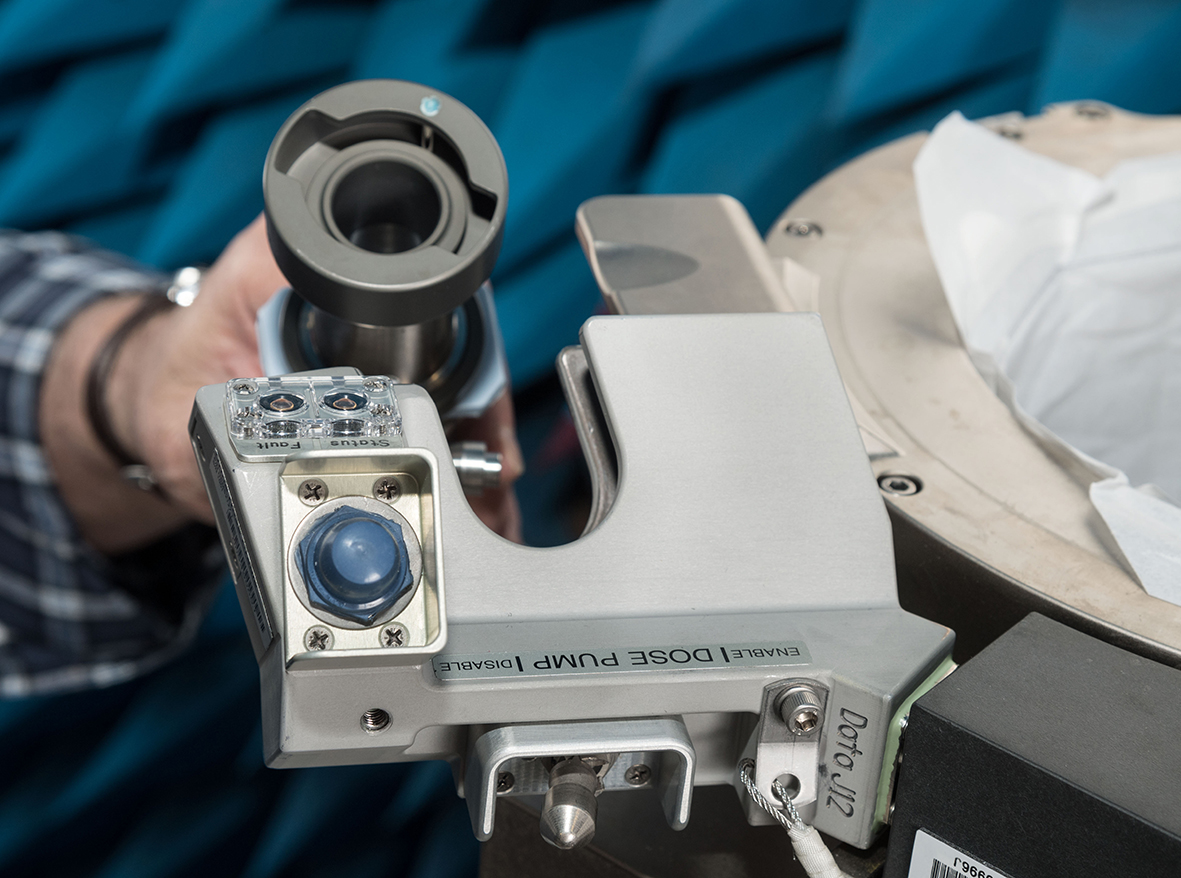
The toilet aboard Artemis II is among the most expensive ever built. Costing around $30 million, the Universal Waste Management System is designed for both men and women and intended for use on future missions.
While it’s still based on airflow principles, it is 60% smaller and 40% lighter than previous designs. It is also corrosion-resistant, improving durability and reducing maintenance demands.
The system features a private compartment, improved seating, funnel systems for better hygiene and onboard urine treatment to support recycling systems.
This contributes to NASA’s goal of achieving 98 per cent water recovery, an essential step towards long-duration deep space missions.
Even so, it is not immune to failure.
On 1 April, a fault in the fan temporarily put the system out of action, though astronauts were able to repair it and restore functionality.
Toilets of the future
Despite decades of progress, there is still room for improvement. The Universal Waste Management System, for example, is sufficiently loud that astronauts have to wear ear defenders while using it.
As missions grow longer and venture further from Earth, waste management will become increasingly important.
Researchers are exploring ways to repurpose solid waste, potentially as fertiliser for growing food in space, or even as shielding against cosmic radiation.
In that sense, the future of space exploration may hinge on an unexpectedly down-to-Earth challenge: who can build the best toilet.