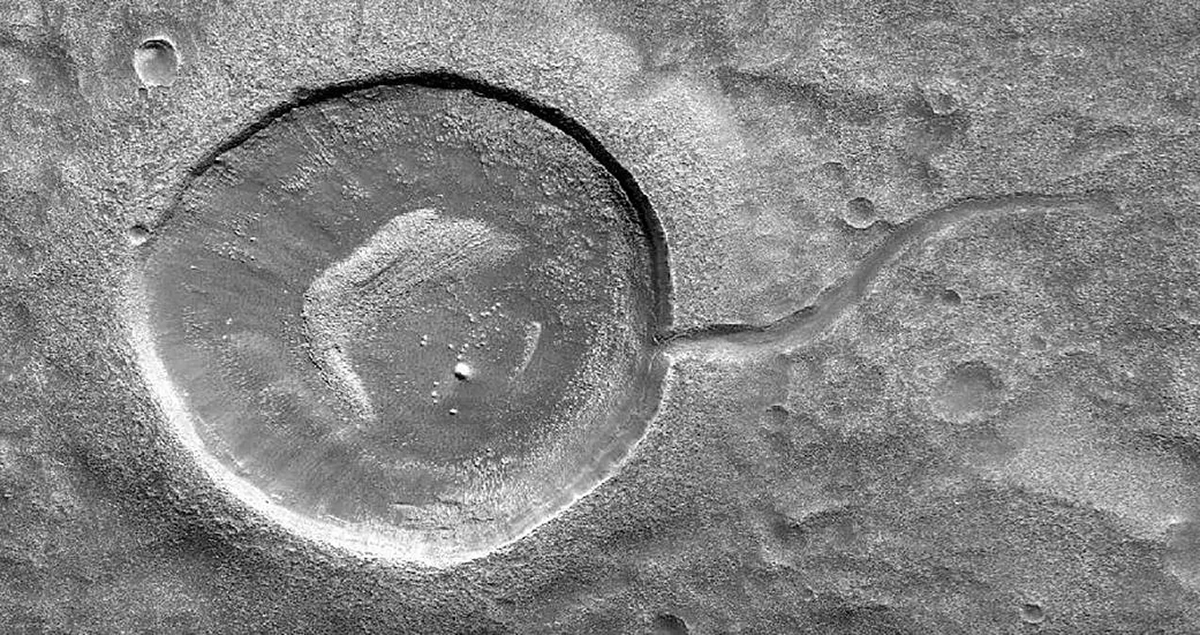
At the turn of the 19th century, American businessman turned amateur astronomer Percival Lowell created a controversy that was to rage for nearly half a century.
Mars, he declared, was inhabited by an intelligent race of beings, their presence revealed by vast irrigation networks, or ‘canals’, visible across the Red Planet.
Lowell’s vision may have partly inspired H.G. Wells’s 1897 classic The War of the Worlds and, more prosaically, a mistranslation.
More on Mars
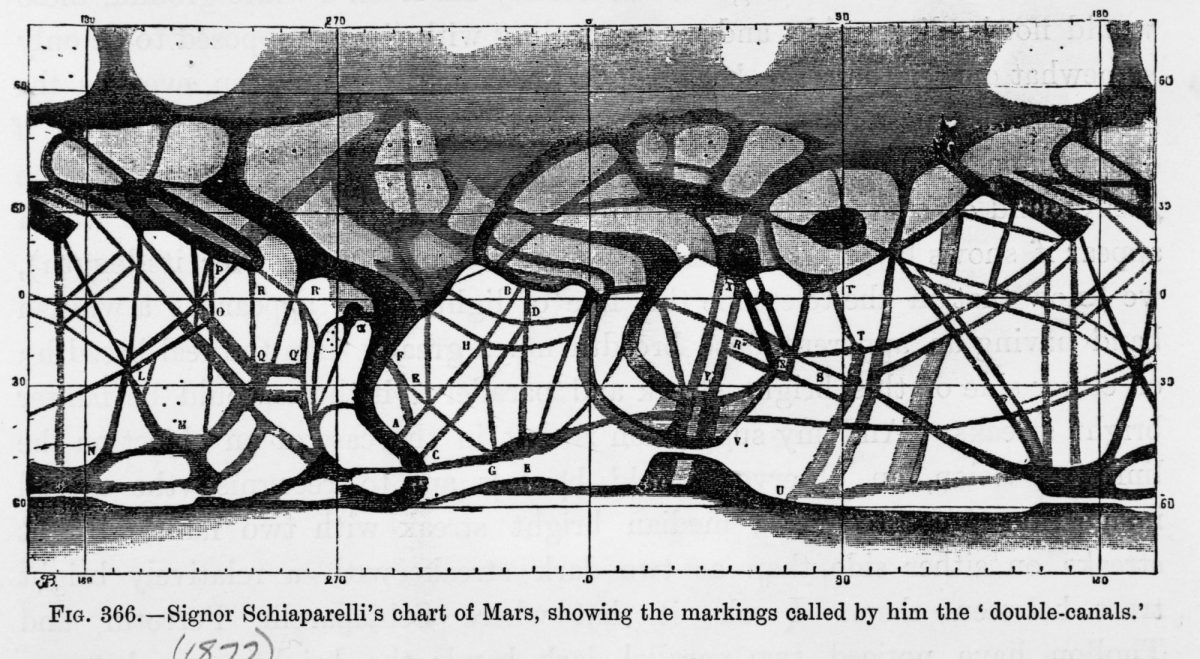
In the 1870s and 1880s, Italian astronomer Giovanni Schiaparelli had produced maps of the Martian surface far superior to those that were available previously.
On these he had drawn some long, narrow features which connected darker regions, and called them canale, the Italian for ‘channels’.
This word was later translated as ‘canals’ in some English reproductions of Schiaparelli’s work.
Whether this influenced Lowell’s interpretation of what he saw through his own telescope is not known, but it seems likely.
We now know that Martian canals hold no water; they were simply an aberration or optical illusion caused by poor instruments (and possibly a psychological predisposition to the idea of alien civilisations).
But the Lowell episode marks the start of a trend in the study of Mars: a tradition of mystery, controversy and even conspiracy.
Many odd things have been spotted from orbit around the Red Planet.
The Face on Mars
Perhaps the most widely known is the ‘Face on Mars’, also known as the ‘Martian Sphynx’.
In July 1976, NASA’s Viking 1 Orbiter took several low-resolution photographs of the planet’s Cydonia region.
These revealed a mesa (flat-topped, steep-sided hill), viewed from above, with features that distinctly resembled humanoid face.
Some chose to interpret this as an ancient carved monument, purposely fashioned into an image of humankind.
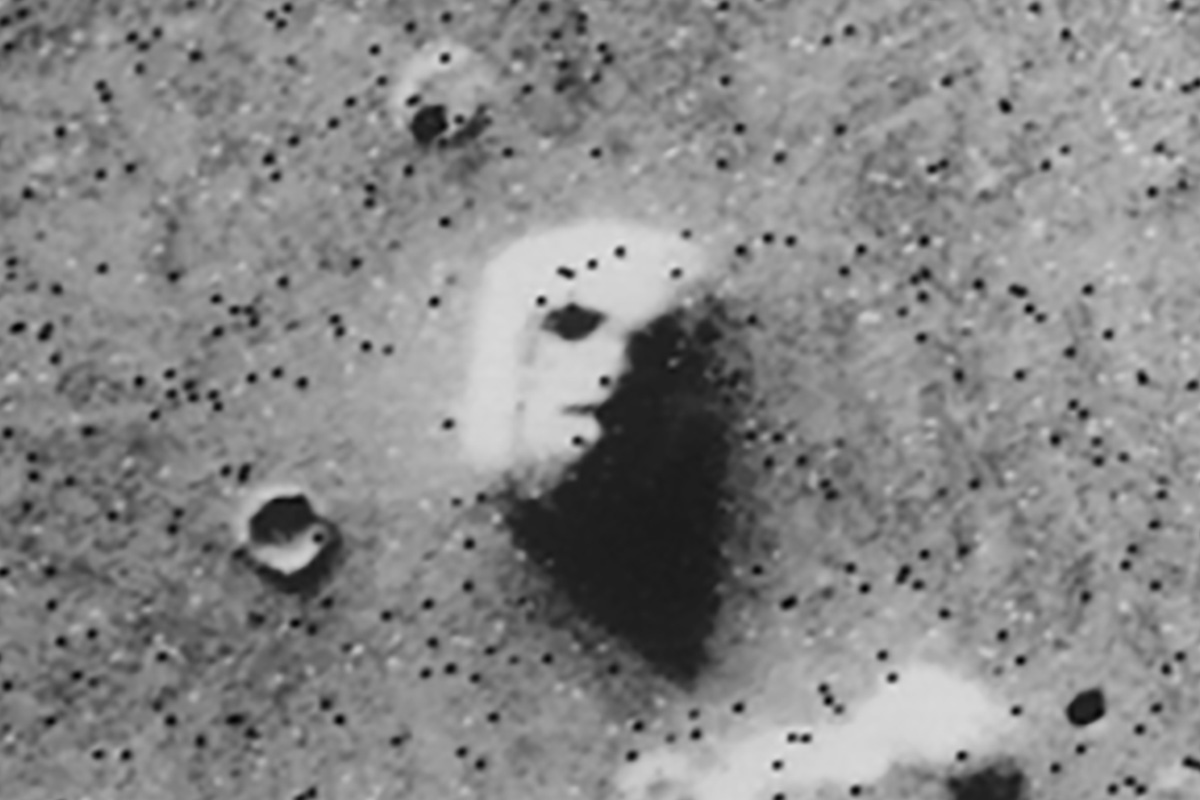
Despite Viking project scientist Gerry Soffen expressing the Agency’s surprise about “what tricks of light and shadow can do”, the Face on Mars image soon became the centrepiece of all sorts of conspiracy theories.
It has inspired countless stories of civilisations on Mars and beyond and opened the floodgates for reports of other weird structures on the Martian surface.
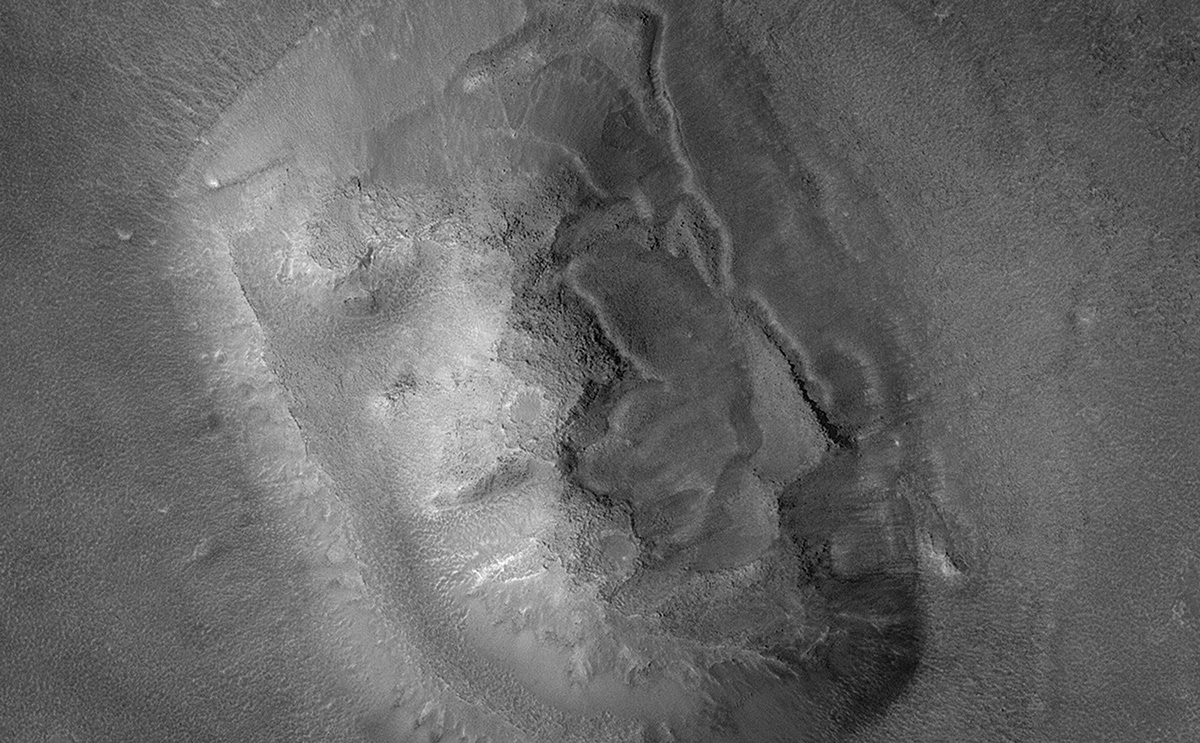
Of course, later imagery of Mars confirmed that the apparent human face was simply due to the angle of the Sun at the time.
A Mars Global Surveyor image of the area from 2001 shows the mesa with spectacular resolution – but no human face.
Other orbital imagery of Mars has revealed a wealth of bizarre features.
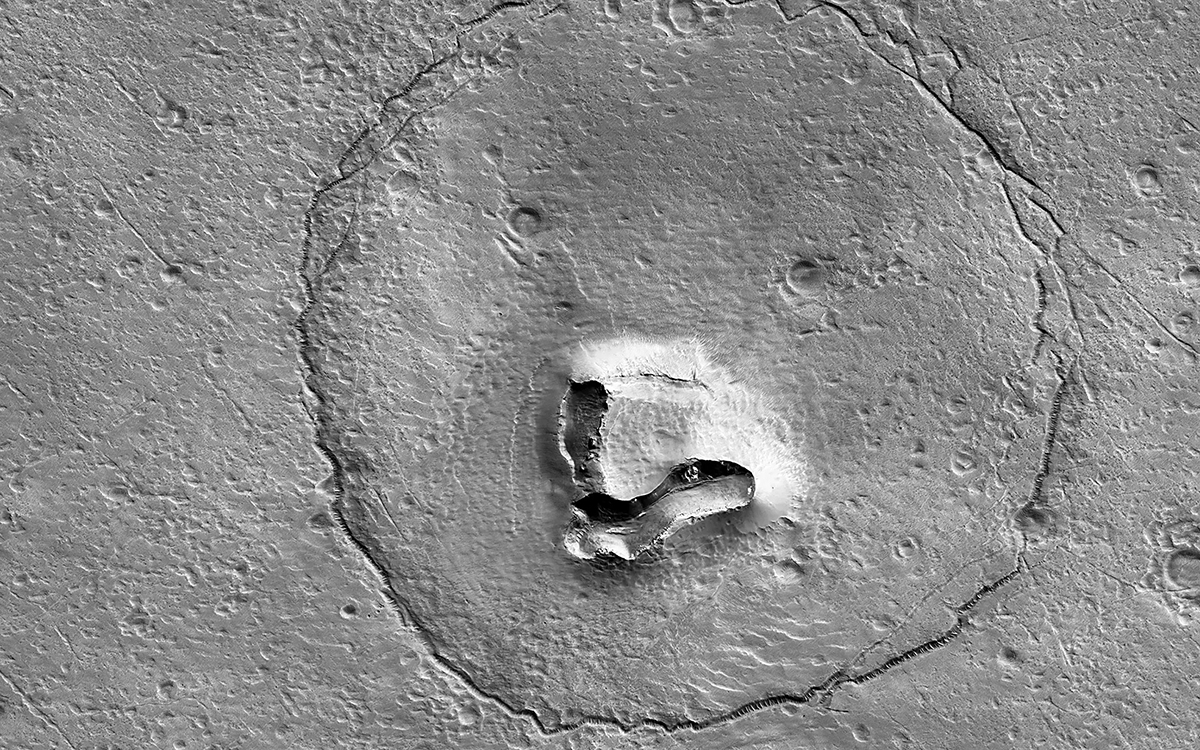
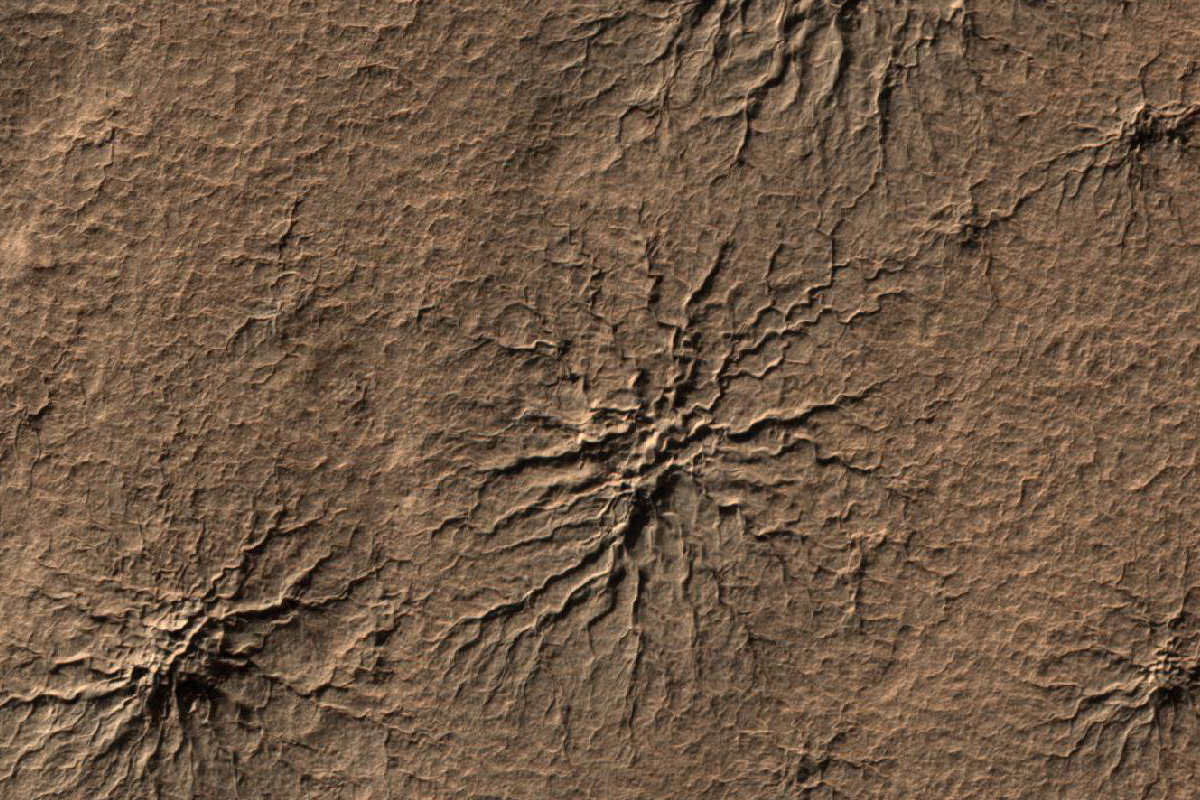
We have discovered a bear’s face, an angel, heart shapes, a spiderweb pattern and a mushroom cloud, as well as characters from The Muppets, including Kermit the Frog.
Conspiracy theorists have, however, been suspiciously silent about why ancient Martian civilisations might have commemorated a popular US children’s TV show!
Mars's Inca City
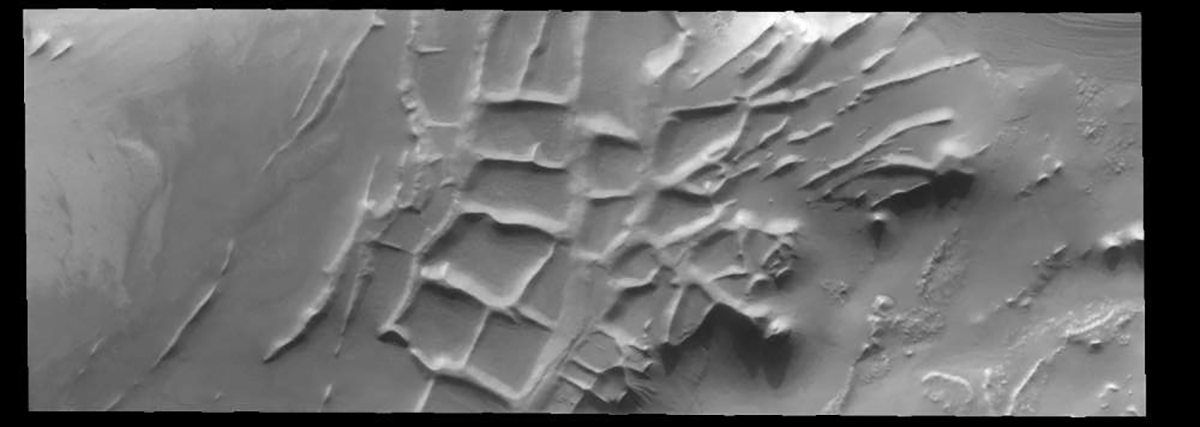
Even earlier than the infamous Face on Mars was the discovery of an entire ‘Inca City’ in images from NASA’s 1972 probe Mariner 9.
The area in question – Angustus Labyrinthus, near Mars’s south pole – bears a striking resemblance to the ruins of an ancient city.
These almost square features were probably formed as magma rose to fill linear cracks resulting from an asteroid impact, and the subsequent erosion of surrounding rock.
A pyramid on Mars?
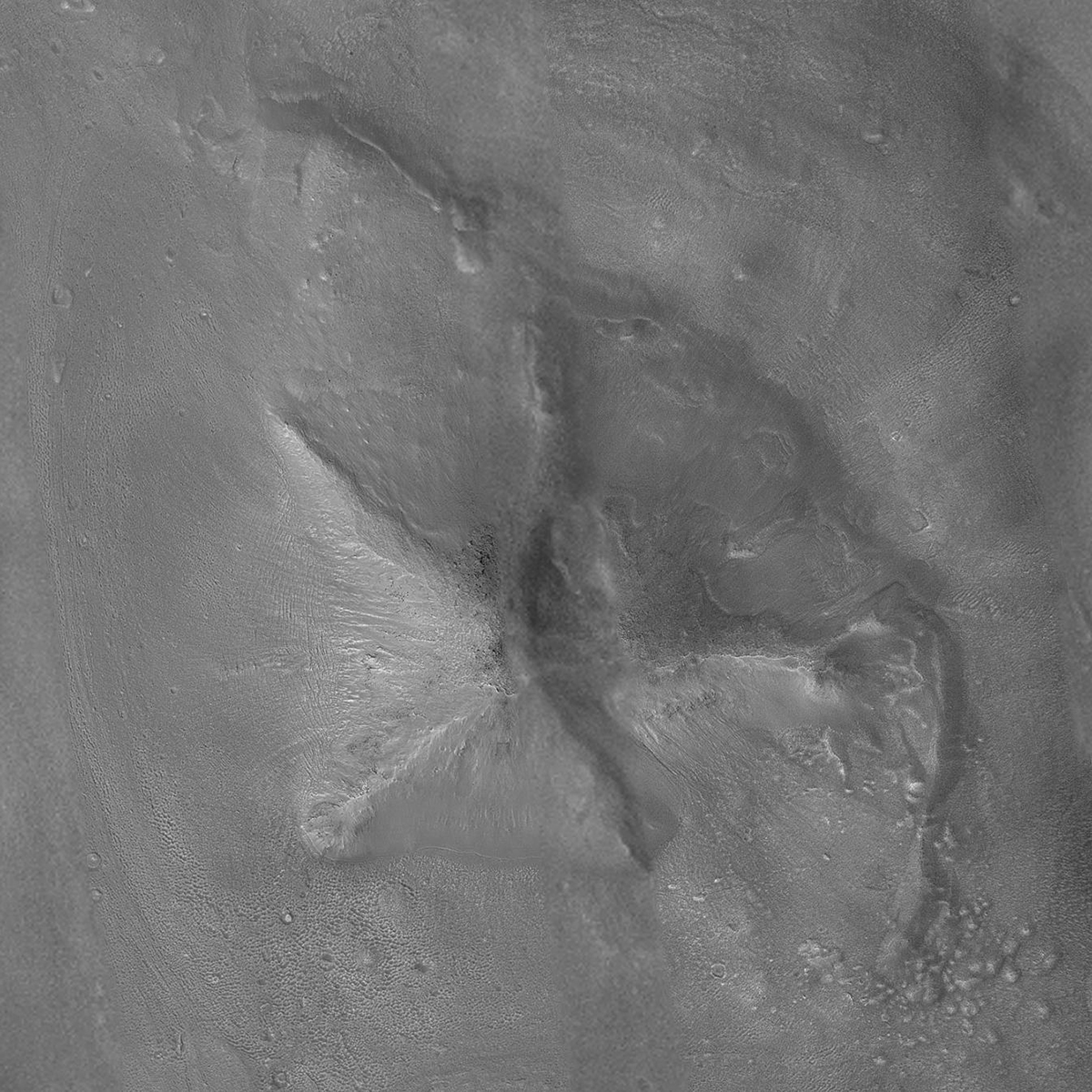
Another image from the Mars Global Surveyor shows a strange pyramidal formation, often called the ‘Candor Tetrahedron’.
It was imaged again by the Mars Reconnaissance Orbiter, which confirmed its apparently regular shape.
Despite looking like an impressive engineering feat from ancient Egypt, the 145-metre-tall (475ft) pyramidal structure is thought to be the result of wind erosion.
Scientifically speaking, none of these odd structures seen in Mars imagery are beyond explanation.
They may strike us as weird, unusual or suggestive, but there are well-known geological or meteorological processes that can easily account for them.
It is easy to assume that the surface is Mars is dead and immutable. But, in its past, Mars was awash with liquid water and was tectonically active.
Its atmosphere, although thin, is still able to whip up violent dust storms today. So, most of the processes found on Earth that change, warp and sculpt the solid ground are, or have been, active on Mars.
And, tellingly, there are plenty of geological features on Earth which resemble the ‘unexplained’ features seen on Mars.
The human brain loves regularity. We have evolved to respond to patterns, repetition and linearity.
It helps us make sense of the world. But we are also predisposed to interpreting these as intelligently designed.
If we see a pentagon, a hexagon, a circle, a square, even a straight line, we assume they are not produced naturally.
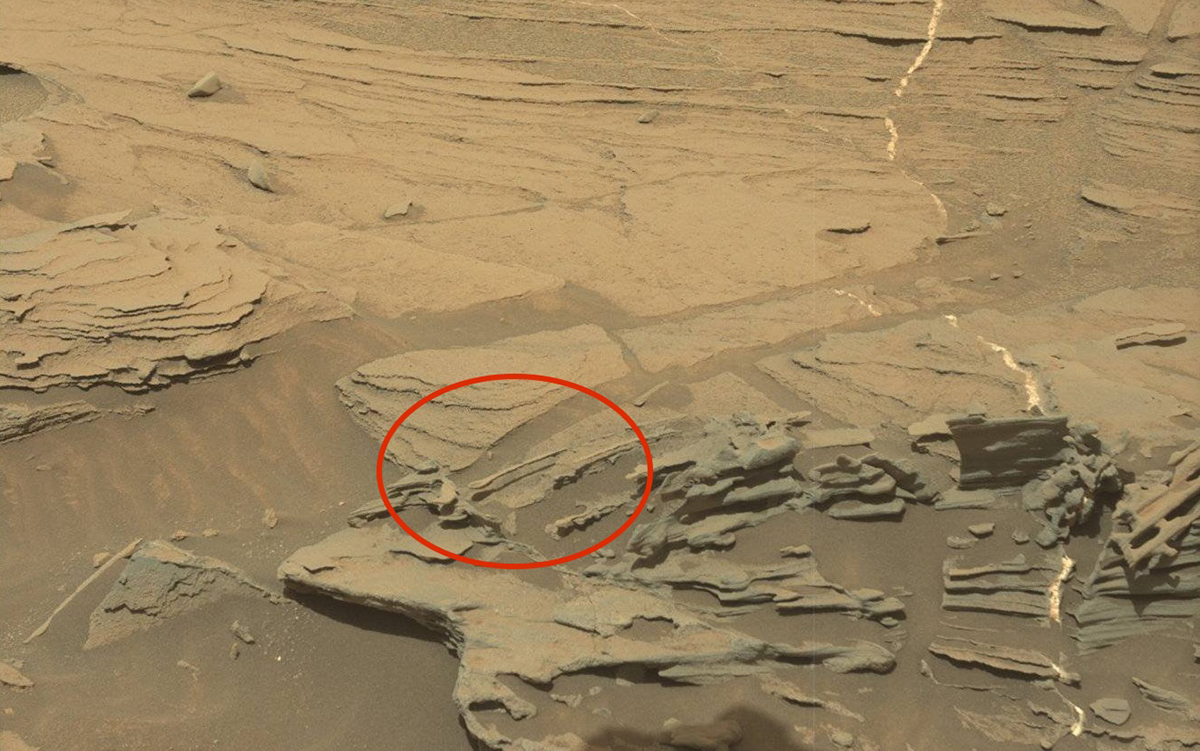
But nature is perfectly capable of producing regular patterns and apparently perfect shapes; a hexagon at Saturn’s north pole, squares in tessellated pavements, straight lines in geological faults, and so on.
Once we began taking images from the surface of Mars, rather than from orbit, the number of suspicious objects or features snowballed. Some have obvious explanations.
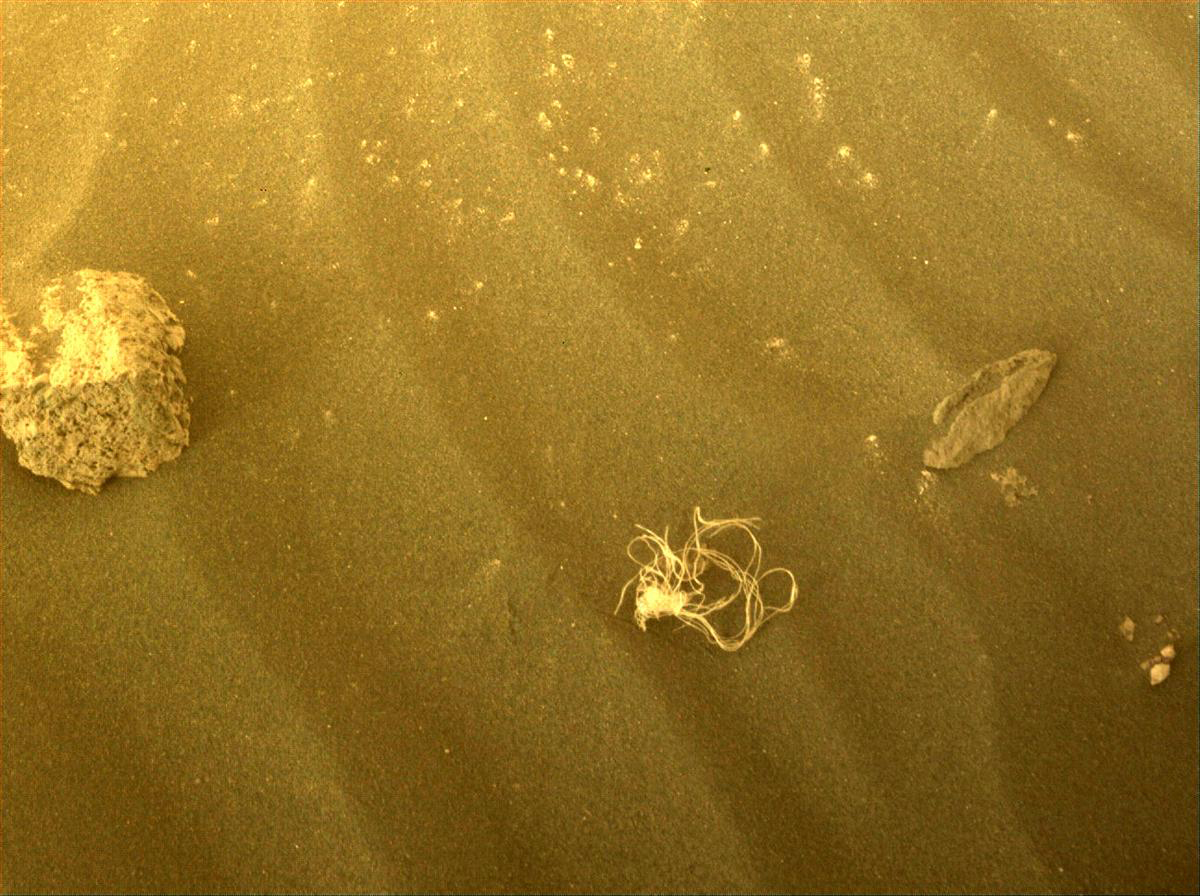
In July 2022, NASA’s Perseverance rover spotted what appeared to be a loose ball of string or ‘noodles’. It turned out this was most likely some netting material from the rover’s own landing system.
The creepy statue on Mars
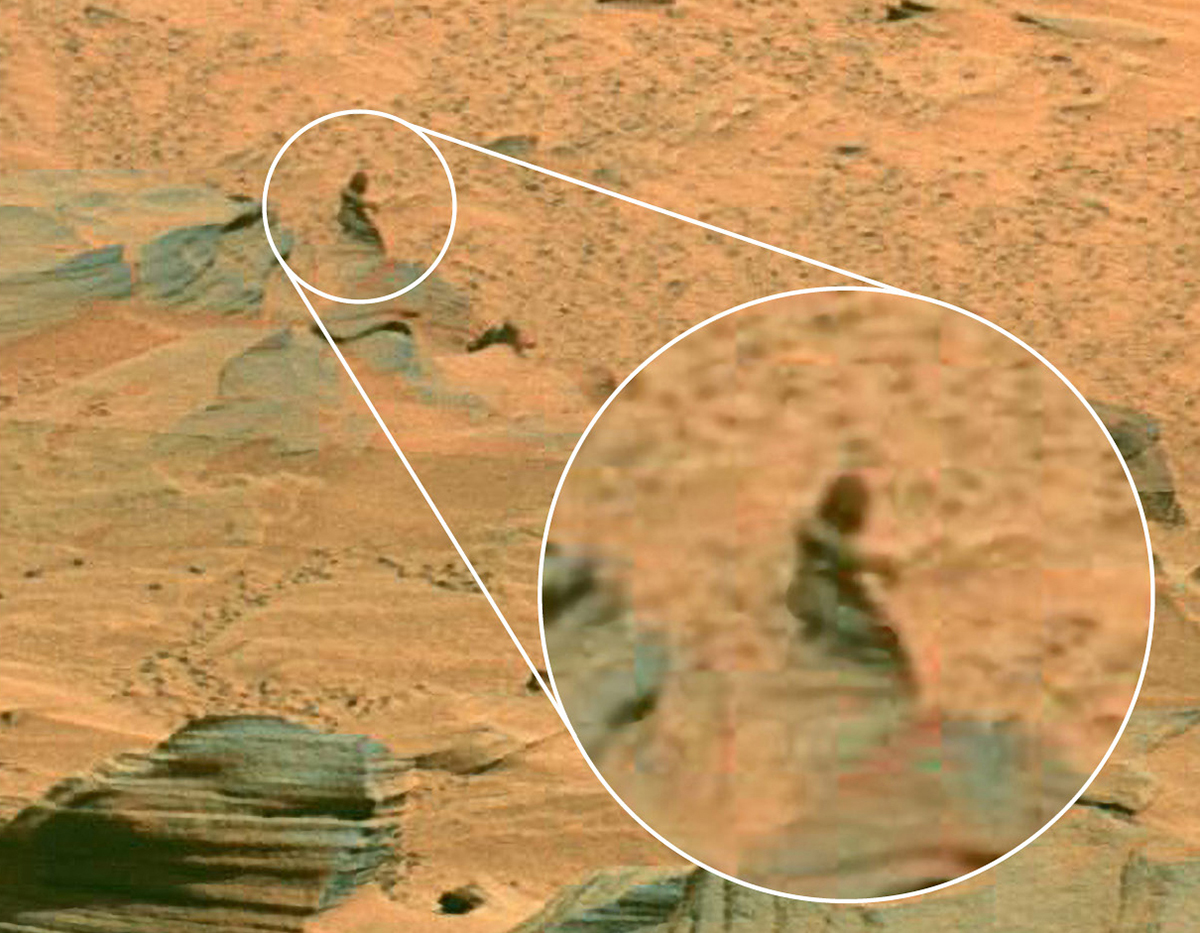
Perhaps one of the most intriguing images appears to show a statue of a figure.
This dark profile, oddly reminiscent of the famous ‘Big Foot’ photograph, was spotted in an image taken by NASA’s Spirit rover in 2007.
Of course, the figure, which is only a few inches tall, lying only a few metres from the rover, is simply a chance resemblance and really the result of millions of years of wind erosion.
Earth is littered with such chance similarities. Mountains, hills, valleys, outcrops, even individual stones often bear the names of the forms they resemble.
Psychologists call this tendency to see patterns in randomness ‘pareidolia’. It’s what makes us see shapes in clouds, in cliffs and on the Moon.
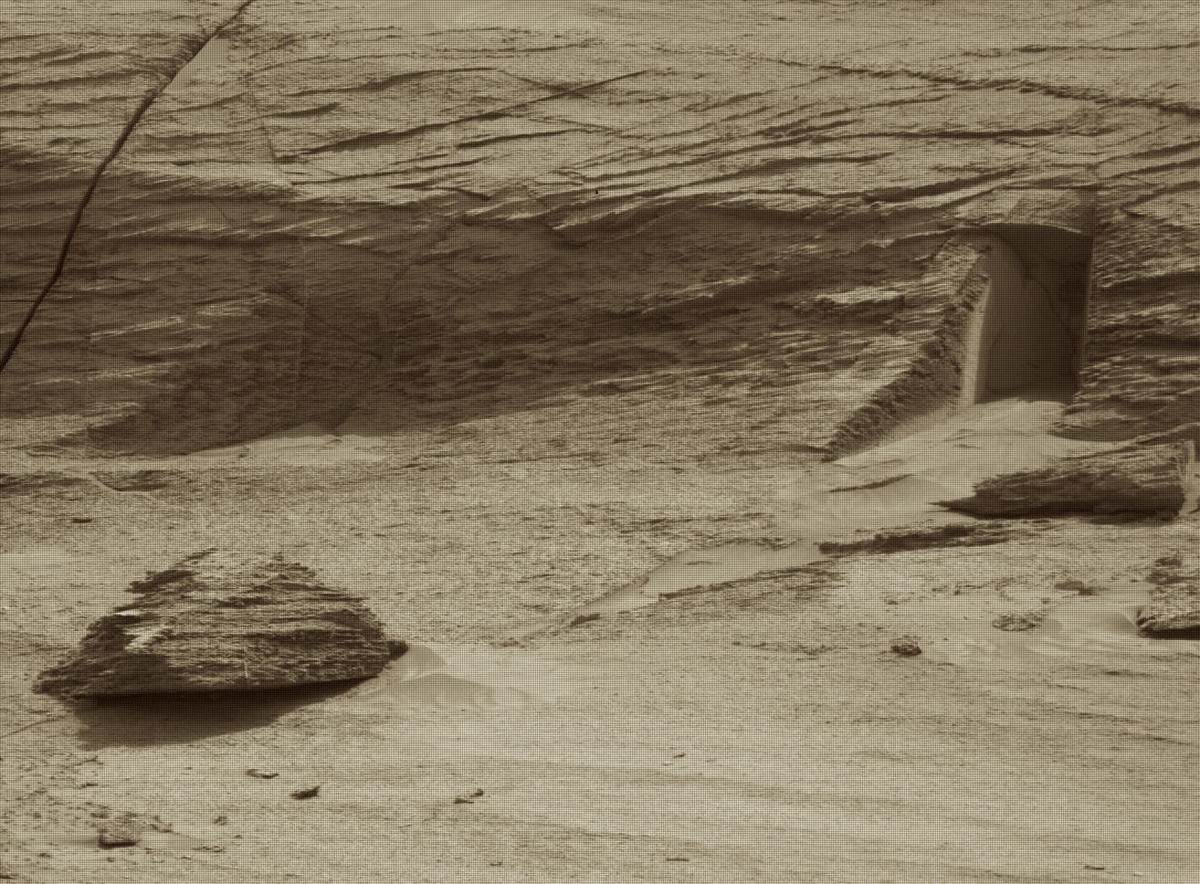
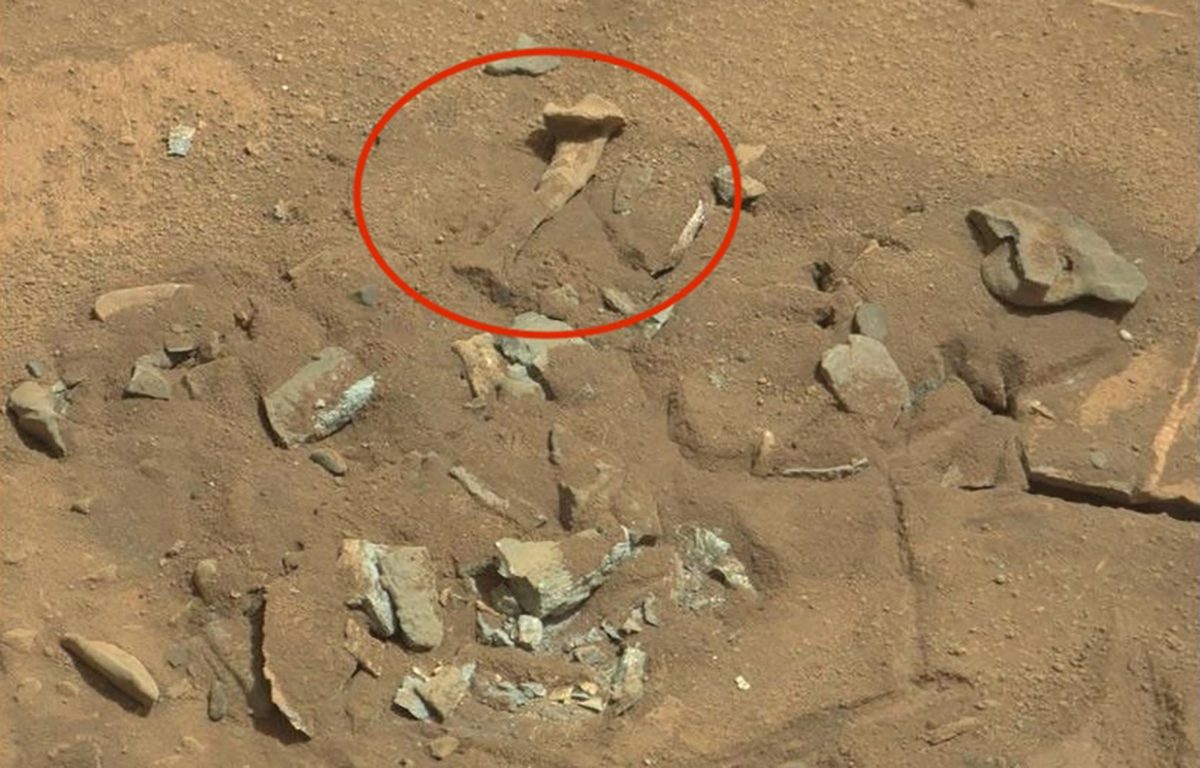
So it’s not surprising that our Martian probes have discovered an Egyptian warrior-goddess, ancient petroglyphs, a spoon, ball-bearings, a robot leg, a microscopic gearwheel, a doorway, a drill bit, a thighbone and many other oddities.
Of course, scientists can also get caught up in controversy. In 1996, researchers announced that signs of life had been found in a meteorite called ALH84001, which had found its way to Earth from Mars.
There was evidence this rock had formed in a water-rich environment, contained minerals and chemicals that could have been made by life and appeared to have microfossils which resembled tube-like Earth microbes.
Unfortunately, it was later shown that all these features could be explained without the need for Martian life.
The strange flashes on Mars
There is one final oddity about Mars which was actually seen from right here on Earth.
Many observers, including Percival Lowell, have reported the appearance of bright flashes of light on its surface. Some have interpreted these as communication signals from Martian inhabitants.
A series of such flashes were seen in 1958, in a region of Mars known as Edom Promontorium. Assuming the flashes were sunlight reflecting off geological structures, or perhaps an atmospheric effect, amateur astronomer Thomas Dobbins later calculated exactly when the 1958 alignment of Earth, Mars and the Sun would happen again.
His predictions said early June 2001 and on June 7th, 2001 the flashes were seen again. So while the precise cause is not yet known, Martian flashes aren’t the mystery they once were.
We have had a fascination with the Red Planet since the dawn of humankind. Although modern science has learnt much about our planetary neighbour, revealing a fascinating and dynamic history, there is still much to learn.
But, perhaps more than any other place in the Solar System, Mars is still a rich source of the weird, mysterious and controversial – and there’s no reason to suppose that will change anytime soon.
What other strange things have been seen on Mars? Let us know your favourites by emailing contactus@skyatnightmagazine.com