To be honest, the Universe couldn’t care less about a multiverse. But some cosmologists believe that our theories require one.
Leaving aside Marvel movies, multiverses pop up everywhere, from an interpretation of quantum physics to an explanation of what kicked off the Big Bang.
What these (sometimes wild) ideas have in common is that they all feature more than one universe, usually with no way to communicate between them (sorry, sci-fi fans: no portals).
More mind-bending science

The invisible dragon
The danger here is what I call the invisible dragon problem.
I have an invisible dragon in my garage. Can you prove that I don’t?
Put flour on the floor and look for tracks? No, it’s a weightless dragon. Poke it? No, it’s made of dark-matter particles.
I can always find a way to avoid any detection. But if I can’t interact with it in any way, why think about it at all?
Similarly, you might wonder why cosmologists need a multiverse. It’s because some feel it would explain away ‘Goldilocks’ outcomes – cases where physical conditions appear balanced ‘just right’.
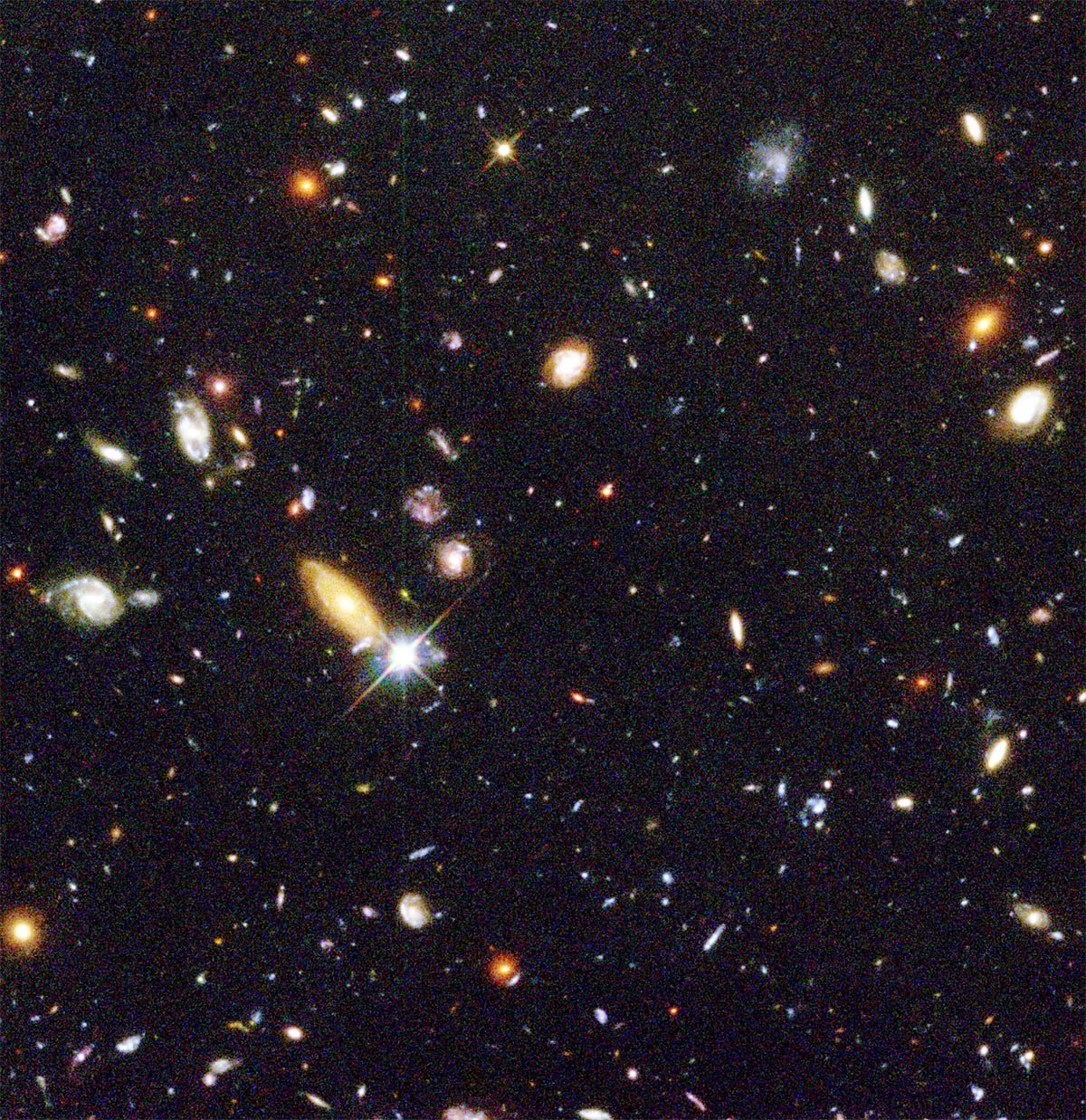
Why the Universe is 'just right'
Our Universe presents us with a fine-tuning problem.
There are many aspects of nature where a small difference in a physical constant would mean no possibility of life, or even matter.
Everything from the mass of neutrons to the efficiency with which hydrogen is converted to helium in stars are suggested as examples where a small change would make a Universe like ours infeasible.
Some believe this implies the existence of a creator.
Despite being an atheist, one of the 20th century’s greatest astrophysicists, Sir Fred Hoyle, was driven to say: “A common-sense interpretation of the facts suggests that a superintellect has monkeyed with physics, as well as with chemistry and biology, and that there are no blind forces worth speaking about in nature.
"The numbers one calculates from the facts seem to me so overwhelming as to put this conclusion almost beyond question."
This, however, is not a scientific explanation. As a result, a multiverse argument is wheeled out.
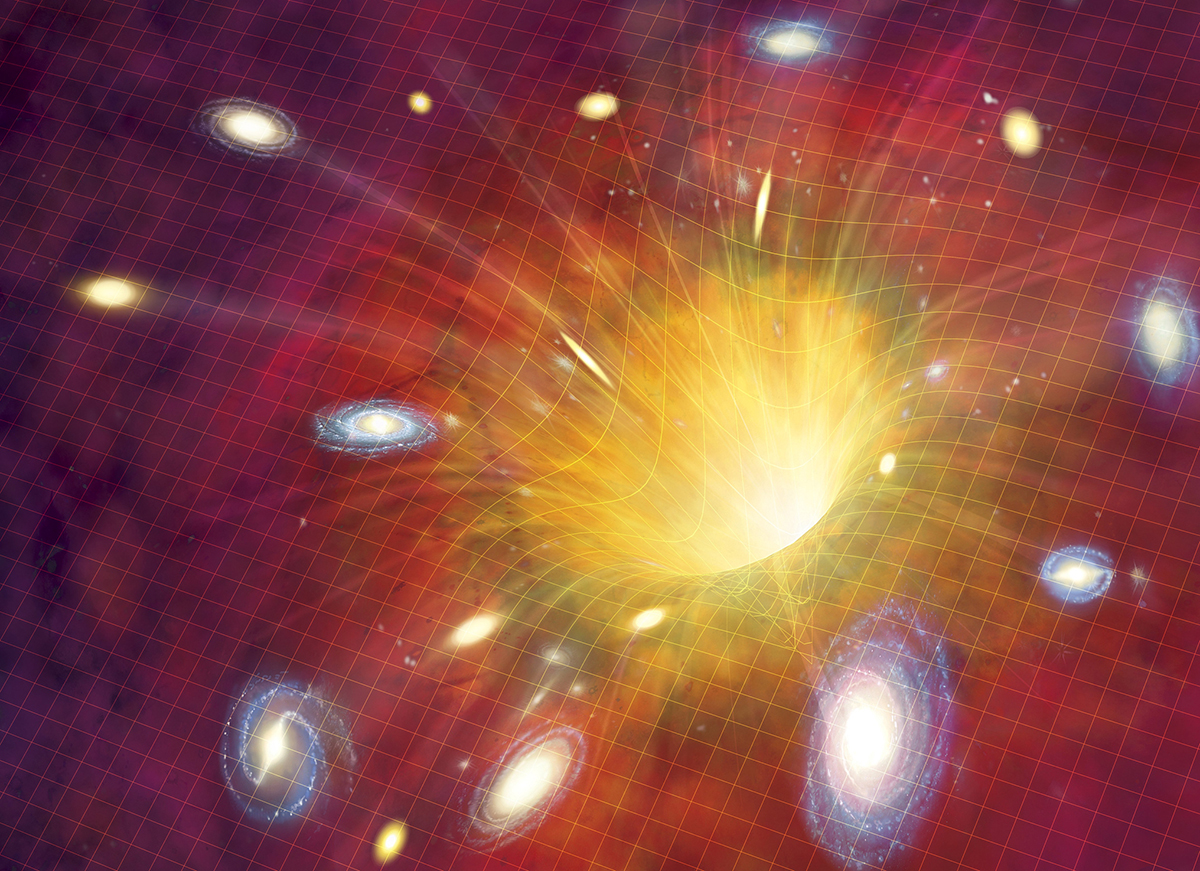
Why the multiverse hypothesis exists
The claim is that with many universes, each based on different physical constants, a few would be like ours, making life possible.
Unfortunately, this employs a statistical misunderstanding described by philosopher Philip Goff as the reverse gambler’s fallacy.
It goes something like this. You walk into a casino with your cosmologist friend.
The first person that you come across is winning game after game. Your friend says: "Look at that, the casino must be full!"
Their argument is that with many players, you are much more likely to see someone on an extended winning streak.

But this is no more effective an argument than the original gambler’s fallacy: the idea that after a run of heads, a coin toss is more likely to come up tails.
In reality, you can’t infer anything about the next throw from a coin’s history.
Similarly, you can’t tell what’s happening across the whole casino by observing one player.
Nor can you infer a multiverse by studying a single universe.
I love multiverses as entertaining ‘what-if?’ mental playgrounds. But unless and until we have concrete evidence for their existence, they remain just that.
What do you think? Does our Universe need multiverses to exist? Let us know by emailing contactus@skyatnightmagazine.com