
Imagine stepping into a cabin, pressing a button and riding smoothly upward… all the way to space.
No roaring engines, no crushing G-forces. Just a long, quiet climb to the stars.
That’s the promise of the space elevator, one of the most audacious engineering concepts ever seriously proposed – and one that, surprisingly, sits within the laws of physics.
More amazing science
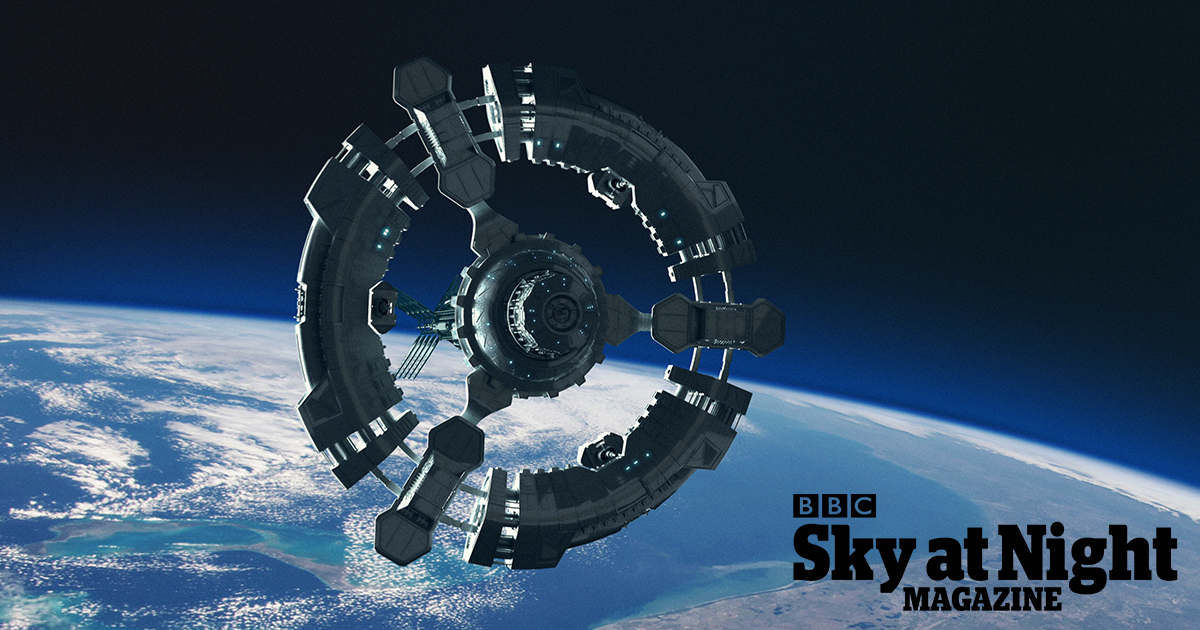
While it was the Russian rocket scientist Konstantin Tsiolkovsky who first sketched a ‘celestial castle’ – a tower reaching all the way up into space – in 1895, the concept was popularised by Arthur C Clarke’s 1979 novel, The Fountains of Paradise, in which an engineer attempts to build a space elevator on a mountain in a fictionalised Sri Lanka.
Clarke didn’t invent the idea, but he made it feel possible.
What a space elevator needs
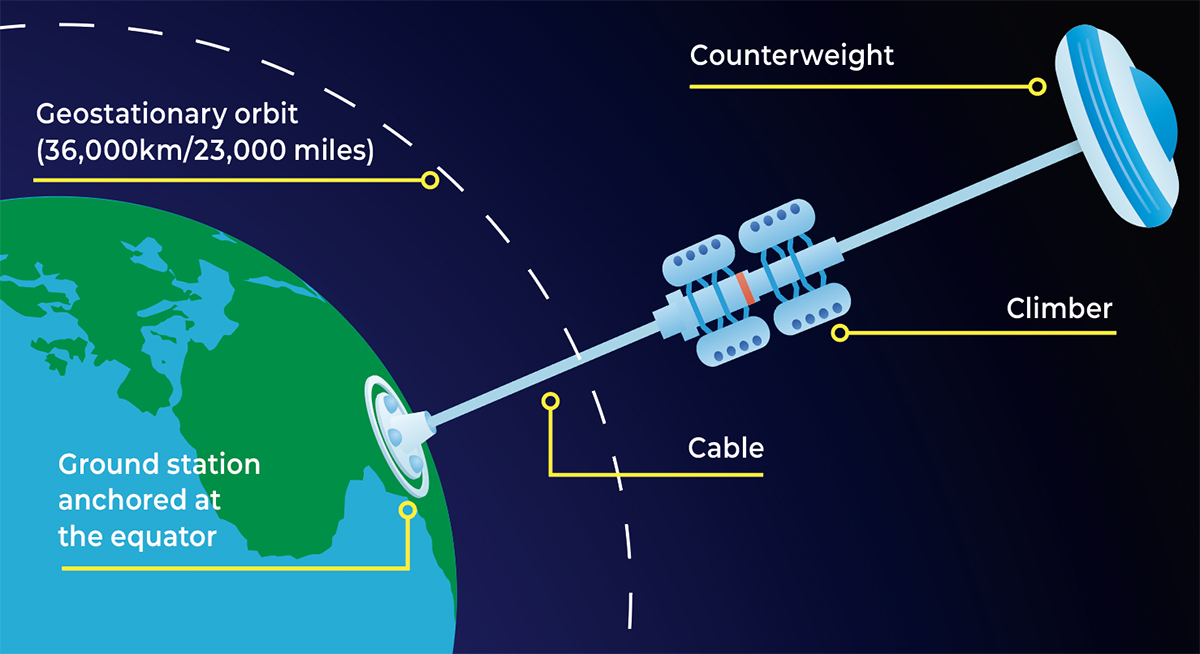
That vision has since solidified into a design with four key components.
First, the anchor: a ground station on Earth’s equator, a fixed base from which everything else extends.
From there, a tether stretches some 100,000km (62,000 miles) into space, well beyond geostationary orbit (where satellites stay fixed over a single point on Earth) at 36,000km (23,000 miles).
A counterweight at the far end keeps the whole structure taut, held in tension by the competing forces of Earth’s gravity pulling inward and centrifugal force pulling outward.
With those forces correctly balanced, the cable will hang like a beanstalk – stable and permanent.
The final piece is the climber: the vehicle that grips the tether and makes the journey possible.
How it would work
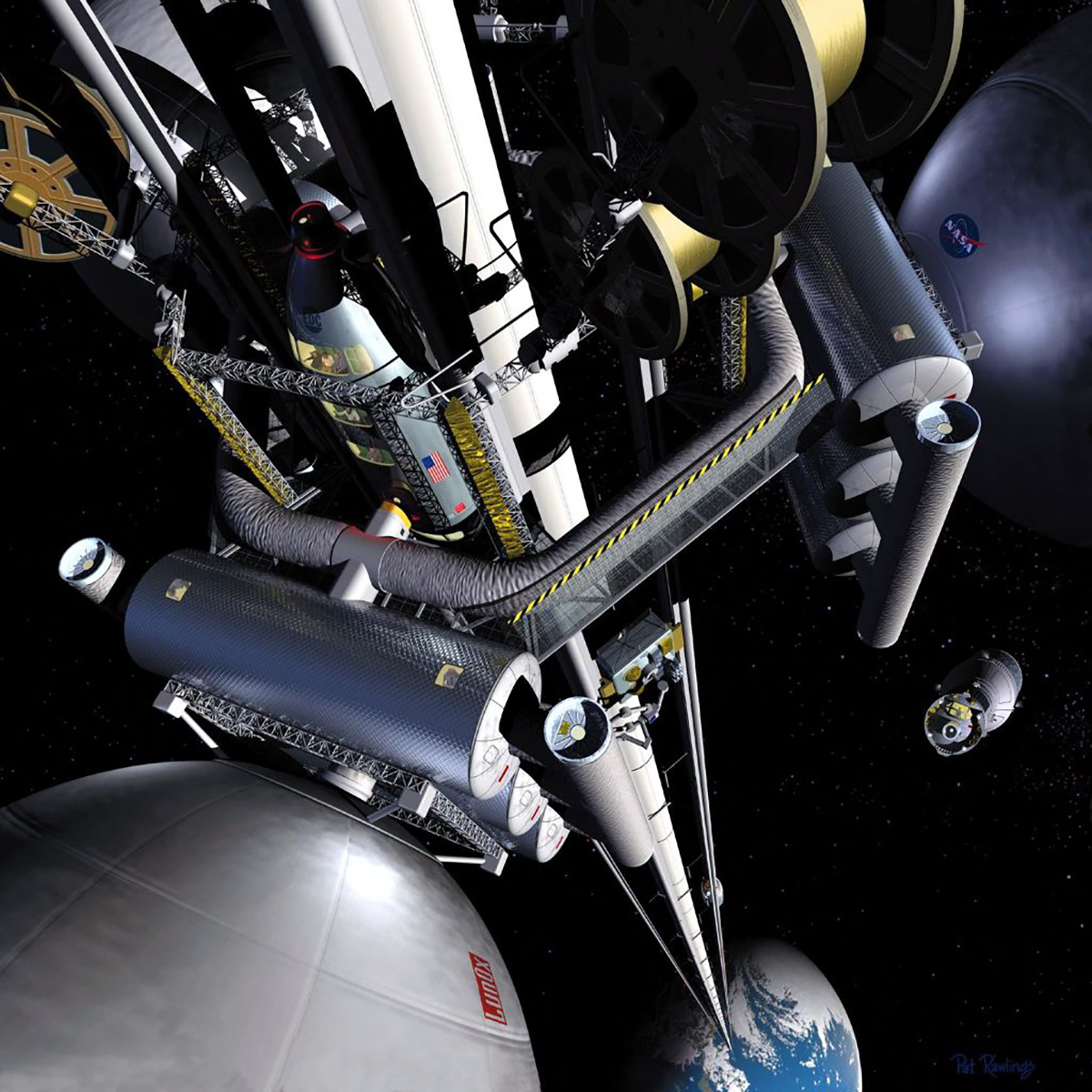
Climbers would ascend using electric motors, powered perhaps by ground-based lasers or solar panels.
No rocket fuel. No combustion. Just electricity and engineering. Cargo, satellites, fuel and eventually passengers could be ferried to orbit for a fraction of the cost of conventional launches.
Getting a single kilogram into orbit by rocket currently costs thousands of dollars; a space elevator could reduce that figure by orders of magnitude.
And once the infrastructure exists, the cable could be used to lower material from orbit: spacecraft returning to Earth could release cargo and let gravity do the work, with that energy potentially feeding back into the system to power climbers heading up.
It becomes almost self-sustaining.
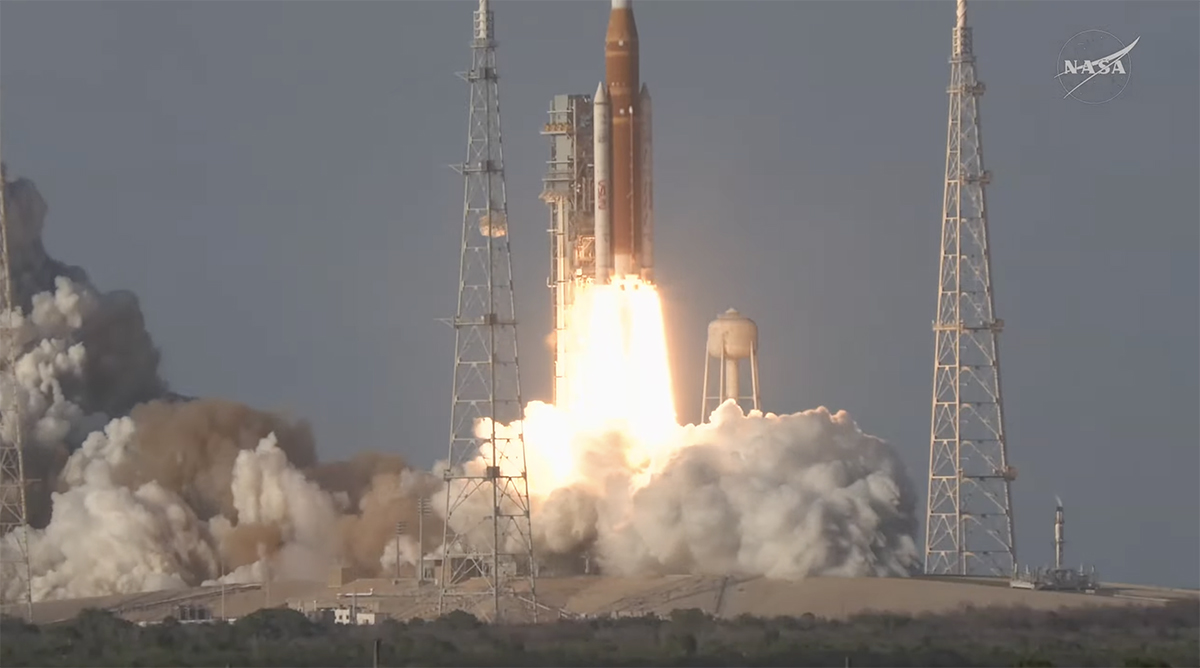
The ecological case is equally compelling. Traditional rockets burn enormous quantities of propellant, releasing gases and particulates into the upper atmosphere.
A space elevator running on electricity could one day be powered by renewable energy, transforming the act of reaching orbit from an explosive chemical event into something closer to running a very long escalator.
After the significant upfront costs of construction, the ongoing energy demands would be modest by comparison.
Of course, there are risks. The most dramatic: what if the tether snaps?
A break high up in the cable would send the upper section drifting into space, while the lower portion, now free from tension, would fall.
A cable of this length, wrapping around Earth as it descends, would cause catastrophic destruction across thousands of miles.
Engineers would need to take this seriously, with proposed designs incorporating self-repair mechanisms or multiple parallel cables to reduce the likelihood of such a failure.
The space elevator remains one of those ideas that is simultaneously visionary and logical, impossible-sounding yet grounded in real physics.
Whether or not we ever build one, it allows us to consider a reality in which going into space is as routine as riding an elevator.
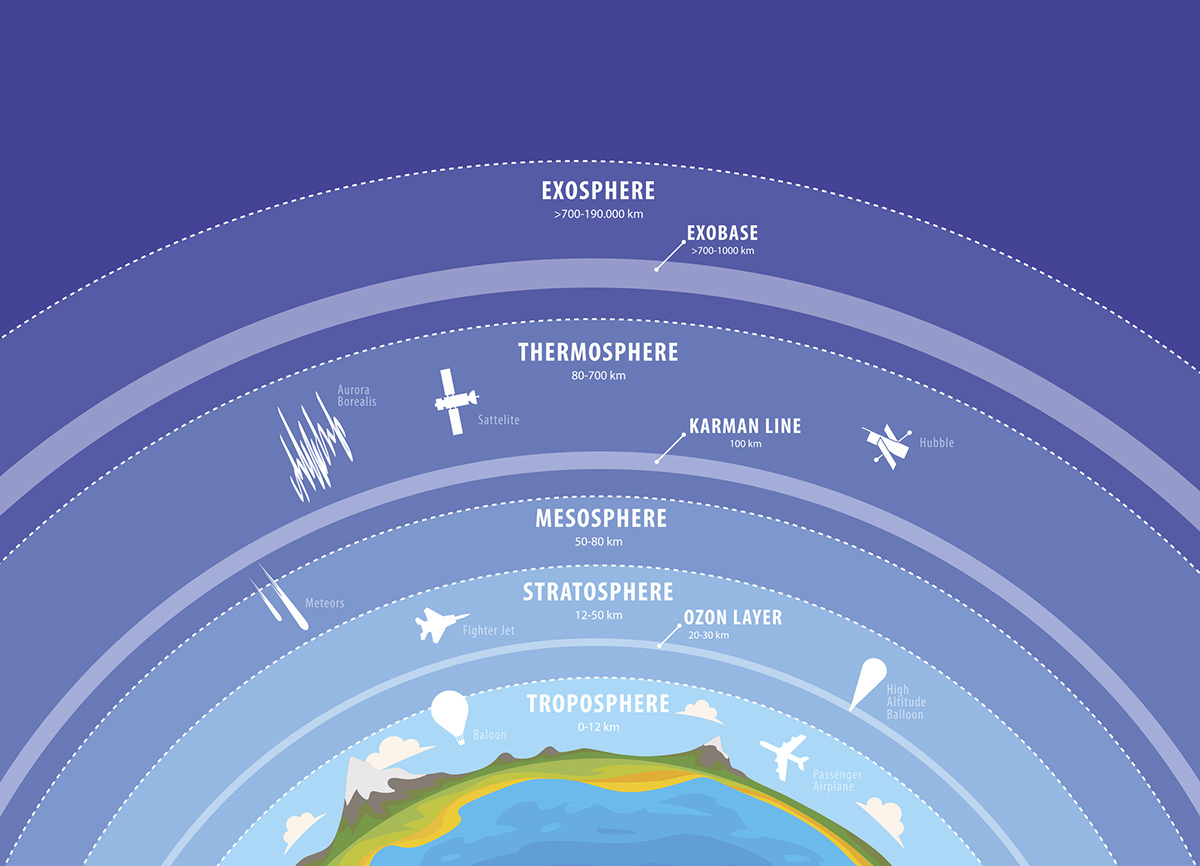
Why we can't build a space elevator yet
If a space elevator is an eco-friendly way to get into orbit, and low cost to operate, why haven’t we built one?
Firstly, its tether would have to be extraordinarily strong – stronger than any substance ever manufactured at scale.
It needs to support its own weight across 100,000km (62,000 miles) while withstanding the stresses of climbers, wind and orbital mechanics.
Steel would snap under its own weight long before reaching orbit.
Carbon nanotubes, discovered in the early 1990s, have the theoretical strength, but producing them in the lengths and purity required is far beyond our current capabilities.
Secondly, low Earth orbit is littered with millions of fragments of debris, all travelling at up to 28,000km/h (17,000mph).
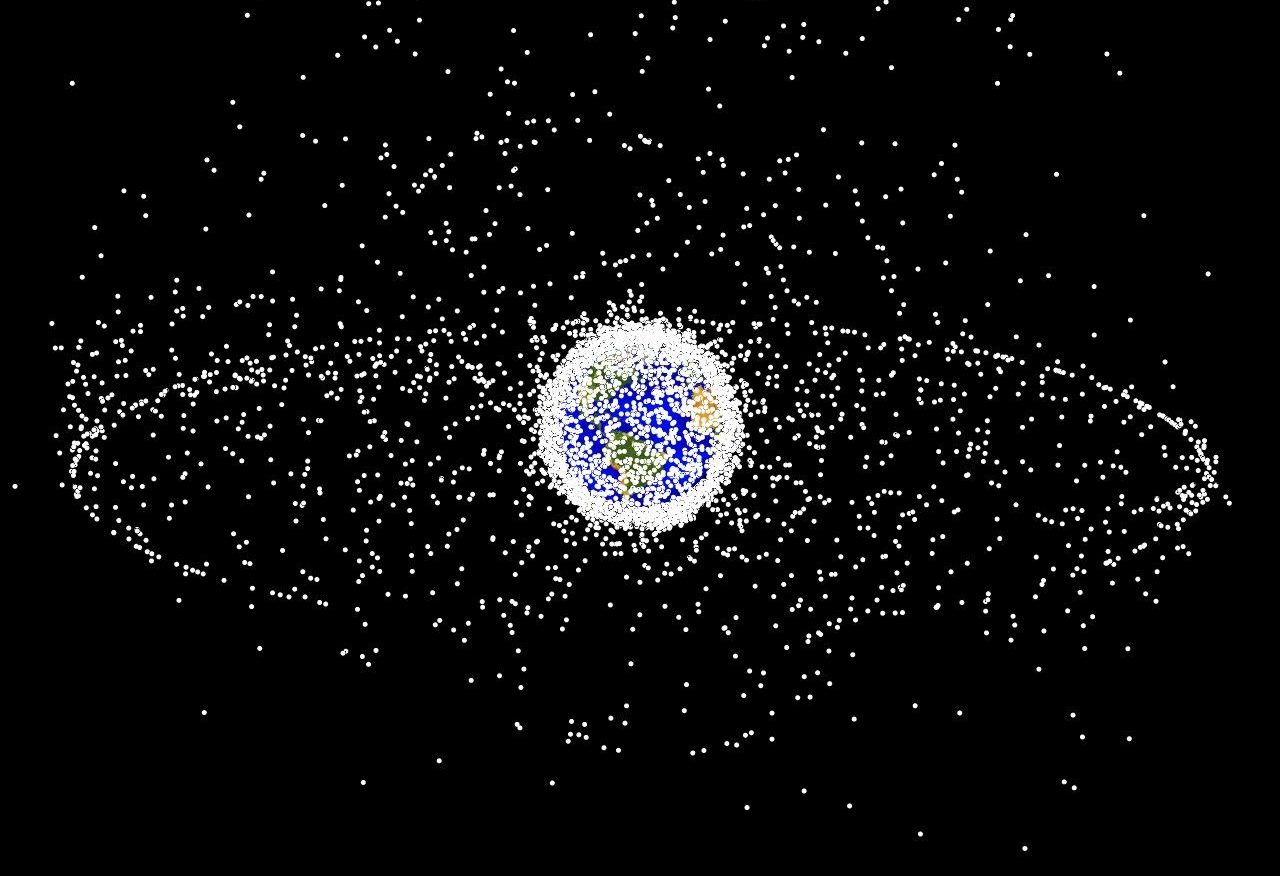
A stationary cable cutting across those orbital planes would be struck repeatedly.
Even microscopic meteoroids, present throughout the inner Solar System, would gradually erode any tether over time.
Designing a cable that can survive decades of such bombardment is an unsolved engineering challenge.
Beyond materials and debris, there’s the question of politics and money.
A space elevator would need to be anchored near the equator, and the costs would dwarf any single nation’s space budget.
Building it would require a level of sustained international collaboration that has never existed for any project in human history.

