
We now have the ability to dim the Sun to change the climate, but should we?
In Danny Boyle’s 2007 film Sunshine, a desperate crew flies towards our dying star to reignite it and save humanity.
In Andy Weir’s Project Hail Mary, a scientist must find a way to dim a Sun that has grown dangerously bright due to alien microbes.
These stories play with a tantalising, Promethean premise: if we can control the Sun, we can control our fate.
Read more

Now, a real-world version of this concept is moving from the fringes of fictional science into serious policy discussion.
Known as stratospheric aerosol injection (SAI), the plan involves spraying millions of tonnes of reflective particles – likely sulphur dioxide – into the upper atmosphere to bounce solar radiation back into space.
While this may sound like a clever hack for global warming, a landmark study from Columbia University warns that the reality could be far messier than some existing models suggest.
The volcanic blueprint

We know that SAI works in theory because nature has provided examples. When Mount Pinatubo erupted in the Philippines in 1991, it blasted a cloud of sulphur dioxide 32km (20 miles) into the sky.
This veil of sulphate aerosols spread across the globe, cooling Earth by roughly 0.5°C (0.9°F) for nearly two years.
So, if volcanoes can cool the Earth, can we mimic them artificially? And would it be wise to do so?
Professor Christian Pfrang of the University of Birmingham warns that predicting aerosol behaviour over long periods is profoundly challenging.
"The main concern is that the particles will undergo processes we do not anticipate, that will cause unintended effects," he explains.
Once particles reach the stratosphere, "They can stay there for a long time, so it is essential to have a full understanding of all the processes they may undergo," he adds.

The Columbia study suggests human-engineered cooling would face hurdles nature doesn’t have to account for.
Material shortages or technical limitations, such as particles clumping together (coagulation), and falling out of the sky too quickly (sedimentation), could make SAI ineffective or counterproductive.
Yet the conversation is intensifying. “Given we seem to be heading to 3°C of warming quite quickly, the imperative to lay out the risks and benefits is increasing,” says Neil Harris, Professor of Atmospheric Informatics at Cranfield University.
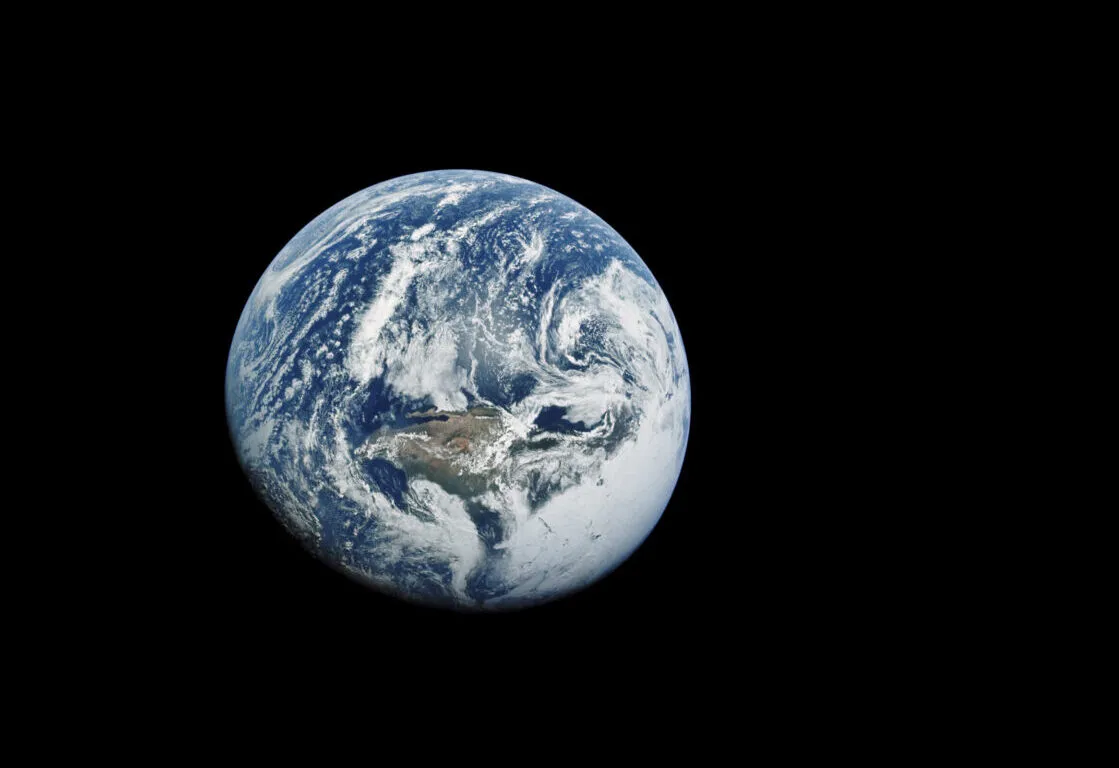
Where should we use stratospheric aerosol injection?
One of the most alarming findings from the Columbia report concerns the where of SAI deployment.
Deploy aerosols near the poles to save the ice caps, and you might inadvertently shift the tropical rains that billions rely on for food.
And Harris argues that unintended regional consequences would be unavoidable.
Because SAI wouldn’t just cool the surface, but alter the temperature structure of the atmosphere itself. It could change the ‘engine’ of our weather.
"The fundamental problem is that SAI influences atmospheric flow patterns, not just surface temperatures," Harris explains.
He notes that while some studies suggest high-latitude SAI could prevent local tipping points, it may trigger others elsewhere.
The risks aren’t just theoretical; they’re written in Earth’s history. Professor Peter Thorne of Maynooth University points to palaeoclimate records – data stored in tree rings and lake sediments – to show what happens when the Sun dims.
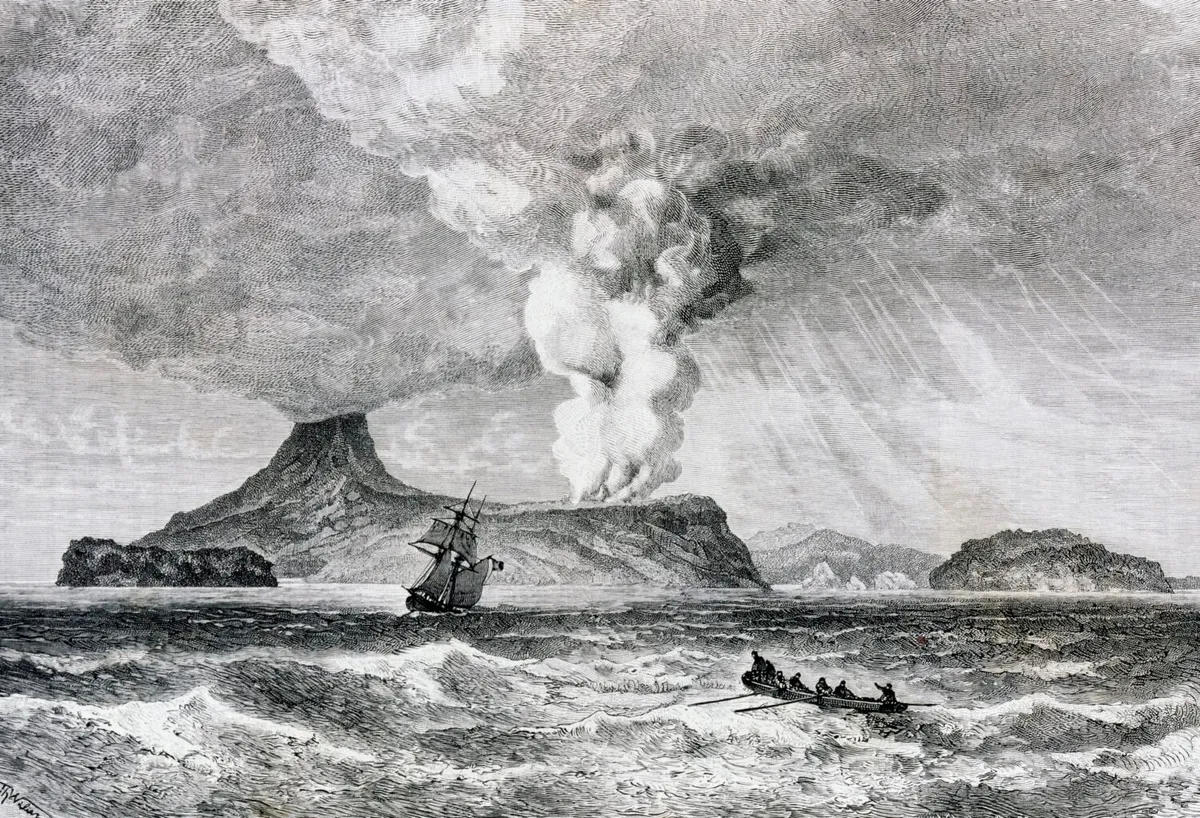
Events like the 1257 Samalas eruption or the 1883 Krakatoa eruption were associated with monsoon failure and harvest collapse.
"We have multiple lines of evidence, not just modelling, pointing to potential significant impacts on Earth’s hydrological cycle and temperatures, with knock-on effects for agricultural production and broader society," Thorne says.
Crucially, Thorne warns we’re effectively operating with impaired vision when it comes to monitoring.
"We have the observations to detect impacts in some regions. Sadly, these are not where we most need them," he says, noting that the Global South and small island states – those most vulnerable to weather shifts – have the weakest observing networks.
Treating the symptom, not the disease
Of course, even if these aerosols could be perfectly distributed, they wouldn’t be creating a stable climate; they would be creating a synthetic one.
Therefore, SAI should be considered akin to a 'fever medication', according to Dr Claudia Wieners of Utrecht University. It may treat the temperature, but the underlying ‘infection’ of rising CO₂ would remain.
Ocean acidification, caused by CO₂ dissolving into the sea, would continue unabated. Furthermore, the impact on ocean systems like the Atlantic Meridional Overturning Circulation (AMOC) is highly uncertain.
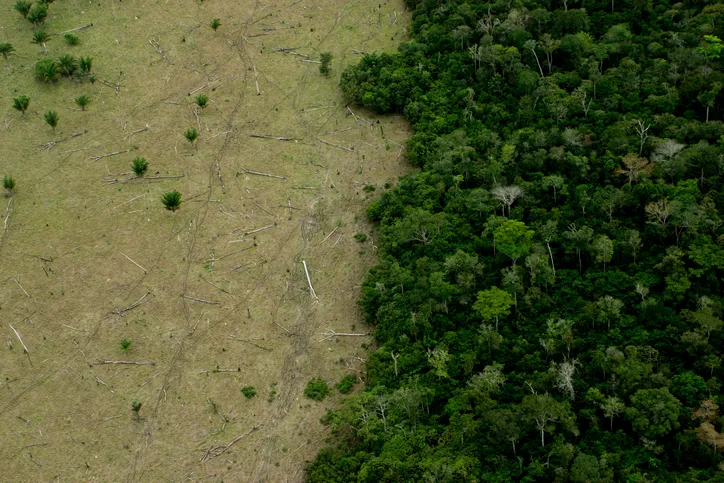
There is also the Amazon paradox: while SAI might reduce heat stress on the rainforest, the resulting reduction in rainfall could cause it to dry out and collapse anyway.
"Does SAI help the Amazon rainforest, or actually endanger it? I don’t know," Wieners admits.
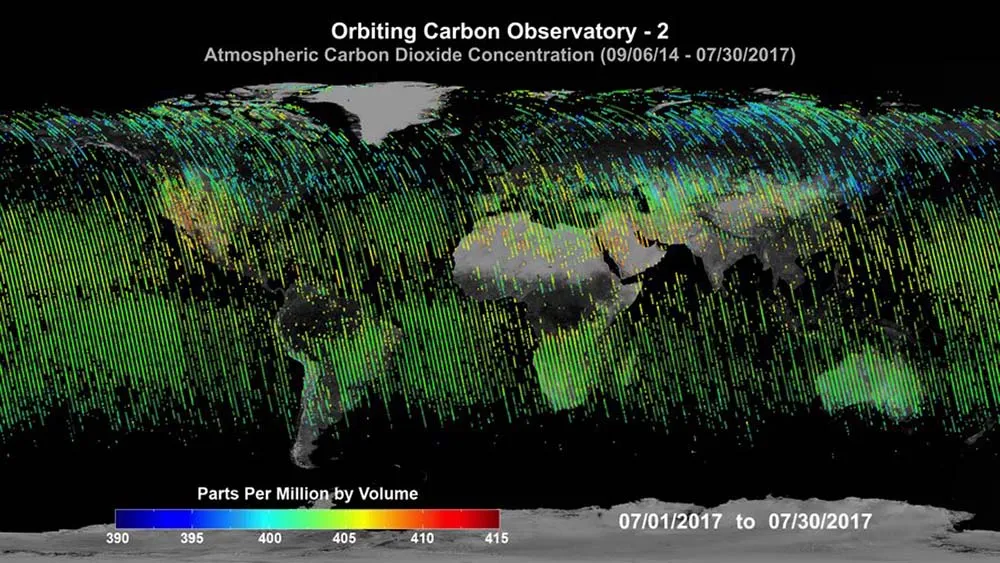
The difficulty is that current climate models have significant blind spots.
Professor Steven Sherwood of the University of New South Wales notes that the very physics of the particles – how they stick together or settle – is often omitted from simulations.
"I wouldn’t say we’re flying blind, but there are limits to how well we can predict the consequences," Sherwood says.
Pfrang’s greatest fear is that ageing aerosols might actually transform from reflective to absorbing, potentially causing heating rather than cooling.
"Human-made SAI will be quite different [to volcanic eruptions] as smaller, continuous injections are being considered, which may have different and so far untested effects."
Sherwood compares these technological fixes to the personal health sector.
"Opioid painkillers, weight loss pills, antidepressant medications – those techno-fixes all do have legitimate use cases, but they’re not the silver bullets many hoped they would be."

Who controls the thermostat?
Perhaps the greatest risk, however, isn’t scientific at all, but human. After all, who gets to hold the remote control for the Earth’s climate?
Dr. Jonathan Symons of Macquarie University argues that the conversation is shifting in unexpected ways. While many in the climate activist community still view SAI as a “dangerous distraction,” a minority now see it as a potential “safe passage” through temperature overshoot.
Symons warns the real governance challenge would be avoiding neo-colonial dynamics. “Those most vulnerable to climate harms, primarily in the Global South, should have at least an equal say,” he argues.
The historical gold standard for atmospheric cooperation is the Montreal Protocol – the 1987 international treaty designed to phase out substances like CFCs that deplete the ozone layer.

CFCs were considered safe until their stability allowed them to reach the stratosphere, where they catalytically destroyed ozone.
"Even now, 30 years later, the ozone layer has not recovered entirely from this man-made problem," Pfrang notes.
However, Harris suggests we are unlikely to witness a similar collaborative effort in the near future.
What’s more, "the large tech businesses could also deploy SAI," Harris warns. "They have rocket, balloon and aircraft capability, and AI is increasingly giving them predictive power."
But the ultimate fear for many scientists is the moral hazard: the idea that the mere prospect of a quick fix will give politicians an excuse to stop the difficult work of cutting emissions.
Thorne invokes a nursery rhyme to describe the situation: "I’m reminded of the old lady who swallowed a fly. I just hope we never get to where we have to swallow a horse." The best remedy, he argues, is to "spit out the fly" – to rapidly reduce emissions to net zero.
A perilous gamble?
In science fiction, geoengineering is often the deus ex machina that saves the day. But the Columbia study suggests we are dealing with a system far more complex than a movie script.
"If there were no hope of adequate mitigation, then geoengineering would probably be better than doing nothing," Sherwood admits. But the margin for error is razor thin.
We must reckon with the fact that Earth’s atmosphere is not a machine we can simply repair – it is a living and wildly unpredictable entity.
And, as both Sunshine and Project Hail Mary remind us, the mission can very often go catastrophically wrong, long before it goes right.
