
One of the biggest mysteries in the Universe is that all the stars, galaxies, gas clouds and planets we can see – all the 'regular' stuff in the Universe – makes up just 5% of the cosmos.
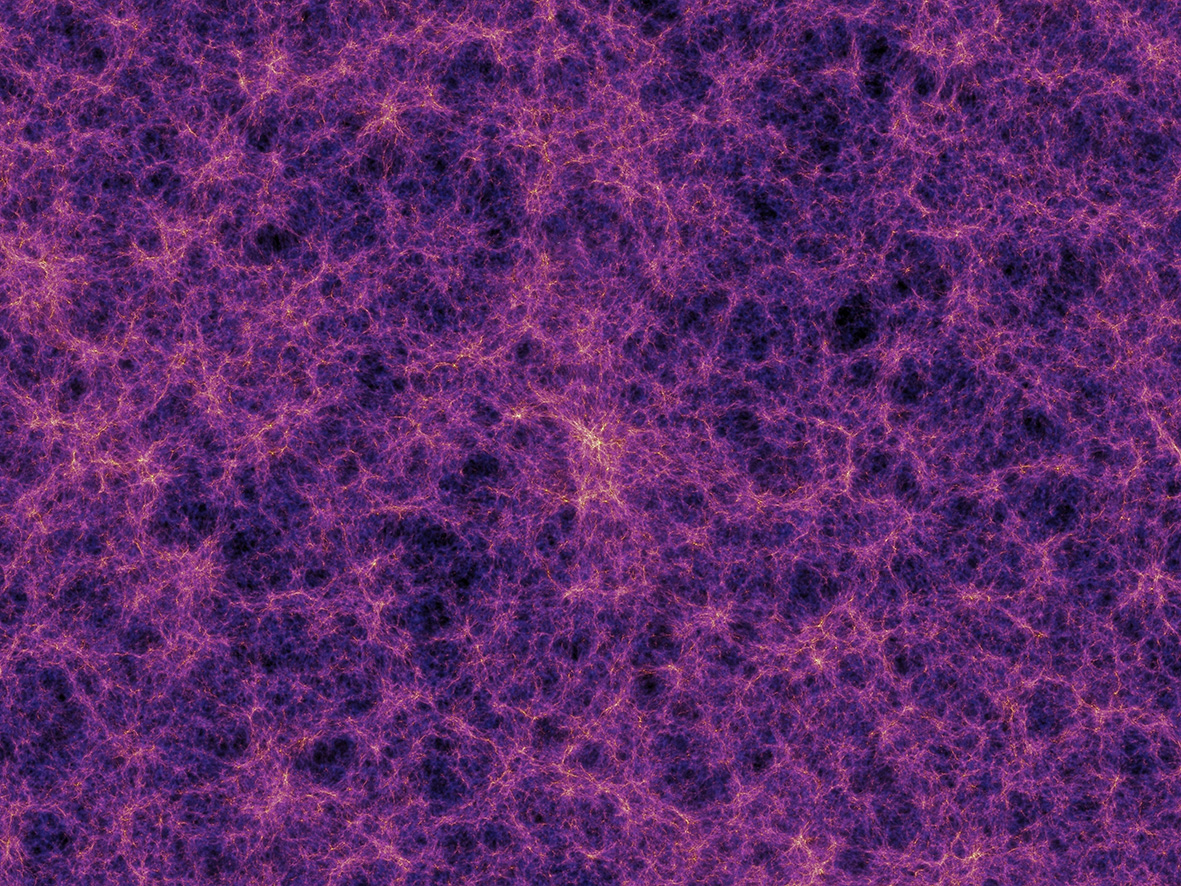
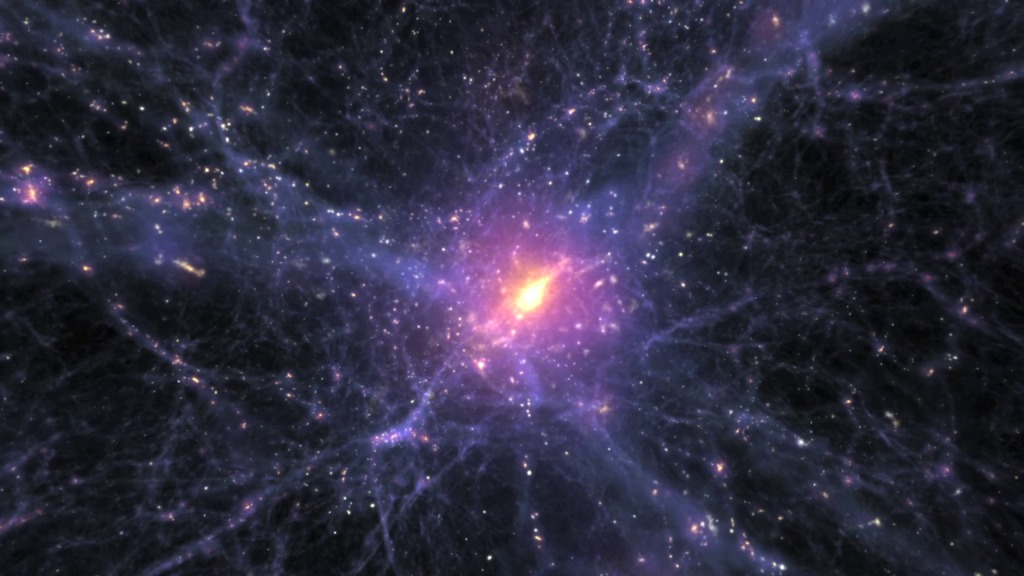
As a result, the structure of the Universe only really makes sense if there is a lot of mass that we can't see.
This is dark matter. An invisible substance that we know must be there because of its gravitational effects, but which we've never directly detected.
Dark matter experiments grow more sensitive every year and the range of possible dark matter particle candidates keeps shrinking.
What happens if they run out altogether?
More on dark matter
The mainstream answer is not to abandon dark matter.
The gravitational evidence for its existence is too robust: galaxy rotation curves, gravitational lensing, the way galaxy clusters behave when they collide, and many other observations all point the same way.
But a prolonged failure to detect anything directly might push physicists towards other, more exotic candidates.
What else could it be?
Sterile neutrinos, primordial black holes formed in the first moments after the Big Bang or ultra-light ‘fuzzy’ dark matter behaving more like a quantum field than a particle are all ideas that have been proposed.
Others would take it as a reason to look harder at gravity itself.
MOND (Modified Newtonian Dynamics), proposed by Mordehai Milgrom in 1983, suggests that gravity simply behaves differently at very low accelerations, removing the need for unseen mass in individual galaxies.
That theory fits galaxy rotation curves well, but struggles badly with galaxy clusters and the cosmic microwave background, where standard dark matter remains far more successful, and most cosmologists regard it as incomplete.
If dark matter continues to evade detection, physicists may eventually have to question assumptions that today seem rock-solid.
That would require rethinking or amending our knowledge of physics – which is precisely why they’re building the next generation of experiments, rather than conceding defeat.

