Star formation

Dark stars – the weird, invisible monsters of the early Universe that could still exist today
Astronomers think the earliest stars in the Universe may not have given off any light at all. But if these weird objects were never visible, how can they be detected?

This exploding star was spotted doing something weird. Now scientists think it might have solved a key cosmic theory
New evidence proves these magnetic monsters are the secret engines behind the Universe’s biggest explosions

New view of the closest super star cluster to Earth, responsible for the peak era of star formation in our Galaxy
null
undefined
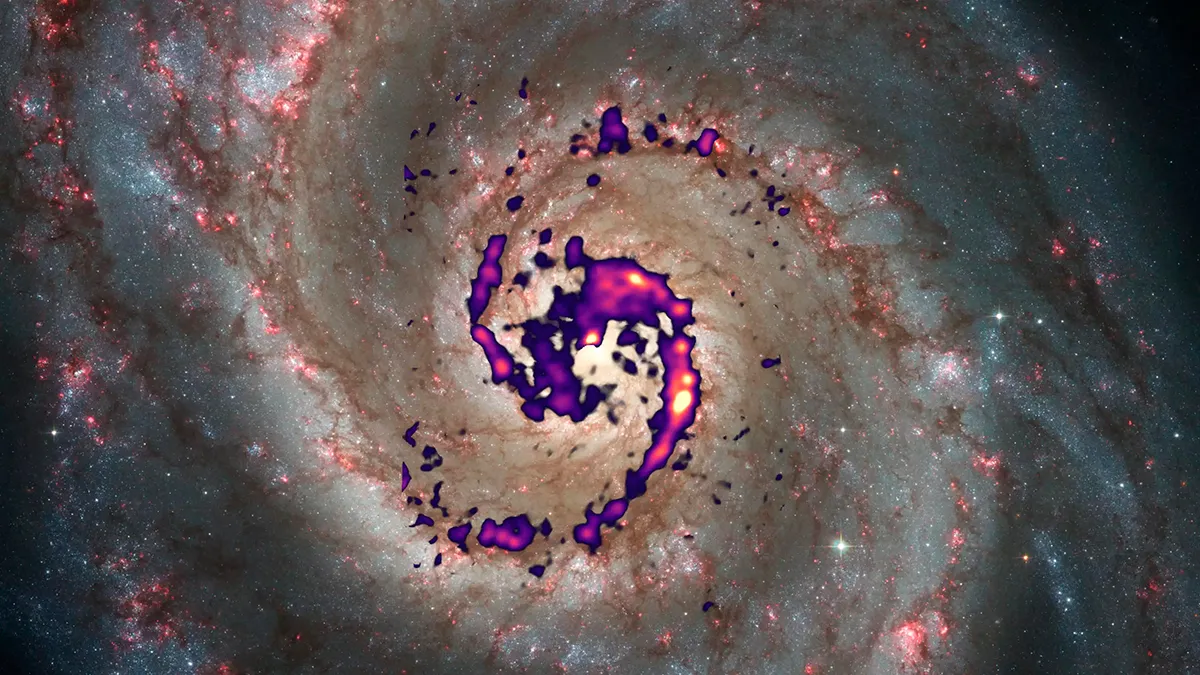
Astronomers have mapped the regions where stars will be born in the Whirlpool Galaxy
Astronomers have mapped the gas that will become stars in the Whirlpool Galaxy, the first such map created for a galaxy beyond the Milky Way.
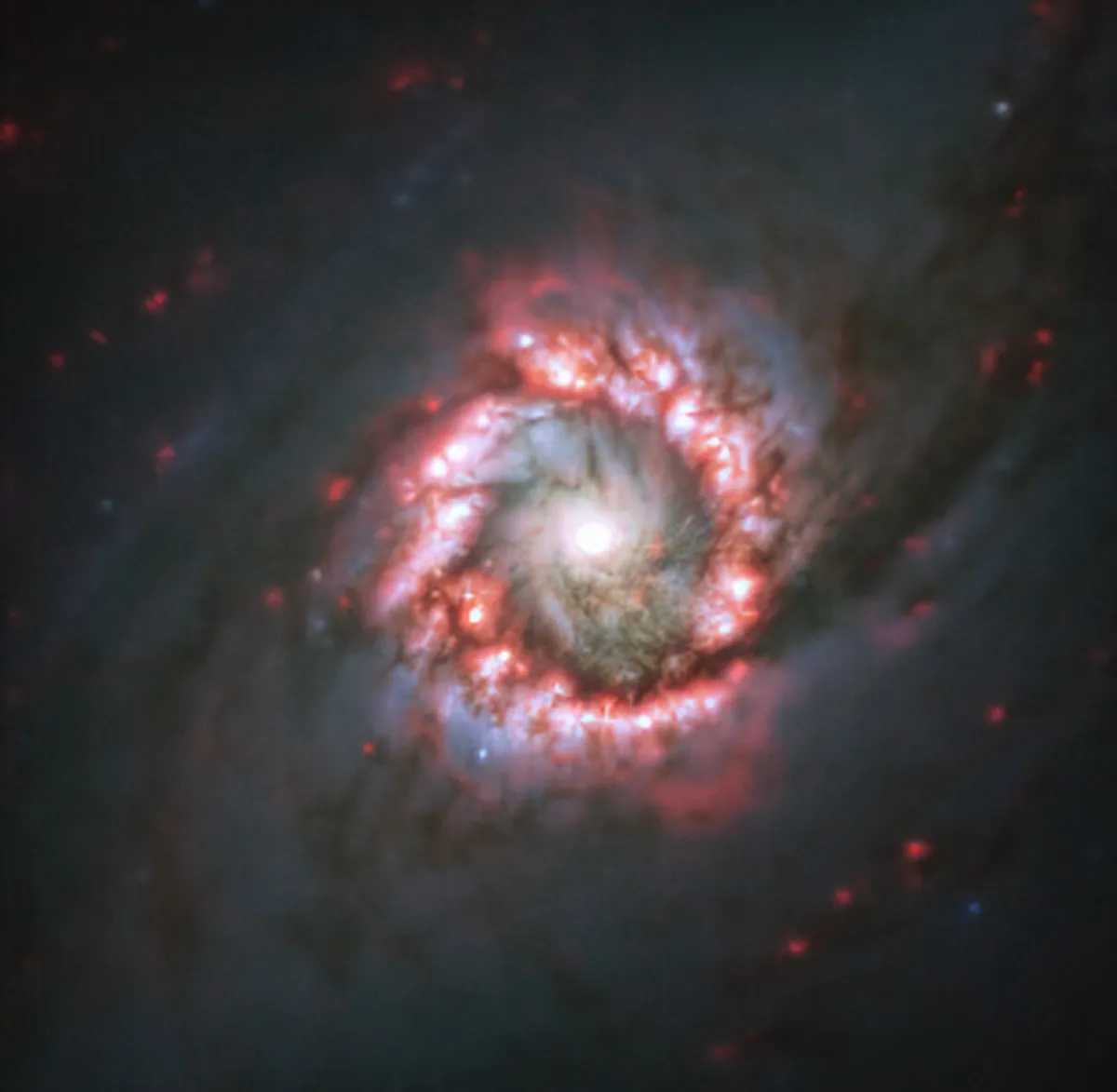
Eye On The Sky | Ring of star formation around galactic supermassive black hole
The processes occurring around a supermassive black hole have produced a ringed eruption of star formation stretching 5,000 lightyears across.

Eye On The Sky | Hubble views spiral galaxy as part of star formation survey
The study of galaxies like barred spiral NGC 1365 is helping a team of astronomers learn more about the formation of stars and star clusters.

Radio Astronomy Podcast | ASTHROS: the stratospheric balloon observatory
This episode we speak to NASA scientist Jose Siles about a new mission to attach a 2.5m telescope to a helium balloon.

Eye On The Sky | A cosmic cloud full of star-making material
Old data from retired space telescopes has been used to create a new image of a vast star-forming region 1,350 lightyears away.

Ingredient for life found around young stars
One of the necessary ingredients for life as we know it has been found around stars in a nearby system.

New stars can form in black hole winds
New stars may be born in the hostile winds that emerge from black holes, according to a study.

Stars form close to Milky Way's black hole
At the centre of the Milky Way lies a supermassive black hole. Astronomers have discovered 11 stars orbiting nearby, resisting the incredible forces that should be tearing the stars apart.

New-born stars cause galaxies to swell
An enormous burst of star formation within the cores of early galaxies may have caused them to swell in size and form the giant elliptical galaxies common in the Universe today.

Stars born in a black hole's breath
A new type of star formation has been observed in the winds blowing from a galaxy's supermassive black hole.

Giant galaxies may grow in cool gas clouds
The study of a growing galaxy 10 billion lightyears away has sparked a new theory as to how the largest galaxies in the Universe form.

Star formation occurs in 'short bursts'
ESO's ALMA telescope has uncovered the growth of a protostar occuring in short bursts, revealing the process of stellar formation in greater clarity than ever before.

Astronomers discover young planetary system
For the first time, astronomers have managed to capture the early stages of a forming planetary system, with the discovery of a young parent star that is already hosting a planet.

Black holes power elliptical star formation
Two studies into elliptical galaxies' star formation have revealed a self-regulating system powered by the jets of black holes.

Multiple star system seen forming
Scientists discover a nascent multiple star system for the first time

Quasars control star formation
New simulations could explain oddly behaving gas

Galaxies stripped bare
Raging torrents of molecular gas, detected coming from galaxies for the first time by ESA's Herschel space observatory, could be the culprit behind galaxies that have lost the ability to form new stars.
